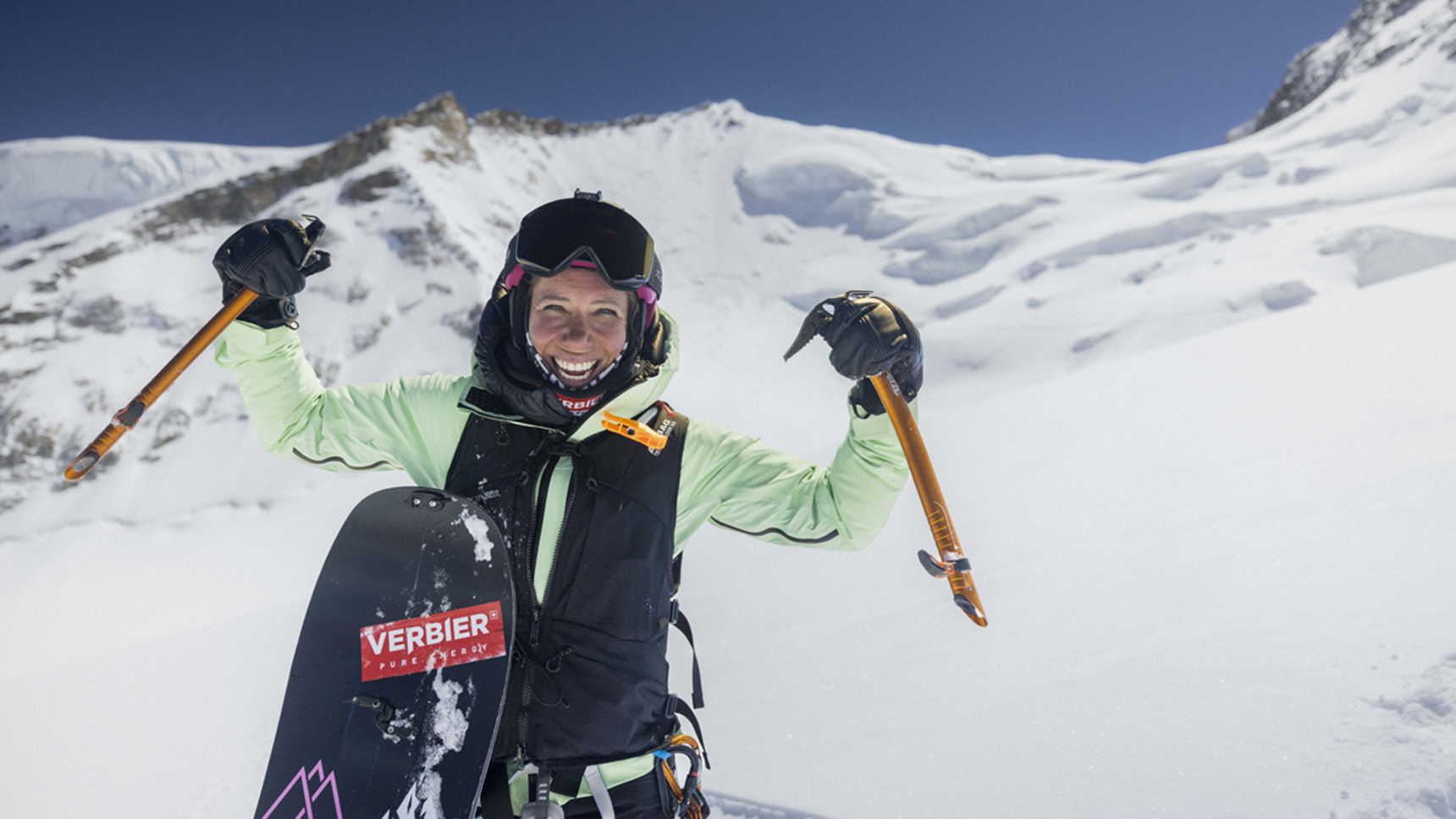





I’ve been inspired by Géraldine Fasnacht since we crossed paths a decade ago. She’s a powerhouse of adventure carving her own path as a freeride snowboarder, wingsuit pilot, and BASE jumper. From winning Verbier Extreme to flying off the Matterhorn and jumping in Antarctica, she brings together elite skill and fearless vision. Few people embody their sport the way she does.
Géraldine Fasnacht has a way of turning big ideas into reality. In her latest project, Nordend: Dreaming Beyond Limits, she becomes the first person to land an ultralight plane at 14,000 feet and snowboard down the steep northwest face of Nordend in the Monte Rosa massif. But the real story isn’t just the accomplishment, it’s the mindset behind it.
Géraldine isn’t driven by ego or danger. She’s a calculated risk-taker, a master of her craft, and someone who’s spent years pushing the boundaries of what’s possible in the mountains and the sky. Every line she rides, every flight she takes is grounded in lots of preparation, her respect for nature, and a deep love for exploration. We caught up with her to dig into what drives her, and how she keeps finding new ways to push and explore beyond limits.
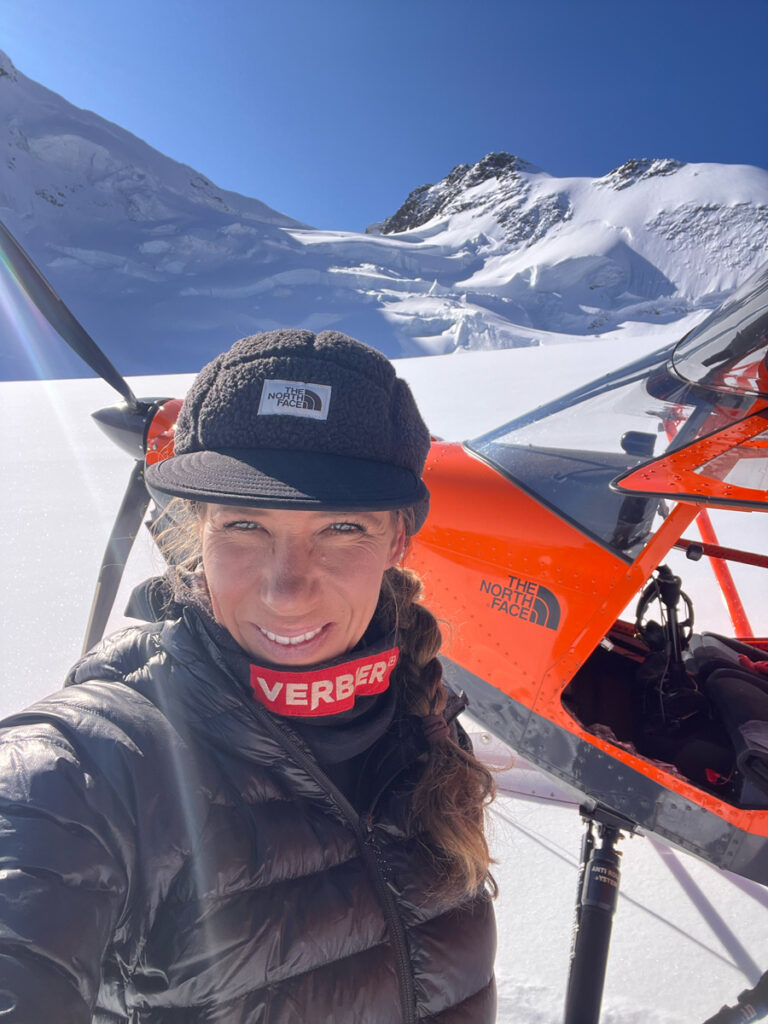
Photo by Line Prod
What drew you to the Nordend and its northwest face as the location for this project? Why this mountain, this line, and this moment?
It is the highest mountain massif of Switzerland. I flew with my wingsuit from this summit in 2016, opening one of the longest flights in the world, 3,000 meters of elevation drop on the south face to Italy. The northwest face is spectacular and looks like the perfect pyramid, with wild seracs along the way. It had long been a dream of mine to draw a line on this face with my snowboard and to achieve it with a technical high landing using my ultralight plane at the bottom of it.
It took me three years to have the snow, wind, and weather just right to land, ride, and take off with all the conditions aligned. This face is so steep that most of the year it is covered in ice from top to bottom. We need specific spring temperatures for the snow to stick to the ice in order to ride it.
The film captures both breathtaking visuals and quiet, personal moments. How did you work with the director, Guido Perrini, to bring that balance to the screen?
We have worked with Guido for over 20 years now. He knows me really well, so I fully trust his work. He did a great job. I’m happy.
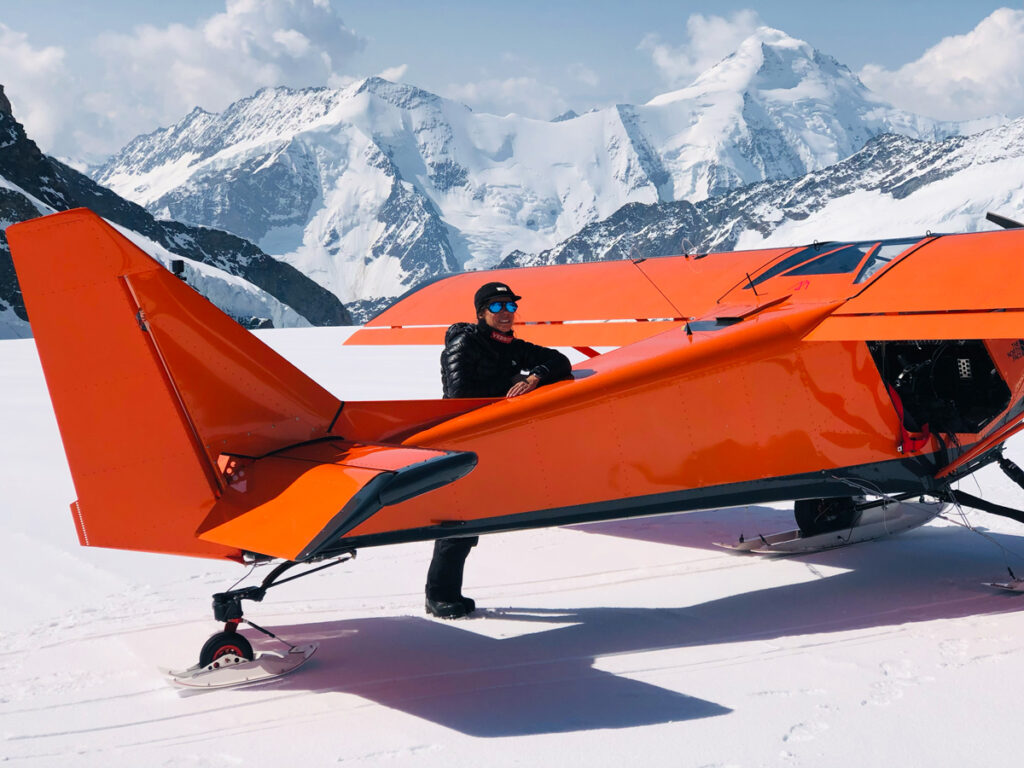
Photo by Elodie Tinel
Combining wingsuit flying and snowboarding seems like a dream perfect for you. Can you walk us through the planning and preparation it took to make it possible?
I started skiing as a kid as soon as I was able to walk. When I started snowboarding, I discovered a new world. Snowboarding was not made to stay on the slopes for me, but to draw new lines, always further in the powder snow. It opened up my mind and skills in every way.
When I started skydiving in 1998 my idea was to gain experience to base jump in my mountains. At that time we were not able to talk about it. So after 2 years I did my first base jump off a bridge that I really dislike then when I did my first base jump off a cliff this was as good as drawing line with my snowboard down a mountain. The connection with the elements was so powerful that I had found the perfect parallel with snowboarding freeride to be able to train and be in the mountains all year around.
I started wingsuit flying from a plane in 2001 and from a cliff in 2004 to be safer and open my parachute away from the wall. With the evolution, slowly but surely, we were able to start drawing lines along the wall, and that’s when I began to have the idea of opening new exit points with my wingsuit.

Photo by Karin Sidi
Were there any moments during the project when you had to re-evaluate your plan or adapt due to conditions, emotion, or instinct?
I think in life, every day you have to ask yourself the right questions. Are you aligned with what you do? Are you on the right path? Even more so when you take on projects like this, where you’re not allowed to make mistakes.
I questioned myself a lot, and I even stopped the project after two years of not having the right conditions aligned. But nature called me back up there in the third year, as it was one of the most perfect winters we’d had in over ten years, maybe. I had to go again.
Were there any discoveries about yourself during this mission that surprised you?
I’m really happy that I felt at peace letting go of this project after two years of trying hard with my team and training for months to be ready. I feel so good in my life as a mom, with my family and friends around me. I felt that my balance was strong enough to make the right decision and to listen to the message that nature was sending me.
There’s a strong emotional undercurrent in the film about dreaming beyond limits. What does that phrase personally mean to you now, after completing the project?
Sometimes you have dreams that feel unreachable, but this is why we call them dreams. If you work hard to reach them, you have an incredible goal in life. It’s scary sometimes, but my friend Mike Horn always told me: If you’re not scared about your dreams, it’s because they’re not big enough! I love this phrase!
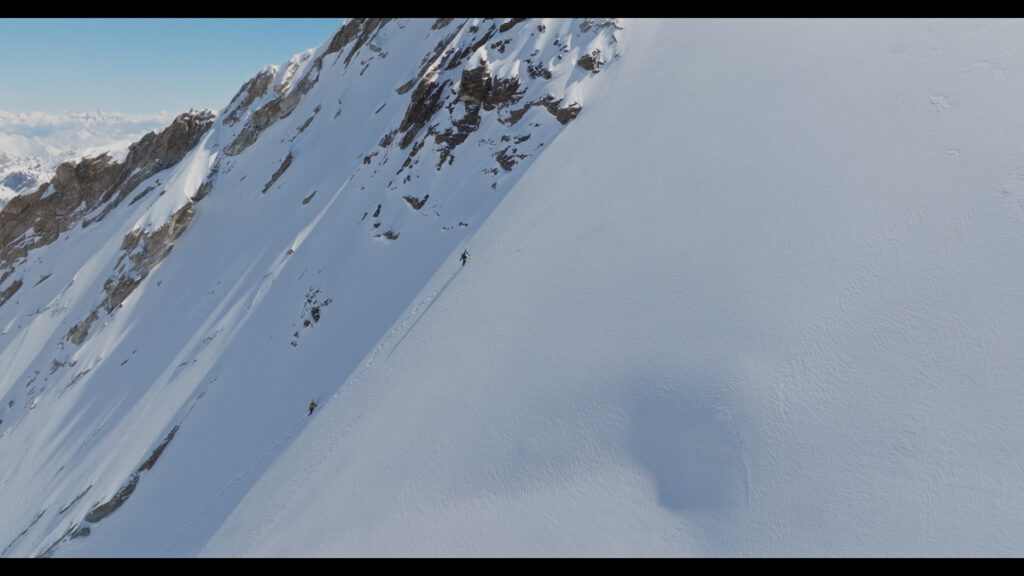
Photo by Scott Cheap
What message or feeling do you hope audiences walk away with after watching Nordend?
Never give up, and listen to yourself. Stay connected with nature and the elements around you—this is the most amazing inspiration.
You started in freeride snowboarding, became a base jumper, and then a wingsuit pilot. What has each discipline taught you about risk, focus, and trust?
The discipline I developed as a snowboard competitor and plane pilot helped me become a good BASE jumper. Learning how to fly with my body in a wingsuit also helped me become a better pilot. All of these disciplines are connected in my world of risk, allowing me to see and understand the elements and the mountains from different angles.
From Antarctica to the Matterhorn, you’ve done things most people couldn’t even imagine. Which achievement holds the most emotional weight for you and why?
Throughout the years, these achievements were all magical, it’s hard to choose just one. But having the privilege to live in complete autonomy in Antarctica in 2009, without connection (only a satellite phone for emergencies), was incredible. Being in complete connection with that place, and flying from some of the most beautiful mountains I had posters of in my room as a kid, was something truly special.
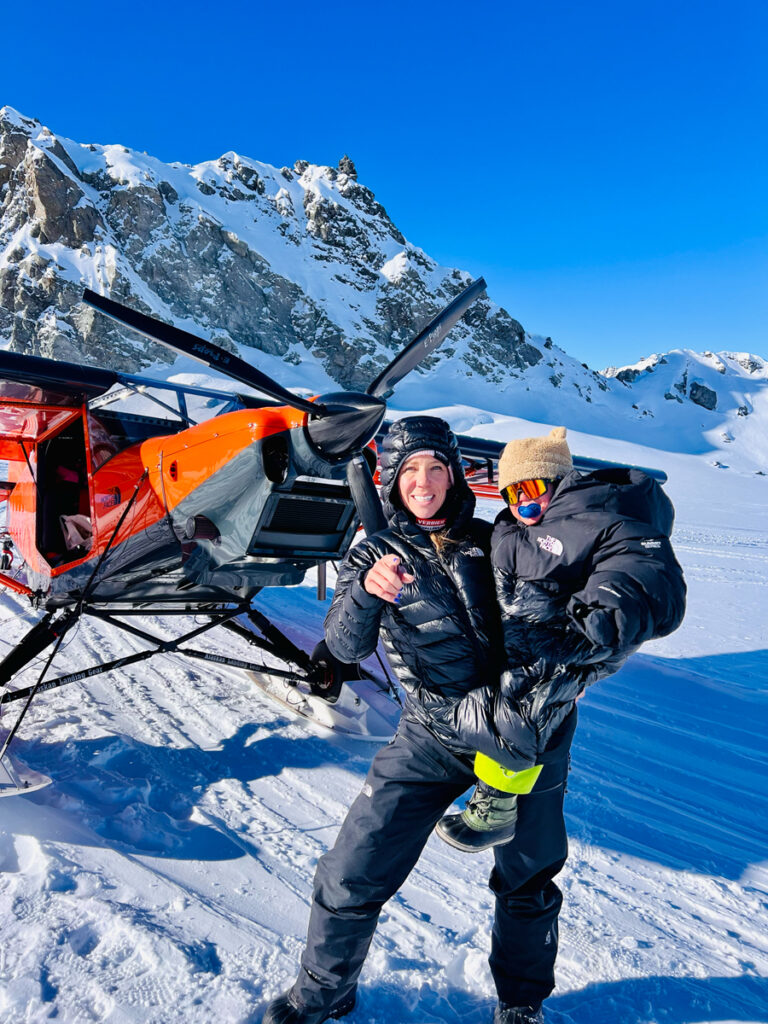
Photo by Giustino Scalfo
You’ve consistently emphasized preparation over recklessness. How do you mentally and physically prepare for such high-stakes projects?
I always try to imagine myself up there and what would give me more safety. Being well-trained is one of the keys! If I need to walk back down, I have to have the strength, the physical energy, to do it. Mentally, I need to understand the level of commitment up there, so the training needs to be as close as possible to the real experience.
And finally, what’s next? Are there new lines, literal or metaphorical, that you’re dreaming about now?
Always drawing new lines now with my new ultralight plane, the first of its kind in the world. Flying and riding, exploring new places in the Alps and around the globe. Enjoying my time with my lovely son, Odin, and trying to show him the way to discover his own passion too.

Photo by Karin Sidi-Ali
What would you say to any young person out there?
Follow your dreams!
Who are your sponsors?
Squirrel, Longines, Verbier, Optimiso group, Fjork merino, Arctic Juice Cafe, The North Face, Jones snowboards, Dakine
Follow Geraldine’s adventures on Instagram or Facebook.