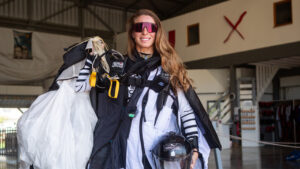



3 breathwork techniques for calming the nerves, calming the mind and sharpening your focus
For anyone who’s ever felt nerves before exit, in the tunnel, or standing on the edge of a BASE jump, you’re not alone. I’d be pretty confident to say that every single one of us at one point or another have felt this feeling in our sport. The energy amplified in those moments is part of the gift in our sport, but that same energy can work against you: shallow breathing, negative thoughts, or over-amped reactions.
In flying, we focus a lot on training body position, canopy skills, group flying, landings. Yet one of the simplest and most powerful performance tools used in most sports and available to us is often overlooked: the breath.
Breathwork isn’t just for yogis or meditation apps. It’s a science backed way to regulate your nervous system, manage adrenaline, and create higher levels of focus under pressure. In my experience, it’s been a game changer in many ways. And, the more I dig into the ways of high level sports athletes in the world, the more I find breathwork as a part of their training.
Here are three techniques used by athletes and performance coaches worldwide that can help you calm your nerves, center your focus, and perform at your best on a daily basis.

1. Square Breathing: Focus
What it is:
Also known as box breathing, this parasympathetic breathing technique is a well known and highly used breath by athletes and the military to stay calm and focused under high levels of stress.
How to do it:
- Inhale through your nose for 4 seconds
- Hold for 4 seconds
- Exhale through your mouth for 4 seconds
- Hold for 4 seconds
- Repeat for 3–5 rounds
When to use it:
After you take off your seatbelts and get settled, on the climb to altitude or at the edge of a BASE exit.

2. Coherent Breathing: Calming
What it is:
Breathing in and out for the same amount of time (around five seconds each) is called coherent or resonant breathing. It’s a controlled breathing rhythm that naturally steadies your heart rate and your nervous system, which have an impact on your ability to focus.
How to do it:
- Inhale through your nose for 5 seconds
- Exhale through your nose for 5 seconds
- Breathe steadily and smoothly, with no pause between the inhale and exhale
- Breathe for 2-5 minutes
When to use it:
In the morning before you start the day or before a BASE jump that feels performative or stressful.

3. Extended Exhale Breathing: Reset
What it is:
This performance breathing technique stimulates the vagus nerve and slows down your heart rate, shifting you into the “rest and digest” mode, a state where your body functions more efficiently.
- Inhale gently through your nose for 4 seconds
- Exhale slowly through your mouth for 8 seconds
- Repeat for 3–5 minutes
When to use it:
Anytime you feel the nerves increase, your thoughts get unruly, or your heart race.
Consider how much money, time, energy you devote to doing this thing that you love. If there’s a free tool, science backed for efficiency, that you can use any time of the day for most situations, doesn’t that seem like a pretty great thing to take advantage of?
Our breath is one of the few tools available that we can take anywhere, doesn’t cost a thing and has a myriad of huge benefits for flying, but also for navigating challenging moments in life.
While in this sport, we can’t always control the conditions, but we can control our response. And that ability starts with how we breathe.