




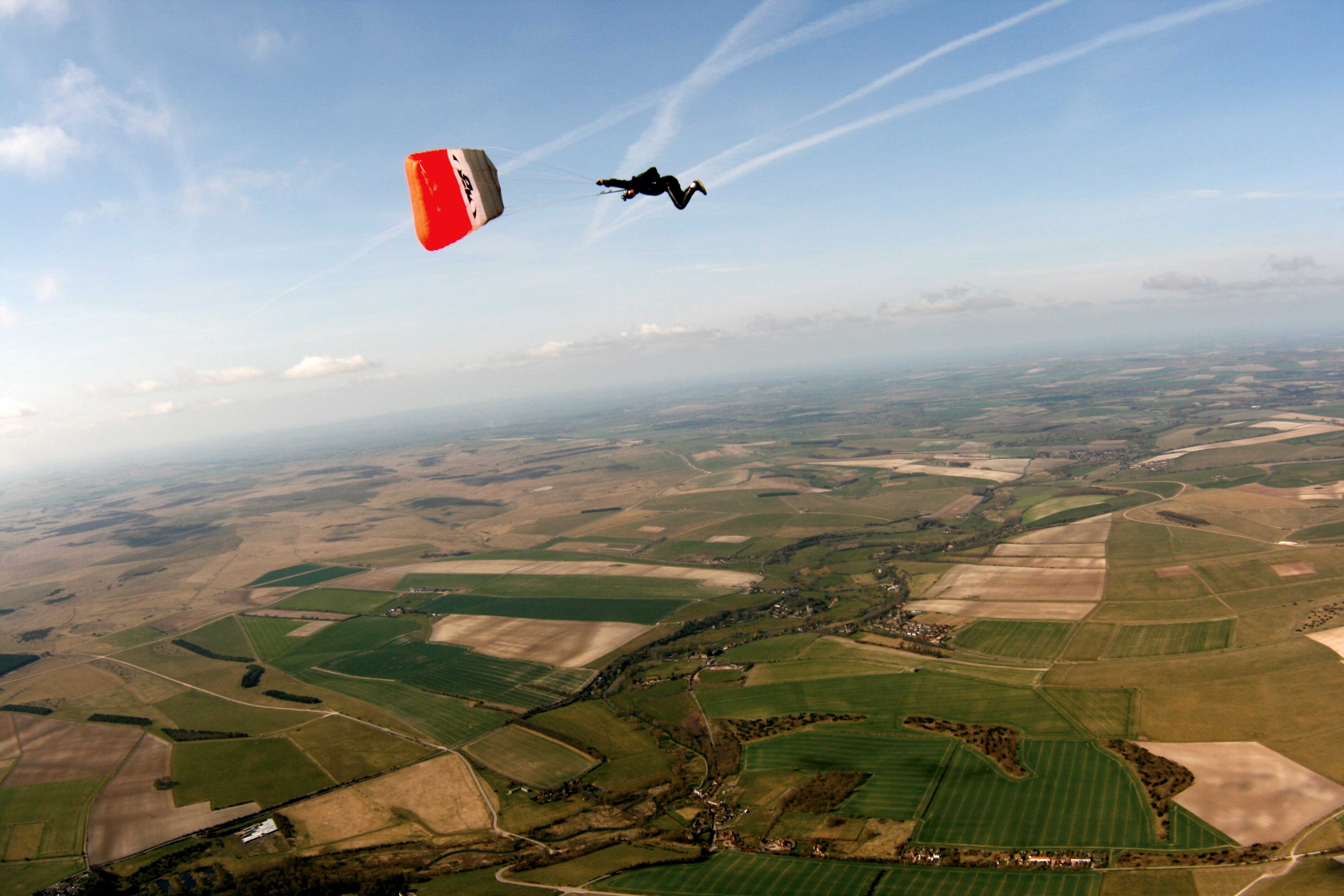
Deane ‘Smudge’ Smith flew a VC 96 with 300 HMA lines, extended his risers to 28 inches and opened up his chest strap, using an RDS (Removable Deployment System) to allow the canopy to fly naturally. Alastair Macartney was flying a VC 79 with 300 HMA lines and, for our test flights, opted to keep the slider and pilot chute on, just to judge the difference between flight characteristics. The wing loading was 2.3 for Smudge on the VC 96 and 2.65 for Al on his VC 79.
Who is the VC suitable for?
As it states on the Performance Designs website, the VC canopy is not intended for those purchasing their first cross-braced canopy. It has been designed specifically for the competitive pilot who is already flying to the max and is looking for extra ways to get the edge.
What are its flight characteristics?
Many of the flight characteristics for the Competition Velocity are similar to the Velocity, as we know it. The differences between those canopies may be too subtle to be noticed by pilots who are new to the Velocity. But to the highly proficient Velocity pilot, these delicate improvements, if combined with proper training, practice and technique, could make quite a difference in their competition performance.
Is this what the PD Team jump?
The PD team have been using various versions of the VC for a many years. As some of the top pilots in the competition world they have many thousands of jumps on this canopy and have set world records flying it.
How is the VC wing different to the original Velocity?
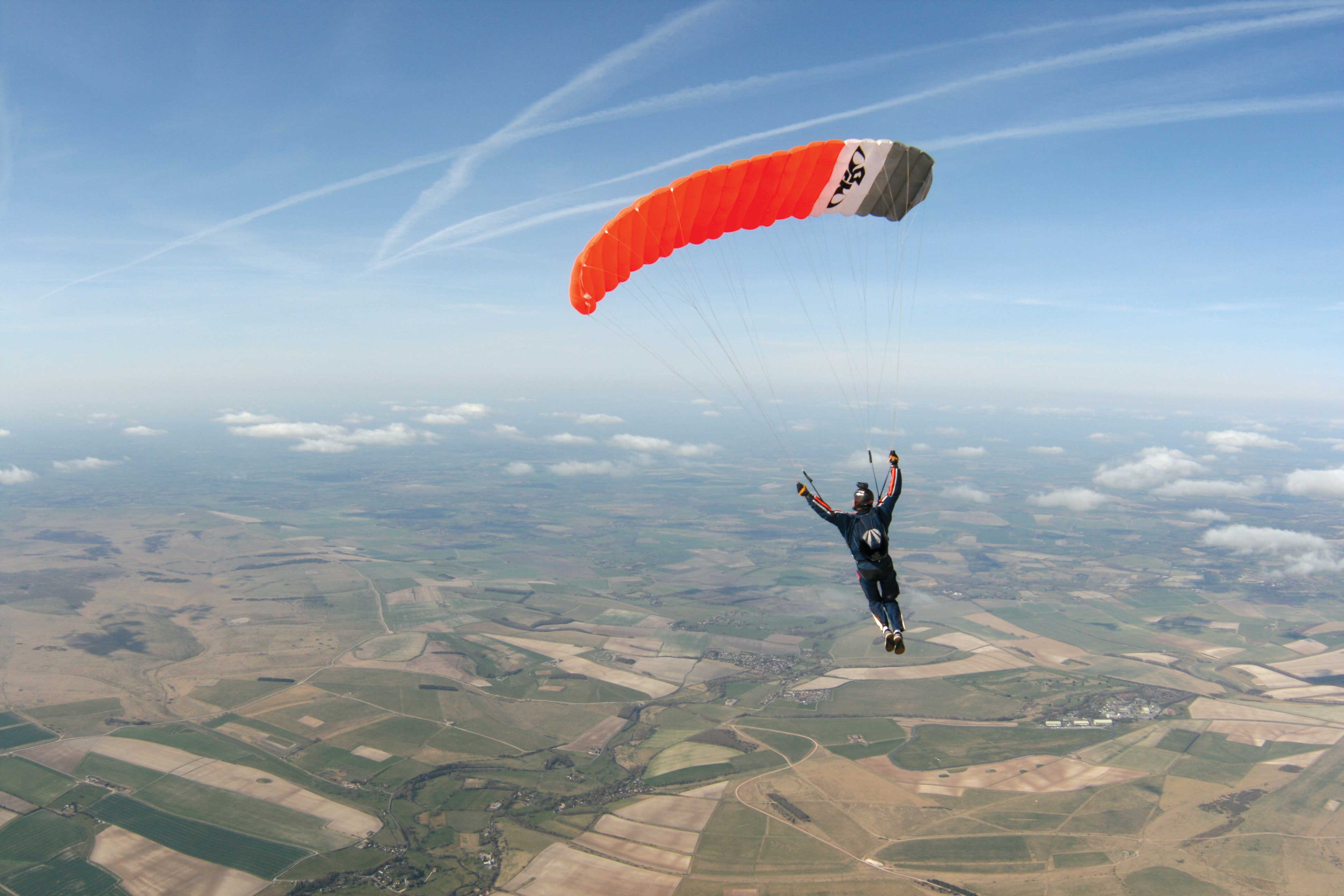
To look at, you will notice very little difference, other than in the reduced drag brake lines, low profile pilot chute attachment point and reduced drag line attachments. The performance differences between these two canopies are due to subtle design changes in the aerofoil that are not very noticeable to the eye. If you were to lay both Velocities on top of each other, they look very similar. There are still seven cross-braced cells, the span and cord are similar and they have the same number of lines.
What sizes of VC are available?
The Competition Velocity is produced in sizes ranging from 111-71 square feet: 111, 103, 96, 90, 84, 79, 75 and 71sqft.
What type of line is used?
The canopies come with either 300 lb or 500 lb HMA. The lifespan of the 500 HMA line is greater than the 300 HMA but the 300 HMA gives the pilot less resistance as every little bit of drag is reduced. You will notice very little difference, with openings almost the same. We jump both canopies with the RDS all the time and very little has changed. The 300 HMA lines have to be replaced after 100-200 jumps and so aren’t really suitable as a work canopy for everyday skydiving, and have an increased cost of maintenance. The response to toggle input is similar although the brake lines have been extended some three inches, so the stall point is lower. In fact, the Competition Velocity will fly slower than the original Velocity before it stalls, due to a number of different factors combining to reduce the stall point.
How does it perform with front and rear risers?
There are many opinions thrown around dropzones on what it is best to use in the final turn to build up speed for landing; harness, rear risers or front risers? Personally front risers aren’t my style. I initiate a harness turn combined with a little rear riser input, my hands already on the rears ready to tweak for a long, smooth, flat swoop. I fly rears because I believe in a smooth powered flight with a good element of accuracy. I feel that the extra speed gained by using front risers can sacrifice accuracy and you need to find the balance.

In these differing flight modes the canopy provides different responses; overall there are improvements in the wing response to rear riser input for use in competitive piloting. As it suggests in the PD Canopy Characteristics documents of the VC, most pilots who have flown the canopy state that it feels more powerful on the rears. It also flies more efficiently on rears, which means it may be later before you feel the need to transfer to toggles.
What sort of pilot would want a Competition Velocity?
The VC is not designed for those purchasing their first cross-braced canopy. It is an ultra high performance canopy only appropriate for competitive pilots looking to squeeze out a tiny bit more performance. If you are not currently flying a high performance competition canopy to the absolute limit then you have no need for the VC.
The VC without doubt gives the competition pilot a chance of increasing his or her performance. The cost of a new canopy will dent your wallet some $3,200. It is strongly recommended to approach canopy pilots who have flown the VC and are current in the CP world for tips.
Performance Designs has excellent wing loading charts; use them. It only takes a few minutes to download the Flight Characteristics of any PD canopy; do you know yours?
Originally published in Skydive The Mag