



LUXFLY co-founder Steve Braff explains how a battery storage system is helping the tunnel manage electricity demand, trade energy and work toward more stable costs for flyers.
In 2022, electricity prices across Europe went through the roof. At LUXFLY, energy went from a line in the budget to an existential question.
Our fans have close to two megawatts of installed power. Electricity is fundamental to everything we do, but I realised that if we kept treating it as something that simply happens to us, we would always be at the mercy of the market. I wanted LUXFLY to become a participant in that market. The answer was a large battery storage system, integrated into the site’s electrical installation.
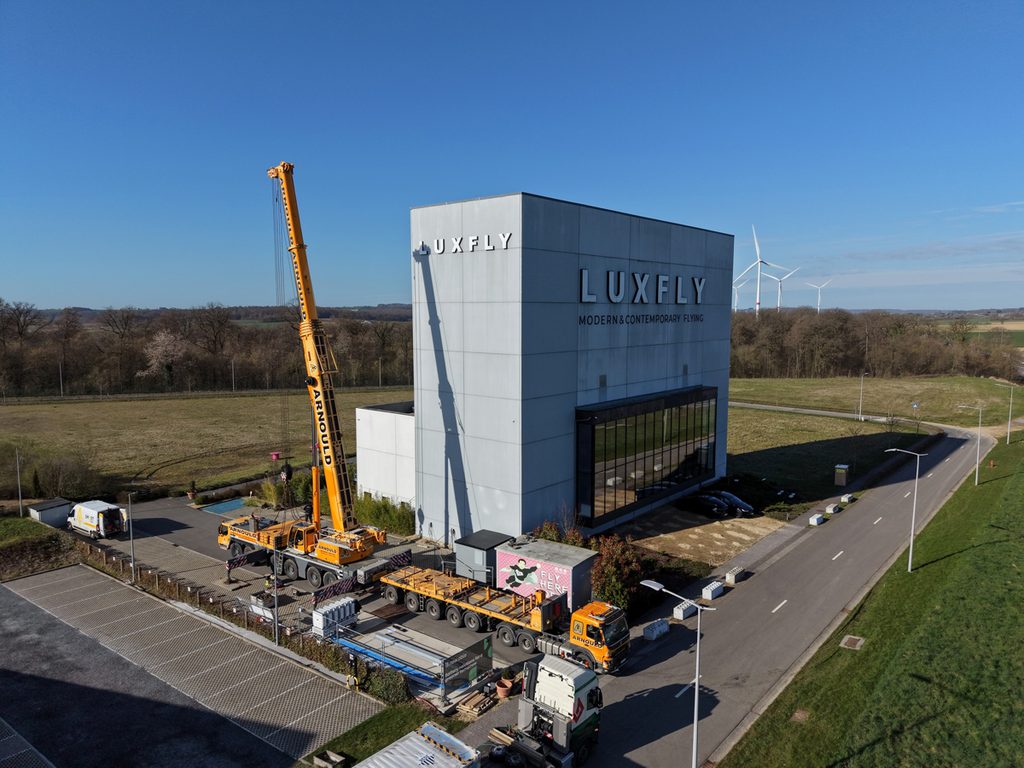
Today, a multi-megawatt-hour battery sits next to the tunnel, connected to our high-voltage infrastructure. An energy management system controls when it charges and discharges, managing the site’s demand and trading on the electricity market while people fly.
Building LUXFLY
My wife Magali and I opened LUXFLY in 2020 in Sterpenich, Belgium, close to the Luxembourg border. Our catchment covers the Greater Region: Belgium, Luxembourg, France and Germany.
We wanted to build a high-end experience that could also serve as a serious training tool for skydivers, professionals and athletes, while welcoming everyone from children on their first flight to company groups.
The family on their first flight and the professional on their thousandth hour deserve the same quality of air and welcome.
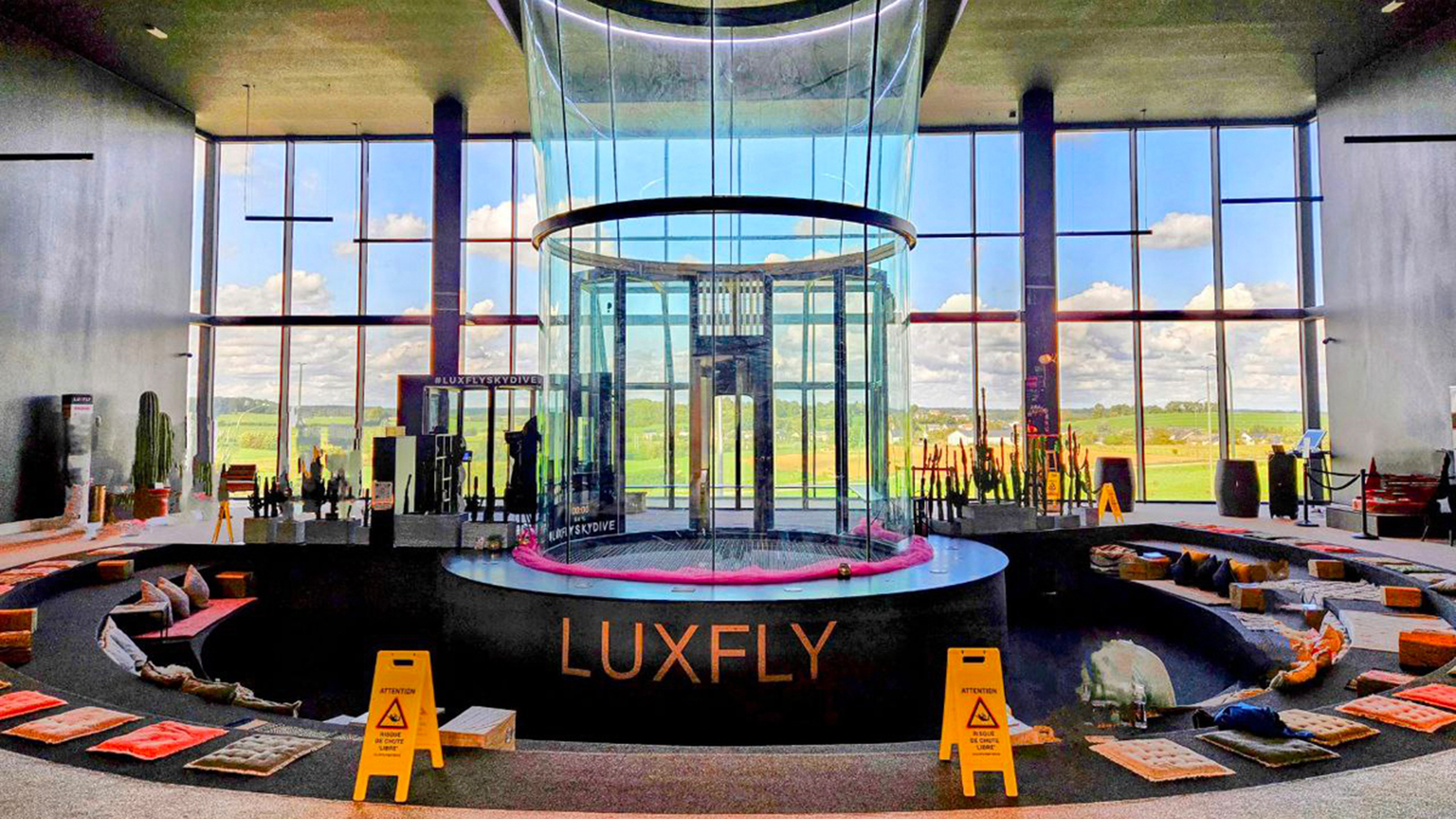
The 15-foot Tunnel Tech flight chamber is surrounded by eight metres of glass, inside a glass tower visible from the motorway. A 300 m² glass bay opens the hall onto the sky and surrounding greenery.
Our sunken amphitheatre accommodates up to 300 spectators. Magali and I have travelled to and flown in more than 100 tunnels around the world, and we kept noticing that children at the back of spectator areas struggled to see. We put the seating into the floor so everyone could have a clear view.
Together, we steered the project from the first sketch to the first flyer, opening during Covid. The battery project is the next stage in developing the site.
Understanding the demand
A wind tunnel’s electricity demand changes throughout the day. Fans spin up for a session, a professional flyer needs higher speeds, and a group of children needs gentler airflow.
On a commercial electricity contract, those peaks can be expensive. The challenge is not only how much electricity the tunnel uses, but when and how it draws that power.
At full power, our fans draw as much electricity as approximately 5,000 average Belgian homes at once. An hour at full speed uses roughly what 200 households consume in a day. The battery gives us a way to manage that demand.

One site, one energy system
The storage system connects to our own transformer, with dedicated equipment installed in the site’s high-voltage cabin. The tunnel, building and battery operate behind a single meter.
High-voltage integration was the hardest part of the project. We were connecting a multi-megawatt-hour battery to the same transformer that feeds the tunnel. Safety, protection and metering all had to be right, and flyers in the chamber should never notice the system working. Every kilowatt-hour entering or leaving the site passes through one metering point, allowing the tunnel, building and battery to operate as one energy system.
Two jobs, one battery
The battery has two functions. The first is peak shaving. When the tunnel’s demand spikes, the battery supplies power, reducing the peak demand seen by the grid. This helps reduce costs and stress on the local network.
The second is electricity trading. The system charges when electricity is cheap and discharges when it is expensive. The energy management system makes those decisions automatically, around the clock. It monitors the market and the site, making decisions every few minutes rather than simply following our flight bookings.
While we are teaching a seven-year-old to fly, the battery can be trading electricity. I find that pretty amazing. We anticipate reducing our electricity bill by 20–40%.
Supporting a changing grid
Storage also gives LUXFLY the ability to absorb electricity when the grid has too much and return it when it is needed.
As Europe adds more wind and solar generation, the supply of electricity becomes more variable. Storage can absorb energy and release it at different times, giving a site such as ours a role beyond consuming electricity. For a business with substantial power requirements, that is a significant change.
What comes next
The battery is phase one. Magali and I are also working on plans involving vertical solar panels and rooftop wind turbines, designed around the building. We are keeping the full details private for now, but the aim is to generate energy on site, store it in the battery and use it to support the tunnel.
When the project is complete, I want LUXFLY to be the most sustainable wind tunnel in Europe.

What it means for flyers
The practical motivation is stability. Better control of energy costs gives us more scope to plan, invest and keep prices fair for flyers.
When electricity prices rise sharply, someone eventually pays. I do not want that cost falling on a family booking their first flight or an athlete training for a competition. This all now allows Luxfly pricing to compete, with camps and team training at €385 per hour, including VAT, during the week or at weekends, with a minimum booking of 10 hours within seven days.
That price is a direct result of the battery. Teams and professional flyers use substantial amounts of tunnel time, and we wanted them to feel the benefit first.


A lesson for other tunnels
Other tunnel operators face the same combination of substantial electricity demand, peaks in consumption and volatile prices. For us, battery storage is a way to take a more active role in managing those costs. The system is operating while we continue teaching, training and flying. The next stage is to build on that with energy generation on site.
Learn more about Luxfly.