




From dance and motorcycle racing to skydiving, BASE and wingsuit flying, Luciana Burkle talks about building a life around air sports, learning from mistakes, and keeping the sense of play alive
From professional dance and motorcycle racing to skydiving, BASE jumping and paragliding, Lucy Burkle has followed her curiosity into very different worlds. After starting skydiving in April 2022, she moved to the French Alps and began building a life around flying. We caught up with Lucy to talk about progression, preparation, making a living in the sport, and why she wants to keep the sense of play alive.
Home DZ: SKC Skydive Center, Tallard
Started skydiving: April 2022
Skydives: 1,200
BASE jumps: 240
Wingsuit jumps: 200
Finding Her Way into Flying
Your life has taken you through professional dance, motorcycle racing, paragliding, skydiving, BASE and wingsuit flying. What draws you to all these activities?
What draws me to this combination of activities is getting to discover different versions of myself in such different environments. Staying in motion also helps me keep different aspects of my life in balance.
Before flying became such a big part of your life, you were a professional dancer. What did dance teach you about your body that later transferred into flying?
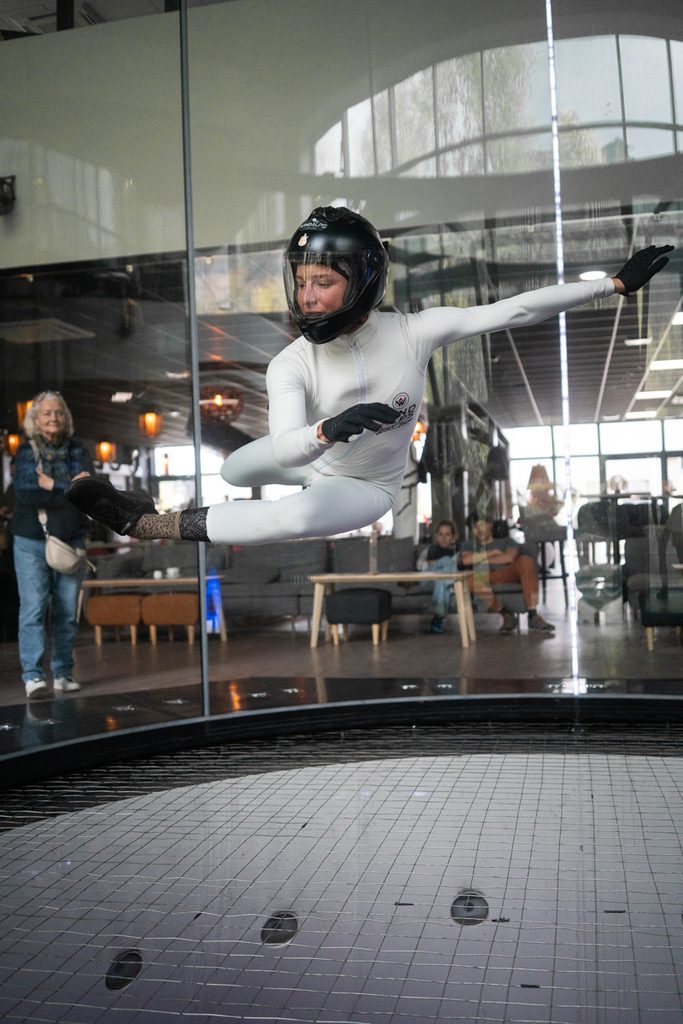
For me, every jump feels a little bit like a choreography in the sky, and I feel very comfortable with that process because of the time I spent as a dancer. Before a skydive, we walk through the plan, the movements, our positions and visual references. Then, in the air, you trust your preparation and muscle memory and let it flow.
How did you get into skydiving and BASE? When did wanting more turn into building a whole lifestyle around it?
I got into air sports almost by accident. In Mexico, I was coaching motorcycle riding, and I trained a couple who later invited me to discover paragliding in Valle de Bravo in 2020. It became an exchange of worlds: they came into my world of motorcycles and racing, and I stepped into their world of flying.
When COVID closed the main paragliding takeoff, we decided to start skydiving together in 2022, simply because we wanted to keep flying. At first, I wasn’t sure I wanted to continue with it. I had actually tried to do my AFF course when I was younger, but I couldn’t afford to keep practising. I was left with the idea that skydiving was only for people with a lot of money, and at that time I didn’t really feel welcome in the sport.
But when I finally did my AFF in Cuautla, everything changed. The feeling of jumping completely blew my mind, and I couldn’t stop. I kept jumping, training and progressing through my licences.
Things became even more intense when I met Vincent Cotte in Dubai, while I was probably the happiest fun jumper at the drop zone! As I started spending more time with him, travelling and going to skydiving events, I became curious about wingsuit flying and BASE jumping.
What really brought me deeper into these sports was the desire to experience different ways of flying, spend more time in the air, understand this element better, and be able to join the adventures my new community was creating. Little by little, it became 100% my lifestyle. I saw in Vincent that it was possible to build a life around these sports and genuinely be happy and fulfilled doing it. Slowly, I moved to the French Alps, sold my motorcycles, and bought parachutes, a wingsuit and flying gear instead.
I also started building a new professional network around this world. Now, in 2026, I’m starting to see the results of everything I’ve been building: working with sponsors as an athlete, being part of the staff at events, offering photo and video services, creating content for other athletes, and now coaching as well. It still surprises me sometimes how much my life has changed. None of this was very clear at the beginning, but I really love the direction it has taken.
What’s your jump philosophy?
My jump philosophy is to remember that this activity is like playing with a superpower. Being able to fall through the sky and fly a parachute is something truly extraordinary.
At the same time, it’s almost a game. We’re not doing anything that important. We’re here to play, explore and enjoy it. Sometimes we forget that when we get too focused on doing it better and better. I like to remind myself how incredible it is simply to be able to do this, and to keep the sense of play alive.
Different Ways to Fly
You move between skydiving, wingsuiting, BASE and paragliding. What does each discipline give you that the others don’t?
In skydiving, the whole drop zone structure takes care of so many safety aspects, from ground control and weather checks to the aircraft pilot, who is basically your private chauffeur dropping you off at the perfect altitude so you can just focus on playing in the sky!
To me, skydiving is the most luxurious way to fly. You have shaded packing areas with fans, people checking the weather conditions, and on top of that, someone flies you all the way up to your exit point. It’s basically Disneyland!
BASE jumping, on the other hand, is like taking all the intensity of skydiving and compressing it into one little shot, like a ginger shot! Everything happens so fast. Instead of a minute of freefall, you might have just seven seconds. Instead of several minutes under canopy, you have maybe 30 seconds.
And that’s what fascinates me. I feel like BASE jumping even changes your perception of time. You enter this state of hyperfocus where every second becomes incredibly intense. Those few seconds can feel just as rich and powerful as an entire skydiving day or even five hours of cross-country paragliding.
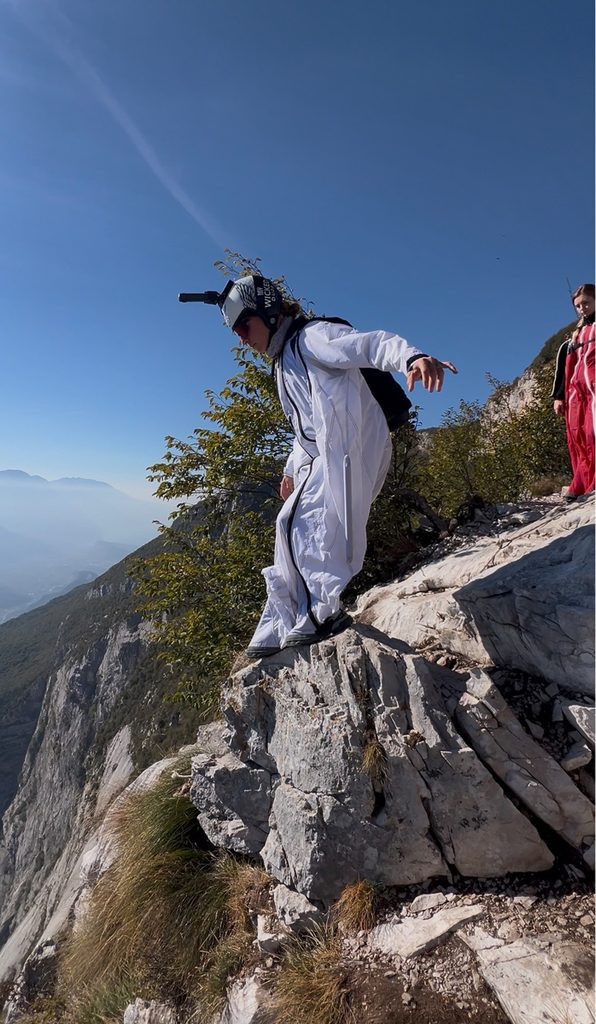
Wingsuiting takes both disciplines to another level! The wingsuit becomes an extension of your body during freefall, amplifying your speed, glide performance and flare capabilities. Paragliding is the purest form of flying to me, because the wing is actually designed to stay in the air, not just fall with style like in skydiving or BASE jumping. It gives you the freedom to go as far as you want, but it also requires you to become a completely autonomous pilot. You need to analyse weather conditions, figure out your landing direction without relying on a windsock or an arrow, understand your instruments, and develop the skills to navigate the sky.
And that’s the magic of it: being able to fly all the way up to the clouds, soar above mountain peaks, and explore places that would otherwise take days to reach on foot.
Which has been the hardest for you to become genuinely good at?
They all have their own level of complexity, but BASE jumping is definitely the most technical and demanding, as there’s very little room for error. Every stage is quite challenging, both mentally and physically.
And which came most naturally?
None of them came naturally to me at first. Every time I started a new discipline, I had to spend a lot of time practising, repeating movements, understanding the theory and getting coaching.
Today, I feel comfortable and natural practising any of them, without chasing perfect performance, but always staying curious and open to learning new things.
Progression and Decisions
You’ve chosen several sports where small mistakes can have large consequences. How do you decide what you’re comfortable taking on?
For me, a good decision is one that makes me feel comfortable enough to keep enjoying what I’m doing. I want to keep learning and progressing, but without losing the joy of it. That balance is what motivates me to continue.
Was there a particular jump or moment that fundamentally changed the way you approach risk?
In skydiving, I’ve always approached and assessed the risks I take in the same way. But before that, when I started motorcycle racing, I experienced some serious crashes on the track that resulted in injuries.
Going through those experiences gave me a much clearer understanding of risk. Since then, I’ve preferred to do things only when I feel fully confident in my preparation, my abilities and the conditions, knowing that I’ve done everything I can to make things go well.
There’s a big difference between being adventurous and becoming technically competent in dangerous environments. How have you approached that progression?
At first, I approach an adventure as an observer, then as an assistant. After that, I start training to actively participate, always with a mentor guiding me and looking after my safety. I keep repeating the experience with someone I trust until, little by little, I realise I’ve developed the technical skills and confidence to do it independently.
Have you ever deliberately walked away from a jump that part of you really wanted to do? What made you say no?
The times I remember deciding not to jump are when I realise I’m no longer fully present and focused, whether it’s because I’m tired or because my mind is occupied with something else.
What’s one mistake you’ve made in the air or mountains that permanently changed the way you operate?
All of them! I’ve made so many mistakes! Forgetting my altimeter or audible, not charging my camera before an important jump, jumping with people I didn’t really know and getting some unexpected surprises in freefall.
I’ve made mistakes with separation at break-off because I didn’t spend enough time on the briefing, bumped into people on exit, and messed up my timing when exiting the plane. Thousands of mistakes, some simpler, others more complex. It’s all part of the learning experience.
You’re involved in sports that are still predominantly male. Has being a woman affected your progression, positively or negatively?
I’ve always felt that it’s had a positive impact on my progression. I’ve received a lot of support, great advice, and I’ve been part of a community that’s always happy to see more and more women getting into these sports.
Maybe the only time I feel it works a little against me is when I’m hiking with men to reach a BASE exit point. That’s always pretty demanding for me, while they seem to be cruising along, totally relaxed.
Behind the Content
Social media shows us extraordinary exits, lines, landscapes and flights. What doesn’t it show about the work required to make those moments possible?
Social media doesn’t show everything, and it shouldn’t have to. These days, it almost feels like we’re expected to share every little detail of our lives online. Behind every adventure, there’s a lot of planning, preparation, waiting for the right weather conditions, and financial strategy.
Sometimes the sport itself provides the income that allows us to maintain a lifestyle we enjoy. Other times, we need to dedicate time to more administrative work, content creation, or negotiating with sponsors and event organisers to make these adventures possible.
As both an athlete and a content creator, how do you keep the desire to capture something incredible from influencing decisions that should be based on safety?
I think that before being an “athlete” or a “content creator”, I’m simply Lucy. I love taking on special projects and achieving personal goals, and I’ve always had this desire to capture those moments so I can look back on them or share them with the people who matter to me.
Since that has always been my main motivation, the simple desire to create impressive content will never be what drives my decisions.
Building a Life Around Air Sports
You’ve built a life that many people would consider unconventional. Was that intentional, or did one decision simply keep leading to another?
Since I was a little girl, my mom and I have explored biological decoding and consciously integrated different perspectives on what shapes our identity. Through that, we decided to embrace the infinite world of possibilities, because life is truly wonderful! I guess that’s why you use the word “unconventional” to describe my life, and I like it.
I used to be a dancer, then I worked on television as a TV host. Along the way, I ran an entertainment agency, bought a food truck to sell Argentine food at festivals, and started training in motorcycling just to survive Mexico City’s crazy traffic—but ended up racing motorcycles!
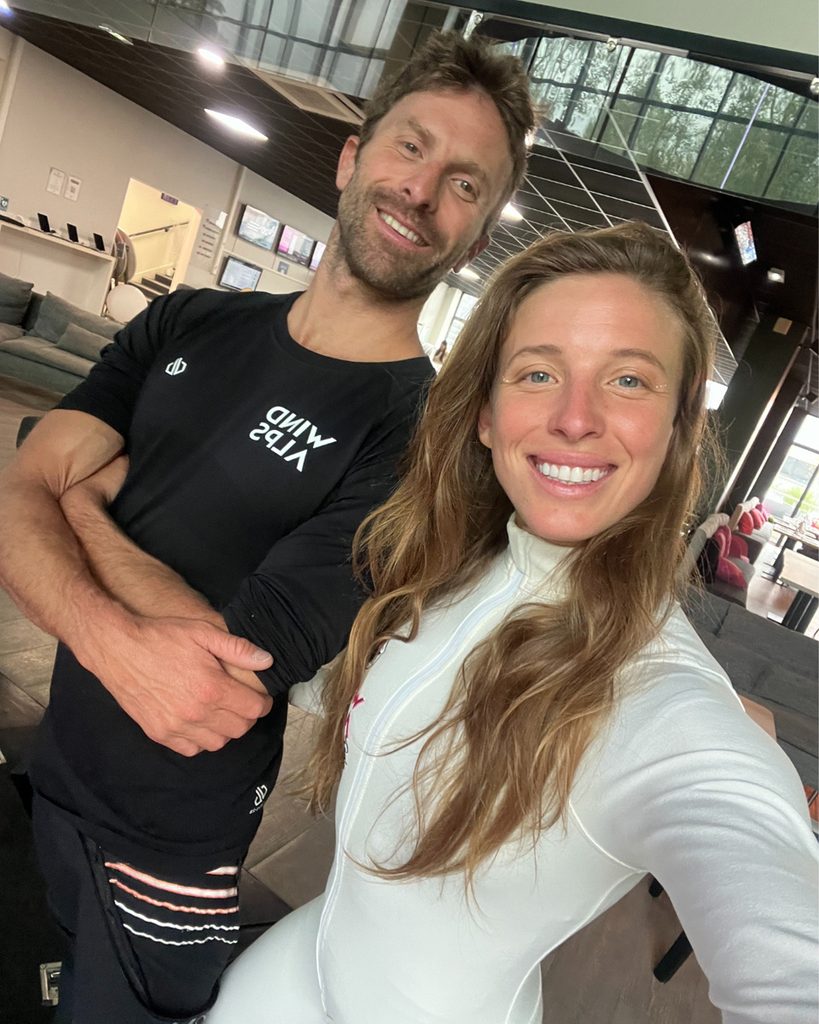
Later, I had some success on reality TV shows and decided to travel the world training in aerial sports. And now I’m in a chapter of my life where the element of air and its community feel completely in sync with me, and I with them. I moved to the Alps, Vincent Cotte and I make a great team, and we love sharing what brings us so much joy, whether through coaching, events, or creating digital content to share with our online community.
What has this lifestyle cost you?
Of course, every decision opens some doors and closes others. Being a freelancer is always an emotional roller coaster, and living a nomadic lifestyle 80% of the time means I constantly have to make an effort to maintain healthy habits wherever I am. It can be challenging, especially when I’m always adapting to new places and environments.
And what has it given you that you don’t think you could have found in a more conventional life?
It has immersed me in an incredibly interesting multicultural world, exposing me to so many different realities and ways of living that have helped me see my own life from a more objective perspective.
And I live surrounded by true luxuries, like good health, an amazing community of people I’ve met throughout my travels, and the opportunity to constantly connect with others and share love, which I believe is one of the most powerful energies there is. This lifestyle has made me much more consciously present and aware of these little details that give life meaning.
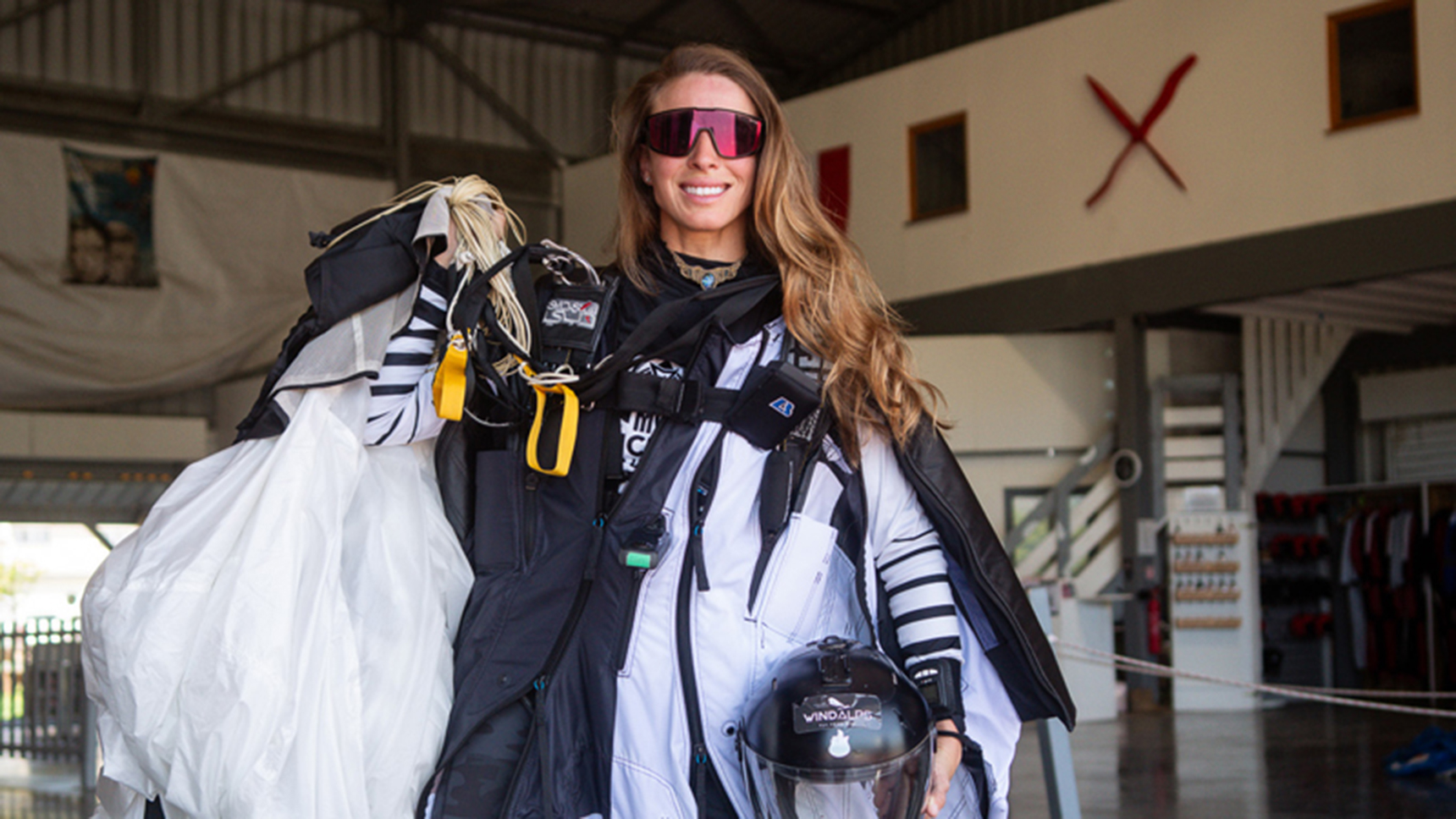
Photo by Felix Wetterberg
What’s next for you? What are you excited about in your flying?
Right now, I want to focus on offering coaching. I’ve been preparing myself to be able to guide and support others through their learning process, and I’ll be travelling between November 2026 and March 2027 through Brazil, Colombia, and possibly Chile or Argentina with Veush. I’d love to connect with local skydivers and help them work towards their personal goals.
I also want to keep working in social media, creating content and collaborating on sponsorship projects or events, helping brands gain visibility through aerial sports.
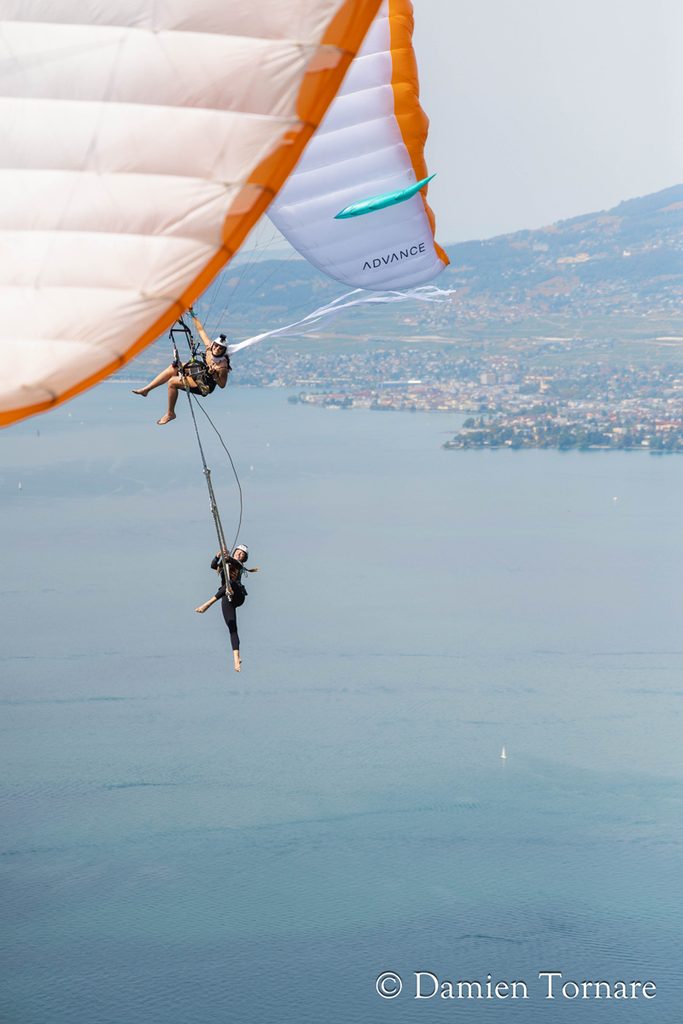
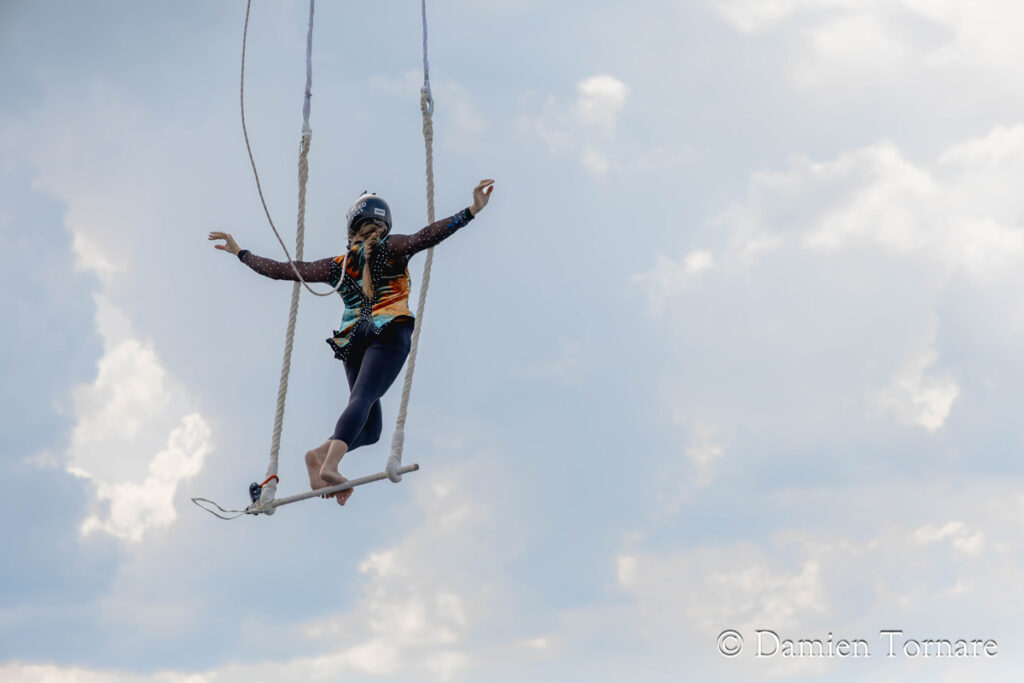
And I’ll definitely keep combining different disciplines! Right now, I’m developing Trapeze Flow, which combines paragliding with an aerial trapeze performance suspended beneath the wing. I built the equipment needed for this activity, and I’m now sharing the experience with both paragliding pilots and acrobats. I also have a few dates throughout the year to perform this aerial show at events and to teach others how to experience this unique combination of flying and acrobatics.
What’s one piece of safety advice you wish everyone in BASE could hear?
You matter so much to this community and to your friends. Practise this sport with full presence and awareness.
What advice would you give someone who looks up to you and wants to go for it in their own way?
You are ultimately responsible for whether you have a good or bad experience. Set short-term and long-term goals, and do some research on courses, drop zones, schools and recommended instructors. Nowadays, we all have access to so much information through the internet.
And most importantly, enjoy every step of the journey! It’s all about learning to fly, and the whole process is extraordinary, no matter which aerial sport you choose.
Who are your sponsors?
My Wicked Dude and WindAlps.
You can follow along Lucy’s adventures on her Instagram page.