




We asked some of the sport’s top flyers to name the one habit outside of flying that has made the biggest difference to their success and their answers offer plenty worth stealing
What makes a great skydiver better?
More jumps and more tunnel time are the obvious answers. But a lot of what separates the best in the sport is not just at the dropzone or in the tunnel. The best have habits, rituals and practices that define their training style, their learning style, and how they handle pressure.
So we asked a group of accomplished flyers one simple question: If you had to choose one non-flying habit that’s had the biggest impact on your success in the sport, what would it be and why?
The answers range from journaling and podcasts to climbing, reflection and staying active.
Marco Furst, Red Bull
If I had to pick one non-flying habit that has had the biggest impact on my success in skydiving, it would be staying active and constantly moving.
For me, skydiving is not only about what happens in the air. It’s about the mindset you bring to every jump. Staying active, curious and engaged has helped me develop that mindset…always looking for the next thing to learn, improve or master.
Amy Chmelecki, Red Bull, Highlight
Ask for feedback and consider it with an open mind.
This one has not always been easy for me, and to this day I occasionally struggle with it. When someone points out something I did wrong or something I could have done better, my instinct can be to defend myself. I don’t like feeling like I made a mistake or got something wrong.
But there is always something for me to learn, and there is always a way I can get better. The first step toward improving anything is being willing to recognize that there may be something I need to improve. If my first reaction to feedback is to explain why I wasn’t wrong, I miss the opportunity to learn from it.
That doesn’t mean every piece of feedback I receive is correct or that I have to agree with all of it. It means being willing to listen, consider it honestly and ask myself, “Is there something here that can make me better? I think that habit has helped me grow not only as a skydiver, but as a teammate, coach, organizer and person.
Yohan Aby
The habit that’s had the biggest impact? Keeping a journal of my sequences.
For years, I’ve been writing down and keeping every sequence I imagine or develop…not just the ones I actually execute in competition. It’s become a real personal creative library.
When it’s time to build a new routine, I never start from a blank page: I dig through and recombine ideas, sometimes written years earlier, with fresh eyes. It’s also a way of stepping back and seeing my own evolution…reading old sequences shows me exactly how my way of thinking about flight has changed over time.
It’s not a technical habit like core training or video analysis, it’s closer to an artist’s sketchbook. But it’s the one that’s fed my creativity and my ability to reinvent myself season after season the most.
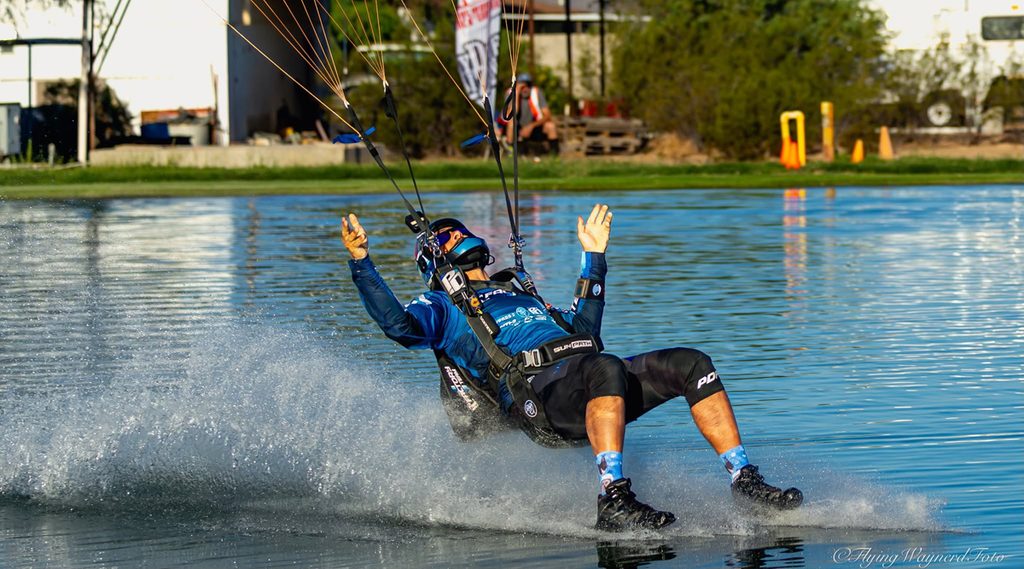
Photo by Flying Waynerd
Armando Fattoruso
What definitely helps me stay so consistent in this sport is keeping both my body and mind relaxed. Reading, watching and listening help keep my imagination vivid and active. This is very useful to me when visualizing a performance or a competition.
The body needs to keep up as well. Doing exercises every day, even light ones, helps maintain efficient reflexes. Recently, I’ve discovered that climbing is a sport in which body and mind have to work in unison, and the different levels of difficulty stimulate a training process very similar to what I described above.
Anna Moxnes
Obsessive thinking patterns. Generally unhelpful in life, but great for getting better at flying and music.
The habit of curiosity… needing to understand how something works… then obsessing about it.
Johannes Bergfors
Listening to podcasts. We can get insights from world-class performers, thought leaders and experts in basically any field — for free and at our convenience. We can spot patterns in the mindsets and habits they have in common, and we can mimic these to improve our own performance or training.
Personally, I take notes on special concepts, ideas and one-liners I hear so I can retain the knowledge past the point of listening.
Will Penny
The habit of constantly reflecting and learning.
Skydiving is obviously a physical sport, but for me, a huge part of becoming successful has been developing the habit of asking myself why something worked, why it didn’t and what I could do differently next time. That applies not just to a jump, but to training, coaching, competition, preparation and even the mental side of performance.
I’ve always tried to avoid becoming too comfortable with what I already know. After a good jump, I want to understand what made it good; after a bad one, I want to understand what I can learn from it. Over the years, those small reflections compound.
I think the best skydivers aren’t necessarily the people who make the fewest mistakes. They’re the people who are most curious about their mistakes and most disciplined about turning them into improvements.