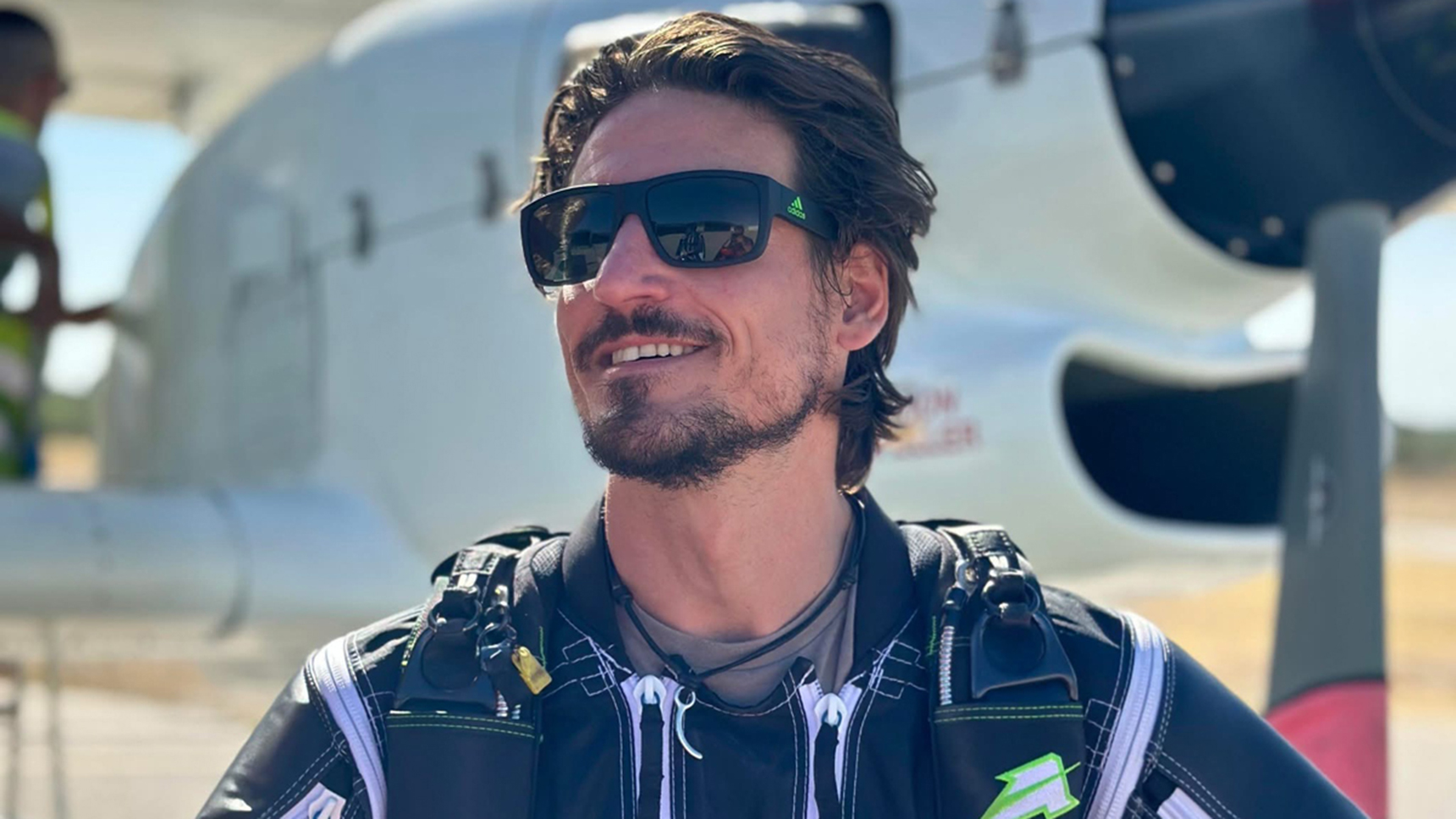





World champion wingsuit pilot Patrick Kramer talks about leaving engineering for a life of flying, eight months of Shaolin training, what separates great flyers from the rest, and why achievement is only temporary
Home DZ:
Skydive Bovec is the closest one/ Inclined Slovenia
Year you started:
2006 Tandem, 2007 Static line course
Jumps
Skydiving: 3300jumps
BASE: 55 jumps
Tunnel: 3200 hours wingsuit, 100 hours vertical
What were you doing in life before you started on this path? At what point did you start throwing your whole self into skydiving, BASE and wingsuit?
I was working in Switzerland in an engineering job. During the week I was in the office, and pretty much every weekend I was somewhere doing fun jumps. I actually tried to get paid for skydiving while I was in the German military, but that was right around the major restructuring of the German Military in 2011, so that didn’t work out.
I went back to engineering, but the office was slowly driving me crazy. So I started studying business administration at evening school while working during the week. At the same time, I did my Tandem Instructor and then my AFF Instructor course. Once I had my AFF rating and my degree, I became self-employed in skydiving. I spent about four and a half years working full-time in tandem and AFF, travelling extensively around Europe and Asia.
From there, one thing led to another: I got into vertical wind tunnels, started coaching, got deeper into wingsuiting and competitions, and did a few BASE jumps along the way. Then in March 2019, I moved to Stockholm to work in the wingsuit tunnel, which really intensified the whole wingsuit side.
There was never really a master plan. I just kept saying yes to the next interesting opportunity and somehow that worked out better than staying in the engineering office.
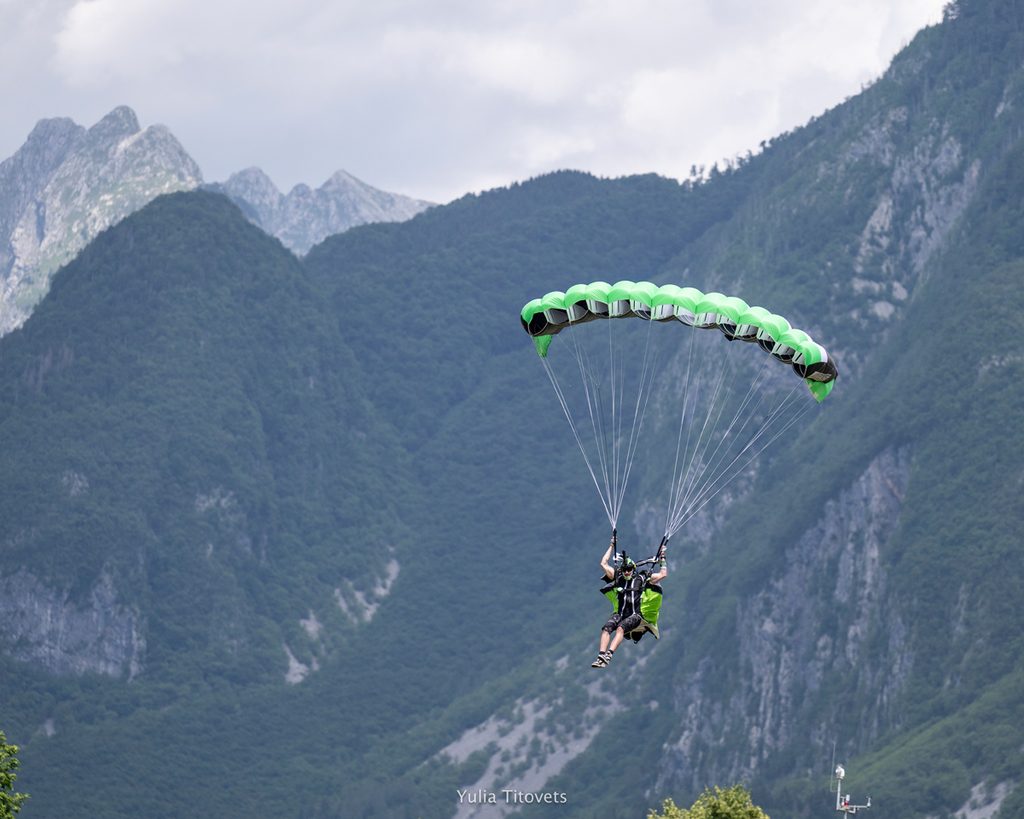
Photo by Yulia Titovets
A lot of people fantasize about quitting their jobs and making skydiving their life. Is there any part of this path that people don’t really understand when they’re dreaming about it?
I think people see the freedom, travelling, flying and the cool Instagram videos, but not always the less glamorous parts.
You still have to work when you’re tired, having a terrible day or simply don’t feel like jumping. If someone has travelled halfway around the world for their one tandem jump, congratulations, you’re going flying.
And then there’s the weather. You can spend days, weeks, sometimes what feels like an entire geological era waiting for the next good jumping day, especially when you’re waiting for a paid jump.
The travelling is amazing, but maintaining friendships and relationships is surprisingly difficult when you’re constantly somewhere else. You meet great people, leave again a few days later, and sometimes hear months later that someone you jumped with has died. So there is this slightly strange “very friendly war zone” feeling to the sport.
It’s an incredible lifestyle, but it’s still a job. You just happen to have a much better office and significantly worse weather-dependent working hours.
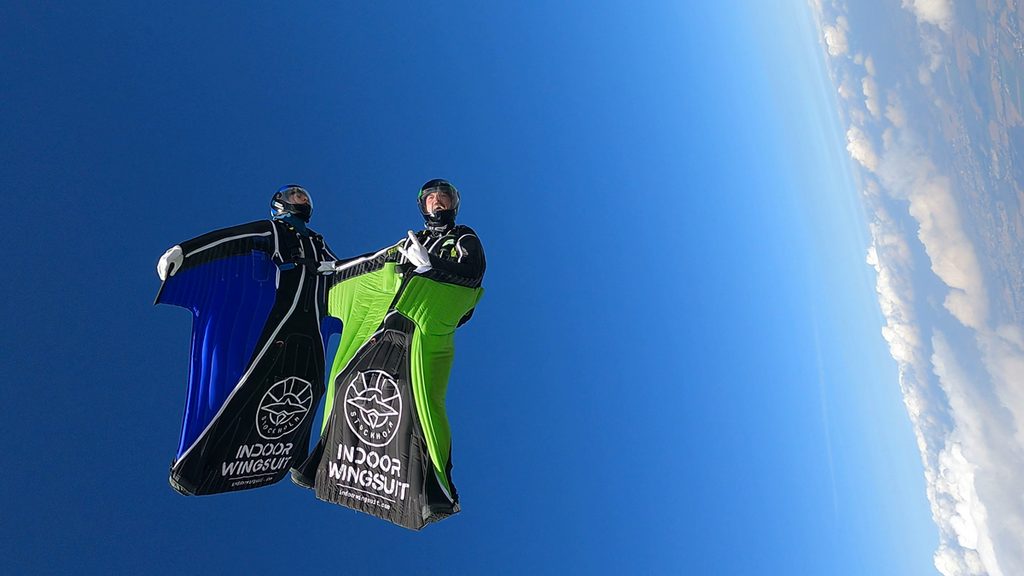
Photo by André Reichel
How did you get into wingsuit and wingsuit competition?
I actually got into wingsuiting pretty casually. A good friend and I had done a lot of freefly together, and we simply wanted to stay in freefall a little longer. Another friend, Sandro Böhme, was already involved in wingsuit acrobatics and eventually asked if I wanted to go with him to the German Championships. I had absolutely no idea what I was getting into or even what wingsuit acrobatic competitions really were. I just thought, “Sure, sounds fun.”
And somehow, we won. So alongside my tandem and AFF work, we started training more seriously for competitions. This was all before I started working in a wingsuit tunnel, so I was mostly learning through jumping, experimenting and watching a lot of video.
Then in 2019 I moved to Stockholm to work in the wingsuit tunnel, and suddenly I could train consistently and on a completely different level. What started as “let’s stay in freefall a little longer” somehow turned into a career in wingsuiting.
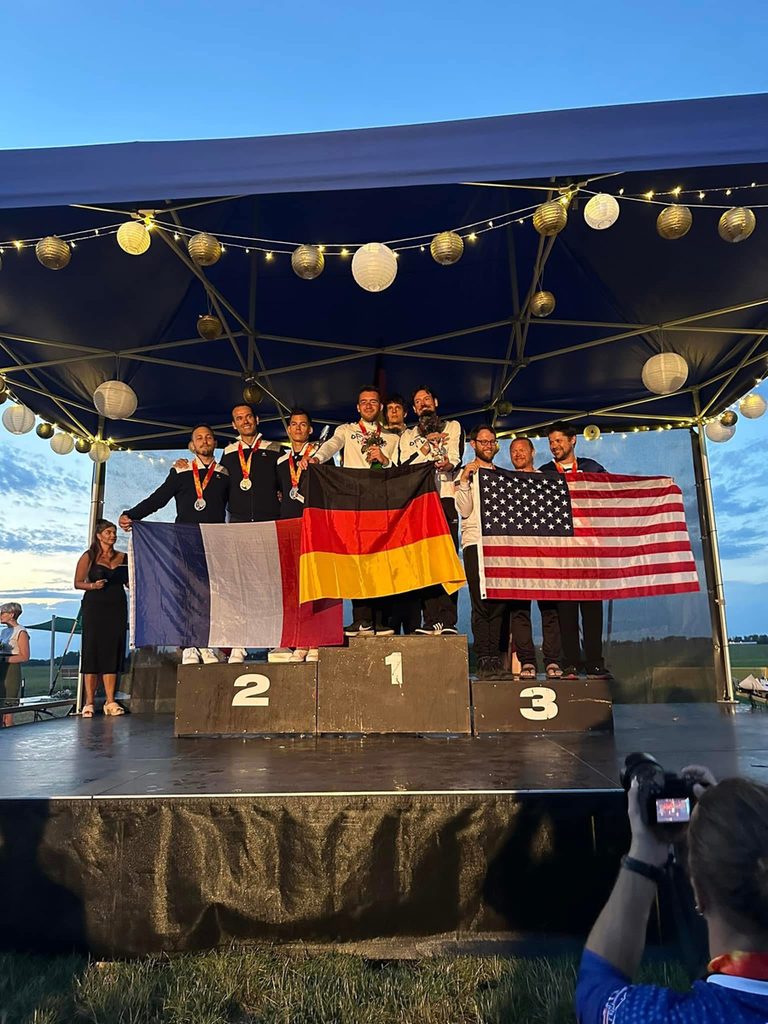
How was that first win as a world champion? How did it feel and what was it like when it was over?
You spend years working towards something, and then suddenly it happens. For a moment, you’re exactly where you wanted to be. But it really is just a moment. The medal doesn’t make you a better flyer or person the next day, and you can’t or should not build your identity around the achievement. If you hold on to it too tightly, you stop moving forward.
I think the important thing is to appreciate the achievement, then let it go and find the next thing to work on. There’s always another skill to improve, another goal to pursue, another way to become a little better than you were yesterday. The achievement is temporary. The pursuit of getting better is what keeps you moving.
Was there a part of the training or competition that you felt really helped you win?
Consistency and having good friends as teammates. Not necessarily having the best training day, but being able to show up and perform when conditions aren’t perfect.
At that level, everybody can have an amazing jump. The difference is who can repeat it when they’re tired, nervous, cold, hot, under pressure or when the previous jump didn’t go according to plan. And a lot of it comes down to boring things: preparation, repetition, communication, video analysis, understanding your teammates and knowing exactly what you’re trying to achieve before you leave the aircraft.
Basically, a lot less “SEND IT!” than people probably imagine.
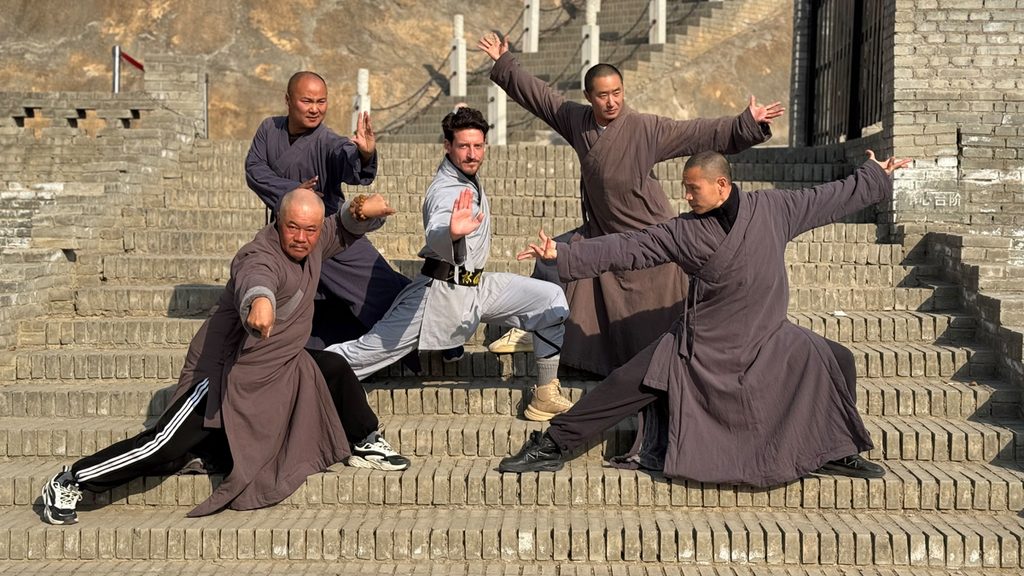
Photo by Shi Yanbo
At some point you went to China and trained Shaolin (a martial art) for eight months. Why?
I needed something completely different, and wanted to be a student in something again. I’d spent years pushing my body and mind through skydiving, wingsuiting and competition, and I wanted to step away from everything I knew.
So I went to China and trained at a Shaolin temple for eight months. I wanted to see what happens when you remove everything and just focus on discipline, repetition and being uncomfortable every single day. And believe me, Chinese monks are very efficient at reminding you that you are not nearly as tough as you thought you were.
Did any of that transfer to skydiving / BASE jumping / competing? If so, what?
A huge amount. The biggest thing was learning that calm is a skill and happiness a choice. In flying, especially at a high level, you don’t want more adrenaline. You want less noise. Shaolin taught me to be much more comfortable with discomfort, repetition and doing something properly even when I don’t feel like doing it.
It also changed the way I look at breathing and awareness. In skydiving or B.A.S.E, people often focus on the physical skill. But when things get complicated, your ability to stay present and make one good decision after another is just as important.
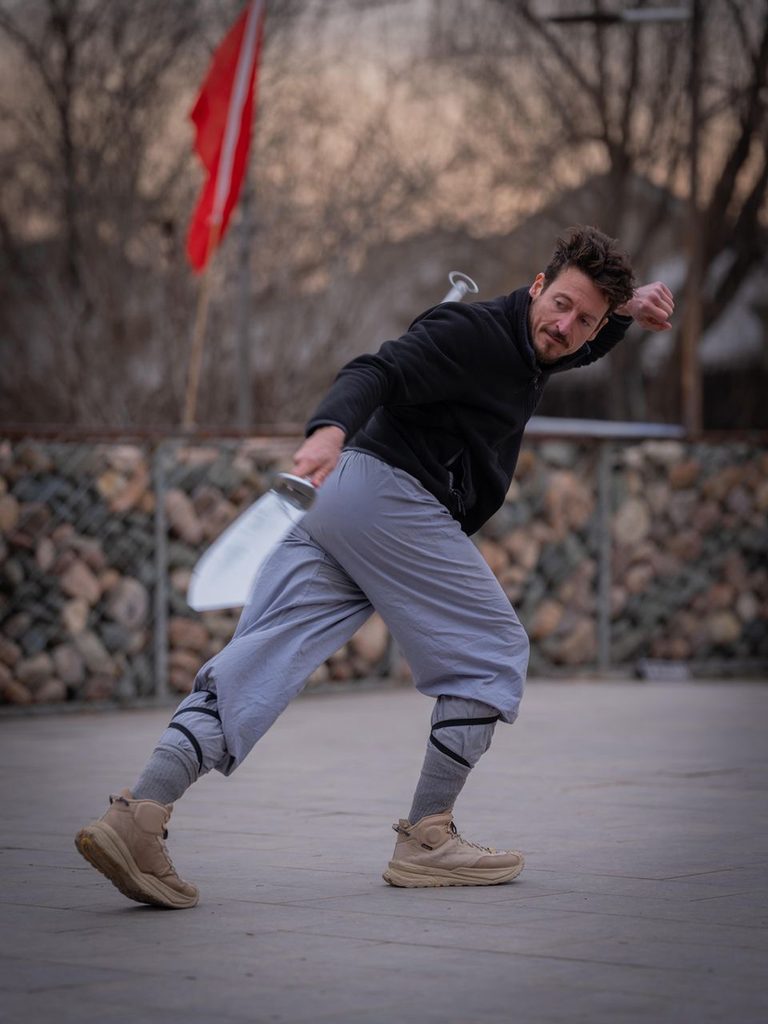
Photo by Shi Yanbo
What was the most satisfying part of that experience?
Consistency, structure and realizing how little you actually need. For eight months my world became incredibly simple: train, eat, sleep, recover, repeat. There was nowhere to hide from myself.
And that’s uncomfortable but also incredibly freeing. It made me appreciate that happiness doesn’t necessarily come from adding more things to your life. Sometimes it comes from removing everything that isn’t important.
Did anything you learned there change the way you fly or coach now?
I think I’m a little more interested now in what is happening inside the person than simply what their body is doing. Two people can make exactly the same technical mistake, but for completely different reasons. One might lack understanding. Another might be scared. Another might be trying too hard. Another might simply be overloaded.
As a coach, I want to understand that too before I try to fix it. And I think that makes a huge difference.
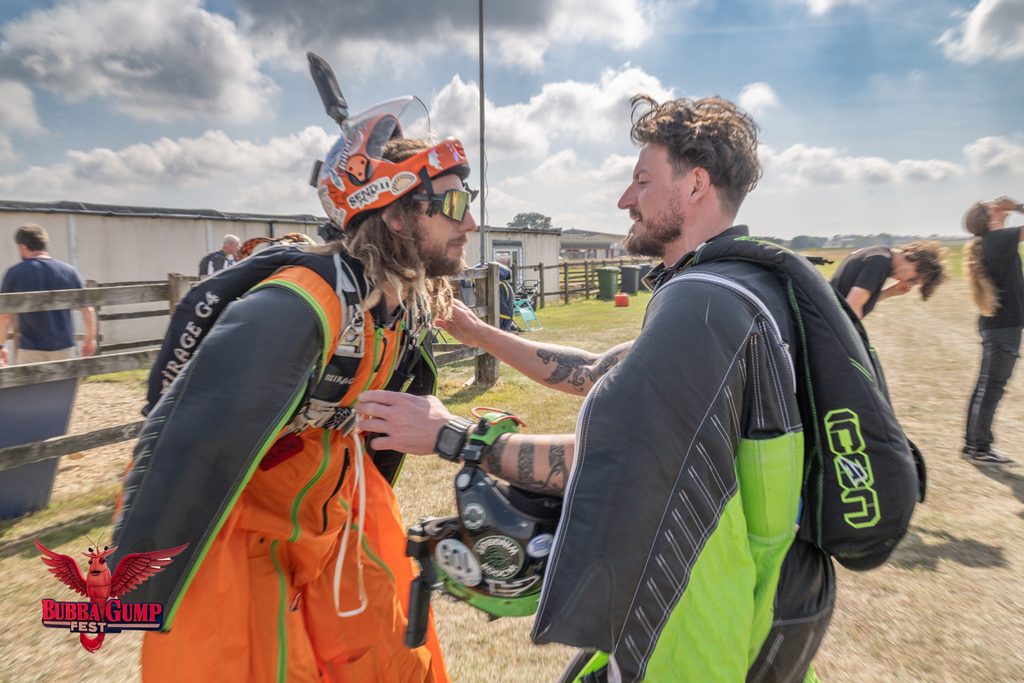
Photo by Jon Nash
You’ve coached a big range of flyers. What separates the people who progress from the ones who stay stuck or quit?
Curiosity and the ability to keep smiling and breathing. The people who improve aren’t necessarily the most talented. They’re the people who are willing to ask:
“Why?”
Why did that happen?
Why did that work?
What could I have done differently?
They don’t protect their ego. They’re willing to look terrible for a while in order to eventually become good. The other big one is consistency. You can’t train once every three months and expect your nervous system to remember everything you’ve ever taught it.
Can you tell pretty early on somebody is going to become a really good wingsuit pilot? What gives them away?
Yes but it’s rarely the person who looks the most impressive on their first jump. I look for awareness.
Can they feel what’s happening to their body? Can they make small corrections? Can they listen? Can they stay calm relaxed when something doesn’t work? And probably most importantly: can they keep smiling? It really is supposed to be fun to learn, to try, and to fly isn’t it? Sometimes in students it doesn’t look like it
You’ve already reached one of the biggest goals available in your discipline. What are you focused on now?
Getting better without becoming obsessed with collecting achievements. I’ve already had some of the moments I dreamed about when I started.
Now I’m more interested in longevity, exploration, coaching, locations and pushing the boundaries of what I can do while staying healthy enough to keep doing it for a long time. And there are still a ridiculous number of places I want to fly. So I’m not running out of projects.
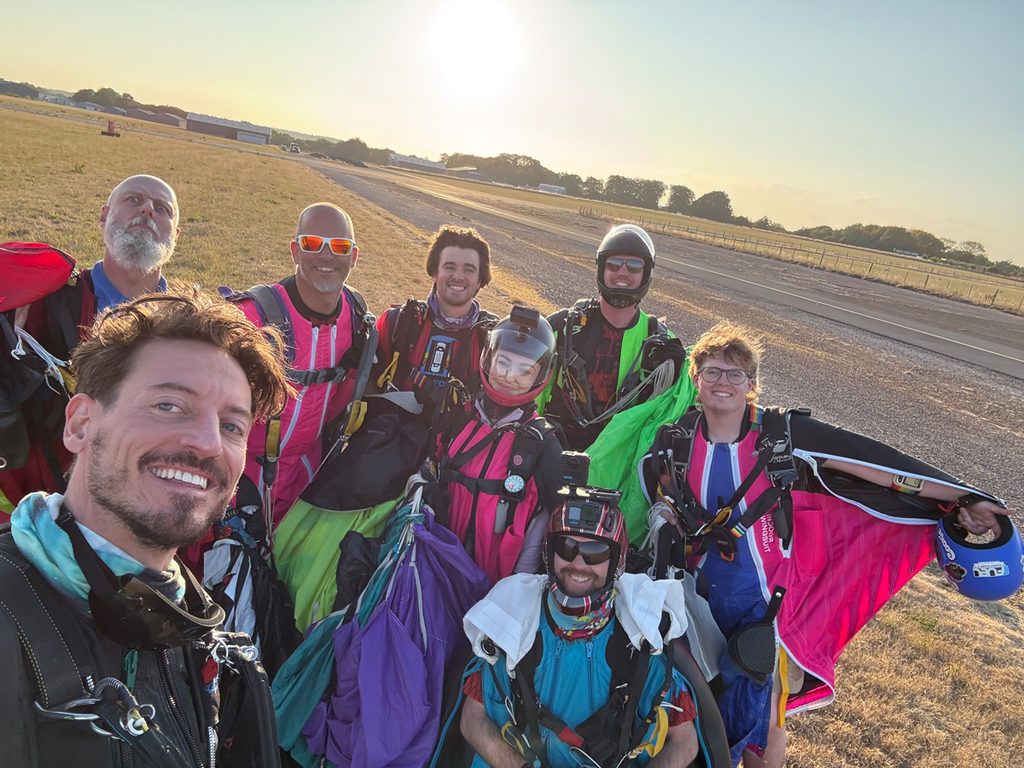
If Patrick Kramer today could sit down with the guy who made his first jump in 2007, what advice would you give him?
I’d probably tell him: “Relax. You have absolutely no idea what you’re getting yourself into.”
Then I’d tell him to enjoy it and just follow the flow.Don’t rush to become good. Don’t compare yourself to people who have been doing it for ten years. Don’t confuse progression with constantly pushing your limits. Learn the fundamentals. Surround yourself with good people. Take care of your body. Stay curious.
And most importantly: Don’t let the pursuit of the next achievement make you forget why you started jumping in the first place. You started because flying made you feel alive. Don’t lose that.
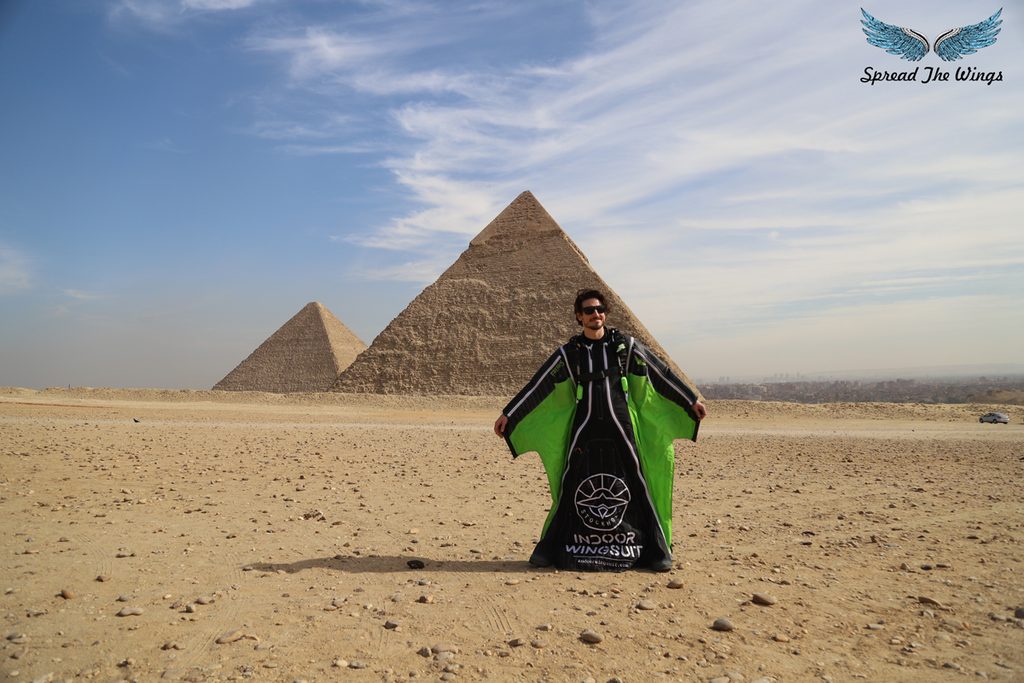
Spread the Wings Boogie
Most underrated piece of safety advice in BASE and skydiving?
Don’t let familiarity turn into complacency and double check the double check. The most dangerous jump isn’t necessarily the crazy one.
Sometimes it’s the jump you’ve done 100 times. You know the exit. You know the landing area. You know the gear. Everything feels routine and that’s exactly when your brain starts switching off.
Treat every jump with enough respect to actually be present for it. And have a plan for when things don’t go according to plan. Because in skydiving and BASE, “I’ve done this before” is not a safety system.
Where can people find you?
Instagram, and in real life in the Wingsuit Tunnel in Slovenia.
Who are your sponsors?
Squirrel, Aerodyne, LB Altimeters, Inclined
I’m incredibly grateful for the companies and people who support me and allow me to keep pushing my flying, coaching and projects forward.