





Your reserve is the canopy you hope you’ll never need. But if the worst happens, its size, wing loading and configuration could determine the outcome. Julian Barthel looks at what really matters when choosing your last resort canopy.
Your reserve parachute is one of two pieces of equipment you hopefully will never use.
That’s a big reason as to why skydivers don’t give that canopy a lot of thought. You mentally file it under “handled” because the pack job is in date. But when the time comes to actually use your reserve, your choices today will define what happens to you then. So let’s talk about them.
What Do You Actually Expect From a Reserve?
Before we get into numbers and gear, it’s worth asking the most basic question: what do you expect your reserve to do?
Timely openings. On a reserve deployment, time is a quickly diminishing resource. Whether you’re dealing with a spinning malfunction at 2,000 feet or have an AAD fire at 750 feet, the reserve needs to be overhead fast once deployed. Different gear configurations will give you varying results on altitude lost. Whether you use an RSL or not, or if you have a Skyhook, will substantially influence how much altitude your reserve activation actually requires.
On-heading behavior. The last thing you need when you’re already managing a stressful situation is a reserve that sends you spinning. Ideally, we want an on-heading deployment even if we were in an asymmetrical body position on reserve activation.
Reasonable stability with asymmetrical loading. If you are hanging under your reserve unconscious and your weight is unevenly distributed in the harness, ideally your reserve should be docile enough to just slowly turn and not start a diving turn.
Stability in line twists. Even with line twists, our reserve canopy should fly straight so as not to complicate an already stressful situation.
A reasonable glide. You need to be able to reach an acceptable landing area from wherever you find yourself under your open reserve.
Manageable touchdown speeds. This is the one that we will come back to in detail. Touchdown speeds in different flight configurations should be survivable and ideally slow enough to pose a survivable level of injury, even if we aren’t able to flare or land unconscious with our brakes stowed.
These aren’t arbitrary wishes…modern reserves, with their 7-cell, low-aspect-ratio design, are purpose-built to deliver all of the above. Reserves are not performance canopies. They’re not designed to be exciting. They’re designed to be reliable and docile to pilot when you’re red-lining after a cutaway. That distinction should inform every choice you make around them.
Design Characteristics: Built Different on Purpose
If you’ve ever jumped a modern reserve, it probably felt slow, docile and a bit boring compared to your main. That’s exactly the point. Square, seven cells and a low aspect ratio mean a boxier wing, which is less efficiency, yes, but dramatically more stable and forgiving, with on-heading openings and drastically higher roll stability.
Reserves behave very differently from 9-cell main canopies on purpose. So, in order not to fly your reserve for the first time in a high-stress emergency situation, you can actually test-jump them through the PD Demo Program, either at the PD demo tent at events or through the PD website.
PD Optimum Recommendations: Where to Start
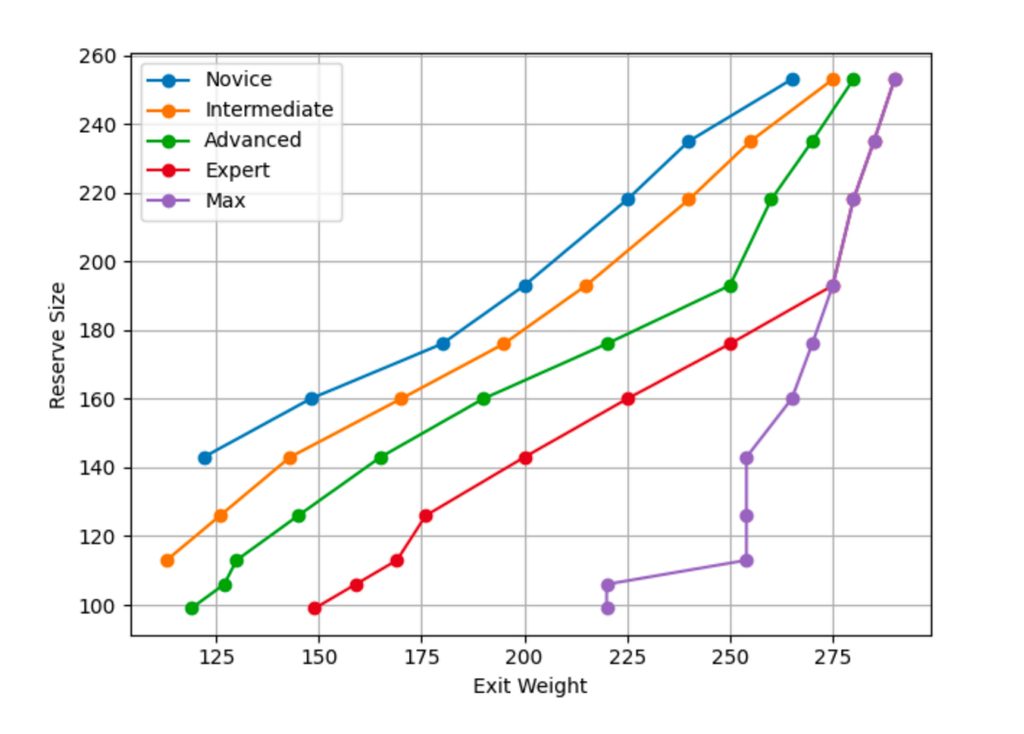
PD’s sport canopy sizing recommendations go by all-out weight. Their framework uses skill and wing loading as key variables:
- Novice: Basic canopy skills. The recommendation reflects a docile, forgiving wing.
- Intermediate: Good canopy skills, comfortable on higher-loaded, more aggressive mains.
- Advanced: Mastered basic/advanced skills, can handle unexpected situations.
- Expert: Current, highly experienced, mastered the full performance envelope.
How Much Reserve Is Enough?
Where do you fall in that framework? Not where you’d like to be. Where you are. The chart maps exit weight to recommended canopy size across all four skill levels. These recommendations are for all PD sport canopies, not specifically for reserves. So, a very important question to consider:
Should you choose a reserve size recommended for advanced or expert pilots Do you want to have to rely on skill when you are piloting your reserve and you have a situation that you need to solve?
Remember that you may not be conscious or have full mobility, and there’s a good chance you may be running out of altitude and places to land. Just because on paper you could be jumping a smaller reserve does not make it a wise choice. Just because a reserve can be loaded to a certain wing-loading number doesn’t mean it should be. This is your last resort. Margins exist for a reason.
Timely Openings: The RSL Conversation
Let’s talk about how much altitude your reserve deployment actually takes in different scenarios. A regular activation without an RSL loses roughly 500–600 feet of altitude from the point of cutaway before you’re under a fully inflated reserve. That’s a meaningful chunk of altitude, particularly if you’ve had an issue at lower altitude, are dealing with a spinning malfunction, or are operating at altitude-sensitive dropzones.
A Reserve Static Line (RSL) connects your riser to the reserve pin, which reduces the altitude required to approximately 300 feet. A Skyhook modifies the RSL and adds a lanyard that uses the drag of the malfunctioning main to extract the reserve freebag by attaching to the reserve bridle — reducing that reserve deployment sequence to something approaching 100 feet.
So, RSL or not?
When an RSL Might Not Be the Answer
This is where setup-specific thinking matters. For most jumpers in most situations, a Skyhook-equipped rig is a meaningful safety advantage. But there are scenarios where the calculus shifts. Since the RSL lanyard adds material with which we could become entangled and connects the main and reserve, it also eliminates the chance to clear the mess before deploying the reserve.
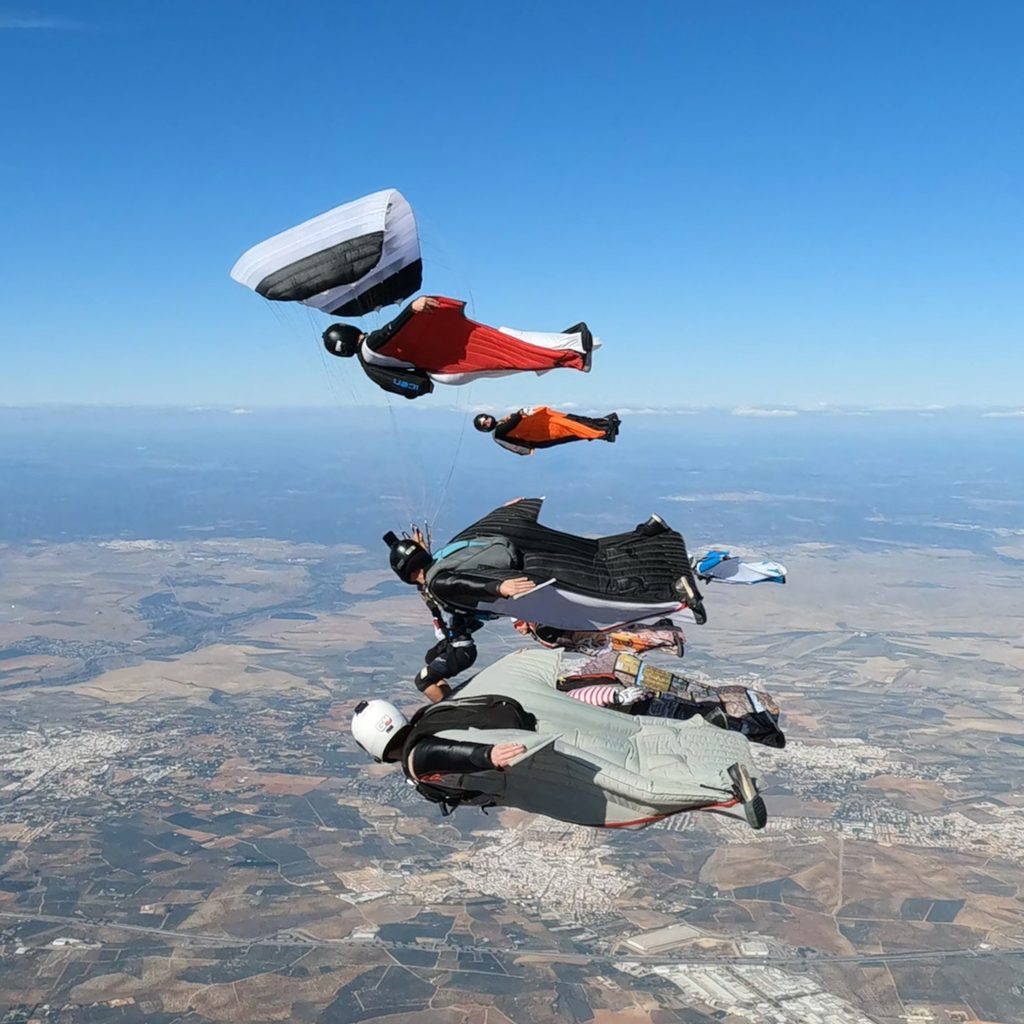
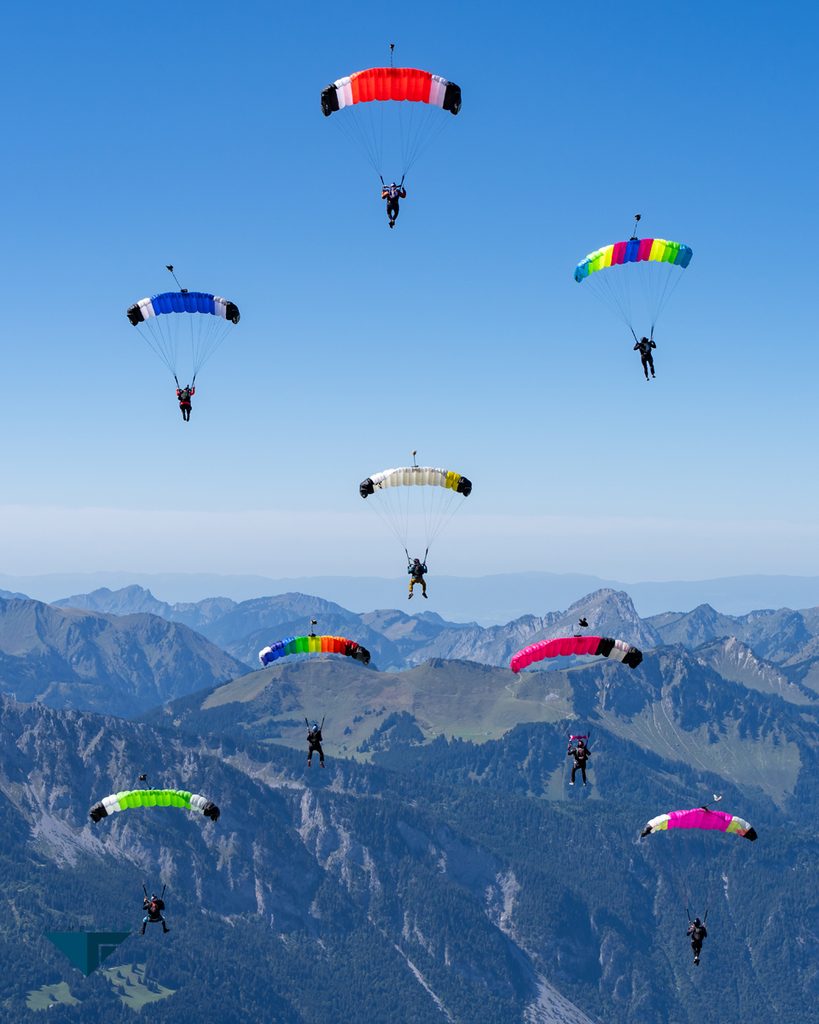
When jumping with bulky camera gear, canopy relative work (CRW), or flocking jumps where a risk of collision and entanglement is very real, the ability to separate from the cause of the cutaway may be a reason to choose not to jump an RSL.
The takeaway isn’t “MARDs are bad.” It’s that you need to understand your specific risk exposure and choose your equipment accordingly. Where is the risk in your particular setup? That question should drive your configuration.
The reasoning that an RSL/Skyhook would cause line twists is an argument that I’m often confronted with. There are two arguments I often hear:
“I want to fall away from a malfunction to get stable and avoid reserve line twists.”
This stands in direct conflict with the pull priorities we get taught in any AFF ground school:
- Pull.
- At the correct altitude.
- While stable.
In my opinion, sacrificing altitude for stability is a very risky bet. Having had a malfunction that left me spinning on my belly, unable to stop because I was so disoriented, I would rather have a reserve open sooner, even if I have to deal with line twists. Slow the vertical descent rate, then you have time to deal with everything else.
“A Skyhook/RSL causes line twists on the reserve.”
Again, I’d rather be open sooner rather than later, even with line twists.
If a reserve dives aggressively in line twists, it is usually an indication that the reserve is:
a) Too highly loaded, and
b) Too small.
Get a reserve that is docile enough so that diving line twists are not a likely outcome.
Even if it means not getting that tiny rig, but a marginally bigger one.
Environmental Factors: Your Landing Area Isn’t Always a Grass Field
The reserve you choose doesn’t just need to open, it needs to fly you somewhere you can survive the landing. That “somewhere” looks very different depending on where you’re jumping.
What’s around your dropzone? Vegetation, water, power lines, urban areas. Consider the available outs from your typical exit spot. Factor in wind direction and strength at the time of deployment, and where that usually pushes you.
Elevation and altitude. Higher-altitude dropzones mean thinner air, which means faster ground speeds under canopy for the same wing loading. If you jump in the mountains, or anywhere with significant elevation above sea level, your reserve is flying in an environment that penalizes size and loads heavier than you might assume.
Heat and density altitude. Same principle. A hot summer day at a sea-level dropzone can give you density altitudes equivalent to thousands of feet above ground level.
Travel. If you travel to different DZs, you may find yourself at dropzones with very limited options for out-landings and different conditions.
A bigger reserve will descend slower and buy you more time to choose an adequate landing area if you have that cutaway at an unfamiliar dropzone and have to put it down in a small space.
Choose a reserve that will give you time and space to think when you are in an environment that you’re not familiar with and have limited options. Think about the inhops in the mountains, the trip to the desert dropzone with higher elevation and the DZ where you jump over an urban environment and have very limited out-landing options. What reserve would you like to have overhead there after a violent malfunction?
Prepare for the worst case and everything else will be manageable.
AAD Firing Altitude: Extraordinary Circumstances
Most skydivers think about their AAD as a backup they’ll never use. But it’s worth thinking through what actually happens when you need it.
The two leading AAD manufacturers have activation altitudes of 750 feet and 850 feet. Even with a clean reserve extraction that takes 400 feet until full inflation, that will put you under a flying reserve with 350–450 feet to spare. That’s not a lot of time and altitude to make decisions that will determine whether you will literally walk away from the situation or not.
In recent years, the trend of increasing AAD activation altitude to give you more time under your reserve in case of an AAD fire has become the industry standard. I personally welcome this trend. However, it is important to consider the effect of a higher AAD activation altitude on decision altitude and hard deck.
The interaction between opening procedure, decision altitude, hard deck and AAD activation altitude is a cascade — each step takes time and altitude. It’s important to understand the effect of our choices on the whole system.
Size, Wing Loading, and What Happens When You Hit the Ground
First, some context on why impact speed matters at all.
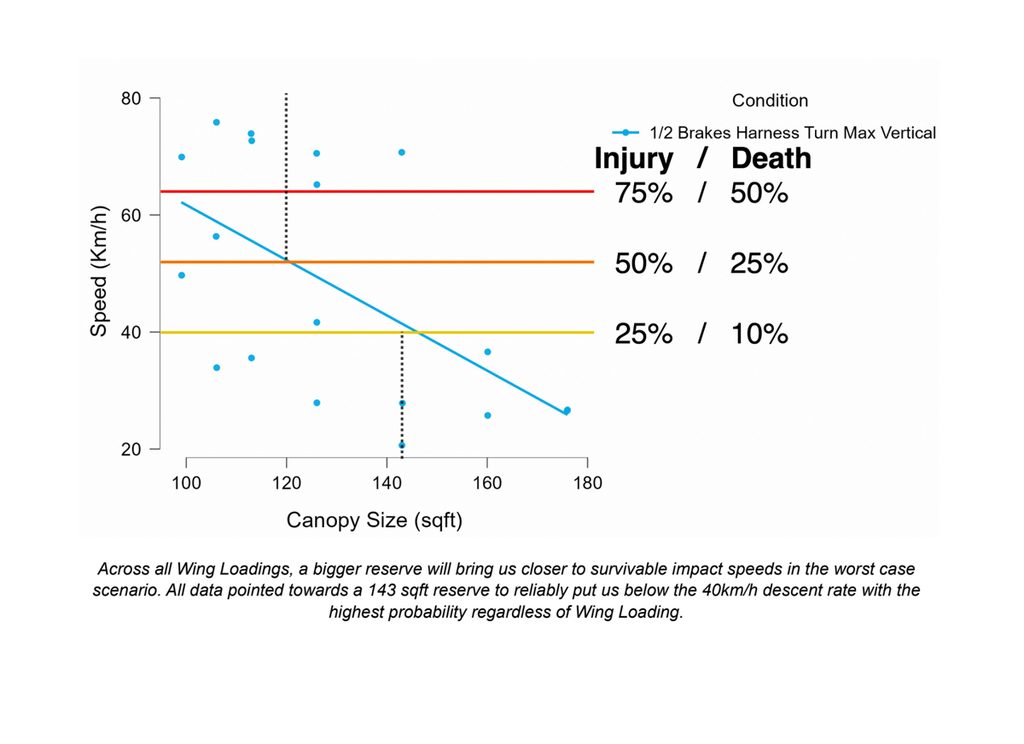
The impact of us hitting the ground under a canopy is much like a pedestrian getting hit by a vehicle. Tefft (2013) studied the relationship between vehicle speed and pedestrian injury/fatality risk when pedestrians were hit by a car.
The thresholds for injury and fatality risks were defined as follows:
| Impact speed | Severe injury | Death |
|---|---|---|
| 40 km/h – 25 mph | 25% | 10% |
| 53 km/h – 33 mph | 50% | 25% |
| 65 km/h – 41 mph | 75% | 50% |
| 77 km/h – 48 mph | 90% | 75% |
The data is unambiguous: at 40 km/h (25 mph), you are in territory where severe injury and death become realistic outcomes.
What the Testing Showed
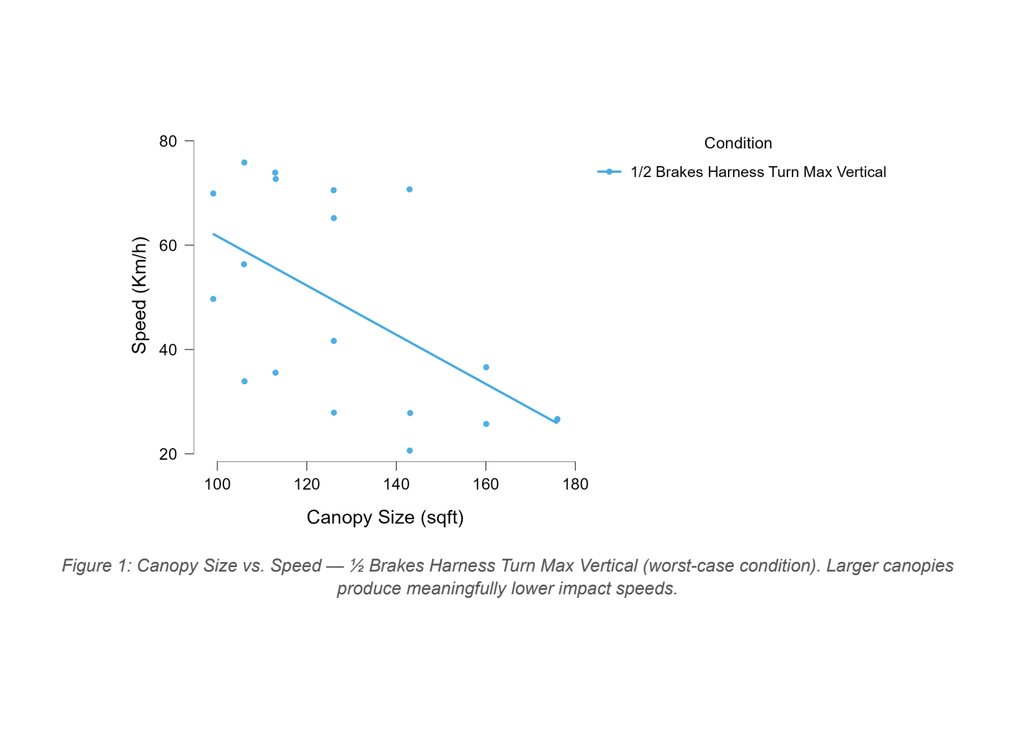
With the help of the Momentum Cadre, we conducted jump tests with four jumpers across a range of PD Optimum reserves (99–176 sq ft), with a variety of wing loadings. The key measurement condition was how much vertical descent rate we could build with a half-brake setting.
This condition simulates a realistic worst case: you are unconscious in line twists after reserve deployment, your harness is asymmetrically loaded, and you are descending at maximum vertical speed. The data tells you how fast you are going to hit the ground when things are really going wrong.
Let’s state the obvious:
Larger canopies are slower. The trend is clearly negative — as canopy size increases, touchdown speed drops.
Higher wing loading means faster landings. When you look at wing loading instead of canopy size, the relationship reverses — more load per square foot means faster touchdown speeds.
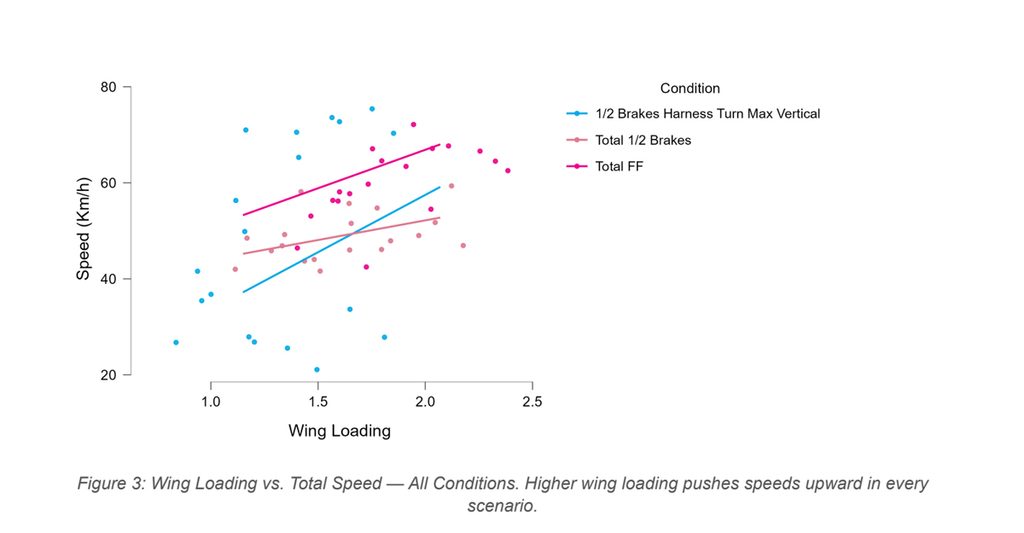
Putting all the information together, it says clearly what we all know intuitively: a small or highly loaded reserve, spiraling, will hit the ground with a lot of energy. Enough to seriously injure, maim or kill you.
Setting Your Parameters
Before you make your final equipment choice, run through these factors specifically for your situation:
- What type of jumps do you do most? (belly, freefly, canopy formation, wingsuit, camera…)
- What’s your typical environment? (dropzone terrain, available outs)
- What altitude MSL do you jump at most often?
- What is your AAD firing altitude? What does that imply for time under your reserve?
- Do you have an RSL? A Skyhook?
- Do you travel to different dropzones or environments? What are realistic scenarios you may encounter there?
And the hardest question: what are you comfortable with in the worst-case scenario?
Not the comfortable scenario. Not the most likely scenario. The scenario where everything goes wrong at once. Because that’s where the wrong choice comes to bite you.
The Bottom Line
Choosing a reserve isn’t a one-size-fits-all decision. Start with the data. Be honest about your skill level and your environment. Factor in your setup and types of jumps, currency, and resist the temptation to treat your reserve as the one piece of gear where smaller is somehow better.
Just because you could doesn’t mean it’s a good idea when it comes to your last resort.


