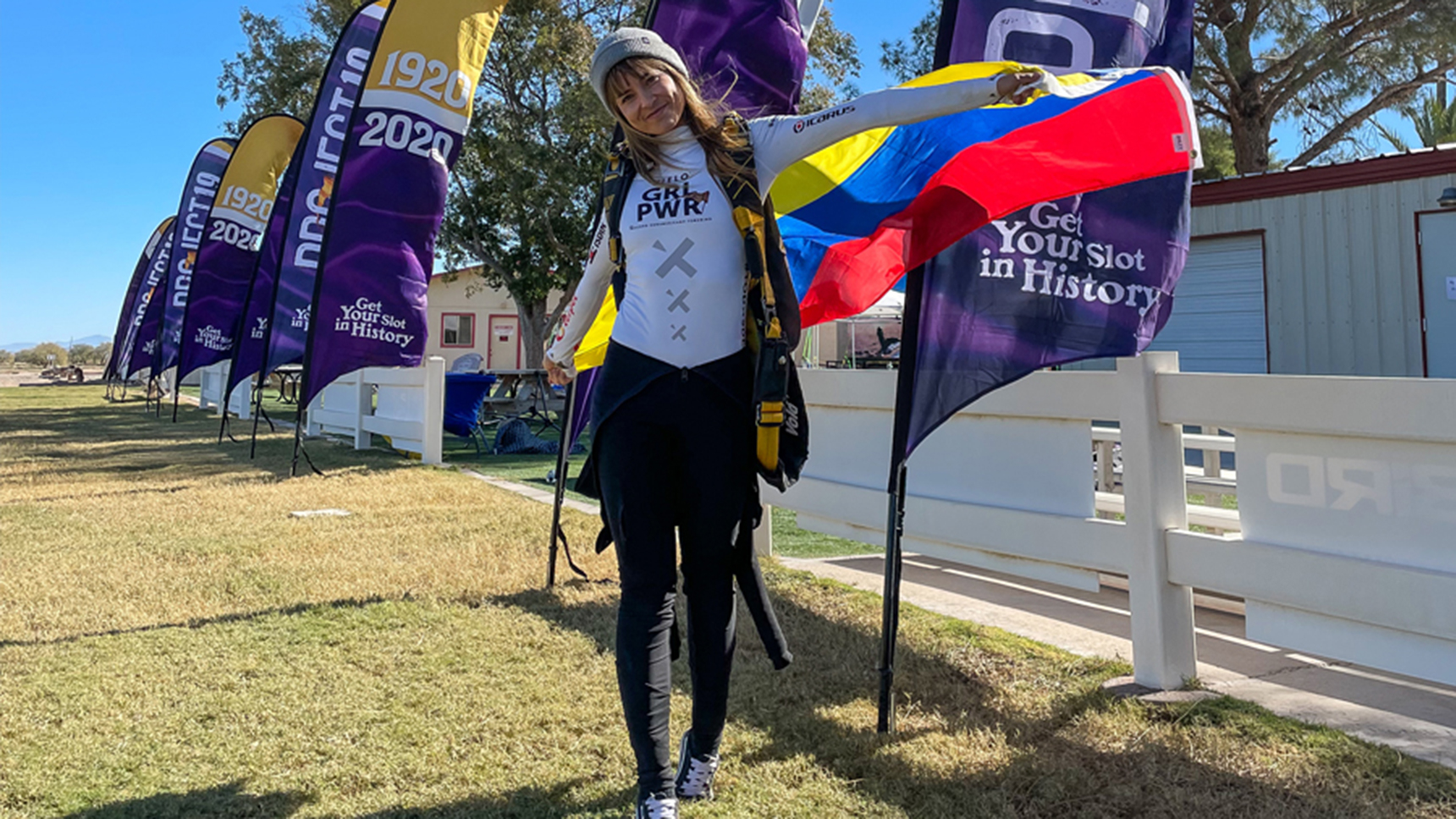




Ana Aponte helped build Xielo, then stepped away to return to the flying she had put on hold. We talk art, ambition, training the mind and knowing when to change direction.
Ana Aponte once sold her paintings to pay for skydiving. She later helped build Xielo in Colombia, spending 13 years creating a place to fly while putting her own progression on hold. Selling her shares gave her the freedom to train, travel and pursue the ambitions that had drawn her to the sport. With 19 years in skydiving, more than 7,100 jumps and world, South American, Colombian and Mexican head-down records, Ana talks about building a dropzone, finding her way back to life as an athlete, and what freediving has taught her about managing frustration and expectations.
What were you like growing up in Colombia?
I loved growing up in Colombia. The country and its culture gave me a lot of tools to become who I am. My environment allowed me to explore sports, art, creativity, competition, travel. I’m really grateful to have had those opportunities and the freedom to develop and pursue my dreams.
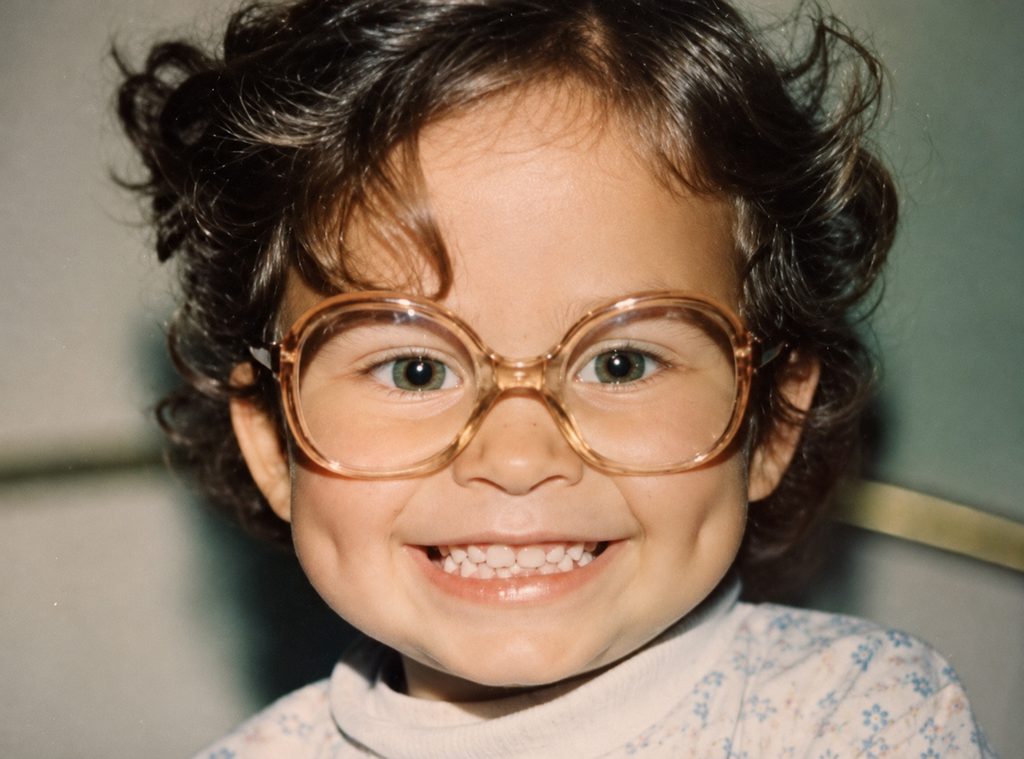
What were your hobbies before skydiving?
Since I was a kid, I was always into art. I was painting all the time and even selling a painting once in a while. When I started studying art, I felt an enormous sense of freedom and joy from learning and exploring all kinds of artistic expression.
Before skydiving, I was studying Fine Arts at university in Bogotá, Colombia, and for the first time I was spending 100% of my time doing what I really loved.
You sold your artwork to pay for skydiving when you were starting out. What did that period of your life look like?
It was one of the most amazing times of my life: doing what I loved—painting—to pay for this other passion that I didn’t yet know was going to become such a huge part of my future.
I had an art studio, and that was where the magic happened. I started selling lots of paintings and doing art exhibitions. My income started growing, and all that money went straight into skydiving.
I landed, called my family and told them, “I just jumped out of a perfectly good airplane, and I want to do this for the rest of my life.” And since then, that’s exactly how it’s been.

When you started travelling to train, what did you realize was missing back in Colombia?
A sport that was constantly evolving, new knowledge, the infrastructure we saw at every place we visited, and amazing opportunities to learn. We absorbed everything we could. We were always asking DZ owners and people with a lot of experience: “How did you get to where you are? How did you build this?”
I started creating manuals and collecting everything we were learning, with the idea that someday we could build a DZ in our own country with the professionalism, safety, and infrastructure we were experiencing.
What was the hardest part of getting Xielo off the ground?
There were many hard things. First, realizing how hard it really is to be an entrepreneur. It is very different from how it looks from the outside.
Another big challenge was realizing that, at that time in Colombia, we still had a lot of work to do around safety, rules, procedures, and professionalism in skydiving. That was one of the reasons we created Xielo. We wanted to help change that.
For many years, there was a lot of resistance to rules and procedures. It was a lot of work to create a culture where people understood that following rules was important to keep our sport safe and help it grow.
We also worked for years with lawyers and Colombian aviation authorities to bring in safety rules and procedures that we had seen in other countries and find a way to make them work in Colombia. We also had to work with lawyers to get permission to make the changes we needed on the airplanes for skydiving. There were so many things we had to do. For many years, it felt like we were going against the current just trying to do things right.
And there was something very personal too. One of the reasons we created Xielo was because we wanted a place to train, learn to fly, and create. But while we were building Xielo, we didn’t have time for that dream. It took around 12 years before I could really come back to it.

You’ve spoken about putting your own progression aside while building the business. How did you get back to being an athlete?
Uff, it was one of the hardest things for me to accept: understanding that we couldn’t have both at the same time. When I realized that, I decided to put all my energy, my soul, everything I had into building that dream—Xielo—that we once put on paper. And we did it.
After 13 years, I felt that we had built what we dreamed about. Of course, the work never ends. A DZ is always evolving if the owners want it to, and there are always so many details to take care of, especially around safety. It never really ends.
But after accomplishing what I had dreamed about with Xielo, and going through some hard personal experiences, I started asking myself what I wanted for my life from that moment on. It was one of the hardest but also one of the most powerful moments of my life.
I decided to let go of everything that was holding me back and sell my shares in Xielo. I understood that I couldn’t have both: the responsibility of having a DZ and the freedom to live the life I wanted as an athlete. At that time, I was living in Mexico, and I knew it was time to make that decision.
Letting go of something I had created from scratch was not easy, but it gave me the opportunity to start becoming an athlete again. Little by little, I started putting my energy back into training, learning, traveling, going to events, and doing what I had wanted to do for so many years. Now I’m living a dream that I had put on hold.

You’ve designed Xielo’s logos and uniforms. How much of what we see at the drop zone is your work, and what were you trying to create?
I didn’t actually design the Xielo logo. We worked with a company that gave us different options, and we chose the logo from there. But from that point on, I started designing almost everything around Xielo: the manuals, uniforms, PDFs with all the Xielo information, and so many other things throughout those 13 years.
And, of course, the black plane! Nico and I designed that together.
My artistic side has always been a huge part of Xielo. I wasn’t only thinking about how things looked, but about how I imagined the whole experience.

What do you want people to feel when they walk into Xielo and how did you create that in the everyday running of the place?
If we were creating a place where people had the opportunity to make their dream of flying come true, we wanted to create a complete experience around it.
From the beginning of this crazy dream, we thought about everything: the beautiful landscape, comfortable spaces, the hotel, a really nice bunkhouse, spaces for AFF training, the restaurant, and a pool where you could sit and watch everyone land.
Even the music was part of the experience. We had playlists for the morning mood, then another playlist to bring people’s energy up as the day started, and so on.
And through all of it, I always imagined the experience with safety at its core. It had to be beautiful and exciting, but also professional and safe.

You’re a small flyer. What took the most work to figure out about flying your body?
My weight has been one of my biggest challenges. Until about two years ago, I weighed 47 kg (104 lb), and I’m 1.58 m (5’2”).
I’m still figuring it out. It has been a huge job for me as a small person who is almost always flying with heavier people.
Early on, I started talking to badass smaller flyers in the sport, like Sara Curtis and many others. They gave me advice on how to fly faster: dress for success, use weights, strengthen my body, work on flexibility, and fly with heavier people so my body could adapt to that fall rate.
Now I’m also working on increasing my weight and getting to around 52 kg. That’s my goal, and I think it will make a real difference.
What’s been the biggest breakthrough in your flying and what finally made it click?
One of the biggest discoveries sport has given me is that some of the biggest work happens in the mind: learning to observe it, understand its nature, and understand how it works in order to train it.
My experiences with records, freediving, and some frustrating moments in sport made me start exploring this much more deeply. And now it’s blowing my mind to discover how much potential there may be in learning to train it.

You’ve described skydiving as an active meditation. What does that actually feel like on a jump?
What blows my mind is how, as soon as someone—a fun jumper, a tandem passenger, or a student—goes through that door, the experience brings them completely into the present moment. They don’t need to meditate or know anything about the mind or these states. From what I have seen, it just happens. And that is one of the things that has always amazed me the most about skydiving.
That made me start asking myself: if someone with no training at all can experience that kind of presence just by jumping out of an airplane, what could happen if we actually train our minds to be more present and aware? Could we experience that state in a deeper way? I don’t know, but I think it could be very powerful, and that question made me want to explore it more.
So I started training my mind, and I still do it today, through meditation, daily habits of being present, different breathing techniques, and visualization. I try to be more present during the jump and also perform better.
I experienced this at another level during a South American record in June 2026. For the first time in my life, I was consciously breathing through the entire jump. I wasn’t trying to do it; it just happened. Everything felt incredibly clear, almost like slow motion. I could feel and see everything around me while doing exactly what I needed to do. That experience of breathing consciously and calmly through the entire jump completely blew my mind.
Over the years, I’ve wanted to keep exploring how much we can train our presence and our minds.
What do you do when you’re frustrated or you feel you’ve plateaued?
It totally depends on the situation and the sport.
Lately, with skydiving and freediving, I keep trying until I recognize that my mind is no longer helping me. Then I step back. Sometimes for a few days, sometimes for longer. During that time, I keep training my mind.
When I’m in a calmer state, I analyze what happened: What is the problem? What can I do about it? How am I going to work through it? I remind myself that it’s a process, that it will take time, and that there will be moments when I just don’t get it.
I’ve also been working really hard on letting go of expectations, because I’ve realized they are one of the biggest sources of frustration for me. Every time I manage to let go a little, the whole process changes for me. It becomes more about enjoying the process and less about fighting against my own mind.

What has freediving taught you that you use in skydiving?
Breathing, visualization, resilience, the importance of being present, and learning to reconnect with my body when the saboteur appears.
Freediving has also taught me a lot about expectations. I’m starting to understand that what I expect to happen is only one possibility among millions. So why do I become so attached to things happening exactly the way I imagined? When they don’t, that attachment can become a huge source of frustration.
I’m learning to let go of that. I can still visualize what I want, work really hard toward it, and give everything I have, while learning to accept the result as it comes.
What makes it difficult for a talented Colombian jumper to reach the international scene? What would make the biggest difference?
Nineteen years ago, it was very difficult to learn properly. Almost everything we wanted access to was outside Colombia, so we had to travel abroad to get our ratings and train with highly experienced people.
Today, it’s completely different. At Xielo, you can now get your ratings, and there are very experienced people organizing amazing events and coaching.
Social media also gives you access to people, projects, places, events, and information from all over the world. You can connect much more easily with the people you want to train with and find opportunities that we didn’t have when I started.
So today, I think it’s much easier for a talented Colombian jumper to find the information, training, and connections needed to reach the international scene. For me, access to good training and the right connections can make a huge difference.

Has your idea of success changed since you started? What are you working towards now?
Yes, it has changed a lot, especially now that I’ve sold my shares in Xielo.
Today, my idea of success in life is tranquility: being able to find that state even when things aren’t going well.
And in the sport, success for me is also about finding that tranquility without putting so many expectations on myself, while still working hard. I want to train again, create, travel, get coached, keep improving as a coach, connect with people and new projects, and continue learning.
I’m just open to this new stage of my life with a lot of energy and curiosity.
What has skydiving forced you to learn about yourself that you might otherwise have avoided?
Training the body and technique is something we all know exists. It’s familiar to us: if we want to achieve a goal, we train our bodies and we train the technical skills we need to get there.
But training my mind has been one of my biggest discoveries. It came from frustrating moments in the sport when I didn’t know how to move forward. That frustration led me to start exploring this path.
Now, little by little, it’s changing my whole life. I keep searching, observing, learning, and trying to understand something I wish I had started learning when I was a kid.
What is the one piece of safety advice you wish everyone could hear?
If I had to choose one, it would be: never let your ego affect your decisions when it comes to safety.
Keep your basic theory and procedures fresh. Be consistent with your training. Invest in quality coaching, courses, events, and equipment. Train your mind and your body, and surround yourself with people who share a healthy vision of safety and progression in the sport.
For me, safety isn’t one decision, it’s a culture you build around yourself.
Who are your sponsors?
UPT
Icarus World
CYPRES
VOLÁ Flywear
XPRO Argentina — Camera Mounts
GoPro Colombia