



Just 1.43 km/h separated Sebas García from defending champion Niklas Daniel in Eloy. The new Open Speed Skydiving World Champion explains how he adjusted by feel when a round went off and why flying at more than 540 km/h takes as much relaxation as tension.
Take us back to the moment you learned you were the Open World Champion. What did that feel like?
All the training is with this goal in mind, and a lot of times, it’s not always the one who trains more and wants it more that wins. So when everything aligns and you can perform your best and see the results of your effort, that is for sure a very rewarding feeling.
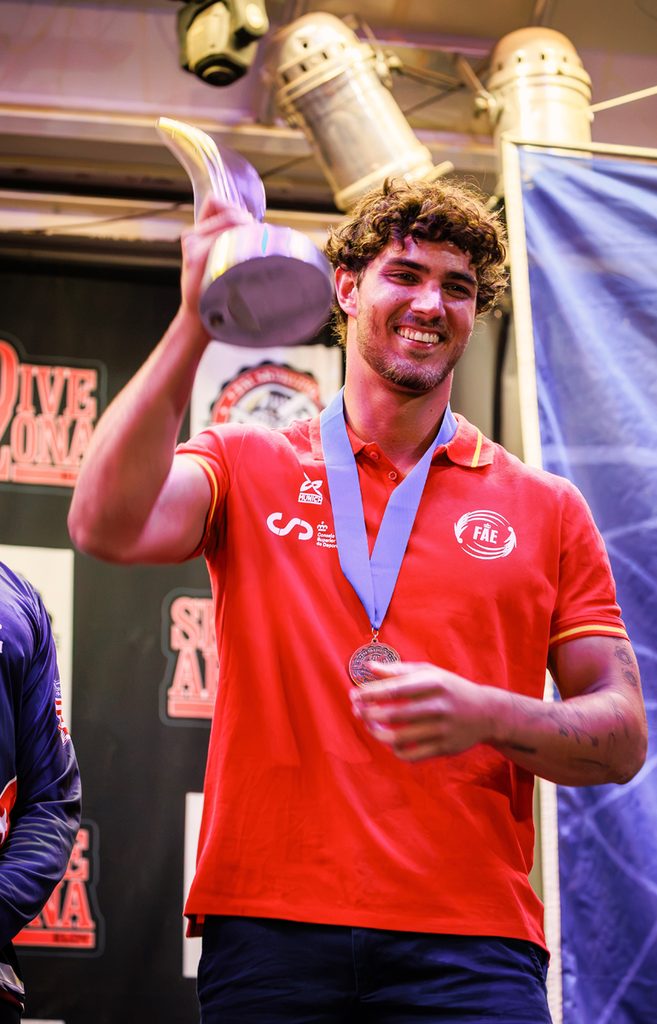
You arrived in Eloy as the reigning Junior World Champion but stepped into an Open field containing defending champion Niklas Daniel and several established 500 km/h competitors. What did you realistically expect from yourself before the first round?
My expectations for this comp were to average every jump above what was the world record before the competition, which I could only do in half of the jumps. So there is a lot of room for improvement for the coming years.
You ultimately beat Niklas by just 1.43 km/h on the overall average. During the competition, how aware were you of how close the title race was?
I was fully aware of how tight the battle for first place was. If anyone had a bad jump, that could be the end, so I was treating every jump as if it was the final.
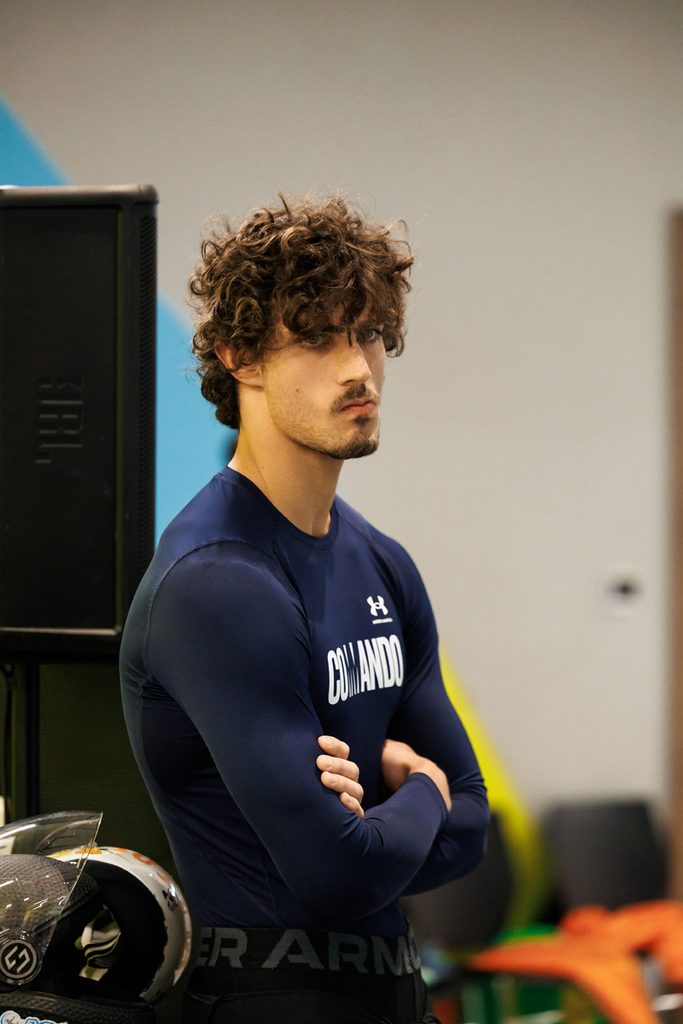
Was there one round when you knew your flying was exactly where it needed to be? What was different about that jump?
Finishing the first competition day with the last round (jump 4), I felt that jump was not a very good one, and it was the first round that I wasn’t the fastest. I was up only by 6 km in the total score.
I don’t really know exactly what I’m doing in competition because I don’t take my personal FlySight, where I could check all my stats very carefully. I prefer to just go with the feeling and trust in my body and all the training I did. So I felt something was off that jump but didn’t know exactly what it was.
The next day, for the first jump, I fixed what I thought it could be, and it worked. So, on jump 6, I knew exactly what I needed. Even though that was not my fastest round, I was 100% sure it would be a good one, and that’s where I really started separating a bit more from Niklas.
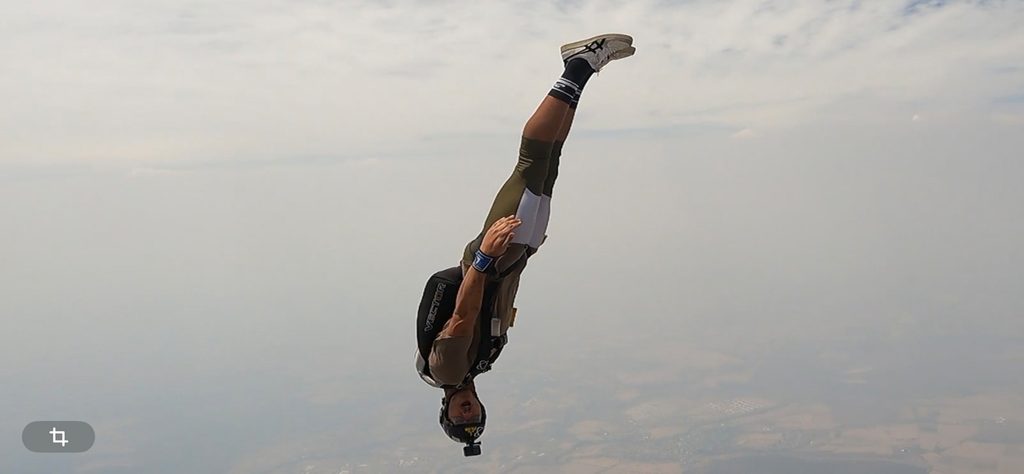
How much freedom do you have to make corrections once you enter the competition window? At that speed, what does a small mistake cost?
At those speeds, the most important thing you need is the ability to be, as we call it in Mexico, “solajado.” Your body needs to be in this constant play between tension and relaxation.
It’s not a static position, even though in a video it might look like that. Every muscle is doing what’s required in every specific moment, and that might change from one second to another. And if you mess up this tension/relaxation balance, at those speeds especially, you are going to get out of balance, and that’s where instability and wobbles will happen.
You began skydiving at 16 in Cuautla. How did you get into Speed? What inspired that?
Since the moment I started skydiving, what always felt the best and what I wanted to do the most was go as fast as I could. Those last seconds in a tracking jump when you’re giving it all were always the best part of the skydive.
It took me a couple of years after starting skydiving to discover that there was a competition discipline that was exactly this: “Speed.” Go as fast as you can. That’s it.
At that point in time, I was working as an instructor in Poland, and Massimo, a good friend who was also working there, was the junior world record holder at the time. So I told him I was very interested in starting competing in Speed. We then had a talk where he explained to me what I needed to get started, and I did.
Immediately after, I signed up for the Speed Skydiving World Cup in Prostějov, Czech Republic, that was set to be three months after we had this talk. Funny fact is, I showed up to the competition without ever doing a Speed jump before … hehe! But that’s a different story.
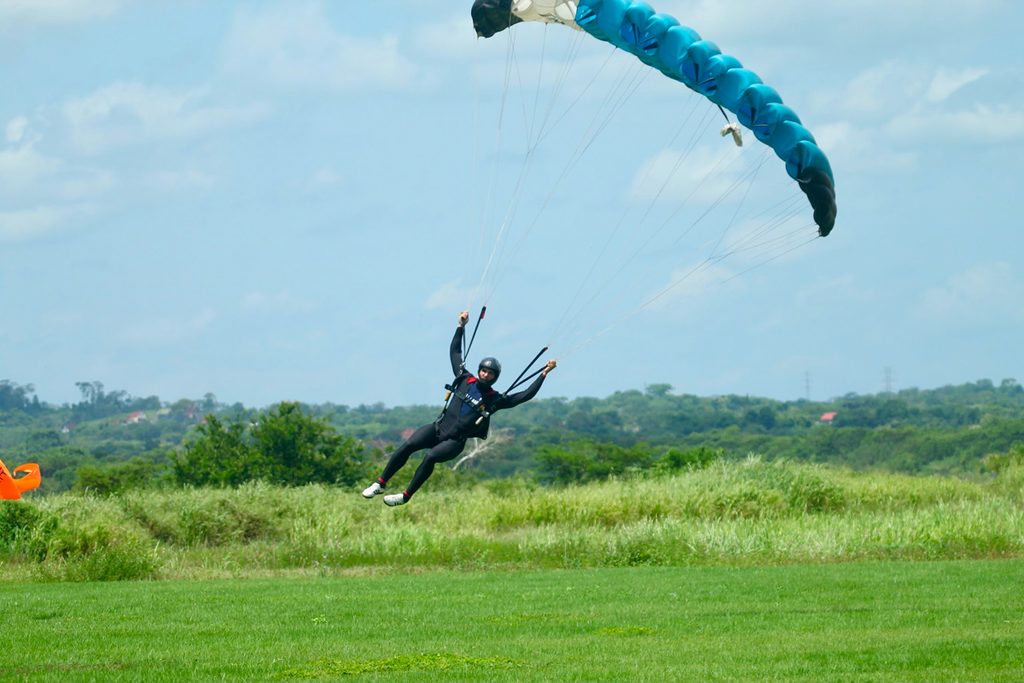
You were born in Mexico and compete internationally for Spain. What do both countries and skydiving communities represent in your story?
I was born in Mexico, and I lived most of my life there until I left at 19 to start working in the wind tunnel. My grandparents on my mother’s side are Spanish, so I have both nationalities.
When I wanted to start competing in 2023, of course I wanted and thought it would be representing Mexico. But the Mexican federation had some situation with the FAI that caused them to be banned for some years. So it was not possible to compete for Mexico in FAI competitions.
Fortunately, I had the option to go for Spain, and I’m very grateful to the Spanish federation for opening the doors for me and giving me the opportunity to compete for them.
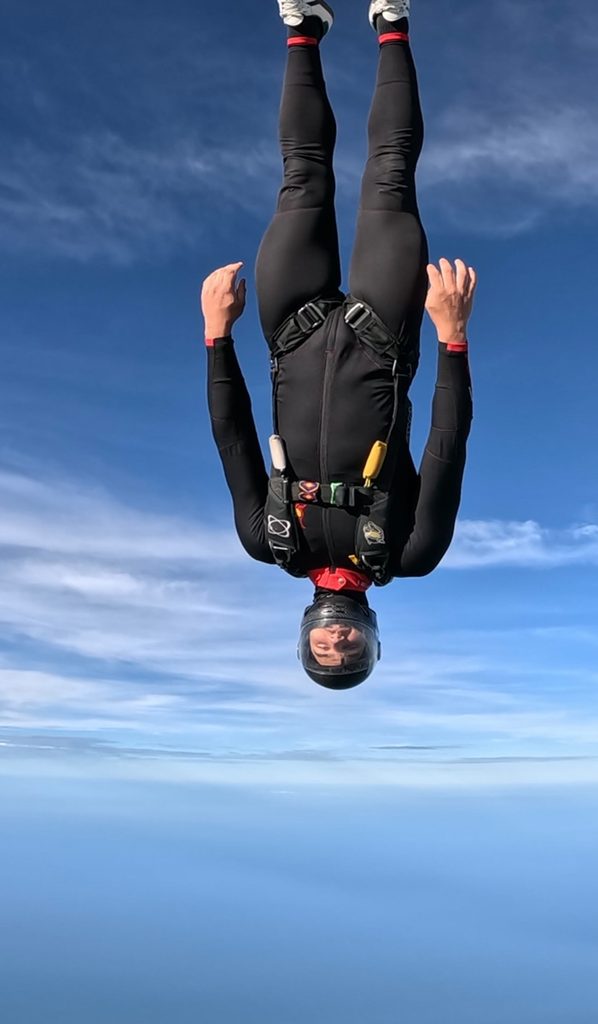
What do people outside Speed misunderstand about the discipline when they see only the final speeds?
I think most people think that Speed Skydiving is just about getting into a head-down position, and then whoever is heavier or has better equipment with less drag will be faster. Then people focus too much on these little details. They start trying to gain weight or get the perfect suit and helmet and try to chase numbers this way. And while changing these things might help you be a bit faster than you were before, they are not really beneficial for the biggest factor, which is the flying skill itself. For sure, these things matter a little bit, but they are only a small part of a much bigger picture.
You are now the Open World Champion. What is next for you?
Speed Skydiving is a very new sport. I’m sure we are barely just scratching the surface of what’s possible, and I will continue pushing and accelerating.
Who are your sponsors?
Silent Teaching, RFAE, CommandoStudio