



From handle checks in the aircraft to visualization and drills on the ground, Jeffro, Julia Botelho, Ewan Cowie and others share how they keep their BASE and skydiving emergency procedures current
Ewan Cowie, Europe
Practicing emergency procedures is important because, if you keep skydiving, it’s not a matter of if you have a cutaway; it’s a matter of when. That being said, I personally managed to go almost 6,000 jumps between cutaways, though I have had two since then.
So how did I keep my EPs current? Being an AFF instructor helps a lot; because I am constantly demonstrating EPs to students, it kept my personal procedures current as well. I don’t do so much AFF these days, but after a certain amount of time in the sport, especially as an instructor, I think the procedures become so drilled in that they are mostly automatic, as long as you refresh them periodically.
So what can refreshing EPs look like? An obvious one for me is when you come to the end of your repack cycle: you can perform an actual cutaway and reserve deployment on your own gear. To me, this is especially valuable because the handles are obviously in the correct position for your gear, and you experience the real resistance and pressure required to pull the handles in real life.
Another way to keep them current is to periodically touch your handles in the plane and visualise the sequence of pulling them in the event of a malfunction. As skydivers, we have a lot of time in the plane on the climb to altitude when we don’t have much to do, and visualising in different ways is an extremely valuable way to make use of the time in a productive way.
If you skydive regularly all year, doing this should be enough to keep those EPs current, but if you have a long layoff, such as over winter, it is more important to schedule some drills to really refresh those EPs. Asking an instructor or other experienced jumper to assist you by outlining different scenarios, using pictures or videos if possible as prompts, and doing several repetitions with no mistakes can really help bring those EPs back into the front of your mind.
Julia Botelho, USA
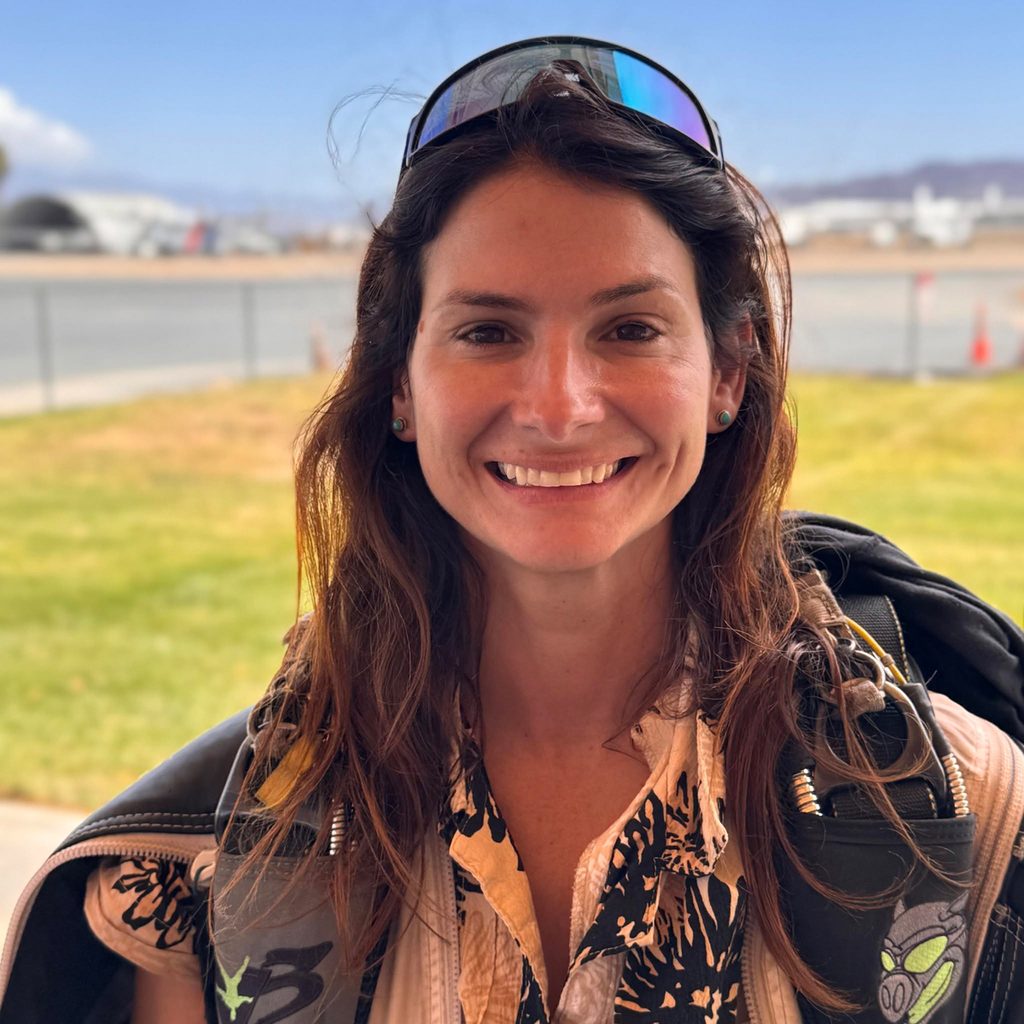
I actually practice my EPs before every jump in the airplane. It’s just part of my routine now, and I don’t even think about it; it just comes naturally. Also, because I fly a wingsuit, before every jump I make sure to check that my handles are out of my suit, always bringing the zipper down to ensure this.
I’ve had two high-speed malfunctions in a wingsuit, with my arms fully zipped and the suit pressurized. With the pilot chute out but no canopy or deployment bag out, I had a hard time using both hands on a handle. I noticed that both times I used one hand on each handle: the cutaway and reserve handles.
It was easier due to the pressurization of the suit and my arms being zipped.
Jeff “Jeffro” Provenzano, USA
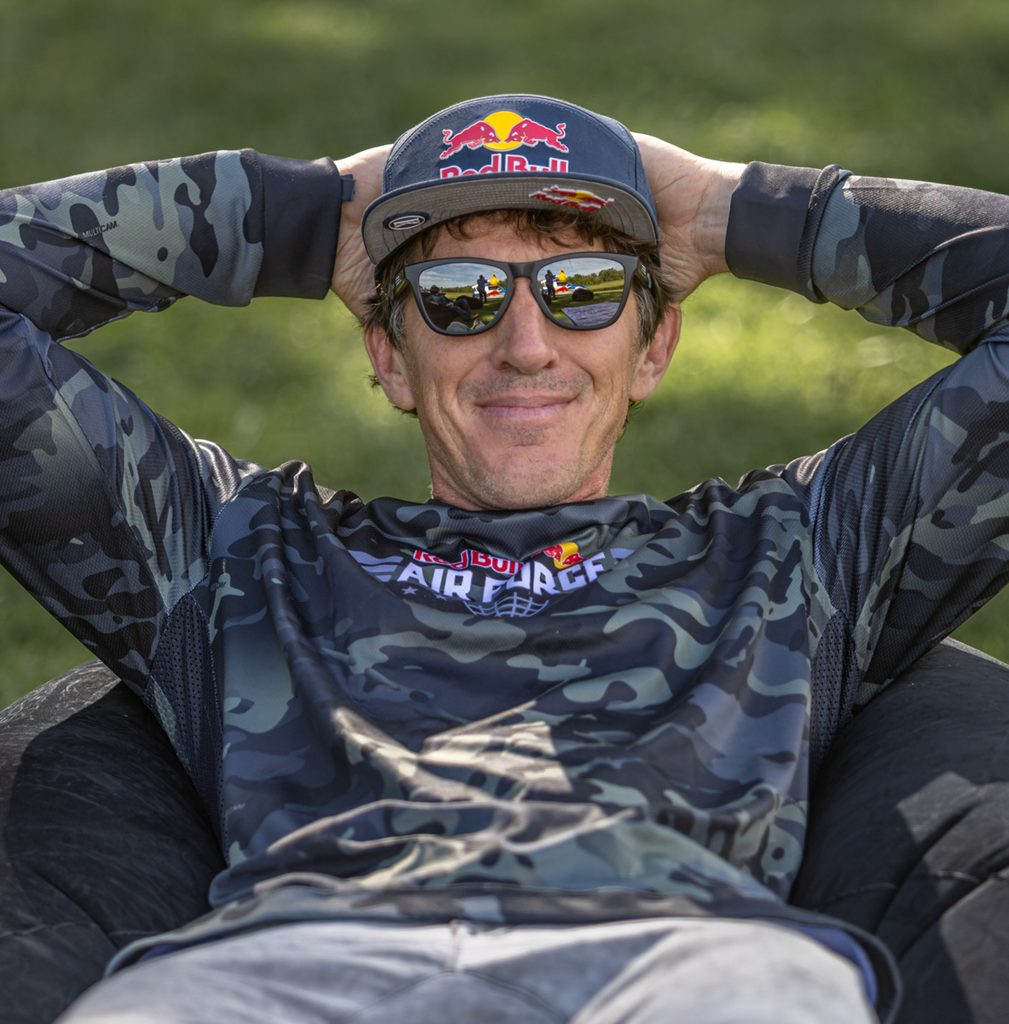
At this stage of the game, I’m not getting in a hanging harness and practicing EPs all the time. I’ve had enough cutaways and enough reserve rides over the years that I know what that feels like. For me now, it’s really more about staying current and, honestly, trying to prevent the emergency before it ever happens.
A lot of shit is preventable.
Take care of your gear. Do your pin checks. Touch your handles. Pay attention to the weather. Don’t jump in crappy conditions just because everybody else is jumping. And don’t rely on somebody else to make sure your shit is right. Be self-reliant. It’s your gear, your jump, your life.
I remember one time I was walking to the airplane and a friend gave me a reserve pin check. The pin was basically sitting right on the edge of the inside of the grommet. I still don’t know how the reserve hadn’t fired. Somebody could’ve bumped my rig and it probably would’ve gone. And I remember thinking, holy shit. I was jumping a ton, I was super current, and I still let something that basic get that close.
That stuck with me. Being current doesn’t mean you get to be complacent.
Before I jump, I always touch my handles in the order I’m going to use them. I make sure everything is seated, nothing is hanging out, nothing feels weird, and I actually grab the handles the way I would if I had to use them. It takes two seconds.
And then visualization is huge for me. Huge.
Visualize the jump. Visualize what could go wrong. Visualize seeing the problem, making the decision, and doing the right thing. I’ve always been big on visualization, not just with EPs but with skydiving in general. Your brain has already been there before you actually get there.
So I guess the way I practice EPs now isn’t really sitting there doing pull-pull-pull over and over again. It’s more staying aware, staying current, taking care of the little things, not getting lazy, and constantly running scenarios through my head.
After doing this for as long as I have, one of the biggest lessons is pretty simple: don’t let experience turn into complacency.
Alethia J Austin, USA
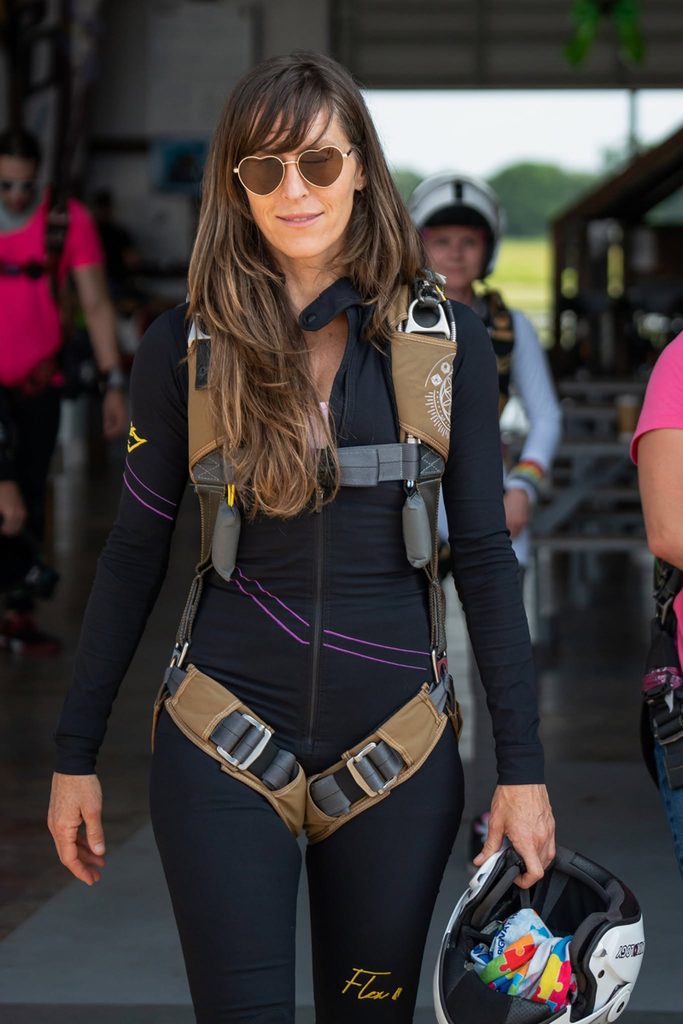
I’m surprised, nearly every ride to altitude, at how little new jumpers seem to touch their gear on the plane. I remember that stage; the rig didn’t make a lot of sense to me and I didn’t really understand my gear outside of the basics. So, I touched my handles and twisted my three rings thinking that was it, but knowing there was more that I was missing and a bit too afraid to ask.
Fast forward 20 years later and my EPs are a huge part of my skydiving processes. When I’m practicing on the plane, I close my eyes, take a deep breath and practice cutting away, I practice going straight to my reserve, I practice grabbing my skyhook. I do this multiple times on the plane, sometimes just as practice touches, other times I’m imagining a certain scenario and how I’d handle it. I try to remind myself every day, that today could be a cutaway. Reminding myself I’m not immune to it helps me stay focused and sharp. I don’t want one and more so I don’t want to be caught off guard, so reminding myself it could happen today helps me.
Then there are slightly dramatic touches of my handles, checking my 3-rings (properly looking that the risers are connected, not that the rings turn), my chest strap is properly routed, and I touch my hook knife which I don’t see people practice often. These practice touches and gear checks are not for me, they’re for the younger jumpers who can see me do this. It’s what I hope is a reminder for everyone to do the same.

Clark Robinson, USA
How I prepare for emergency procedures can be condensed into three steps.
- Learn and familiarize myself with emergencies and appropriate responses
- Practice the skill that is the appropriate responses to each potential scenario
- Mental visualization rehearsing each situation in my head so it is ingrained in me and ready to rock and roll when the occasion calls for it.
Visualization is the step I feel is most commonly overlooked, but it’s a process that truly locks in our knowledge and skills. For example, when I’m about to jump a cliff, I look at the terrain and run through every way my parachute could open, how each would affect me, and exactly how I’d respond. What do I do with an off-heading to the left? To the right? A full 180? What about an on-heading opening? I did this on every jump for my first few hundred BASE jumps and I still periodically do it to stay current at that specific emergency procedure.
For me, visualizing is absolutely crucial for everything I do. Whether it’s clearing line twists, refining wingsuit transitions, freeflying, learning new tricks on skis, swooping, or basically anything else, I am constantly visualizing every single day. I build each scenario in my mind as realistically as possible and run it over and over, dissecting each piece, understanding how it will feel, and working through every detail until it feels like I’ve actually done it many times and I know it cold. Through that process, the skills and knowledge get built in and tucked away, ready to surface when you’re out there getting buck wild with your hair on fire.
Paulo Pires, Brazil
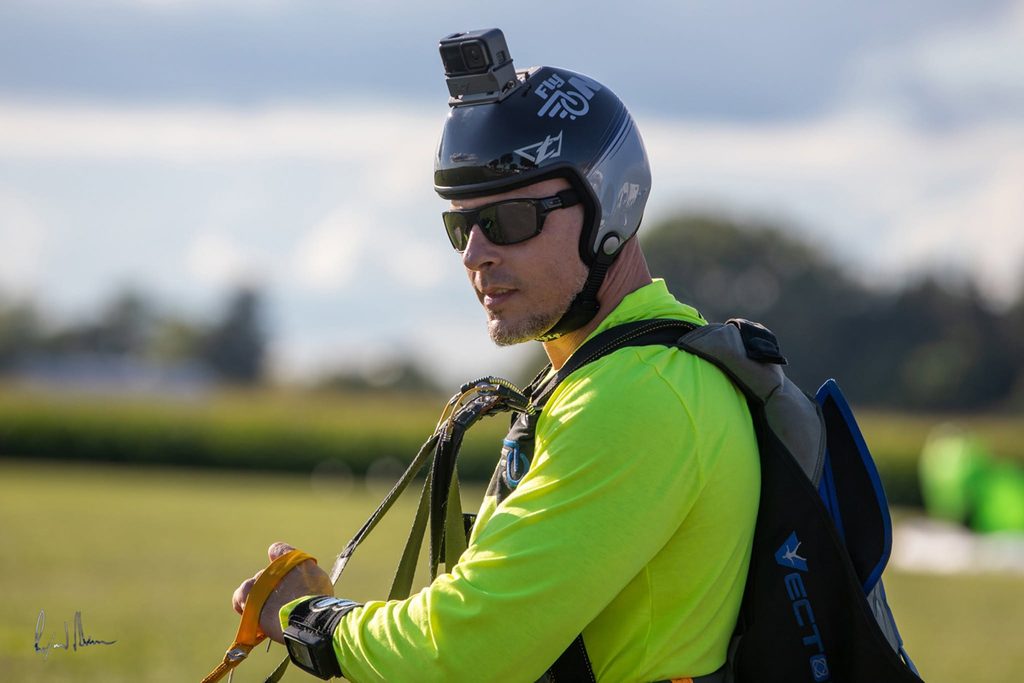
I strongly believe in the power of mental training, not just for emergency procedures, but for everything we do in our sport. However, it’s especially important when it comes to emergency procedures, because that’s usually when you’re under the most stress, and you need to be prepared for anything.
Visualizing every step, thinking about everything that could potentially happen, imagining how you would react to each movement and how the situation might develop, and, of course, regularly checking your equipment and practicing your emergency procedures are all essential to being prepared and reacting properly in any emergency situation.
When the mind is prepared, the body knows how to react.

Aurel Marquet
In BASE, there are no emergency procedures in the skydiving sense. On a classic slider-up wingsuit jump, we usually pull the pilot chute at around 300 m, which, in the vast majority of cases, leaves little altitude to deploy a reserve and get it flying. So the work happens elsewhere. Canopies are bigger, packing is more meticulous, and most of the risk sits around the jump itself. The approach to the exit can expose you to falls before you’re even geared up. At the exit, there can be a missed push, an off-axis launch, or a slip. In flight, you can encounter obstacles along the line, terrain that turns out to be flatter than expected, or an exit that’s marginal for the suit’s glide ratio. Then come the openings: not finding the pilot chute, line twists, or a tension knot. Under canopy, the wind can be too strong to reach the planned landing area, and you might end up in trees, water, or rocks.
Every experienced BASE jumper will tell you that the most important thing in this sport is planning. For me, that means weather forecasts, maps, terrain and topography, past FlySight data and laser measurements, and choosing gear, an exit, a flight line, and a landing zone that match my level and experience. Then I evaluate and re-evaluate all of it during the approach and again during the jump. The margin for error is small, and you have to be able to react fast. Every situation has a response that should already have been visualized, prepared, and trained for as much as possible. Before every jump, I visualize the flight and run through every incident scenario I can think of. The physical side involves consistent, regular training all year round: workouts, skydiving, canopy control, and moving efficiently in mountain terrain. The goal is to make decisions that remove as many unwanted surprises as possible before I ever leave the edge. Don’t be careful; be competent.
Jodie Mayo, Australia
I’ve been in the sport for 10 years now, and up until year eight, I would practice every time before I boarded the plane.
Now, after a couple of cutaways, I don’t practice as often, but I do try to do it at least once a day prior to boarding, usually before my first jump of the day. I also mentally run through them when I’m checking my gear prior to exit, physically checking that my handles are stowed and secured correctly and visualizing doing them if I have a malfunction.
I run a Skyhook, so my EPs haven’t changed much since I started, but I have spoken at length with other experienced skydivers who are on higher-performance canopies and don’t run Skyhooks, and their EPs differ from mine quite a bit. I do try to do them as often as possible to set a good example for my students, as it helps visually remind others to do theirs.

Patrick Kramer, USA
For me, the emergency mindset is about being prepared, but also being able to adapt. I have around 55 BASE jumps, spread over a long period of time. So I have to be honest with myself: I have a lot of experience in wingsuit flying, but I don’t have hundreds or thousands of BASE jumps behind me. That makes it even more important for me to have a clear emergency mindset and procedures in my head before I leave the exit. If something goes wrong, I don’t want to panic or freeze. I want to recognize the situation, switch from the original plan to a new plan and work through the options I have.
Of course, you can’t have a procedure for every possible situation. There has to be room for improvisation and adapting to what is actually happening. But the improvisation should happen within a framework that I have already thought through and trained.
Assess the situation. Adapt the plan. Execute the appropriate procedure. Create separation. Deploy. Get clear. Fly the canopy. Land.
At that point, the original flight plan doesn’t matter anymore. The new plan is simply to deal with whatever is happening in front of me and get myself safely to the ground. For me, that’s what a good emergency mindset means: being prepared enough to know what to do, but flexible enough to adapt when reality doesn’t follow the plan. The goal is to make a new plan, execute it, and survive and walk away with another story to tell.