
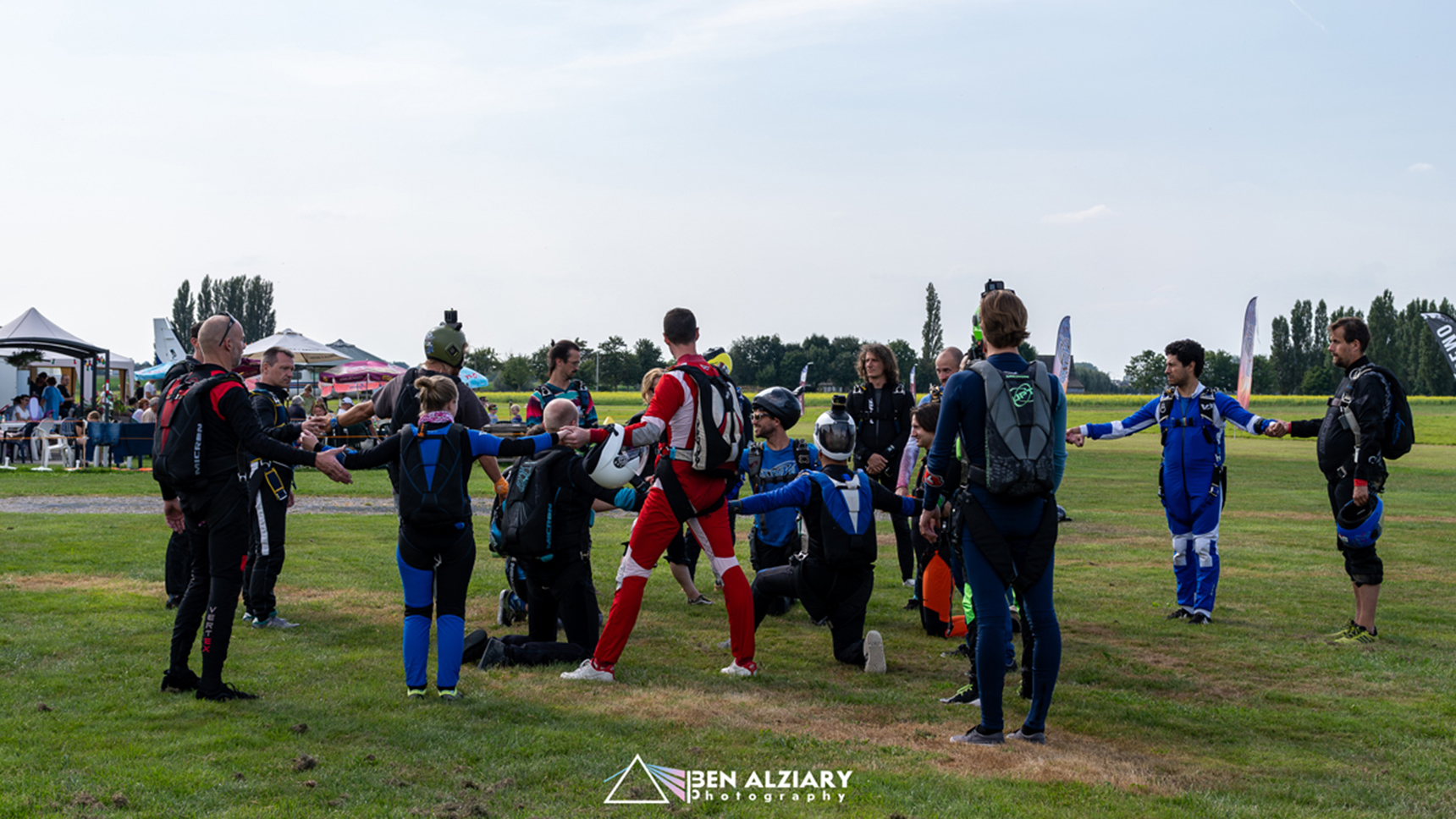





Kim van der Horst shares lessons from a summer of bigway coaching, from building a balanced team and recovering mid-jump to knowing when to step down
With record season in Europe ramping up towards next year’s European Vertical Record [August 2027], I’ve dusted off my record-organising cap and dug in. I love thinking about records and why they work, or don’t. Here are some takeaways from the camps we organised this summer, in no particular order.
Community
Records are a community effort.
I can hear you thinking, “Duh”, but sometimes you just have to state the obvious. You need experienced flyers who are committed to staying current, so that new kids have a chance to acquire their bigway skills. Every time the ratio of new bigway flyers to experienced flyers is out of balance, the energy can become too amped up. Besides providing a stable base, experienced record flyers bring a strong mental game that can balance out the excitement and nerves. Because, let’s face it, when it comes to bigways, we want those emotions in the mid-range.
But then again, a national record can also be a great reason for a semi-retired seasoned skydiver to get stoked to jump again.
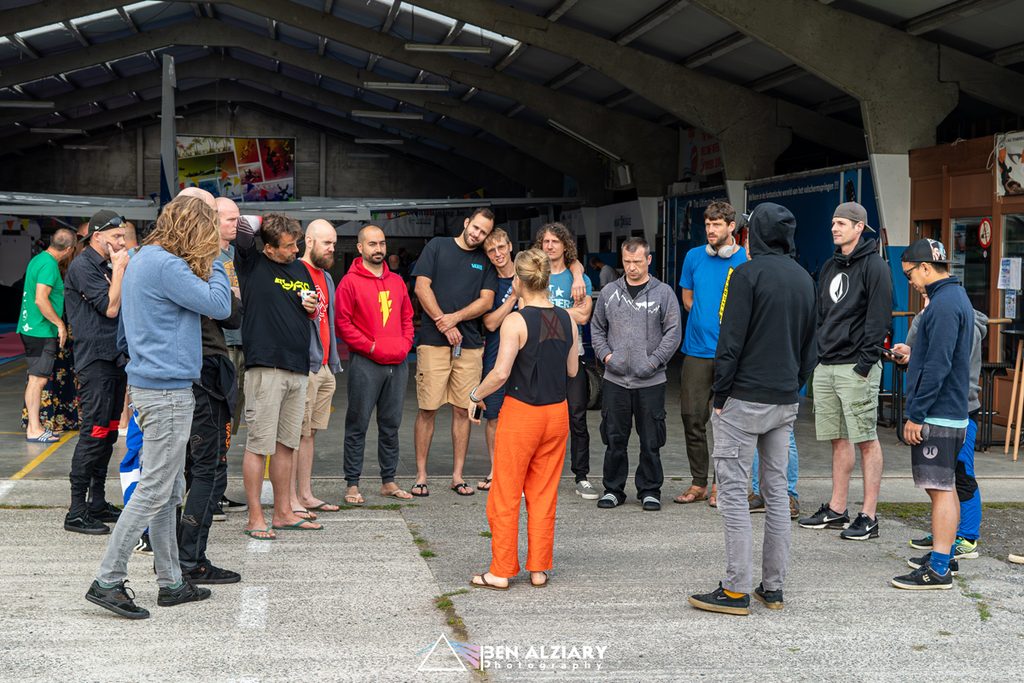
Photo by Ben Alziary
The Reset Button
Being able to hit the reset button mid-jump is an asset that’s hard to overstate. It’s so important that we actually build it into the dirt dive: visualise the dive or float to get on level; stop; breathe. Make the approach to your radial; stop; breathe. Go to your stadium level; stop; breathe, and so on.
But what if something goes wrong during a jump? Depending on how much time you have left, being able to stop, breathe and try again is an asset that could potentially save a record. Seeing new bigway flyers bring that skill to the table gets me every time.
Not letting the stress of a mistake spill over into your flying an extremely powerful skill. The reality is that we’re all human and we’ll all mess up at some point. It’s how we recover that matters.
Exits
When you exit from a back-loader or a Twin Otter, of course, it’s important to be efficient. However, when you’re doing a formation from a Caravan, it’s key. The Caravan door doesn’t allow two people to exit at the same time, so the struggle for the divers is real. The engineering of exits usually reflect that, creating a slightly longer float to help the divers get as close to the base as possible. Exits are teamwork, and during training camps I’ll debrief them like angle jumps. Seeing the back flyers exit in a perfect cascade, with the divers keeping exactly the same distance between them, is as satisfying as it gets.
Dynamic Skills
If I had a euro for every time an angle flyer spoke dismissively about vertical skydives, I’d probably drive a bigger car. However, the reality is that, except when you’re in the base, 30–70% of a record will involve angle flying. Angle skills are fundamental to staying safe in a bigway.
The approach is back-fly to vertical; the break-off is vertical to back-fly, with a barrel roll to belly, followed by an as-fast-and-flat-as-you-can belly tracking. And if you don’t know how to do those skillfully, mistakes during the approach and separation can be dangerous.

Ego and Progression
We all have an ego, and when our ego is balanced with humility, it can push us to do great things. However, when the ego is inflated or deflated, it can seriously impede your growth and affect your performance. Personally, I don’t think you can overstate the importance of self-reflection in learning and progression. If you can’t honestly look at yourself, your skills, your mindset and your behaviour, it’s virtually impossible to change. Similarly, beating yourself up disproportionately when you make a mistake can stand in the way of simply trying again.
When learning skills for a solo endeavour, you can probably get away with looking only at your skills. But bigways are a team sport, and we have to be able to reflect on our behaviour too. Avoiding honest self-reflection and being too hard on yourself are both unhelpful for progression. Believe me, I’ve been guilty of that last one more than once.
Stepping Down
Sometimes performance is about knowing and respecting your limits. At our last camp, bad weather stopped us from jumping on Saturday. Sunday morning offered a short gap before the winds were due to pick up again. The group was evenly split between local flyers and people who had travelled from outside the Netherlands, so I definitely felt some pressure to get some jumps in.
We made a game plan: prioritise jumps over debriefs to do as many as possible. The team rallied, and we got some jumps in as the winds picked up. After every jump, I checked in with the team: “Are we good?” When the DZ manager signaled that there was a window for a third jump, one person admitted he wasn’t comfortable with the winds and wanted to step down. He had only recently started jumping again after an injury, was flying a bigger wing, and felt he was pushing beyond his limits.
It’s hard to put into words how much I respect a decision like that. Being able to assess your limits under pressure is an asset that makes the whole team stronger. The group that went up had a great jump that showed progress, but the landings were on the edge. With one near-incident, I knew we’d pushed it and gotten lucky. But luck is not a strategy.

