




Kim van der Horst’s look at the first VS8 competition and what comes next
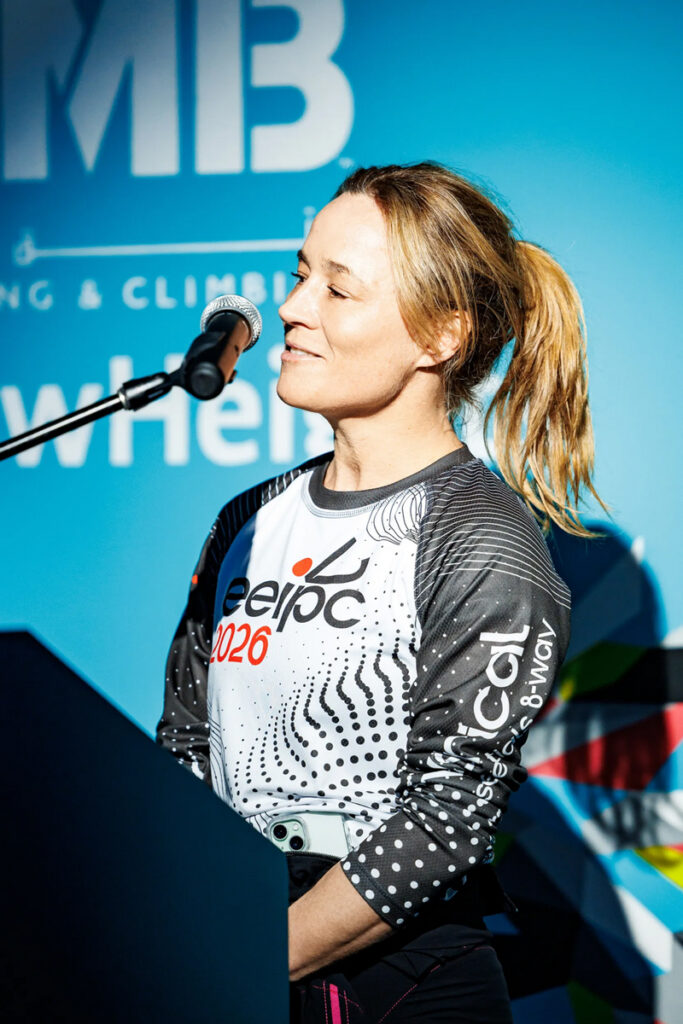
Sometimes it’s a good thing that we don’t know what we are saying yes to. When I was asked to set up a new competition discipline last year, I didn’t think long before accepting, and there were many moments afterward when I questioned my life choices. But last week was not one of them.
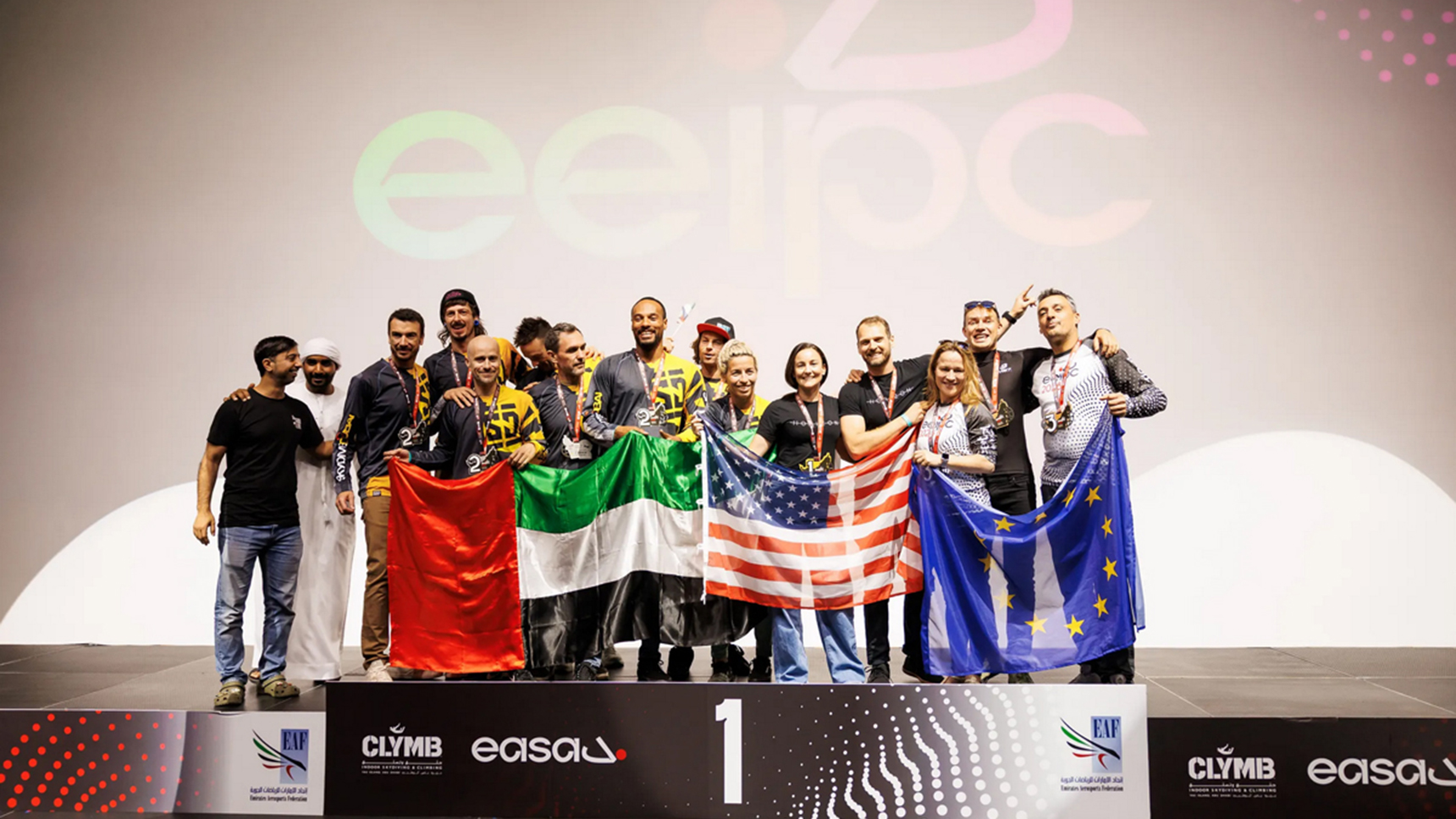
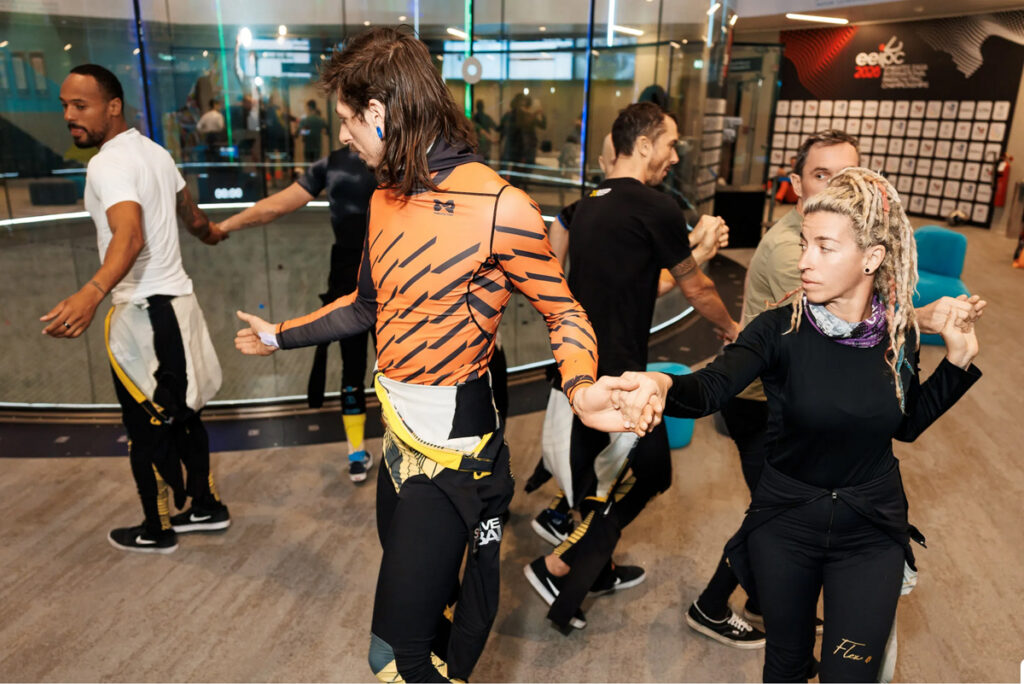
Before my eyes, I saw free routines being built in four days (four hours), groups of eight individuals becoming a team, teams inspiring and motivating each other, and, most importantly, cheering each other on. I have to agree with one of the competitors who said that this was one of the most satisfying weeks of flying of his life.
Did I underestimate the work? Yes.
Did I drive my captains and all the people who helped too hard? Most definitely.
Were the days too long and the schedule too tight? For sure.
Does stress have a new meaning for all of us? Yup.
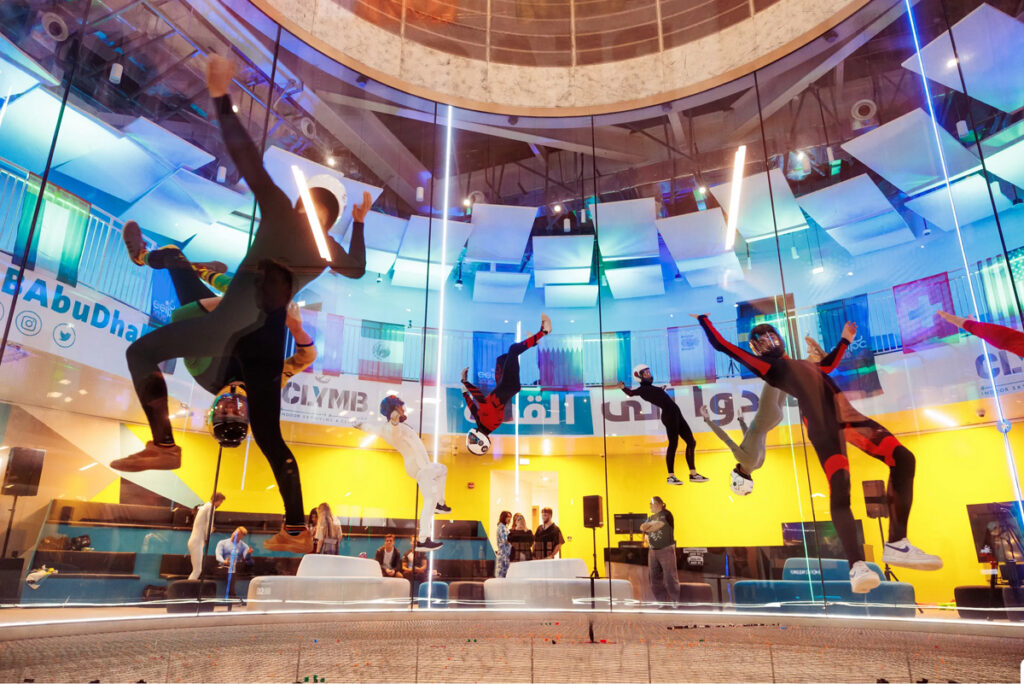
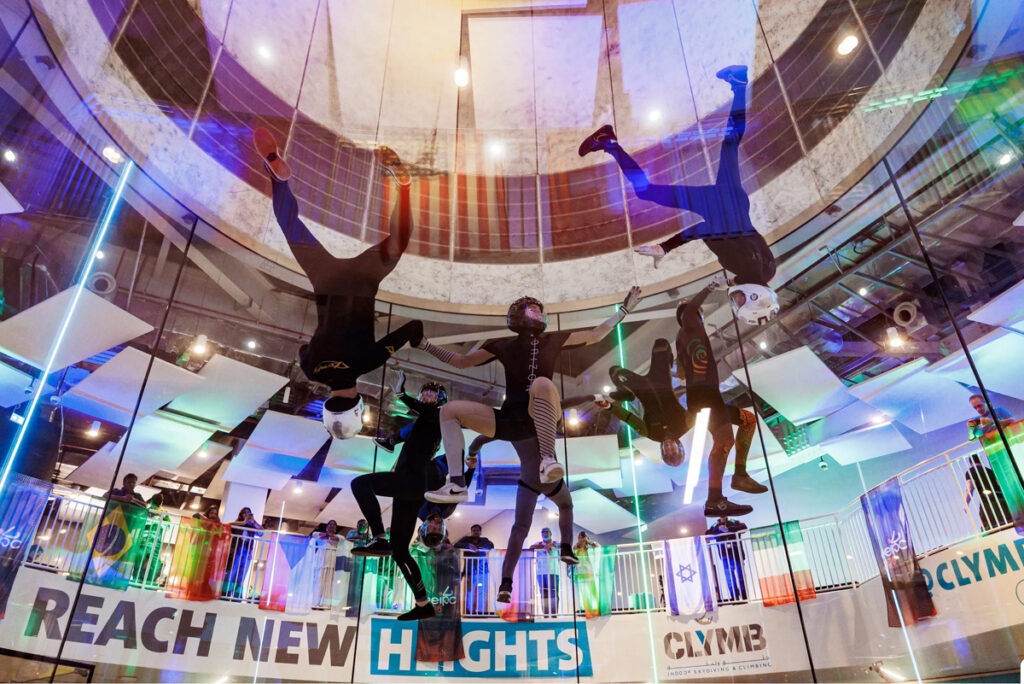
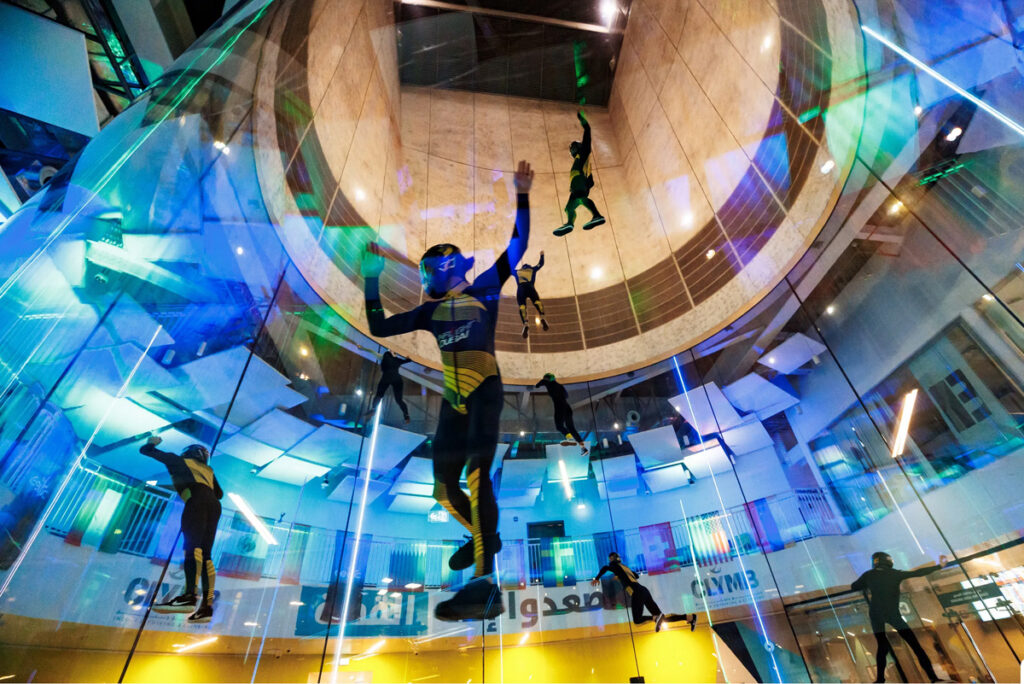
But man, to see four 8-way free routines being built in only four hours and flown in the biggest wind tunnel in the world…that was magic.
The Concept
The concept was simple: four 8-way teams came together at CLYMB Abu Dhabi during a workshop week. Each team received four hours of training time to build and train a free routine. On competition day, eight rounds were flown: five free routine rounds and three compulsory rounds.
The goal, beyond testing the concept, was to bring free routines back, bridging the gap between dynamic and vertical flying while giving the teams a level playing field.
More Than Just Flying
This competition didn’t just test flying skills, but also creativity, teamwork, time management, and leadership. In my opinion, this format fills a gap in the current competition landscape.
Strong, professional flyers who love to compete in artistics, but don’t necessarily want to dedicate four years (or more) to competition, can get their free-routine fix here. The free routine length was 2:00. As the week progressed, we adjusted the time range from 1:45–2:00 to 1:30–2:00. The compulsory rounds were 1:30, with the goal of gathering as many points as possible within the time.
Judging: Learning as We Went
Beforehand, there was a rough concept for judging. In my head, we would keep it low-key and figure it out along the way, following the judging criteria for 4WD Free Routine. However, judging each other’s free routines turned out to be much more work than expected, especially since our brains were already taxed by creating and training the routines.
Eventually, Olivier Longchamps and Max Martin, both athletes competing in The Race, longtime competitors in several artistic disciplines, and with Olivier also serving as a judge, helped establish Difficulty and Presentation scores. Execution scores for the free routines and compulsories were judged by the captains after the competition.
The Difficulty and Presentation scores were close enough that the compulsories could still decide the competition, and they did.
Free Routine Scores
- Euro – 8.8
https://www.instagram.com/p/DTqMxm4EtgP/ - USA – 8.3
https://www.instagram.com/p/DTqKGLckkwv/ - UAE – 8.1
https://www.instagram.com/p/DTqL7TAkvWi/ - International – 8.0
https://www.instagram.com/p/DTqOdJ0EgYS/
The Compulsories
The compulsories were a different ball game altogether. With the goal of bridging the gap between dynamic and vertical flying, competitors voted beforehand on which snakes, verticals, and mixers they wanted to include.
We knew our judging methods would have to be low-tech for this first competition. Ring busts wouldn’t apply, and line busts had to be judged from the top camera view.
As competition day approached, discussions between the captains made it clear there wasn’t enough time to establish solid rules for verticals and mixers. Eventually, we limited the compulsories to snakes only. Even then, after extensive conversations, all teams busted on the switch of the HD Mix Snake.
For this first competition, each compulsory move earned one point. A skip was −1, and skipping the snake was −2 to discourage strategic skipping. A bust resulted in zero points and was given for grip breaks, being out of slot, or being out of orientation at the start or end of the move.
Ultimately, performance in the compulsories decided the competition, with the top three teams finishing within one point of each other.
A Level Playing Field
I strongly believe in a level playing field: all teams receive the same amount of training time to show what they can do. In many competitions, outcomes are effectively decided beforehand, with teams backed by strong federation support taking the stage.
This competition is for the athletes, by the athletes. Teams may be sponsored for registration, travel, or accommodation, but training time is equal. That’s where teams show their worth.
What this competition really highlights is the art of building free routines and learning to fly together, something most flyers don’t get to do often. During the skills camp the week after the competition, captains immediately began teaching free routines to participants, allowing that knowledge to spread into the wider community.
Looking Ahead
I’m stoked about where this discipline can take us. We’re already thinking about next year, what we can improve, how to grow, and what the next steps should be.The most important step will be securing sponsors to hire organizational support. Running something like this on a purely voluntary basis is something you can only do once. If we want continuity, the organization must be able to dedicate real time and energy to it.
Team captains
Europe
Jérémy Saint-Jean & Kim van der Horst
International
Doni Gales & Rob Jones
UAE
Jamie Webster
USA
Jesse Jaber
The competition is sponsored by EASA and CLYMB.
If you’d like to get involved, send a DM to instagram: https://www.instagram.com/vertical_sequentials8/