




Before learning to fly faster, fly steeper or fly head down, professional freefly coach Dani Gallego explains why every skydiver should first develop a deep understanding of relative wind.
How many times have we heard that making a good exit determines a huge percentage of a successful skydive? And yet, I believe that nowadays we don’t take the necessary time to carefully study and understand this part of the jump. Just like everything else in this sport, and in life, it has a natural learning process, and we need to dedicate enough time to each stage so that we don’t find ourselves in the future wishing we had spent more time on the basics instead of trying to progress too quickly.
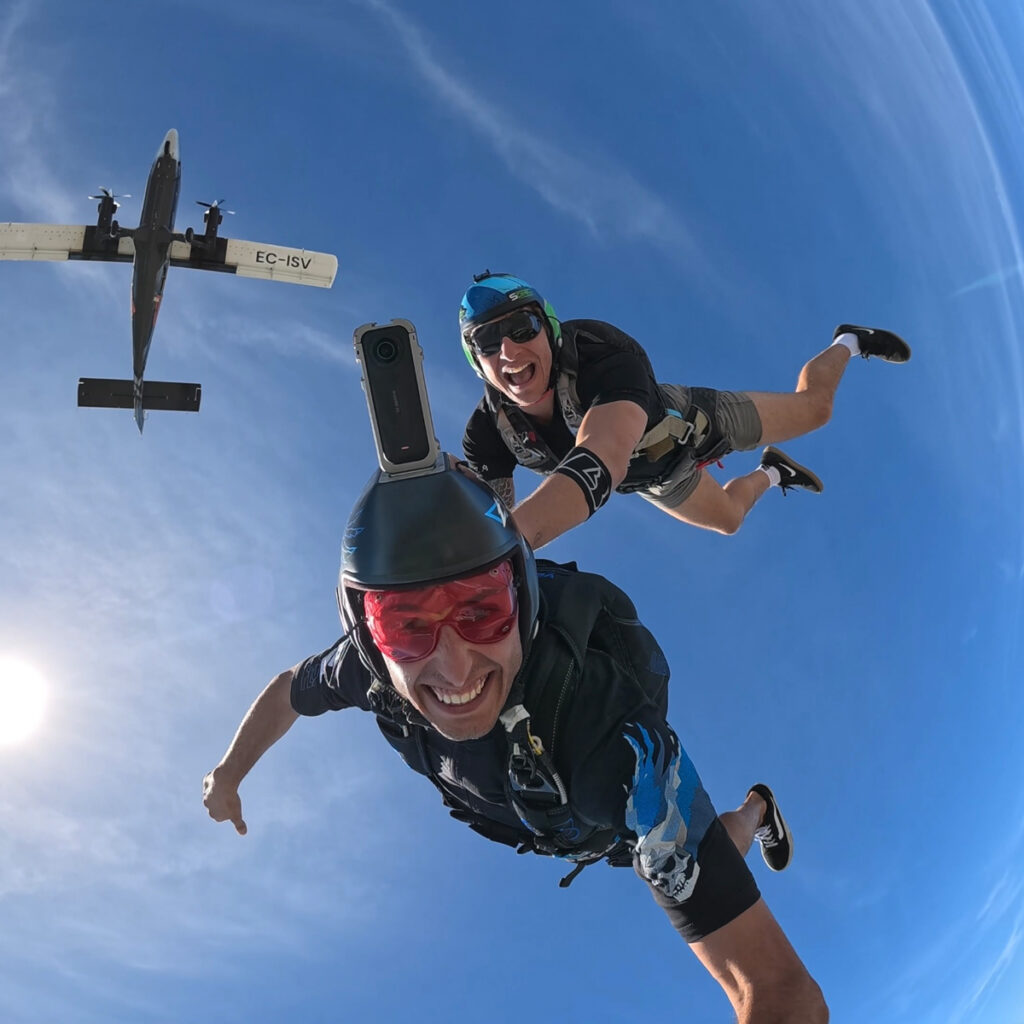
Photo by Cesar Rico
Starting With AFF
During AFF, we are taught where relative wind comes from and how to manage it well enough to achieve a minimally stable exit. We usually learn two basic exits, both with our chest presented to the wind: one facing toward the pilot, and the other facing toward the tail of the aircraft. Both are belly exits.
Once we finish the course, we know how to exit in this position. The next step is to consolidate it by improving our heading and our penetration into the relative wind (more or less drag).

Photo by Gustavo Cabana
Entering the Relative Wind on Your Own
This is where things become interesting, once you start making exits without instructors by your side.
To begin doing this successfully and to avoid becoming the wheel that never stops spinning on every exit, it is necessary to understand how to fly belly and how to move in that position once you are in the relative wind.
Coming from a tunnel flying background, I find it quite strange that someone who is not yet stable on their belly starts flying back, or even head down. Yes, you read that correctly. How crazy would it be to take someone who isn’t stable in belly and teach them head down in the tunnel, right? That’s a topic we’ll cover another time.
Some of the problems that can arise when trying to fly at high speeds without following the proper progression include:
- Drift in any direction
- Generating high speeds without control
- Long, unintended horizontal movements
For that reason, try to explore the basic body positions as much as possible, because they are what will allow you to understand how to deal with the relative wind.
My recommendation is to spend as much time as possible working on belly exits, focusing first on controlling your heading and, if you rotate in yaw or roll, correcting it to maintain your intended direction.
If we want to get started with tracking, it is important that our initial direction matches the aircraft’s flight path.

Photo by Ewan Cowie
Practice Exercises
Some exercises I recommend practicing once you’ve entered the relative wind are:
- Turns in place, in both directions.
- Moving forward and backward while maintaining heading (without applying an angle).
- Focus on driving your knees backward (arching) and bringing your knees forward (de-arching), and understand the difference in fall rate.
Once you are qualified, try doing these exercises with another person to add an extra level of difficulty and test your skills. (Remember to turn perpendicular to the aircraft’s flight path approximately five seconds after your exit. If you’re not sure, ask an instructor while preparing your jump on the ground.)

Building a Strong Foundation
By following this process, you will learn to identify the relative wind and increase your success rate on belly exits at every angle, regardless of your experience level.
Give it a try and let me know how it goes.