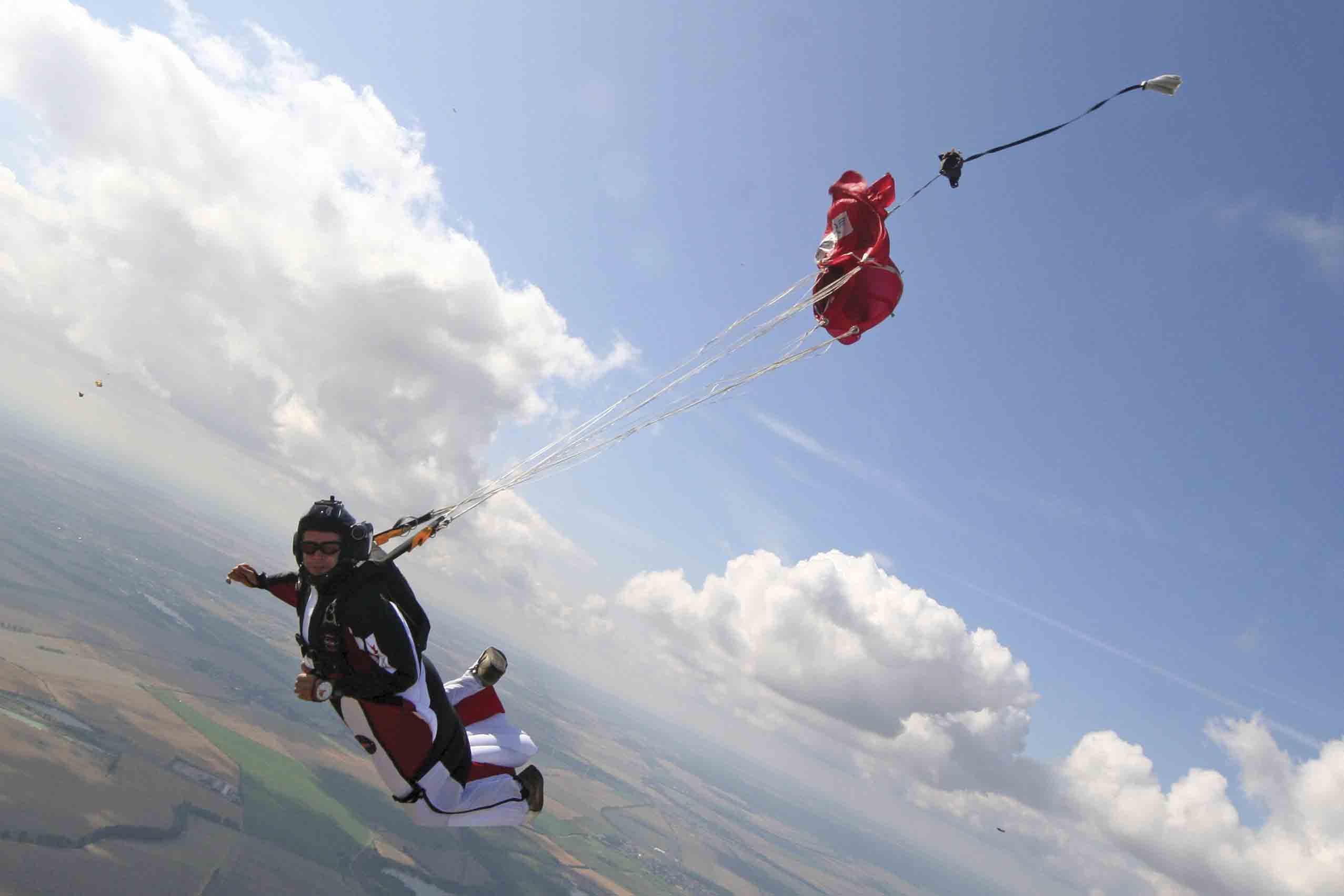




In discussions about reserve rides with wingsuits, many times I was asked for a relationship or common factors. Let me try to answer that question this way – prevention is better than cure!
Pull High, and Stable
It is always a risk to talk about incidents that I have not personally observed. But generally I have seen many wingsuit pilots who are not 100% stable when it comes to pull time. They think they are – but they aren’t! In addition to the low rate of descent caused by a wingsuit, this may be the first step in the wrong direction. Before we start a discussion about substitutes like ‘longer bridle’, ‘bigger pilot chutes’, etc, we should address body position on deployment.
Always stop your wingsuit flight a little higher than a normal skydive. In the beginning, 5,000 feet (1,500m) should be pull time for you. Tell manifest that you need to pull a little higher. Step by step you can lower your pull altitude down to 3,500 feet (1,000m). No ‘Bird’ should pull lower; this way you allow yourself time to concentrate on a clean pull. It will also give you time enough to open all your zips – or to deal with ‘Plan B’ (LQRS or whatever is needed, see later). If you were caught by surprise and find yourself lower than you should be, your pull might result in a frantic, non-stable action, the result of trying to get your main out asap! So? Pull high, pull high and stable (like AFF, remember!), close all your wings before you pull – and don’t forget to ‘wave off’ beforehand (Birds do that by tapping toes).
Jump a Suitable Canopy
If you jump an elliptical or semielliptical and kind of aggressive small main canopy, you will face even more problems right after a not so stable pull and opening. Experience shows that elliptical canopies don’t come out of a line twist by themselves; in most cases they make the twists worse. I have 1,200 wingsuit flights now, with only one cutaway: I had an elliptical main at that time. This is the reason all wingsuit flight manuals say ‘don’t jump an elliptical canopy’. I myself like to fly my second 7-cell Spectre 120 now; the one I have today is 1,800 jumps old and still quite good! But Sabres, Quadras, everything that is non-elliptical, is okay too!
Practice Makes Perfect
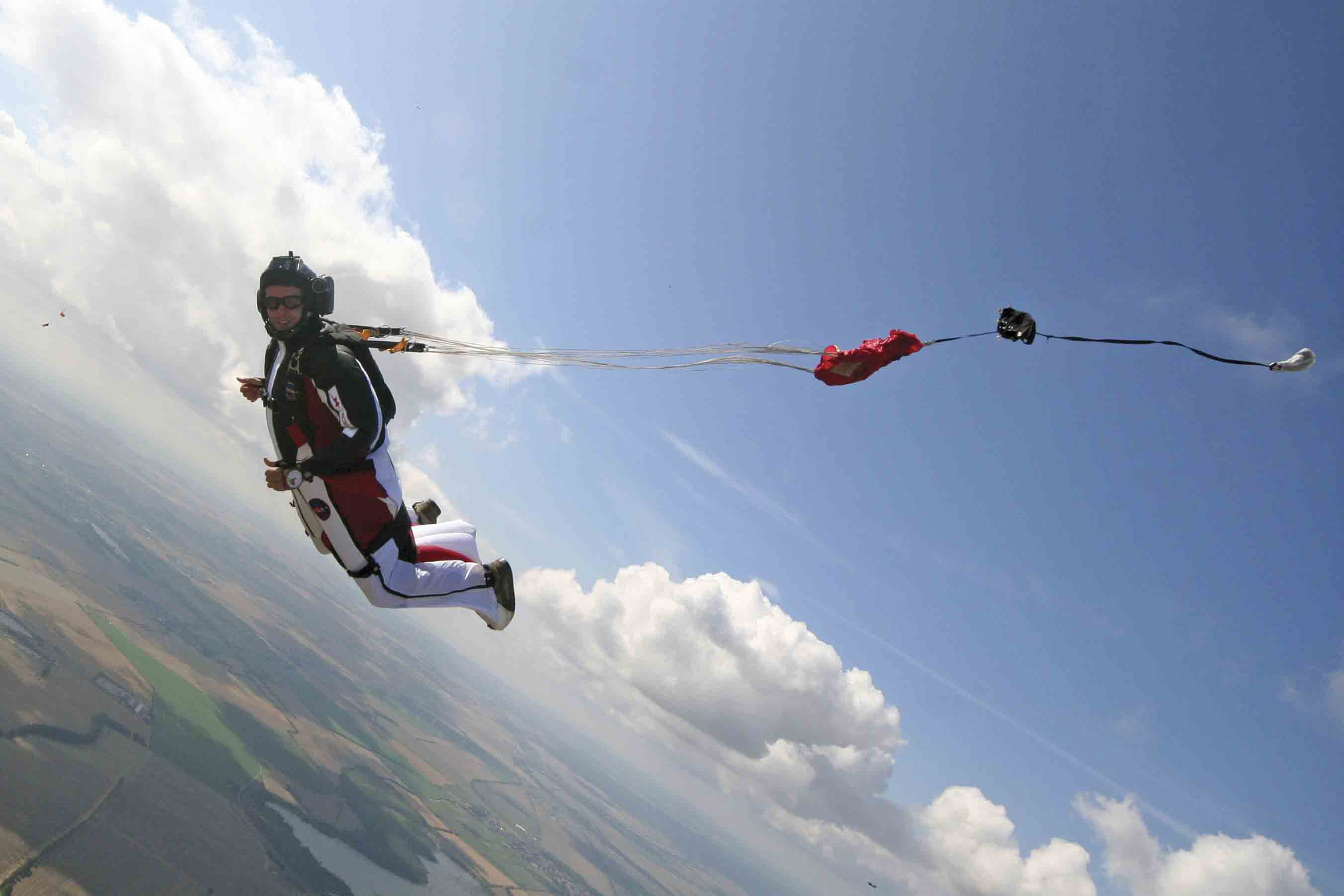
Okay, when it comes to ‘technique’, let’s talk ‘body-technique’! When you are high enough on deployment, you have all the time you need to make sure you are symmetrical and stable. Even if you need a second attempt, you are not in a hurry! You can practise this if you like; think ‘wingsuit’ but jump without a wingsuit, practise the perfect wingsuit body position for pull time! If you find you still deviate in this moment, maybe you are not ready for a real wingsuit flight just yet. There is more information about this in the many wingsuit flight manuals.
Be Ready
One technique I myself use; I put both hands on the two arm wing release handles, right after I pull. Do I need them? Well at least I’m ready. And if not? I can let them go again! And open the zips instead, as planned.
Quick Release Legs
I am a big fan of LQRS, the Leg Quick Release System. This option doesn’t cost so much extra, and will always provide you with the opportunity to kick out line twists, etc.
Summary
- Read the manuals
- Altitude is safety
- Better skip elliptical canopies
- Clean stable body position at pull
- Always have a plan in case something goes wrong.