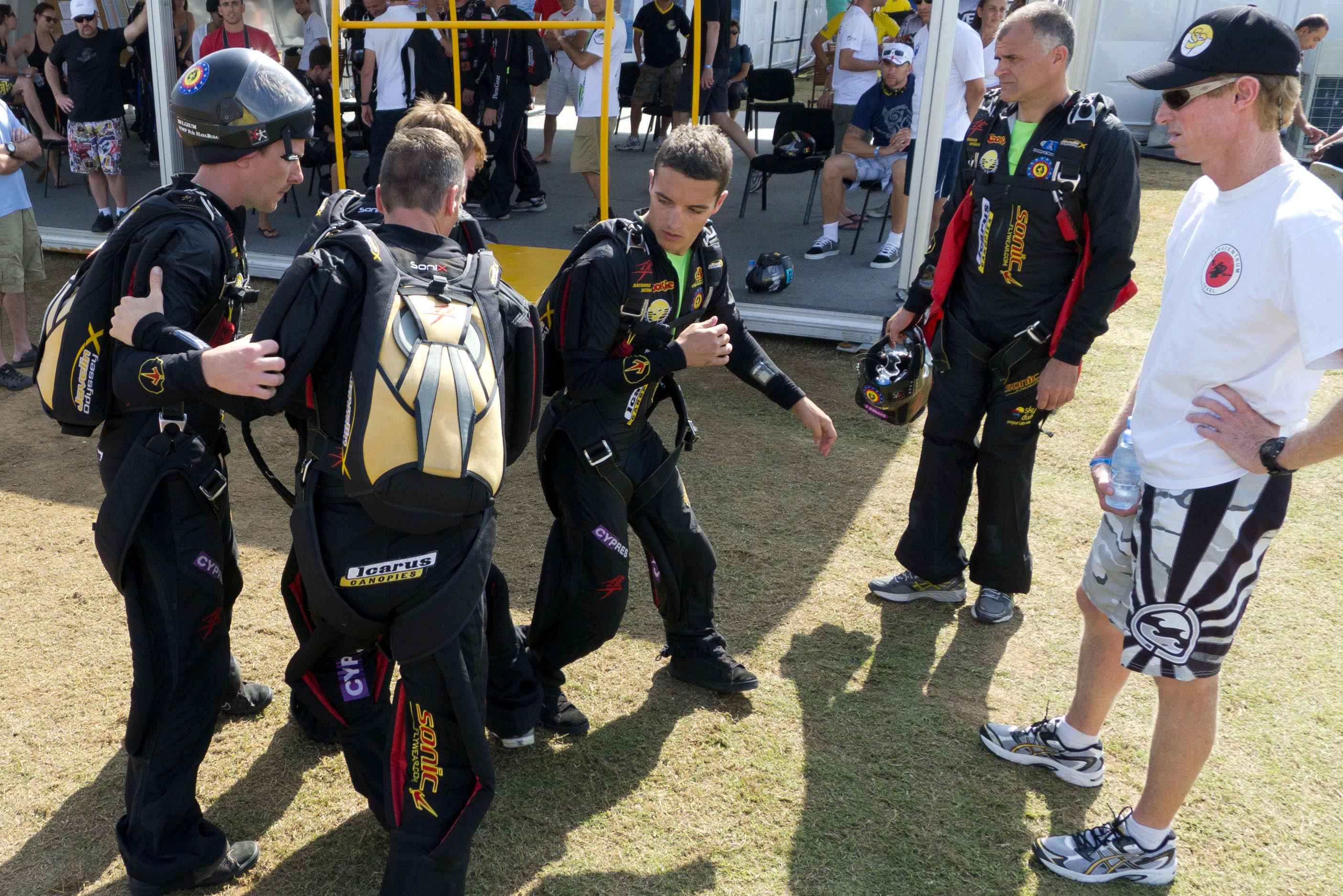




How do we Choose a Coach?
Dear Rolls
We had some problems last year with our coach, and decided not to use him again, as he had been very unreliable. So now we’re looking around for a good coach. We have a 3-year plan as a team and currently have a 15-point average in AAA. My question is, how to decide on a new coach? What do you think is important? What questions should we ask him/her? Is it best to try and get a coach to do 3 years with us or better to change coaches each year?
Cheers
Rosi

Hi Rosi,
When you’re looking for a (new) coach, it’s like looking for a new team member. There are many coaches around, but just a few will really fit into your team dynamics. I think that one of the most important things is that there is a mutual sympathy and respect for each other. Friendship is always a great way to start the cooperation between coach and team.
There are many different kind of coaches, with all different skill levels and experience. To be a good coach, there are things more important than just being friendly and funny.
Depending on the team goals and the level you are shooting for, the coach must match the profile. If you’re aiming for a 20+ average, but your coach never flew higher than a 15+ average, he’s probably not the best choice for the job.
COACH CHECK LIST
Let’s have a look at the ‘check list’ when you are a team with ambitious plans.
KNOWLEDGE – THEORY
To be a good coach it’s essential that at least you know the theory of how to fly your body, and have a good technical understanding how blocks work. Knowing the differences between exits, hill work and terminal movements is mandatory.
## SKILLS – PRACTICAL
As a coach, you need to know the theory, but knowing what it feels like and understanding what problems occur by a certain speed, is a big advantage to teach the team the correct skills. So finding a coach that has flown at the level you are shooting for is surely recommendable.
EXPERIENCE
Having a coach with many years of coaching experience is an advantage. Usually he already knows what to look for during the briefing and debriefing, because we often see the ‘classic mistakes’. Having different ways of explaining the right technique is necessary, because everyone processes information in his or her own way. Your coach must be able to adapt to the team and to be creative in seeing and explaining stuff.
COMMITMENT
A good coach is a person who is not there only for the money! To me, a good coach really wants to share his knowledge and passion and cares that the team is learning and making progress.
You want a coach that works equally as hard as the team, someone that takes the job and preparations seriously, who analyzes every step on the way.
You don’t want to have a coach that sits on his lazy ass on a table, just summing up the next formations. He must be actively involved and not just playing the Joker to compensate for hard work
You don’t want to have a coach that sits on his lazy ass on a table, just summing up the next formations. He must be actively involved and not just playing the Joker to compensate for hard work.
LEADER
A good quality of a coach is to be a leader, without becoming dominant or arrogant. The job is to keep the team on track and send them in the right direction in a respectful way. The coach must be able to deal with different personalities and needs, often being a diplomat as well.
MENTAL TRAINER
Having a coach with lots of competition experience will help with the mental training and preparation as well. If he went through lots of up-and-downs during his career (the downs usually in the beginning) he can pass on that experience and try to avoid that the team makes the same mistakes.
COACH OR JUST A GOOD COMPETITOR?
As we all rationally know, being an awesome competitor doesn’t make you automatically a great coach. We all have a certain natural ability for teaching but, even if you have it inside of you, we need to keep developing it to become outstanding. So keep in mind that having a high level athlete is an advantage, but it’s for sure not a guarantee that the person’s coaching skills are evenly matched.

BRANCH OUT
Once you found the right coach, I recommend staying with him [or her] for at least two years, but obviously this is also depending what the team goals are. Switching coach every year doesn’t make sense to me, as this is too short to make it work in the long run. It always takes some time to grow together as a team, and the full potential cannot be reached within one year. Nevertheless if you are happy with the current coach and you feel that the team is still improving and learning new stuff, there is no need to look for a new one. Some co-operations can last for a very long time, but in the end branching out and getting new kinds of input from other coaches will make the team better as well.
SO-CALLED COACHES
In our sport there are many people who call themselves ‘coach’, and they all have good intentions, but not all of them are qualified enough to do the job properly. We need to ask ourselves, why do we work with a coach? It’s for learning techniques, engineering, mental training and so on… The reason why we hire a coach is to save us time and money, right? So you better make sure he is worth the money.
Even if you are in one of the best teams in the world, nobody will think, ‘Oh let’s make this move more difficult than necessary’
The comment I hear often from junior teams is that they choose a ‘low level’ coach because it is cheaper and that they don’t need a top level coach for learning their basic skills. Until a certain degree I fully agree. But be aware of the following facts… All of us know that learning something new is quite easy, but it can be damned hard to get rid of old habits. I cannot emphasize enough that especially when you start doing 1-on-1 coaching, take a good coach. Someone that has ‘good eyes’ for it, who is able to correct you right away. The money that you probably pay more for a good coach is more than worth it. Learning the correct skills is an investment for your skydiving career. If you learn ‘Old Skool’ stuff, it’s a waste of money and time, and afterwards you need to learn the correct techniques anyway, so then you’re paying double.
A comment often made by ‘low level’ coaches is; you don’t need a top-level coach because you cannot fly like them. First of all, a good coach will always adapt to the skill level of the team and work with the technical ability of their students. Because once we were all beginners, we know how it feels like. Secondly, even if you are in one of the best teams in the world, nobody will think ‘Oh let’s make this move more difficult than necessary’. All the top teams in the world try to find the easiest and most effective moves. It is not always possible to do an efficient, quick and easy move, that’s for sure, but then we also don’t teach it in that way.
Don’t get me wrong; I am not attacking anyone here! I fully support the people that are trying to help others and give their best. But I am a competitor, and I wish for the new generation that they can and will learn the correct things since the beginning. Only in this way we can keep raising the level of our sport, which I believe still has a big future ahead of us.

TRY OUTS
If you have a few coaches in mind, I suggest to do some ‘try outs’ with them and see what feels best. They probably have different ways of explaining and how to work with the team. By working with a few coaches there is a chance that you must fly the same block in different ways, and yes, you might lose some time with this experimenting, but it is worth the investment to find the best coach possible for your team.
QUESTIONS TO ASK
If you do the try outs, ask also for each coach’s availability, coaching fee (including bad weather & travel days) and whatever is on your mind. Making clear agreements since the beginning will help to avoid problems in the future. I believe working with a coach is necessary to save time and money, plus having an outside point of view (not only for the technical stuff) can be a big help to avoid internal problems and discussions.
I wish you good luck finding your new coach!
Kick ass!
Roy
Check out Roy’s FS Coaching page on Facebook