



What flying skills do you think are essential before someone considers learning to BASE jump?
I believe it is very important to have at least 200 skydives before learning to BASE jump. This really isn’t very much, the standard used to be 500 about 10–15 years ago. A person needs to be very comfortable, current, and accurate with a canopy. They should practice reaching above line twists when they get them, to control the canopy from above the line twists before trying to get out of the line twists (as long as they are not on a small sporty canopy). They will want to get used to correcting heading with rear risers after deployment as well. It is quite helpful for a student to fly a BASE canopy on several skydives too, to get used to the differences in flight and control.
Do you believe every prospective BASE jumper should go through some form of dedicated tracking or wingsuit training before their first BASE jump?
Not necessarily, because some people are not interested in terminal wall jumps. If a person was planning to do terminal jumps, then yes, it would be helpful to get training for tracking and two-piece tracking. Wingsuit can come much later, after mastering a two-piece tracking suit.

What are the most common body flight weaknesses you see in students entering BASE?
Poor body position on belly and poor body position on deployment.
What’s the most preventable mistake you see in BASE and fatalities?
Many fatalities happen because of poor decision making. In BASE, there are big consequences due to the unforgiving nature of the sport. Many people want to progress rapidly because of all the videos online that make it look easy. One should take their time and understand the negative possibilities that can happen to anyone. A person is blind to the negative side in the beginning and they make decisions as if nothing will ever happen to them. Given enough time in the sport, they will be confronted with death of friends, close calls, and scary situations. This will rapidly mature the jumper and they will naturally make better decisions, if they make it through that beginner phase. The key is to control one’s eagerness, learn from the mistakes of others, and just be very conservative.

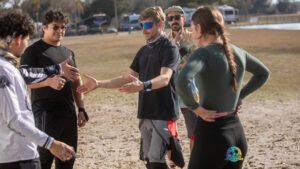
Photo by Megan Hackett
How do you coach people to recognize when they’re ready and when they’re not?
I help them learn to make better decisions, as this is one of the most important parts of BASE. I help them decide if they are not ready or if they need to take a step back, without deciding for them. If I decide for them, certain personalities will just see me as the guy getting in the way of their hopes and dreams. But if I help them see and make that decision on their own, often times it is better.
What’s your recommended progression for someone starting with a skydiving background who wants to BASE jump?
Get at least 200 skydives — more is better. Practice tracking, accuracy, and jump at different DZs. Practice reaching above line twists to control the canopy when you have them. Take your time and understand that it is very serious and unforgiving. If you are in it for social media fame, you are missing the whole point and risking more than you are aware of. It is for a personal passion, not to get attention. Take a real course and don’t cut corners. Look for the most experienced people and go there, not a budget course. Time and experience in the sport teach the best lessons. Just because a person does the craziest jumps doesn’t mean they are actually a good jumper. Anyone can go risk everything — it is all about control of the body and mind, and the ability to make good decisions in each moment.

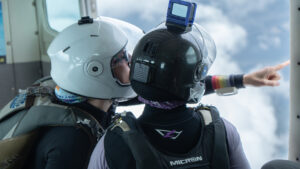
Photo by By Megan Hackett
What do you wish more people understood about the gravity (no pun intended) of the sport?
There are no mistakes allowed. It is not fun when your friends die. You are blind until you have a few years in the sport, until you have been confronted with the negative side of the sport. It can be very, very fun, but it can also be horrific. Use the negative side of that spectrum of experience to help you make wise decisions that will keep you on the positive side.
Sponsors: SQRL, Kavu
Catch up with Sean on Instagram