



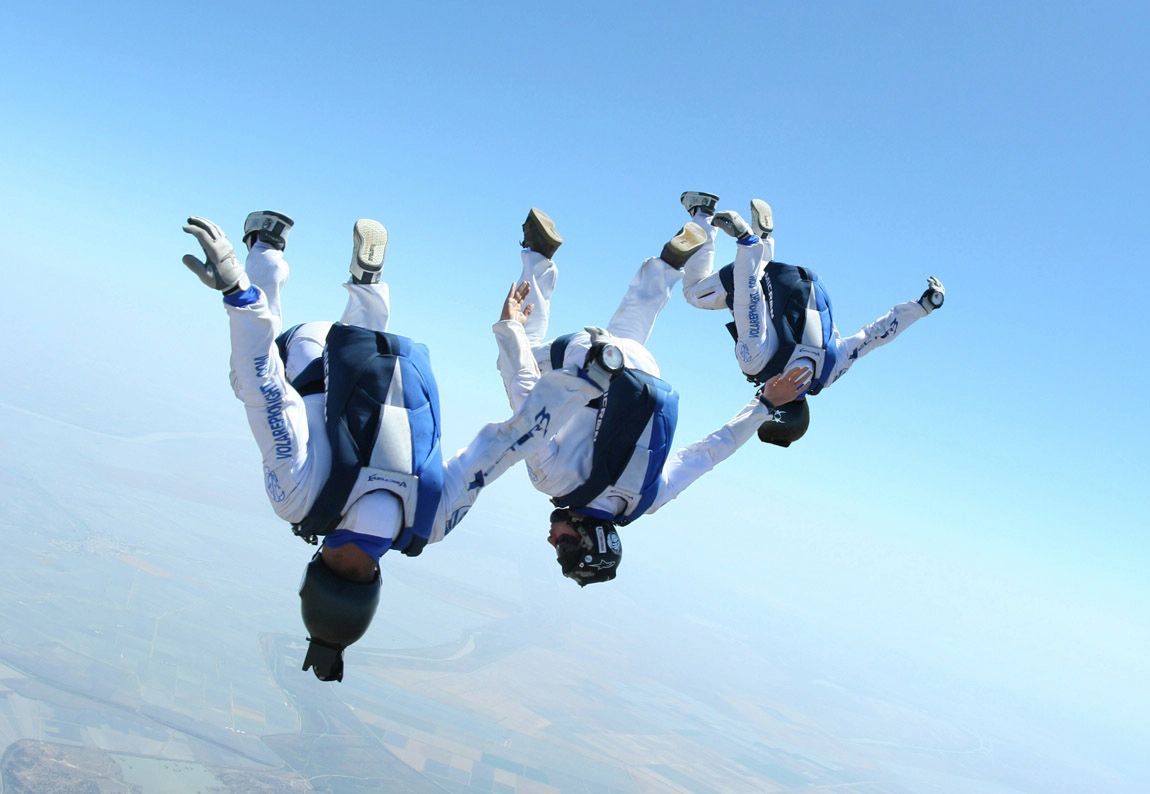
It seems that the majority of non freeflyers have very little knowledge of the artistic arenas. I often hear comments like “It looks hard but I’ve no idea how it’s judged.” or “The problem with freeflying is that it’s purely subjective” lead me to surmise that many still regard freeflying as a purely peripheral discipline lacking both structure and direction. Because of these common misconceptions it seems that many skydivers feel that making a transition from the point-based competition structure of FS into the world of the artistics might be too big a leap into the unknown.
After all we’re all in skydiving to progress, so it’s understandable that taking up a discipline that seems to lack direction might seem like making a bit of a risky investment. And after all, the majority of skydivers will see slower gains in freefly progression in comparison to FS. I feel that another big reason for the relative lack of interest in competitive freeflying is the fact that there are very few flyers who understand the competition structure, ie, what makes up a free routine?
How is freeflying scored?
A full meet is seven jumps, of which two are ‘compulsory’ rounds, the other five are ‘free’ rounds. As the name suggests the compulsory rounds include some ‘must-do’ moves that have to be included in the jump, called Compulsory Sequences. These can appear in any order, and may be joined together with other moves at the team’s discretion.
What is a freefly free round?
The rest of an artistic freefly competition is made up from five free rounds (free routines). The IPC competition rules for Artistic Events (5.2.2) define this round thus: “The content of the Free Routine is chosen entirely by the Team.”
I would define it as an artistic demonstration of aerial skill and control, using creative camera work to grab the spectators’ attention, with the aim of involving them in the flow of the dive. It is essentially a piece of performance art and, with this in mind, should affect the spectator or judge at an emotional level. It is also essential that the free routine should include the demonstration of technical ability as part of the performance, in order that its artistic production can be broken down and analysed.
How is the free routine judged?
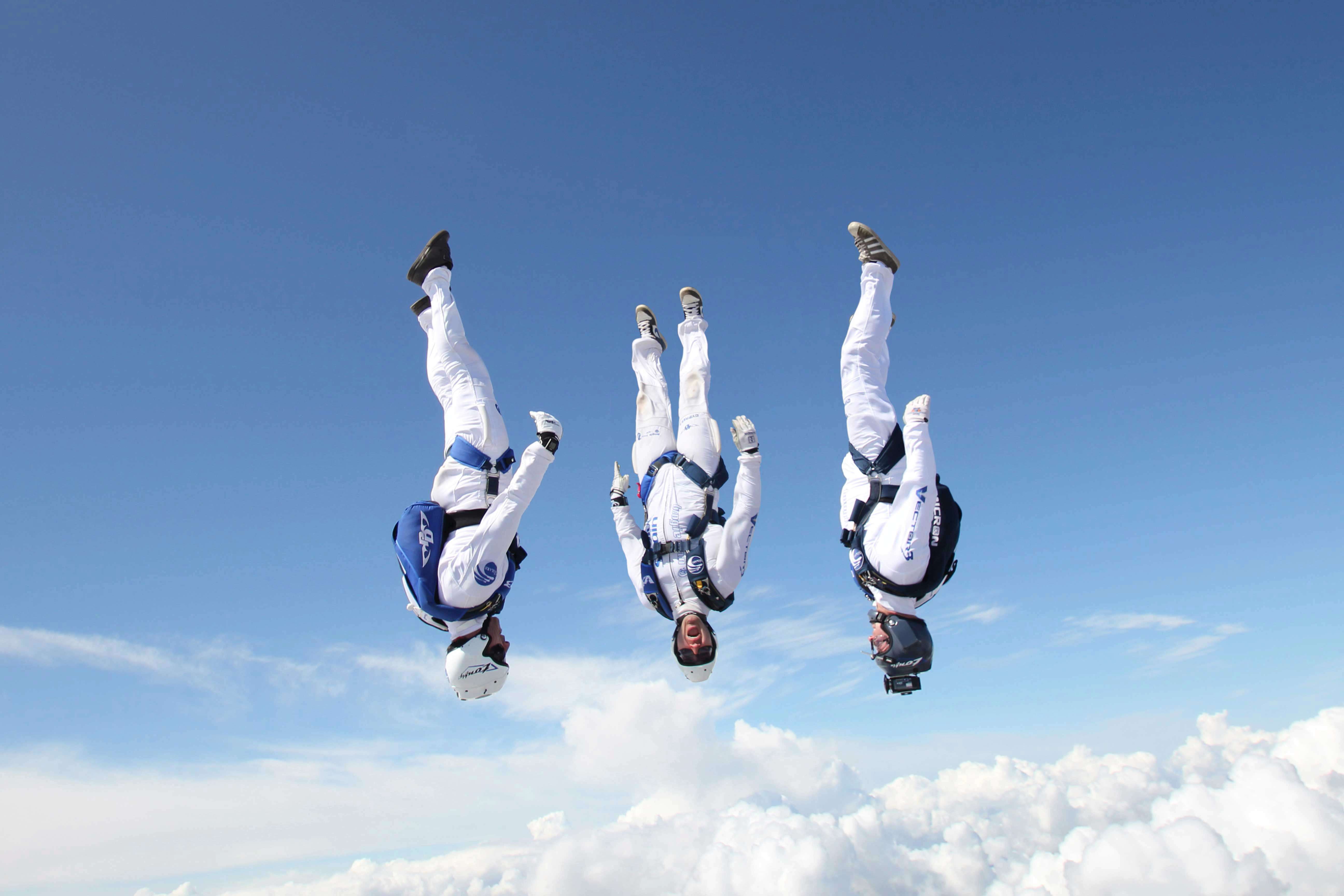
The myth that free routines are judged in a purely subjective manner comes from a lack of understanding and a misinterpretation of the rules. A free routine is judged on presentation (both the performers and the cameraflyer) and technical difficulty. A panel of judges is broken down to individually concentrate on these specific areas in order to increase objectivity and accuracy in regards to scoring.
Of course there will always be argument when it comes to teams being judged on their own artistic merit or individual style, especially when a team fails to keep up with the latest developments in the specific discipline. Despite this I believe that artistic freeflying is pretty much what it says on the tin:
- Artistic
- Free
- Flying
Failure to combine these three elements within a free routine will probably result in disappointment.
Understanding the game
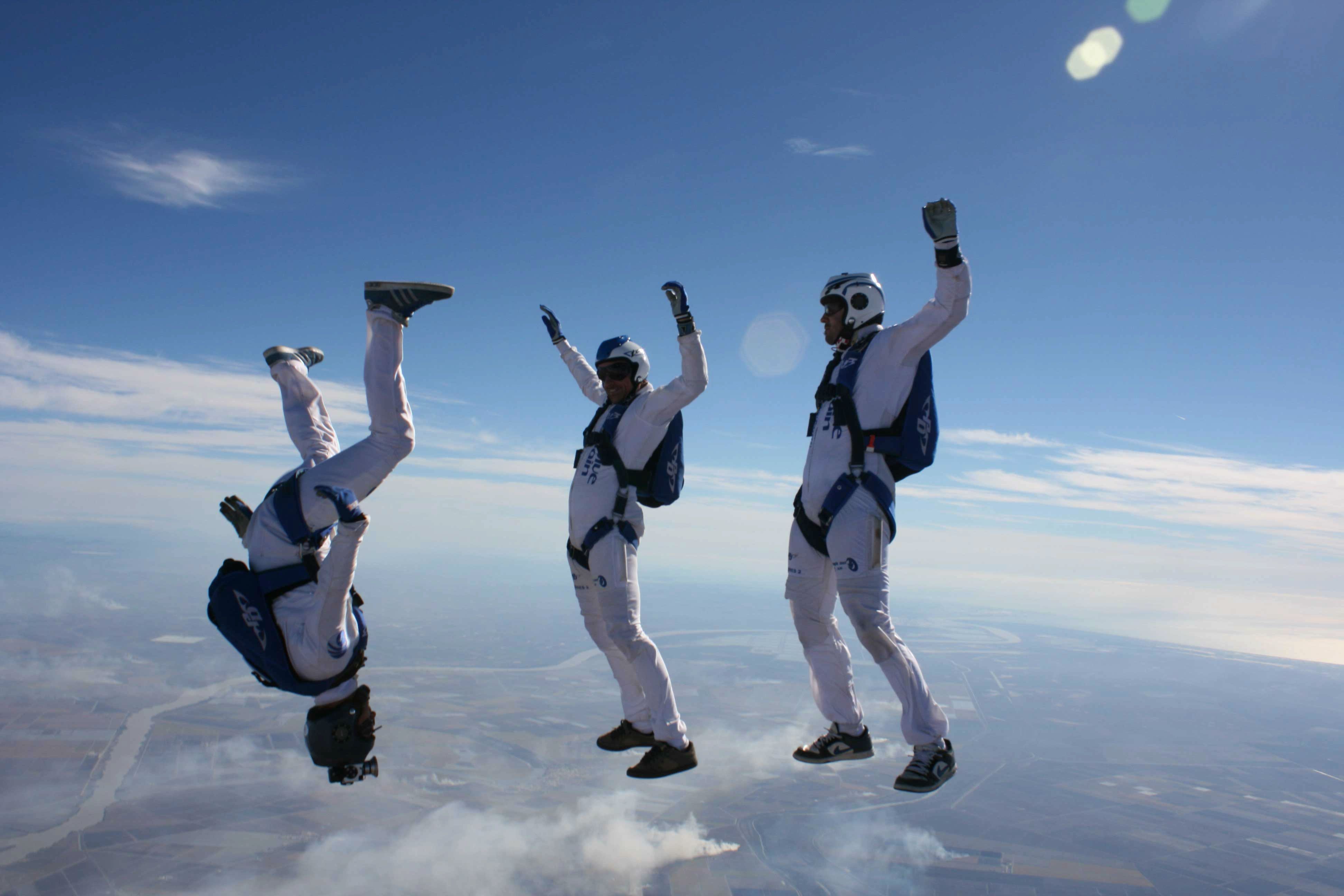
Ideally a free routine contains a powerful style of continual synchronised three-way movement (flying), structured to incorporate technical tricks within the flow of the dive. It is important that a freefly team understand what they want to showcase before they start structuring their free routine.
Where do I start?
Research
Look at what’s happening within the discipline and try to find footage of the latest developments. Look at what the top teams are doing and find a way to incorporate the latest techniques within your routine. If you decide to copy a particular sequence or trick try to add a twist to it. Make it yours.
What can you do already?
Try to plan and build your free routine around your existing strengths. Basically don’t bite off more than you can chew. Use your existing skill base as a platform from which to launch new tricks, rather than trying to wipe the slate clean and remodel yourself on the current world champions. The beauty of the free routine is that it should be designed around your own unique style; embrace it.
How do I create a routine?
Essential elements
• Memorable start and finish • Show something original • Have continual flow • Fly clean and strongly • Fly together, fly as a three-way • Showcase the flight! • Finish in time
Start with a bang!
Start your free routine with a bang. Try to create an original entrance (exit) which will set the pace of the routine. If you can find a new trick or do something explosive from the outset then you will effectively grab the spectators’ attention, then it is just a case of holding onto it and taking them on a journey.
Tips
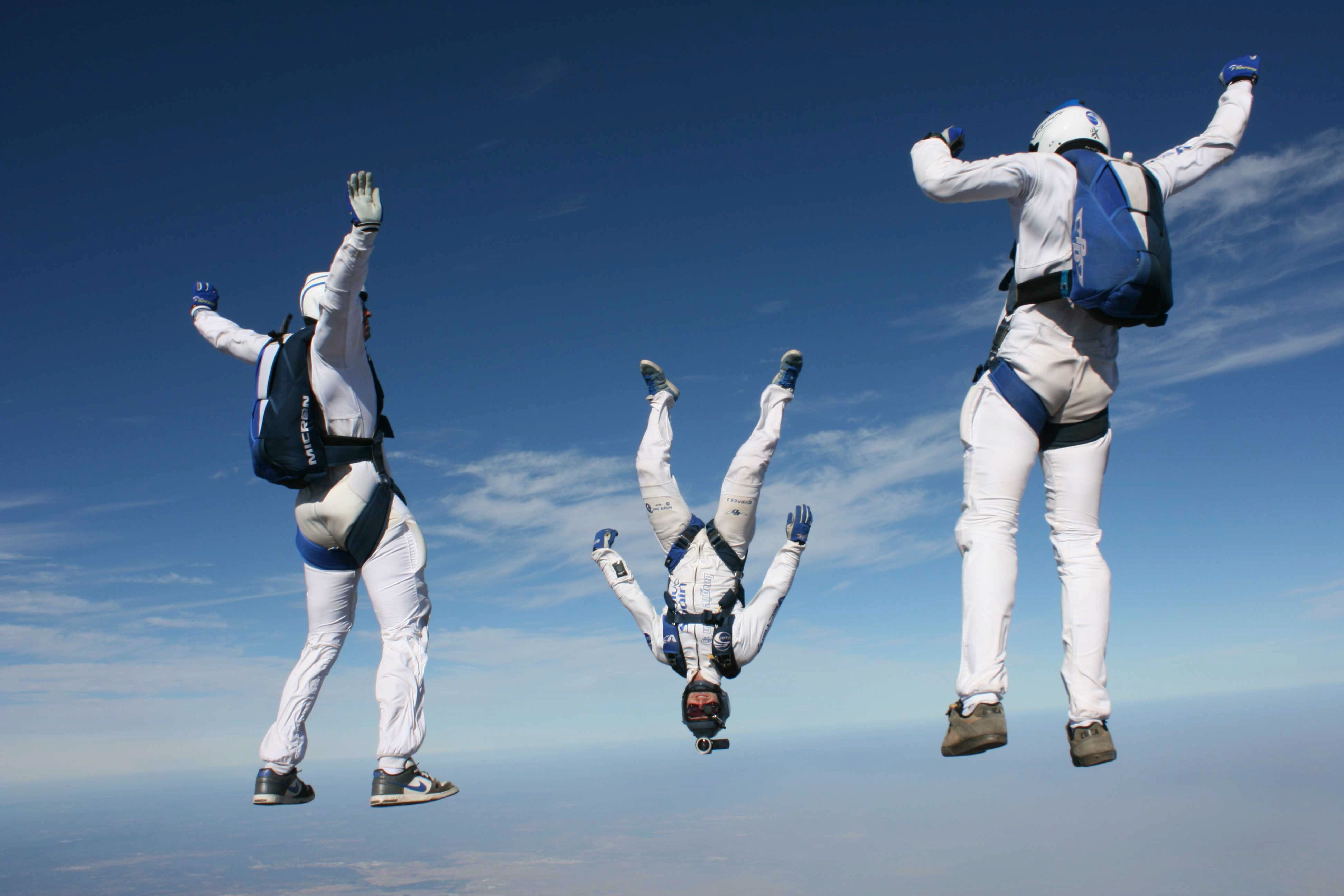
The exit is a good place to create a presentation piece, possibly something complex but initially static, eg, head to head, a very difficult move to perform at terminal but surprisingly stable on exit. Free flown rotational moves with no grips (eagles and carves etc) can be hard to control and may lead to separation on the hill because of the increasing speed and angle change.
Set-ups and keys
Break down the routine you have in mind and concentrate on the set-ups for each trick or sequence. As with all skydiving disciplines it is important that we have a solid foundation to start from. Slowing things down and setting up correctly allows us to become more predictable thus reducing confusion. Think about using obvious keys to initiate tricks and sequences when training. These will become less obvious as the routine becomes more polished and will not noticeably detract from the flow of the dive.
Your final move must create a lasting emotional impact on the spectator – Go out with a bang!
Fly with the camera
Artistic freeflying is about three-way flying. It is important to include the camera as an integral part of the routine throughout the dive. Failure to do this will result in a static presentation and give an unwanted 2-dimensional feel. Try to use as much of the sky as possible by having the cameraperson fly sweeping and integrated orbits with the performers. This type of camera integration will give the routine a better flow, help to hide certain static set-ups made by the performers and give the routine an element of speed.
Fly clean
Think about flying clean. The term ‘flying clean’ basically equates to the performers flying in a smooth and strong manner (gymnastic presentation) with little unnecessary movement. This also applies to the cameraflyer, who should fly in such a way as to create a smooth image without camera shake.
Keep it simple
It is better to showcase a simple trick done well than a highly technical trick done badly. Highly technical tricks can also be high risk, so ask yourself whether it’s worth including something that has the possibility of going wrong and detracting from the rest of routine.
Finish your routine
Finish in time. It is better to be a second or two under than not finishing at all! It is okay to go over the allocated 45 second time-frame in training as it is likely that the more you rehearse the dive the quicker you will get through it. If you are consistently going over time as the competition draws nearer don’t be afraid to cut sections or tricks out if you need to.
Go out with a bang!
Your final move must create a lasting emotional impact on the spectator and show a definite end to the routine. As with the entrance, it is a good idea to showcase an explosive and memorable finale.
And finally
Don’t take it all too seriously!