




In the Middle Ages when fresh meat was scarce, it became common to try to deceive someone by selling him a ‘pig’ in a poke (bag). In fact the bag would contain a cat, never prized as a food source. So, if the buyer didn’t check the contents he could expect to be deceived. This practice gave rise to various idiom worldwide, such as ‘never buy a cat in a bag’, or getting a ‘pig in a poke’ or ‘letting the cat out of the bag’.
This premise is enshrined in British commercial law as ‘caveat emptor’ — ‘let the buyer beware’ (Latin). This remains the guiding principle of commerce in many countries: if you buy something it’s your responsibility to make sure it is what you intended to buy.

Buyer Beware
This same principle applies to buying gear on the internet or through classified adverts. Every month or so our loft at Chuting Star has a new jumper come through who wants to find the ‘best deal’ on a rig. He or she is usually interested in finding used equipment online or through a classified ad.
Start Locally
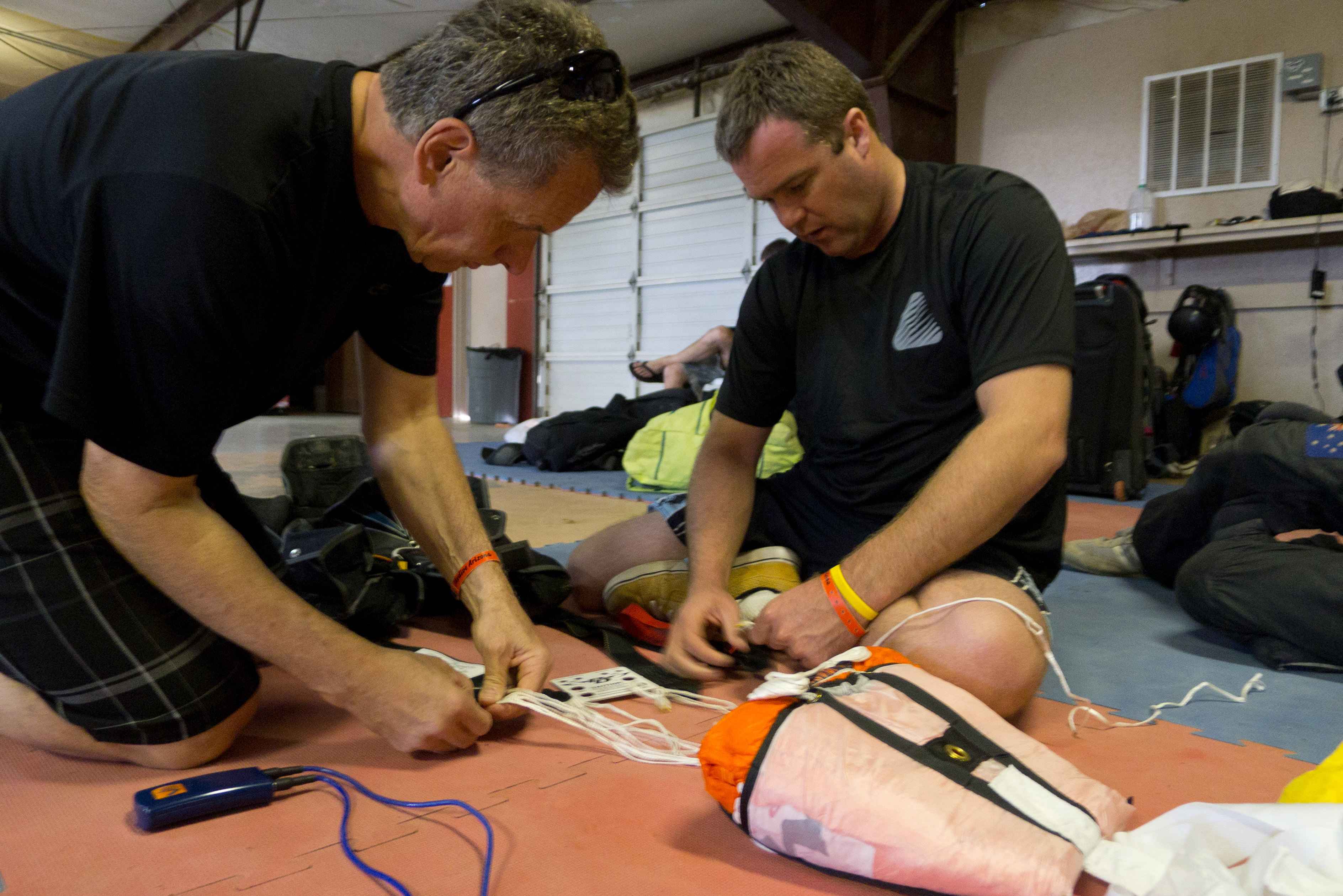
This is fine but start locally to reduce the hassle. Most DZs and gear shops have used kit available from jumpers who skydive right there and local riggers know a lot about the condition and history of the rig, AAD and its parachutes.
History & Inspection
Equipment bought through a gear shop has usually been inspected by a rigger. Gear bought direct from a seller through a classified ad can have little or no information on the history, how the rig was taken care of or the number of jumps on the main. And the seller is just trying to get rid of the rig, so can stretch the truth a bit.
Good Fit
Purchasing a rig on the DZ or through a local rigger or gear shop also allows the customer to try it on for fit and comfort. Finding a rig online that fits well can be difficult. Most jumpers end up sacrificing a good fit for a low price so they don’t have to deal with returning a rig shipped from out of state and a few months later finally realize the rig just does not fit comfortably.
Remember the Hidden Costs
Lastly, by the time a jumper pays for the ‘best deal’ used rig, including shipping, rigger inspections and necessary upgrades or repairs, often the jumper could have bought an inexpensive new rig for the same price. There are many brands with different prices available from your local DZ or gear shop that can be custom fitted for you. Contact your local DZ/shop for more info.
A Cautionary Tale
Many people don’t realise that buying used gear could present safety issues. As a student you will most likely get to hear that before you buy used gear you should check with multiple experienced third parties whether the gear is in good state and fits your profile. At least that is what I was told when I started skydiving. That was how I used to do my business for many years. About a year ago I skipped that step. This is the story…
Time Pressure
There was pressure behind the purchase because I was 3 weeks away from a back-to-back training camp in preparation for a competition. I did have a interesting bargain that I was hesitating about for a longer period of time. But I never really checked the canopy that well. So I decided to rely on my trust instead of instead of taking my time to gather other opinions about the gear. I was buying a Katana 120 that was pretty old and had a few patches. But the seller offered a good price and added a free line-set. He told me I would have to change the lines on the canopy pretty soon. My primary canopy was also a Katana 120 and I absolutely loved it. So I thought I would be multiplying my fun by two and bought myself the second one. Because of the time pressure I immediately took my gear to the rigger and asked him to repack and prepare my secondary rig.
Test Jump
I had one week left before the training week so I decided to test jump the gear with its old line-set. Usually I test jump canopies from lower altitude but I was asked to film a jump of two friends that were gonna try a head-down exit. Thinking I was already familiar with this type of canopy I agreed. So I went up to 13.000 feet. I did prepare to leave the jump a little bit early and pull higher to test the canopy.
For whatever reason my friends kept linked after the exit and tried to hold the headdown position. Speed was picking up very fast. But I managed to keep up thanks to my heavy bodyweight. Right after they funneled it was time for break-off. I floated up as hard as I could to slow down and deployed not much later.
Test jump – the Cat comes out of the Bag and tries to Scratch its new Owner!
Violent Malfunction
What happened next was unexpected and very violent. I can honestly say this was the nastiest malfunction I’ve ever experienced: absolutely no snivel, instantaneous spinning, no visual and enough G-forces to send you to sleep. So I did not hesitate to initiate my emergency procedures.
I was lucky my reserve opened correctly because I deployed on my back. That was probably because of the adrenaline pumping through my veins. I quickly regained my composure after the opening and saw that my friends had no clue what had happened. As the last group out I was afraid I was going to lose my gear so I decided to follow it down. I ended up flying down to a soccer-sized field surrounded by forest. I retrieved my gear within 5 minutes. So I was able to go right back to my beloved rigger to have him change the line-set and repack the whole thing again. My rigger even gave me 50% off on the repack because I was such a good customer!
One Year On
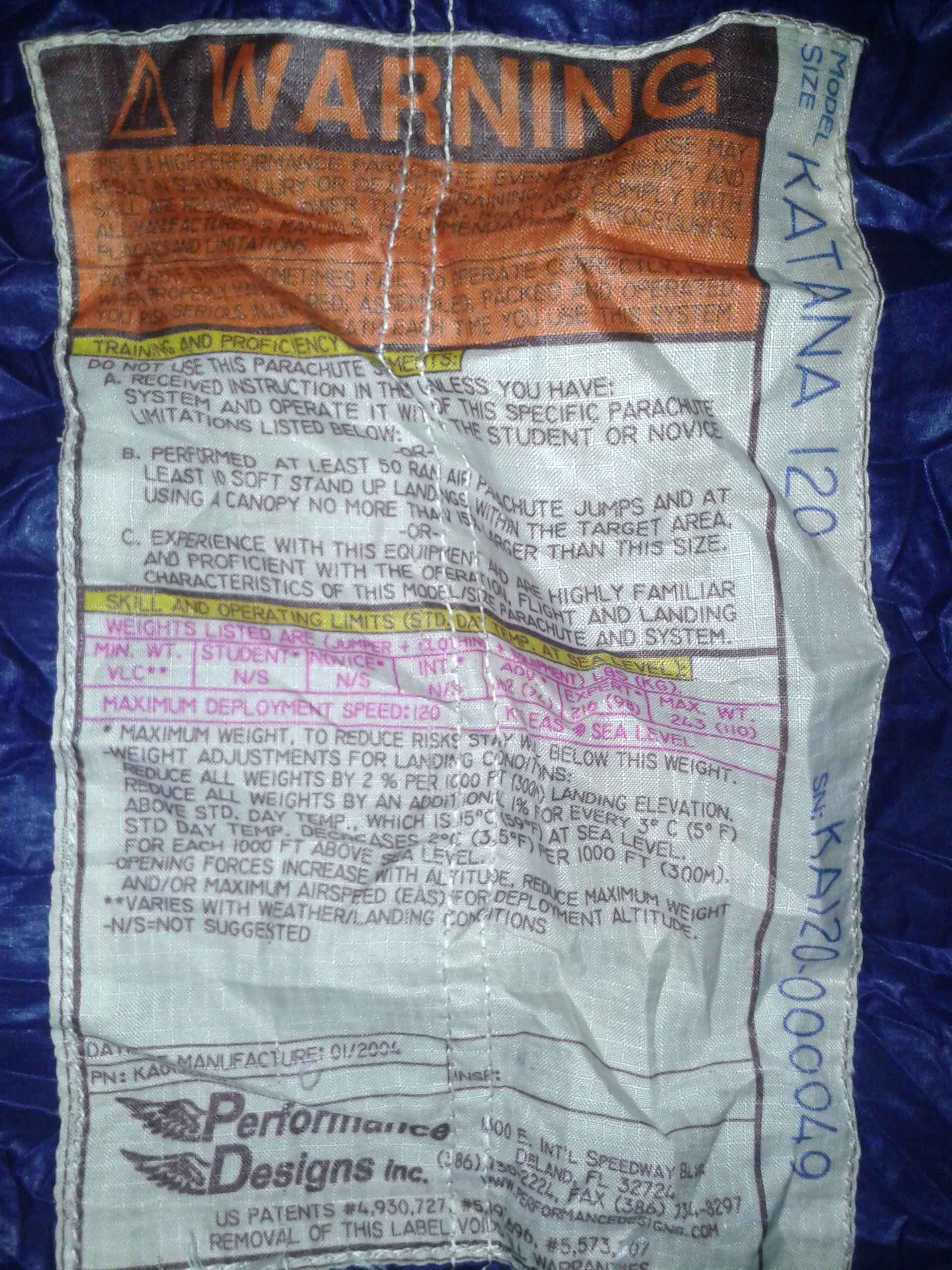
So I was ready for my upcoming training. Changing the line-set did the trick and improved the canopy’s behavior. But one year later I still don’t like the canopy. It just doesn’t fly like the first Katana I had. I also discovered the serial number of the canopy was N°49! I still can’t believe I somehow forgot to check the manufacturing date. So I’m probably stuck with this canopy forever unless I give it away practically for free. But I don’t wish anyone else to have the experience that I had. I guess one day I will make some curtains out of it.
What I’ve learned from this experience is that no matter who sells you gear or how experienced you are, you have to be careful and resolute. Always try to test jump before you actually hand over the money. I don’t blame the guy for selling his gear. I blame myself for not taking the time to inspect the gear thoroughly.
Checklist
Five things you always need to check on a used canopy:
1, Serial Number
Check the serial number and manufacturing date on the canopy’s warning patch. Verify with the papers.
2, History
Ask the following questions and remember the answer might not always be too accurate:
- how many jumps are on the canopy?
- how many owners has it had?
- how many jumps are on the current line-set?
- how many reserve procedures were executed while flying the canopy.
3, Inspection
Inspect the condition of the every part of the canopy. Look for wear and tear on the:
- canopy’s fabric and seams
- slider’s fabric, seams and grommets
- lines and fingertrap locking seams
- softlinks
4, Trim
Measure the canopy’s trim if the line type has the tendency to shrink due to friction.
5, Test it
Test jump the canopy a couple of times before you pay any money.
Second Opinion
If possible have someone else more experienced repeat steps 3 & 4 to try to confirm your own findings and/or discover any new things.
Introduction by: Mike Gruwell of Chuting Star
Case study by: Alex Verbruggen