



Fresh off winning the Wingsuit World Championship Luke Rogers shares his personal journey, how he trains to take gold, and advice for newcomers to wingsuiting...
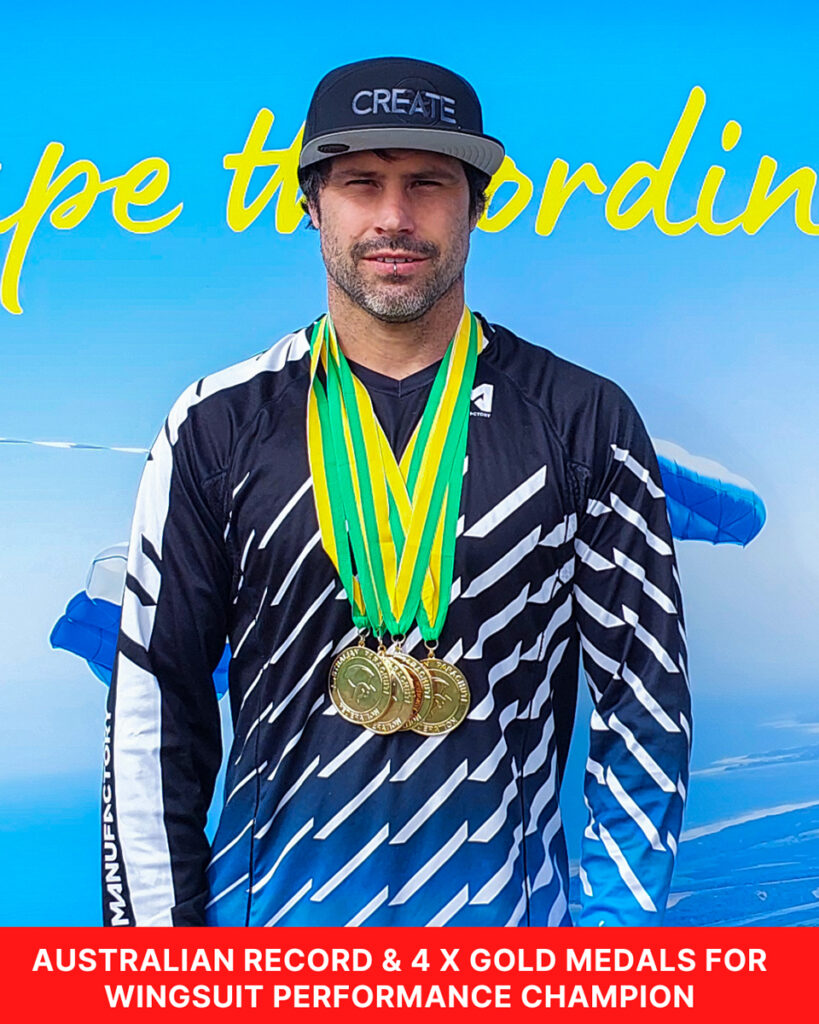
What first inspired you to take up wingsuit flying, and can you share a defining moment that made you commit to it as a career?
This is about as cringy as you can get. I was on the couch with a friend flipping through youtube one night on his living room TV, and there it was, Awolnation, ripping out the infamous “SAIL” as Jeb Corliss ripped through “The crack”. This is how I was introduced to wingsuit flying. Wingsuiting started properly for me in 2016 when I quit my job and moved to the USA to commit to full time skydiving for a year off work. I planned to return to normal life after the year. I went from a 300 jump wonder to a fully sponsored athlete in that year. The real defining moment was my 3rd wingsuit competition ever. It was the Wide Open Wingsuit Series Event at Kapowsin, pretty much the SQRL HQ. I landed first place in the distance race there and I knew I wanted to somehow turn this into a job.
How do you mentally and physically prepare for competitions?
I practice a lot of visualization. Whether that be in the plane on the way to altitude, where I visualize the entire jump from start to finish and see myself performing the task perfectly. Or at night when I listen to self hypnosis tracks to improve my performance on competition day. Physically, I just try to stay flexible and strong. Stretching is a big part of my routine, as well as listening to my body when I am training. If my shoulders feel like they are fatiguing, I work on strength and endurance exercises in that area which allow me to be a stronger flyer, which leads to better results in competition.
How do you train when you’re not jumping? What exercises or practices do you focus on to enhance your performance in the air?
I used to do a LOT of training sessions in the gym to build up my overall body strength/core strength. These days I stick to using my bodyweight and elastic resistance bands for convenience. I can’t count how many shoulder front/side raises as well rear delt exercises I have completed. Enough to snap a few of those elastic bands! I also like to stand inside a circular resistance band and hold the wingsuit configuration for extended amounts of time to somewhat mimic the forces and strain put on my body during wingsuit flight. This helps a lot with endurance.
How has your training evolved as you’ve progressed in the sport? What adjustments did you make specifically to become a world champion?
As wingsuit development continues to evolve, having more strength and endurance is key. The suits are not getting any smaller that’s for sure! My training regime has become more fluid and flexible. I really listen to my body after a long training day. What muscles hurt, what muscles are giving way during the flight, then I adapt my training program to suit. Sounds simple right?!
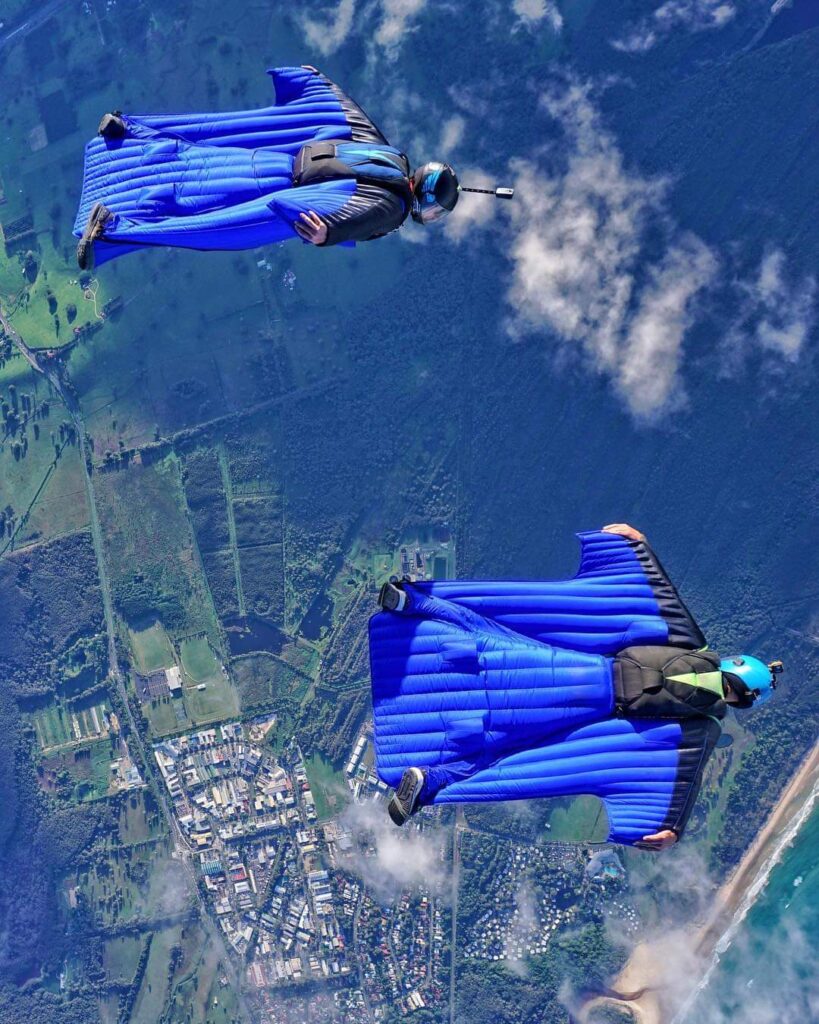
Photo by Chris Byrnes
What do you see as the next big evolution in wingsuit flying, and how do you think the sport will grow in the next five years?
I think we are seeing it right now. The addition of “aerodynamic grippers” has seen quite a substantial jump in performance. We have seen our distance and time scores increase nearly 10% by this modification alone. That is HUGE! We are requiring more and more airspace, jump runs are going out 4 miles and we can still overshoot the dropzone coming back. As fun as this is, I think there will come a point in time where our suits will have to be restricted due to air space. We are pushing it as it is.
For those who are just starting in wingsuiting what’s one piece of advice you wish someone had told you when you started?
Go slow to go fast. Don’t rush to get into the next biggest suit to be one of the cool kids. Learning transitions and backflying in a powerful suit like the Freak is less forgiving and more dangerous to yourself and your friends than learning in a Swift and an ATC. Enjoy the process.
What does a typical training day look like for you, both in the air and on the ground? How do you balance intense training with rest and recovery?
Over time my training days have become more flexible and less rigid. I used to have a set routine that worked well in a controlled environment. However, traveling a lot more, living out of a suitcase, and competing for many years has changed the way I train. Now I really listen to what my body and mind are telling me, and shape my workouts, training and rest days around that. My typical day will look a little like this: I will usually wake up, go for an hour super-fast paced walk/jog to wake up the body and process what I will be working on in the sky (maybe distance runs etc). I will then start visualizing what I want to work on/fix/accomplish for the day. Afterwards I will have my morning coffee, then do all the normal things like work/breakfast/life stuff. At the DZ I will use the massage gun on my body, see what feels good, what is sore, then stretch and visualize what I will be working on for the day. During the day I will try to get on as many loads as possible without feeling too fatigued, as I don’t want sloppy form to enter my training routine at all if I can help it. After the day, I will use my massage gun and see what muscles are sore and make a note to work on and strengthen those areas for my next workout. If I am too sore, I listen to my body and take a day off from performance runs the next day. My workouts used to be primarily inside the gym with barbells and dumbbells. However because of travel I have gotten used to using my own bodyweight and almost exclusively elastic weight bands, which means there is no excuse not to have time or means of doing my workouts wherever I go. This way I am trying to look after my mind and body in real time, not a fixed routine that may lead to fatigue in both areas.
What’s a memorable jump you want to share? One that stands out among the rest?
I did an ash jump for one of my close friends Chris Byrnes over his home DZ where his journey began at Ramblers Toogoolawah. His brother and sister were releasing his ashes while under canopy on a two way tandem jump and a bunch of his friends and I did a group wingsuit flyby. That was pretty special.
What keeps you motivated to continue pushing your limits in a sport that’s demanding both mentally and physically?
I am a competitive person by nature, and a bit of a perfectionist. I don’t believe I am even close to my full potential, I know I can achieve more. This drives me to keep training and competing. There is no training run or competition run that I have felt that I couldn’t have done more. I know areas where I can improve. I guess I feel I haven’t reached my peak yet, so mentally this gives me a lot of drive. I want to have a feeling of “this is all I am capable of” before I think of slowing down.
Competitions come with intense pressure. How do you stay focused and calm during such critical moments, and is there a particular experience where you had to really dig deep?
During competitions I have never really gone out and tried to go to the higher risk and inconsistent “make or break” realm of my abilities. I try to stick within the scores I can do consistently, so for me this takes a lot of stress out of competition. My training is focused on raising my overall top performance for sure, but by doing this the goal is actually to raise the level and performance of my consistent runs for competition. My best runs are always in training. During the last world’s meet, the competition was so close. First and second place were separated by around 0.2 points, which is ridiculously close. It really came down to the last jump. I managed to increase this gap to a 1.0 point by sticking to a solid consistent run – not pushing my limits, but by flying what I know I can do, which I knew would be enough. There was no reason to push harder and win by 1.2 points. The 0.2 points more means nothing. If I made a mistake by pushing myself, I could have possibly lost the lead and come in second.
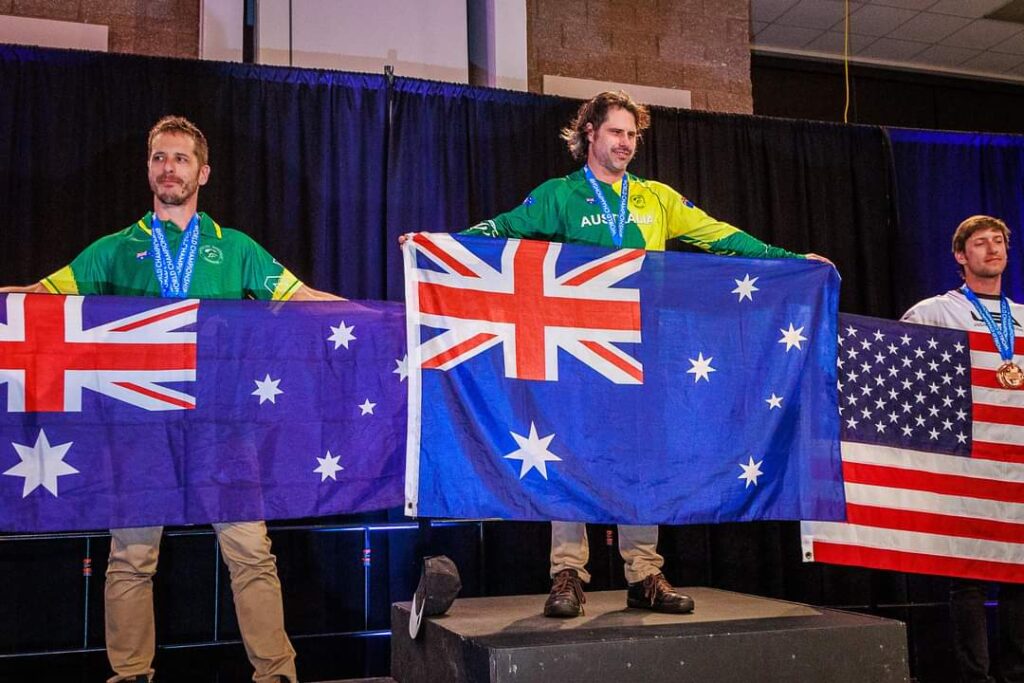
Photo by Kevin Penn
What are some of the biggest lessons you’ve learned from competing at the highest level, and how have those lessons shaped your approach to wingsuit flying?
In competition, your mental game can make or break your performance. If you don’t have your emotions under control, they can sway up and down depending on the results you are getting, making it near impossible to perform at your highest level. In my 7 years competing at worlds, I have seen a couple people who could have easily been on the podium if they could only have just controlled their mental game and emotions. Working on your mental game is so important.
Physical preparation is also vital, whether this be training in the gym or doing actual competition runs over and over again until everything becomes second nature. I think a quote sums this up perfectly “We don’t rise to the level of our expectations, we fall to the level of our training.” If you want to be on that top spot, you have to be willing to train harder than anyone else, putting in more effort than everyone, because the level you fall to has to at least match or be higher than other people’s best. So for me, I have worked on a lot of self hypnosis, meditation and visualization for my mental game. For the physical and training, I have given up a normal life, a normal job to spend the majority of my time at a dropzone jumping/training.
How has winning a World Championship changed your perspective or goals for the future?
Now that I have proven to myself that I can do it, I want to do it again. I want to win the overall again.
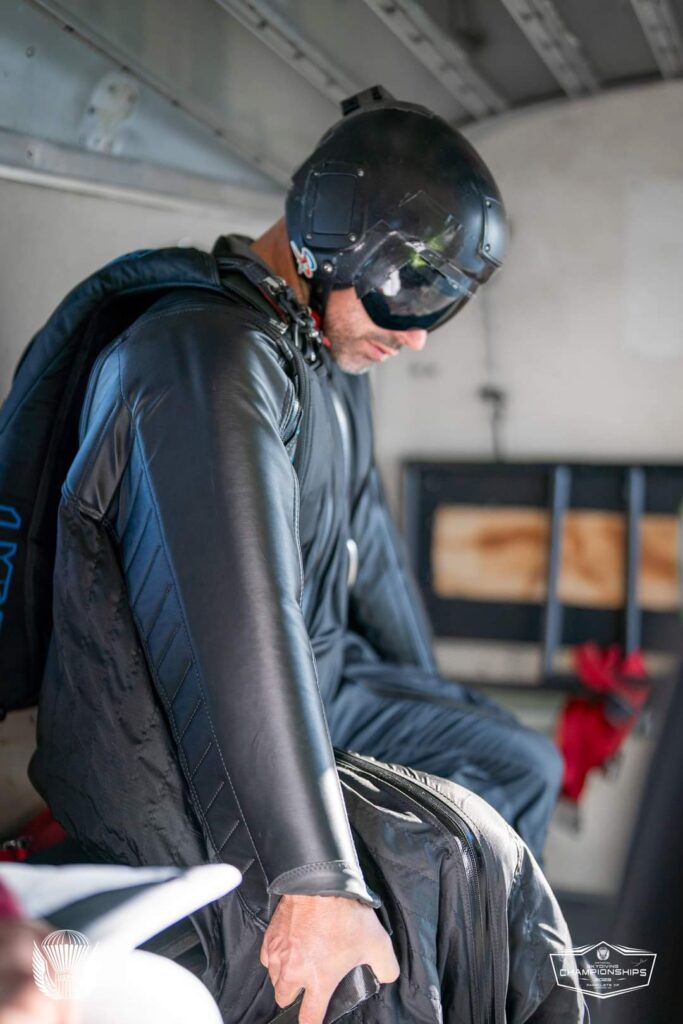
Photo by Alex Swindle
How do you incorporate technology in your training and performance analysis? Are there specific tools or techniques you use to gain a competitive edge?
We use a device called a “Flysight”, which is a fancy GPS unit that records your flight data. We can then analyze this data with computer programs that allow us to really get nerdy and crunch data to see how well we performed, and if different body configurations work better than others. You can really a lot about a suit, weather conditions and how they affect performance in a short amount of time if you really understand all the data. If you know how to fly in hot conditions, cold conditions, lots of wind, no wind, cross wind, this can give you a real competitive edge over others who have no idea, or less understanding.
For those aiming to follow in your footsteps, what advice would you give about what it takes to become a world champion in such a demanding sport?
Be patient. Be very patient. It can be a pretty lonely sport with a lot of solos on the DZ. Don’t forget to have a few fun jumps here and there. It’s all about balance. Don’t just train in the sky; train on the ground with mental work, visualizations, working out and stretching. If you are a bit of a nerd and love to crunch numbers, you will fit right in.
Who are your sponsors?
- Squirrel
- Cookie Helmets
- Australian Parachute Federation
- Aerodyne
- Mee loft
- Manufactory Apparel
- M2 AAD
- LB Altimeters
- Create 38