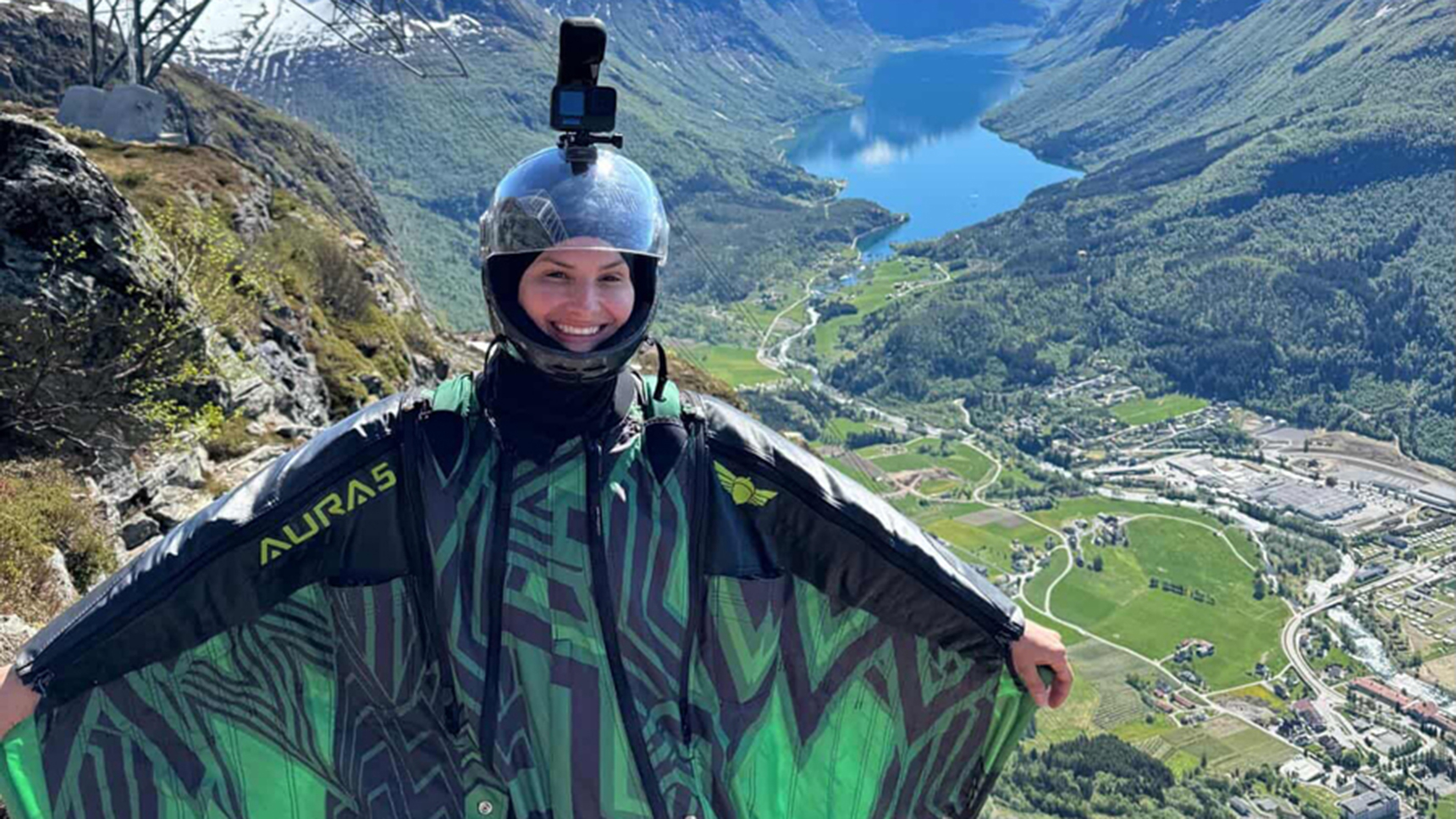





From walking away from jumps to managing pressure and progression, Julia Botelho shares an honest perspective on modern BASE jumping
Q: How did BASE first show up in your life and at what point did it shift from curiosity to something more serious?
Julia: Back in 2012, I used to climb a lot. At the time, I wasn’t even a skydiver yet. One day, while climbing Pedra da Gávea in Rio, I saw a BASE jumper fly past me and I was instantly fascinated. I remember thinking: I want to try this. So I started researching it, booked my first tandem skydive, and immediately fell in love with the sport. Right after that, I signed up for AFF. It didn’t take long after finishing my AFF before I was taken to a bridge near the dropzone in Brazil for my very first BASE jump.
I had very few skydives and honestly knew almost nothing about the sport. Iignorance is bliss sometimes… definitely not something I would recommend today. Back then in Brazil there weren’t many BASE instructors, and the scene was much smaller.
At the time, I was a lawyer attending the School of Magistrates, trying to find an escape from the pressure of office work and endless studying. Little did I know, that moment would completely change the course of my life. I just couldn’t stop jumping after that. In 2014, I quit my job and went on my first trip to Europe not thinking much about the future, just following my passion.
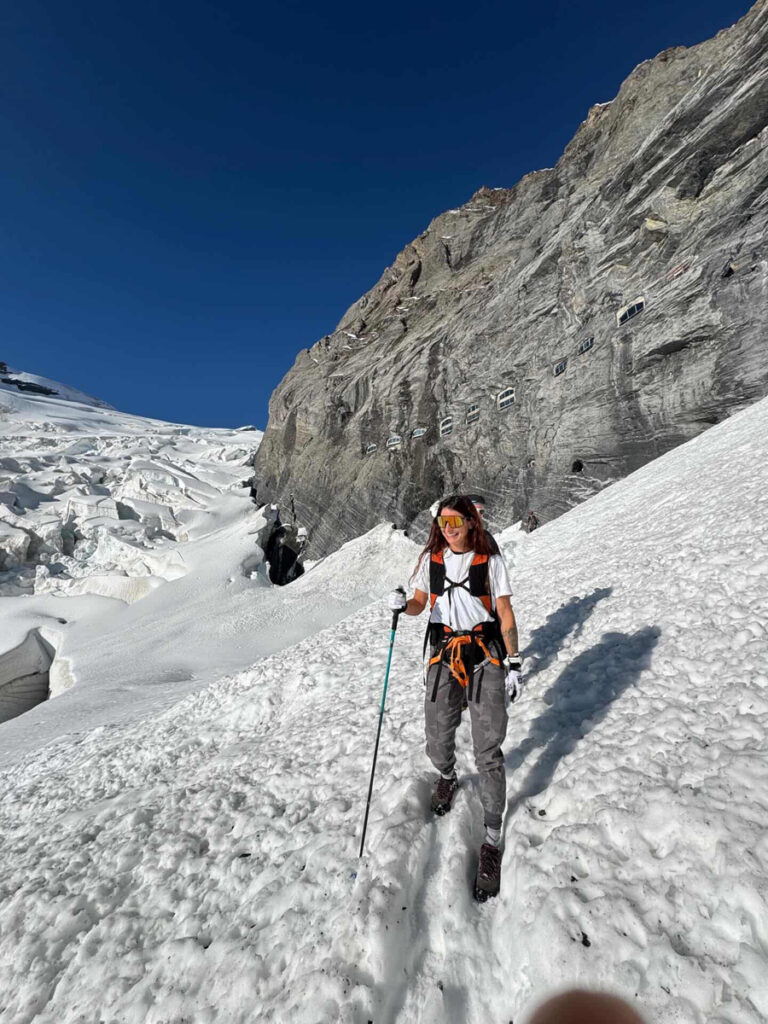
After that, I moved to the mountains of Espírito Santo, Brazil, with my boyfriend at the time, and we dedicated our days to climbing and opening new exit points in the area. Life became simple: hike, climb, explore, jump, repeat. I haven’t really looked back since then and I just kept on going to see where this passion was taking me, because I was hungry for knowledge, experience, and I wanted to learn and progress.
Looking back now, it’s crazy to think how one random moment on a mountain completely redirected my life.
Q: There’s a big difference between skydiving skill and BASE readiness. What was the hardest adjustment for you early on?
Julia: That’s a great question because that gap between skydiving ability and BASE readiness is something you only truly understand once you’re in it. BASE isn’t an extension of skydiving; it’s a different mindset built on precision, restraint, and commitment to a decision before you leave the object. I do believe the two disciplines complement each other, and that long-term progression comes from balancing both skill sets rather than relying on just one.
My own path was very different (and not something I would recommend). In some ways, I felt like I became a BASE jumper before I truly felt like a skydiver. For a long time, I actually had more BASE jumps than skydives. I was very comfortable in the mountains, and I learned early how important it is to act decisively and keep things simple.
In skydiving, you have time, altitude, and margin, you can stabilize, troubleshoot, and rely on repetition. In BASE, everything is compressed: decisions, exposure, and consequences. There is no altitude buffer to figure things out. I learned that fairly quickly. My skydiving skills actually developed later, when I made a conscious decision to become a better flyer/skydiver and bring that level of competence up to match my BASE progression.
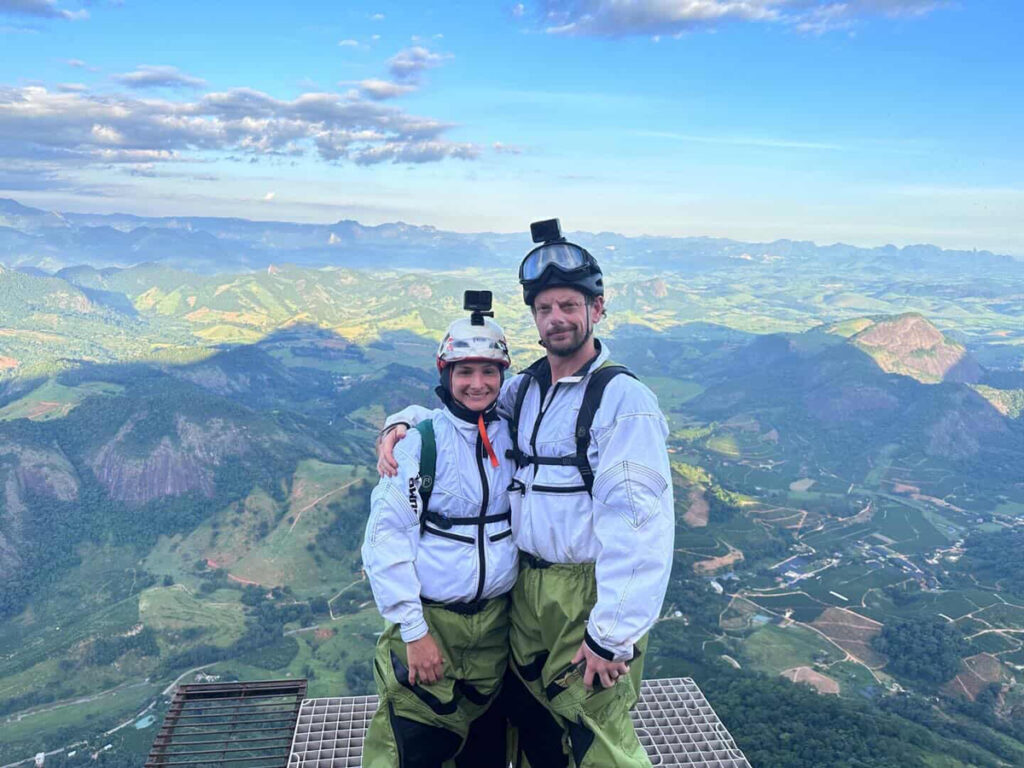
Q: When you step up to an exit, what’s actually going through your mind? Is it calm, calculated, or something else?
Julia: That moment, standing at an exit, is never just one feeling. It’s calm, but it’s not passive. More like a very focused quiet. Everything unnecessary disappears. Almost like a type of meditation. It’s not adrenaline-chaos like people imagine, and it’s not emotional either. If it is, something is wrong. It’s actually a kind of narrowed awareness, almost like the world gets quieter, not louder.
But I’ll be honest: that calm only exists because of experience. Early on, it wasn’t like that. Early days were much more emotional, more reactive, more internal noise. That’s where most of the learning happens, in controlling what’s going on inside you before the exit and during the flight.
Now, after many years, it feels less like “courage” and more like commitment to a decision that was already made earlier in the process. And once that switch flips, it’s just movement.
Q: What does “good decision-making” actually look like in BASE? Not in theory…but in real situations.
Julia: In real situations, good decisions often look boring. Sometimes it means walking away after a long hike because the wind isn’t right. Sometimes it means standing on top and not jumping, even though everything is technically “possible.” That’s a hard one, because nothing happens, no action, no reward, just a decision that no one else sees.
And then there’s in-the-moment decision-making, which is really about discipline, not creativity. When you’re at the exit, good decision-making is not adding new ideas. It’s actually the opposite, reducing variables to what is known, rehearsed, and stable.
Bad decisions usually come from “improvising under stress.” Good decisions come from recognizing when nothing should be improvised at all. I think the biggest misconception is that BASE rewards boldness. It doesn’t. It rewards consistency and honesty. The most experienced people I’ve seen are not the ones taking the most risk, they’re the ones who are quickest to say “not today” without needing to justify it.
So in real life, good decision-making often looks like restraint, patience, and sometimes just walking away when nobody is watching. It’s controlling your emotions and acting more rationally. In BASE, emotions are always there, excitement, fear, pressure, attachment to the moment, but good decision-making is about not letting those emotions drive the outcome.
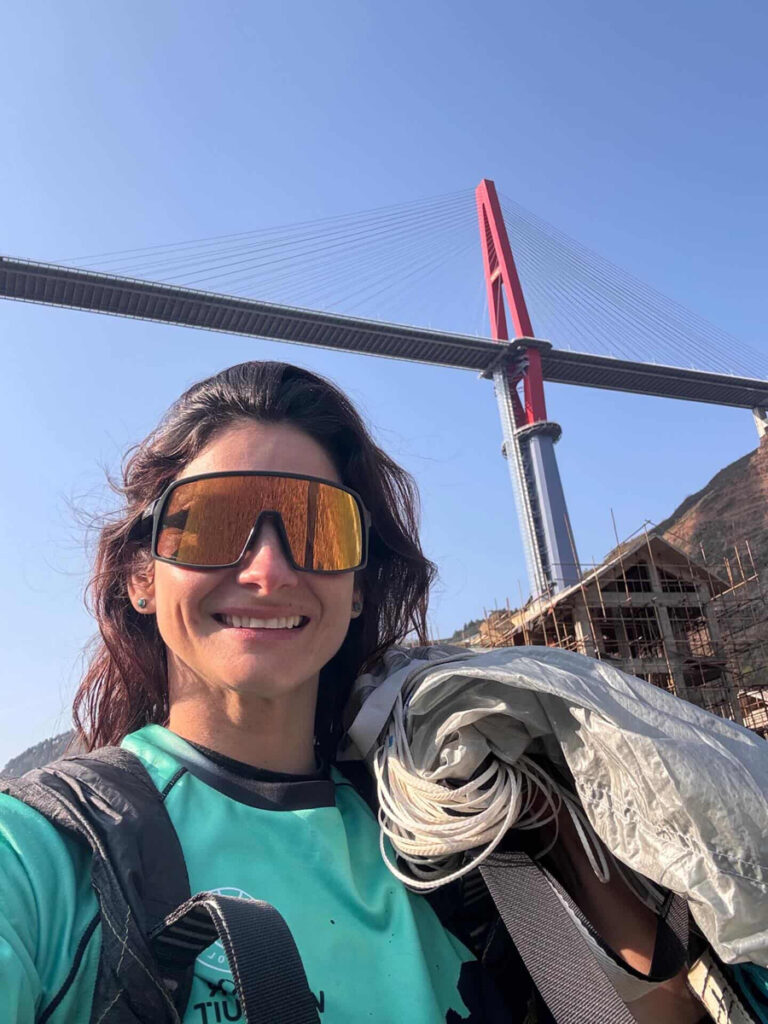
Q: Have you ever walked away from a jump that others took? What made you make that call? How often does this happen?
Julia: Yes, multiple times. Recently I went on a building jump. When we got there, it was windy, so we decided to wait. After a while, I suddenly saw about 10 more jumpers walking up to the building. At that moment, I paused and looked at the situation objectively.
The conditions were already marginal. With a larger group arriving, the dynamic changes fast. Pressure builds, patience drops, and someone is likely to start rationalizing a jump in suboptimal conditions just because “everyone is here now.”
So I thought through the chain of outcomes, not just the moment:
- Either I stay and get influenced by group momentum
- Or I stay and risk being in a situation where I’m waiting longer and increasing exposure to getting caught
- Or I make a clean exit from the situation while nothing has escalated yet
So I made the decision to walk down and go home.
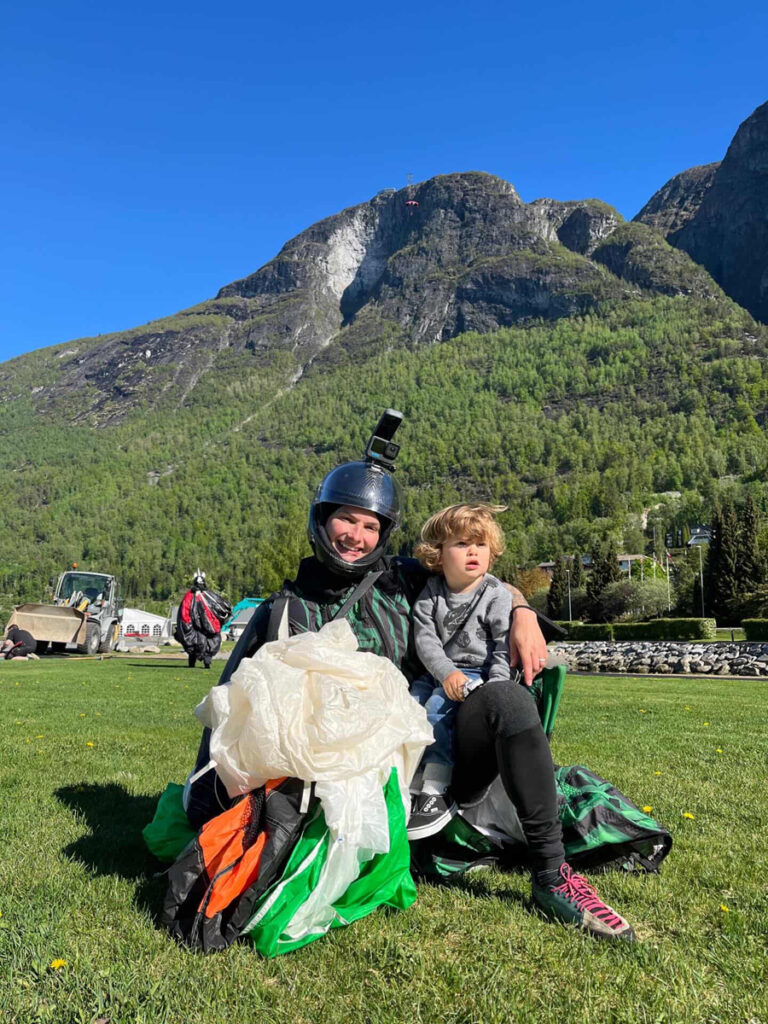
Q: What part of the sport demands the most from you mentally? The exit, the lead-up, or the accumulation over time?
Julia: So mentally, the heaviest part isn’t the moment you jump, it’s everything that trains (or distorts) how you make that moment possible. In some jumps, that could be the approach, in others the legality of the jump, the conditions changing, group dynamics, waiting, deciding whether to go or not. Your mind is active, evaluating constantly. That’s where doubt, pressure, and judgment calls happen.
Q: There’s a lot of talk about progression, but not enough about pacing. How do you personally manage progression without getting pulled into the pressure to push faster?
Julia: The pressure to “progress faster” is real in this kind of sport, but it’s subtle and often internal. Comparison, momentum, feeling capable, or simply wanting to keep the flow going can all create it.
For me, managing that comes back to perspective. Learning is endless. If you rush to the “top of the mountain,” you arrive there and immediately ask: what now? I try to stay grounded in the idea that it’s not about reaching a destination, but about the quality of the journey itself. That helps me step back from the pressure to move faster, and instead focus on moving well.
Q: What’s something people get completely wrong about BASE jumping?
Julia: One of the biggest misconceptions is that BASE jumping is mainly about adrenaline, fearlessness. But long-term, that mindset doesn’t hold up. The sport actually rewards restraint, patience, and the ability to not act when something feels slightly off.
Q: For someone on the skydiving side looking toward BASE, what are they underestimating?
Julia: What skydivers often underestimate is how much BASE is less about “flying ability” and more about decision quality under compression.
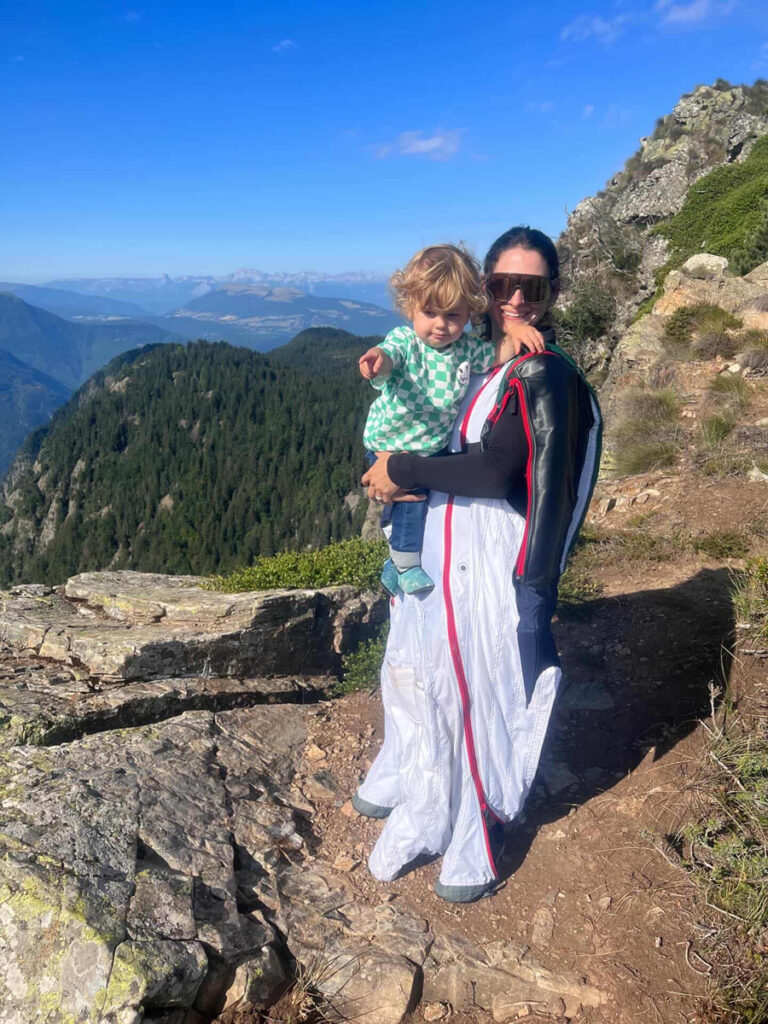
Q: Outside of jumping, what keeps you grounded? What gives you balance in a sport that can easily take over everything?
Julia: Outside of jumping, what keeps me grounded is my family, especially my son.
Having a lot to lose changes how you approach everything. It doesn’t make you less committed, but it makes you more aware. You stop operating in isolation and start thinking in terms of responsibility, not just passion. That awareness is actually what keeps me on my toes. It reminds me that every decision carries weight beyond the moment itself.
The sport can easily take over everything if you let it. It becomes all-consuming very quickly because it’s intense, immersive, and always evolving. But life outside of it is what creates balance , not by competing with it, but by keeping it in context. For me, that context is simple: there’s a life I come back to, and people I’m accountable to. And that shapes how I move through everything else.
Q: When you look ahead, what excites you most? More technical lines, new locations, or something beyond the jump itself?
Julia: New locations, the travel, the people, the smiles. Honestly, technical lines are not really something I chase. I don’t feel drawn to technical lines or impressed by “sick lines” online the way I might have in the past. What stands out to me now is longevity in the sport, people still doing it well, consistently, years down the line. After having a child, that kind of intensity and energy management just adds stress to my jumping, and that’s not what I’m looking for these days.
Q: If someone is serious about stepping into BASE, not just trying it, but committing to it, what do they need to understand early that most people only learn later?
To be patient. But not passive patience. It’s active restraint, discipline, and building enough self-awareness that you don’t confuse readiness with excitement.
Q: Who are your sponsors?
Julia: Squirrel Kavu and Skydive Elsinore.