
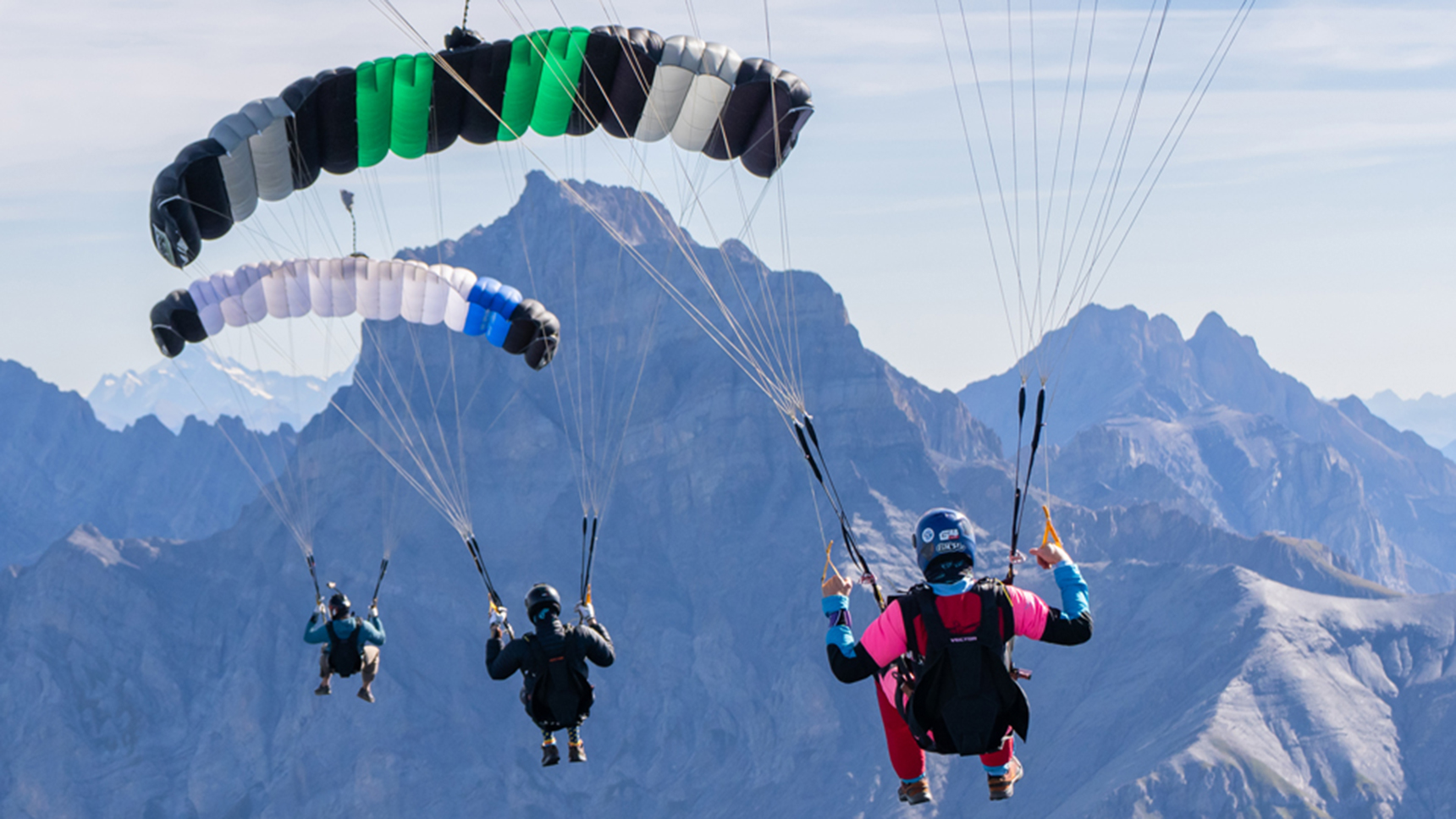





Behind every mountain line is a deep understanding of weather, terrain, canopy control, and restraint. Pete Allum shares lessons from decades in the sport.
First of all, mountains are not a good thing to try and beat. They will always win, as they have time and size on their side.
Thanks for reading this article, but I should warn you: one objective of this piece is to give you a heads up on what flying in the mountains is about, but the main goal is to help you prepare.
We have all seen the stunning images of tiny canopies whipping through the wild mountains of Norway, Switzerland, or Slovenia, and have often visualized ourselves in those groups, tagging along at the back and maybe barrel rolling down a glacier to a trending audio track.
You might want to spend some time learning the basics before throwing yourself into one of these video games that can hurt. Or it may be that you prefer to jump a more lightly loaded wing and think this may not be for you. Well, read on.
A Brief History of Mountain Flying
Let’s start by looking at the current state of mountain flying in our sport, beginning with some history.
Almost as soon as square parachutes were invented, people tried to run themselves off hills and mountains. These pioneers and idiots (I count myself amongst the latter category as a younger skydiver) kick-started our parallel sports of paragliding and speed flying.
These are very different sports from ours, as their equipment has evolved much faster in those worlds, and the education is all about the wings, the weather, and the mountains — things that the average skydiver has very little interest in.
If you got this far in the article, it means that you might be interested in taking your wing into the mountains. Therefore, if you feel inclined, I encourage you to explore those sports in a safe environment with instruction at a recognized school.
The Norwegians, Swiss, and French probably have the longest history of jumping out over the mountains and flying alongside them. The Norwegians especially have been steadily honing their skills, and if you check out the walls of the clubhouse at Voss, you can see older images of canopies flying amongst the hills.
If you sign up for mountain flying in Voss, they will give you a thorough briefing as well as make you watch a video of the lines you intend to fly, especially the landing areas and possible out-landings. When you fly there, you will be following a knowledgeable stack leader who will spot the aircraft and lead the line.
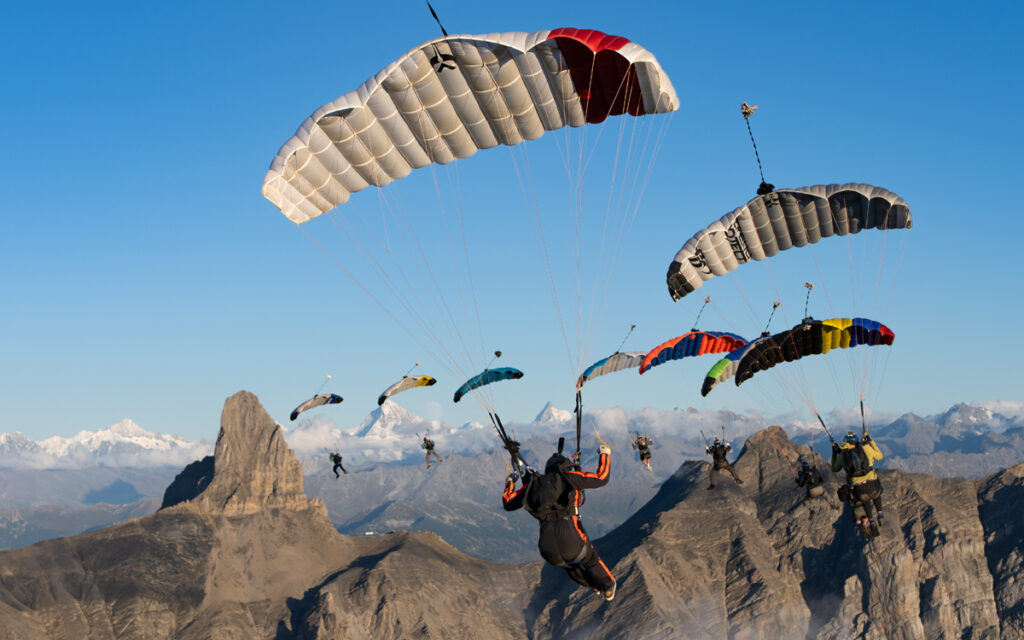
Photo by Felicia Sturgeon
What kind of experience do you need to fly in the mountains?
The current rules in Voss are as follows: as a local, you need 500 jumps with 50 in the last six months, and as a visiting jumper, you should have over 1000 jumps and 50 in the last six months.
The mountains and landing areas in and around Voss call for a high level of awareness and discipline. Mountain flying in Voss is described as flying closer than 1500 feet vertically and 1000 feet horizontally from mountains or terrain.
Please check local regulations if you intend to fly elsewhere, but I think the Norwegian regulations are a decent minimum guideline.
Alternatively, flying amongst the mountains — in other words, further away from the hills and landing in the valley — can be considered more like an inn-hop and is often open to lower skill levels. This would be a great way to start your journey, even if you already have a lot of skydiving experience.
Do you need a tiny, aggressively loaded canopy to fly in the mountains?
Many people see high-speed canopies featured in the images and videos and assume they cannot take their lighter-loaded wings on these kinds of jumps.
Provided you know your wing and the conditions are good, you can access many of the lines on a variety of wings and wing loadings.
You may also want to know how your reserve flies, just in case. Nowadays we can jump a reserve as a main canopy at either the same or similar size and performance to your own. Check in with manufacturers at events on the DZ for this wise demo option.
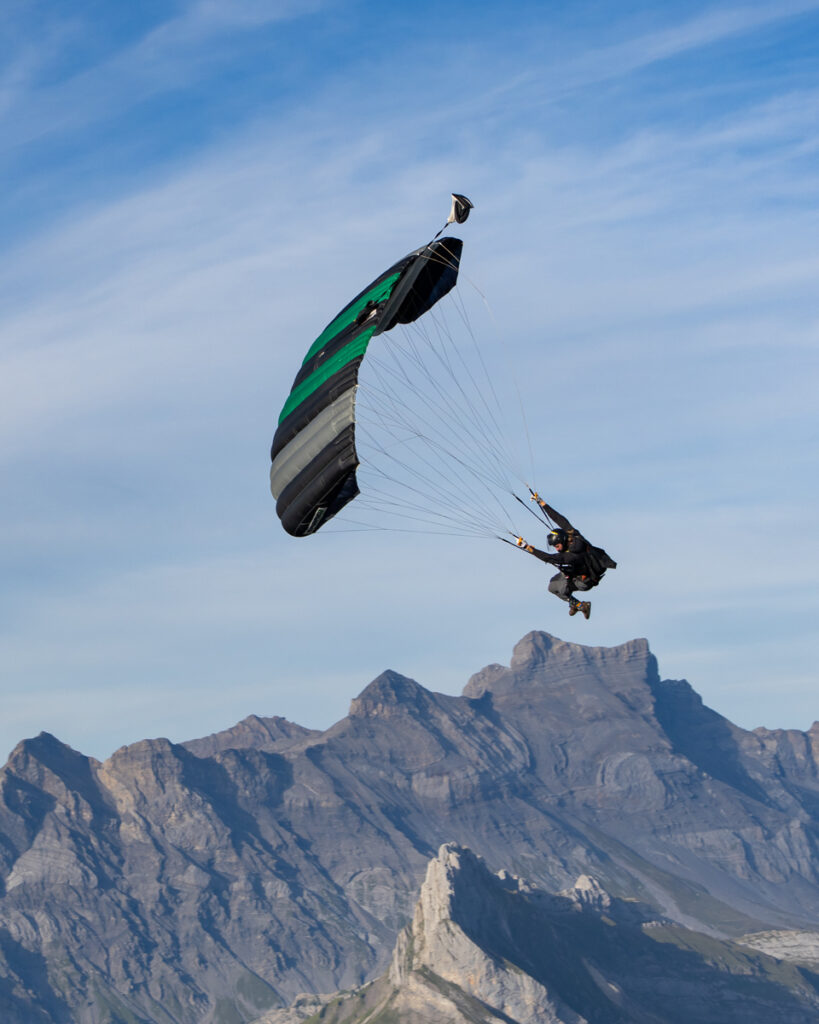
Photo by Felicia Sturgeon
What is good jumping weather in the mountains?
The best thing is to hang out with the locals and listen to them.
First of all, you need to be able to see the terrain at all times, so clouds are out. Then you want to be able to fly through clean air, so windy or thermal conditions are also out.
Wind and heat in the mountains create turbulence — that rough, bumpy air that will buffet you and your wing, creating lift and sink at moments you may not want it.
Perfect conditions are fleeting in some regions and can often occur only at particular times of day. As I said, talk to the locals.
You may be flying in the mountains, but it’s not a swoop camp
This is where your skill and knowledge of how your canopy works are really going to help.
Quite often, the landing areas at the end of a mountain run are small and surrounded by obstacles, so this is a skill you should practice a lot at home before even thinking about signing up for a mountain run.
The best advice I can offer here is to get canopy coaching if you feel your skills are lacking under your wing. It’s not a dark art. If you don’t have good accuracy and landings now, it doesn’t mean you never will. Go and learn these skills the same way you would get tunnel or freefall coaching.
These skills will make your everyday jumping safer and more fun, as well as preparing you for eventually flying that mountain line.
These are the basic skills:
- An effective flare
- Consistent flight planning in all conditions
- Understanding the performance range of your canopy
The landings at the end of a mountain run are always straight-in, natural-speed landings or, at most, a mellow 90° turn.
The reason for a more mellow landing is simple:
You are pumped after flying that line, probably already close to terrain, landing in an unfamiliar area, and often well above sea level.
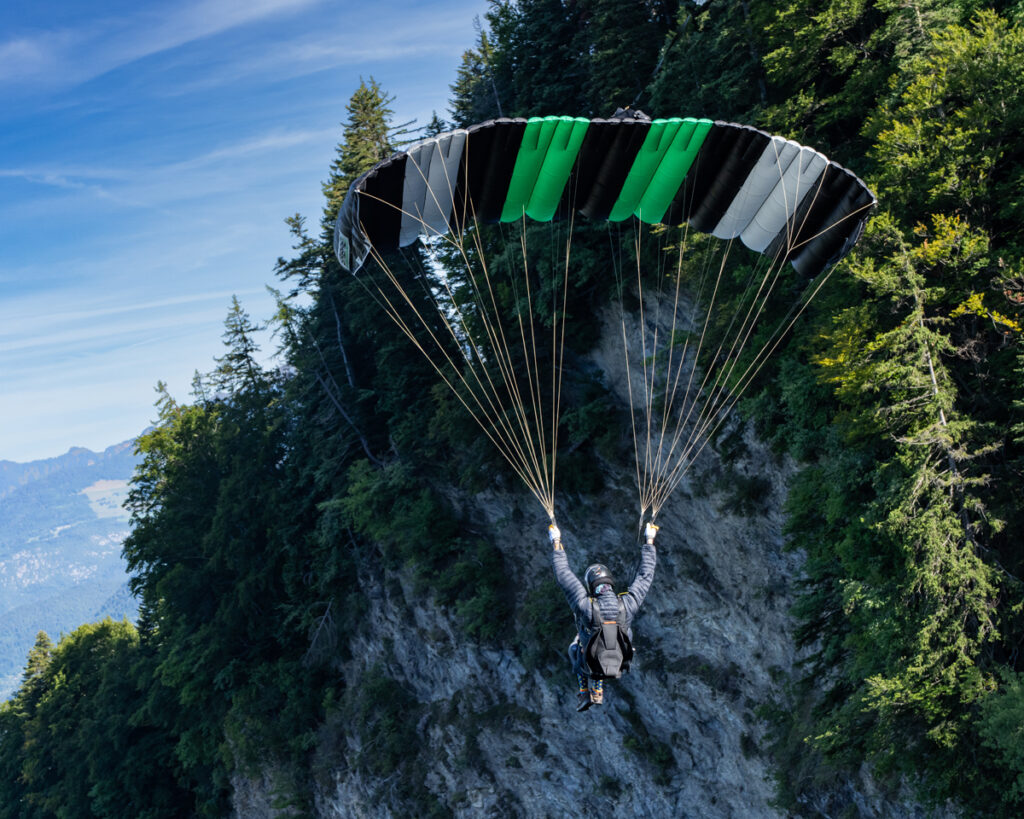
Photo by Felicia Sturgeon
What mindset do I need to fly in the mountains?
There’s a sweet spot in progression where you have built skills, your confidence is growing, and you start to understand both what you need to be aware of and what you should be nervous about.
That sweet spot comes right before complacency. Pay close attention to your state of mind and your situational awareness. If in doubt, talk to a mentor or coach you trust who knows your skill level.
Many people with far more experience than you have gotten into trouble in our sport, and mountainfl flying adds another risk component to an already risky endeavor. Try to make your small mistakes while learning on a DZ with people around to help you understand the basics.
This is me speaking from experience. I have been jumping for 47 years and have over 37,000 skydives. Touch wood, I have not yet hurt myself on a DZ, but I have sustained my worst injuries either flying or playing in the mountains. I have a deep respect for the environment. It is beautiful, but it can also bite.
Final Thoughts
In conclusion, if flying in the mountains is something you truly want to put on your list: get some skills, start on the DZ, and maybe even add some paragliding or speed flying. Then find a venue that offers guided flights in well-known areas in good conditions and be ready for some epic moments.
Places that currently offer mountain flying are Skydive Voss and Skydive Bovec, or you can contact Flight-1.com or Momentum Flight to see what camps are being offered in mountainous environments.


