




Estimated reading time: 8 minutes
Everything you need to know about the world’s most common path to becoming a licensed skydiver
If your goal is to become a skydiver, not just do a tandem skydive, AFF is where the journey begins.
Short for Accelerated Freefall, AFF is the training program that takes complete beginners from their first solo freefall to a recognized skydiving license. During this intensive course, you’ll learn everything from body flight and canopy control to emergency procedures.
AFF at a glance
- Full name: Accelerated Freefall
- Typically consists of seven progressive training levels, though the exact structure varies slightly between training organisations and dropzones
- Ground school first: a full day of classroom and harness training
- Two instructors in the air for Levels 1–3, one instructor for Levels 4–7
- After Level 7: solo consolidation jumps to reach 25 total jumps
- At 25 jumps: complete your A-Licence Proficiency Card, pass the written exam, and complete a successful check dive
- A kicense: allows you to jump independently at most dropzones worldwide, subject to local requirements
- Typical timeline: a few weeks to a few months
- Typical cost: approximately $2,500–$4,500+ in the USA or £1,800–£3,500+ in the UK to complete AFF and earn your first license.
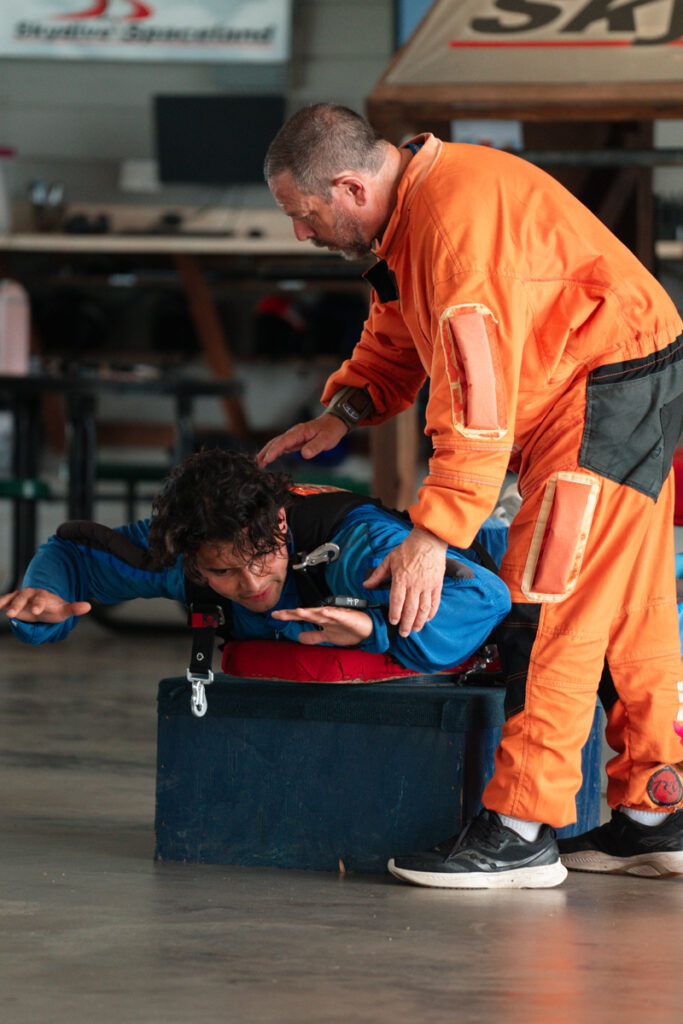
Photo by Jesse “Tex” Leos
Why is it called ‘Accelerated’?
The name refers to how AFF compares to some of the older training methods, particularly static line programs. In static line training, students make multiple lower-altitude jumps with automatic parachute deployment before they experience true freefall.
AFF was developed in the United States during the early 1980s as a faster alternative. The main idea was simple: put experienced instructors next to the student in freefall from the very first jump. This allows students to learn real freefall skills immediately rather than progressing gradually through the static line jumps.
From Level 1, AFF students typically jump from full altitude (around 10,000–14,000 feet) and experience true freefall. The progression is in the learning process as students are taught and tested on freefall maneuvers.
Today, AFF is by far the most common way to get a skydiving license worldwide. It is the standard training method at most USPA-affiliated dropzones in the United States and is used in equivalent forms by many national organizations around the world.
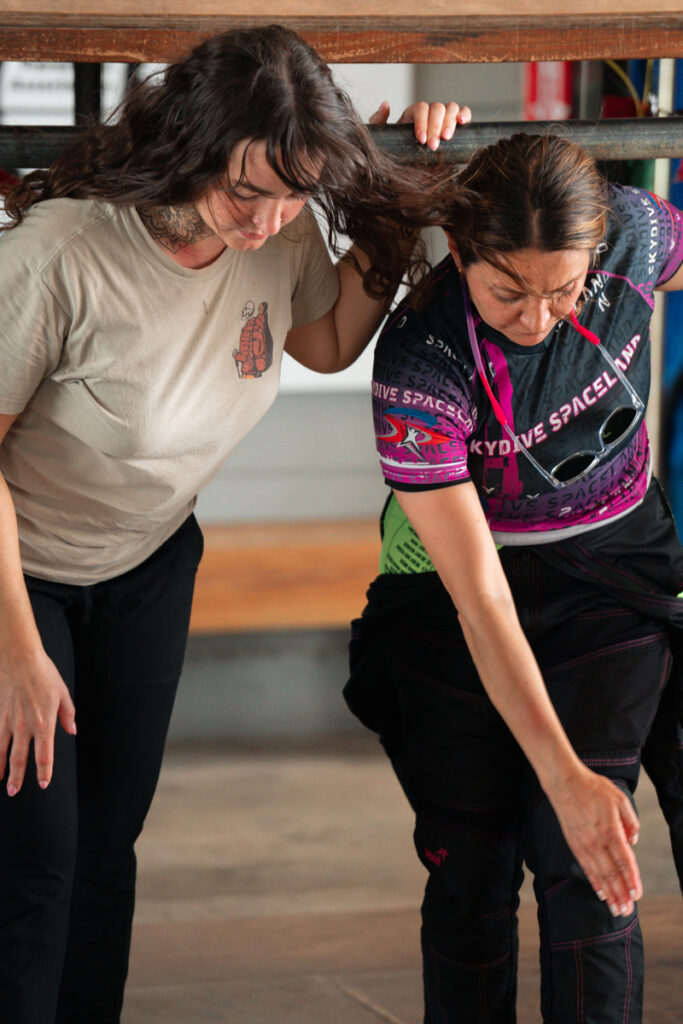
Photo by Jesse “Tex” Leos
Ground school: where AFF really begins
The very first part of the AFF program is the complete ground school. This is a full day of classroom and practical training, typically lasting between four and eight hours.
Ground school covers:
- Equipment: How your parachute system works, what each component does, how it is packed, and what your Automatic Activation Device (AAD) is designed to do.
- Body position: The arch, heading control, turns, and how small body movements affect stability and movement in freefall.
- Altitude awareness: How to read your altimeter, when to deploy, and how to make good decisions under pressure.
- Emergency procedures: What parachute malfunctions look like and how to respond correctly. These procedures are practised repeatedly in a suspended harness until the responses become automatic.
- Canopy flight: How to steer your parachute, fly a safe landing pattern, avoid obstacles, and land safely.
Good ground school is methodical and thorough. If it feels overwhelming, that’s normal. The goal is competence, not rushing through the class.
The seven AFF levels
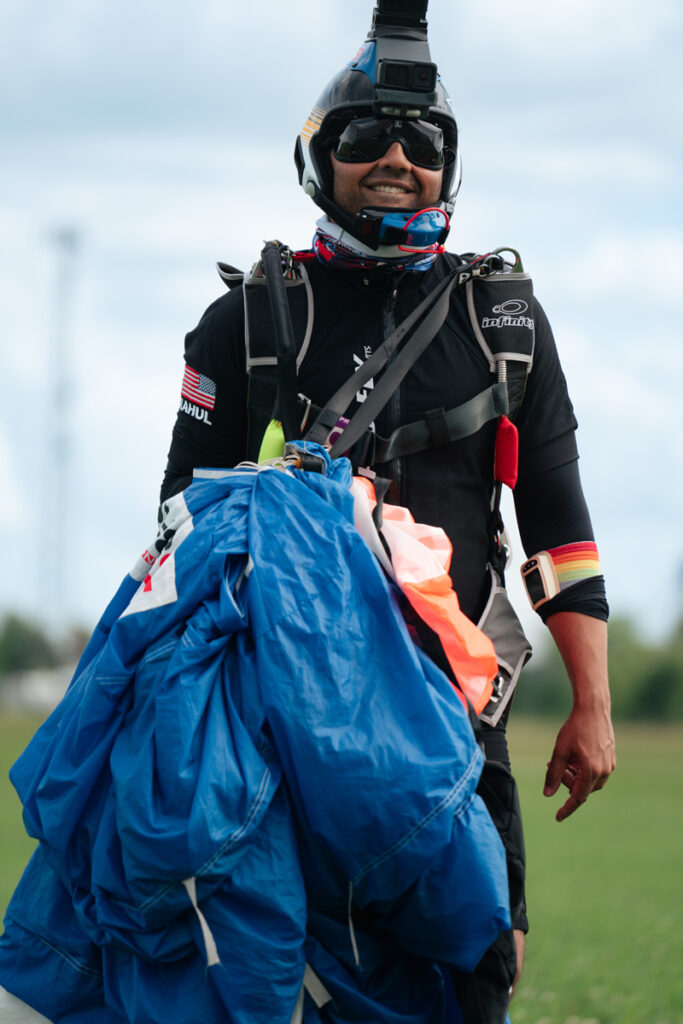
Each AFF level teaches specific skills that must be demonstrated before progressing and it’s an important process for learning how to fly your body.
If you don’t successfully complete a level, you repeat it. That’s entirely normal. Most students repeat at least one level during their progression.
| Level | Instructors | What you’ll learn |
|---|---|---|
| 1 | 2 | Stable exit, stable body position, altitude awareness, deploy your own parachute |
| 2 | 2 | Reinforce Level 1 skills, improved altitude awareness, greater stability and control |
| 3 | 2 | Typically the first level where both instructors may release completely, demonstrate stable solo freefall, maintain heading and altitude awareness |
| 4 | 1 | 360° turns, independent stability, improved awareness and control |
| 5 | 1 | Greater independence during exit and freefall tasks, improved control and confidence |
| 6 | 1 | Controlled instability exercises, front loop and recovery, forward movement |
| 7 | 1 | Tracking, horizontal movement and separation, demonstrate readiness for supervised solo skydiving |
Important moments in AFF
Level 3: first freefall without instructor grips
Typically, Level 3 is the most memorable jump in AFF. It’s often the first time both instructors release completely, leaving you to fly your body independently in freefall. Both instructors, or one, are there to be sure you are steady. But this jump really gives you the feeling of controlling your body by yourself.
Level 6: controlled instability
You’ll intentionally perform a front loop and recover to a stable body position. The purpose is to prove that if something unexpected happens, you can recover calmly and deploy safely. This one is also a fun jump as who doesn’t love a front flip.
Level 7: learning to track
Tracking is one of the most important safety skills in skydiving. It allows jumpers to create horizontal separation before deployment and helps prevent canopy collisions. This level teaches you that important skill.
After Level 7: earning your A-License
Completing Level 7 does not make you a licensed skydiver. It means you’ve completed the AFF program and are now progressing through supervised solo jumps.
From jumps 8–25, you’ll continue building experience, improving canopy control, and refining your freefall skills.
In the United States, students typically qualify for a USPA A-License after 25 jumps and completion of the required proficiency card, written exam, and check dive. Other countries use equivalent systems with their own licensing and qualification requirements.
“Getting your A-License isn’t the end of progression. It’s the point where the real learning begins.”
What happens after your A-License?
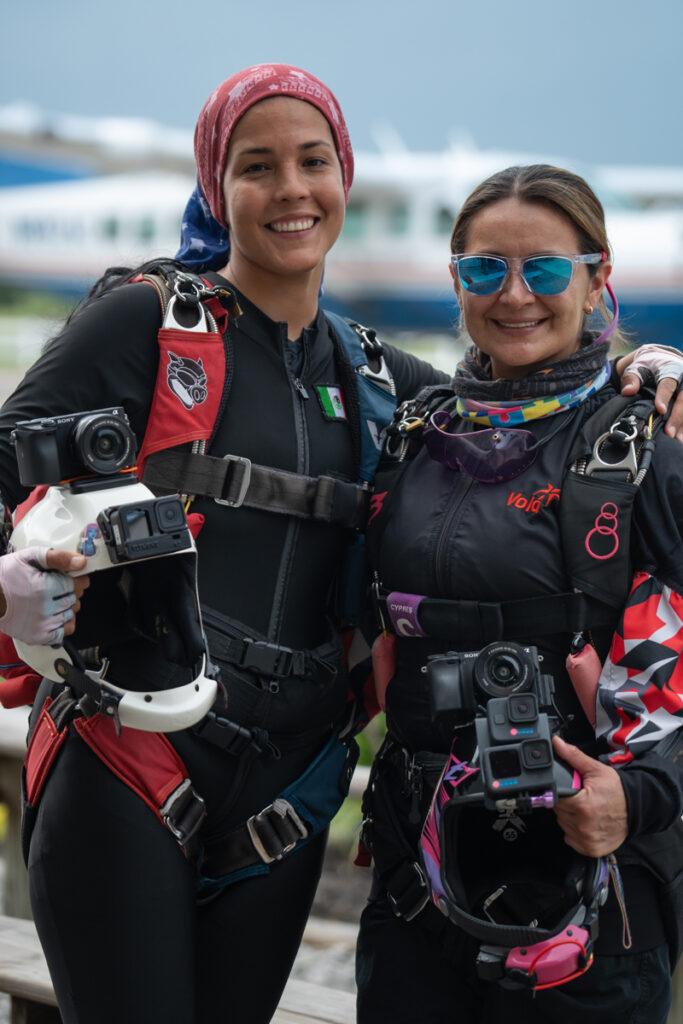
Licensing systems vary between countries. In the United States, skydivers progress through USPA A, B, C, and D licenses. Other organizations, such as British Skydiving, use their own license and qualification structures. Regardless of the system, earning your first license marks the transition from student to independent skydiver and opens the door to more advanced disciplines and training.
With an A-License, you can jump independently at most dropzones, skydive with other licensed jumpers, and begin exploring the many disciplines within the sport.
From there, opportunities include:
- Formation skydiving
- Freefly
- Wingsuiting
- Canopy piloting
- Coaching and instructional ratings
- National and international competition
Most jumpers eventually discover a discipline they love. Some end up really chasing progression. Some end up just there for the fun jumps and no plans with friends. And others stay for the community and lifestyle.
Is AFF right for you?
If your goal is to become a licensed skydiver, AFF is by far the most common and widely recognized pathway. The two biggest considerations before starting are time and money. Training requires consistency. Long gaps between jumps can slow progression and increase costs.
Students who progress most efficiently are usually those who:
- Commit to a specific dropzone and finish the course there
- Understand the full financial commitment upfront and prepare for it
- Jump consistently throughout the program
If you’re still deciding whether skydiving is right for you, the best first step is a tandem skydive. A tandem is an excellent introduction to freefall, working through first jump jitters and experiencing being under a canopy for landing. It’ll give you a good idea into whether or not you want to continue on.
AFF Frequently Asked Questions
Do I need to do a tandem first?
Not always, but most dropzones strongly recommend it.
How long does AFF take?
As little as a week with excellent weather and a full-time training schedule, though one to three months is more typical.
What if I fail a level?
You simply repeat it. Most students repeat at least one level during training.
What if I freeze or panic?
AFF is designed around that possibility. Students spend significant time practising emergency procedures on the ground, and instructors remain close throughout the early levels. Most students are surprised by how manageable the experience feels once they leave the aircraft.
Is gear provided?
Yes. Most AFF programs include rental equipment throughout training.
Can I jump anywhere in the world once I’m licensed?
In most cases, yes. Skydiving licenses are widely recognized internationally, and licensed jumpers can visit dropzones around the world. However, local rules, currency requirements, and documentation policies vary between countries and dropzones, so it’s always worth checking ahead.
How old do I need to be?
In the United States, the minimum age is 18. Some countries permit younger jumpers with parental consent.
What to do next
Read: What’s In An AFF Course?
Read: How Much Does It Cost to Learn to Skydive?
Subscribe: Skydive Mag’s monthly newsletter