




We asked some of the sport’s most respected BASE athletes one simple question: What do you wish you’d known before you started? Their answers aren’t just advice for beginners. They’re reminders for every jumper, regardless of experience.
No one starts BASE jumping knowing everything they need to know. Experience is earned the only way it can be: through every decision, every jump, and sometimes through lessons that come at a high cost. The athletes featured here have spent years building that experience, and the insights they share were earned over years, one decision at a time. Read these BASE jumping lessons on safety.
Sean Chuma
Remember why you’re here.
It is not about your Instagram. It is not about attention. It is about the love of flight and that brief moment of freedom when the magnetic force of Earth is calling you back. We, as jumpers, play with that. That moment when you are in harmony with gravity is something that feels beyond our normal reality.
Enjoy it, and don’t be distracted by all the other seemingly shiny things that come along with the sport. Be in it for the feeling it gives you to be briefly detached from the surface of the Earth.
Make sure it is something you are ready to give your life to. You need to love it so much that you can’t live without it. Otherwise you are risking everything, and you will feel major regret if something does happen to you.
Remember that there are two opposite sides of the experience of this sport. One is beautiful and one is horrific. Respect the side you are trying to hide from because it helps you make the wise decisions that will keep you closer to the beautiful side.
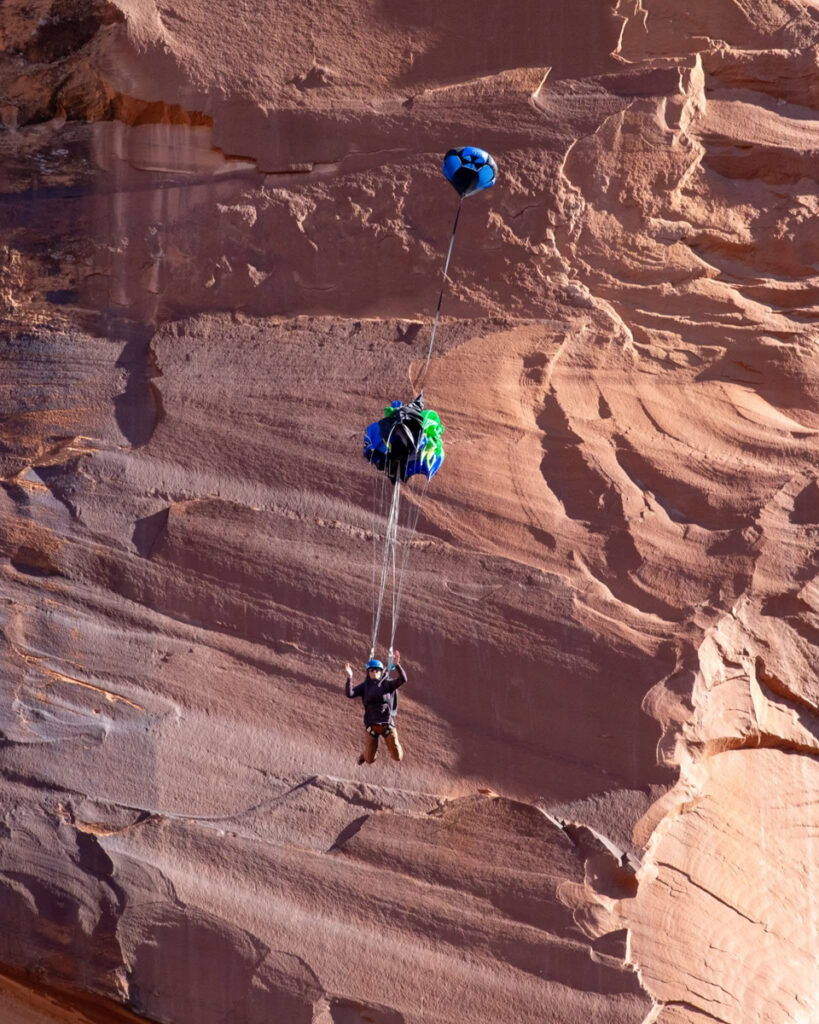
Photo courtesy of Sean Chuma
Max Manow
BASE is not skydiving.
I wish I would have known that it’s a completely different sport. Don’t assume that because you’re a good skydiver you already know enough. Get proper guidance. Your mentor should give you all the information and never assume you already know “enough.”
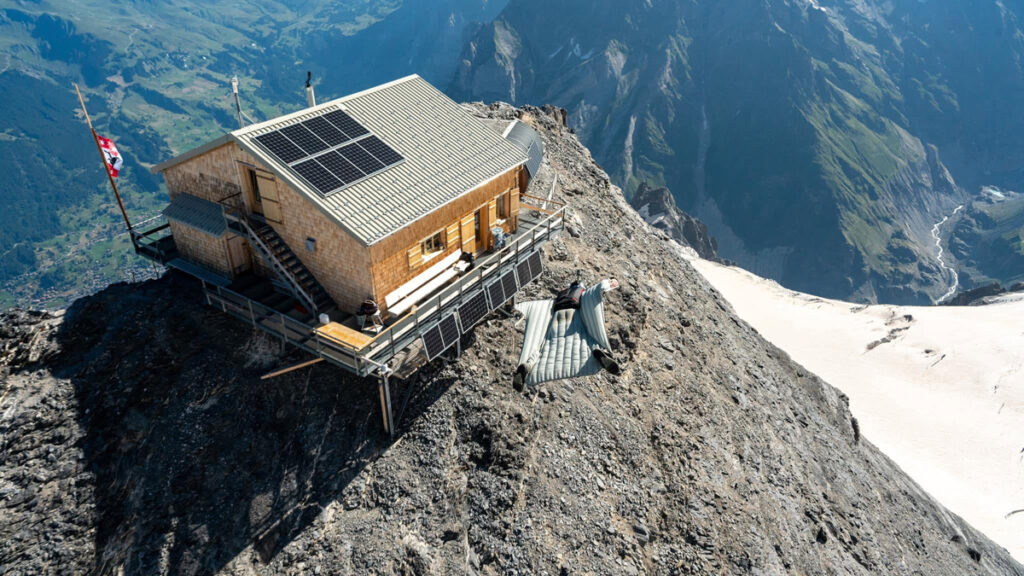
Photo courtesy of Scott Hiscoe
Scott Hiscoe
Sometimes the best jump is the one you decide not to do.
Before getting into BASE, I thought the hardest part would be making the jump itself. What I learned over the years is that the hardest thing is not jumping. Having the discipline, patience and willpower to know when to walk away. If the weather isn’t right, your mental preparation isn’t there or something simply doesn’t feel right, it’s time to leave. It’s something I’ve always struggled with.
These days, if the weather looks marginal, I simply don’t hike to the exit because I don’t want to put myself in a position where I have to make a bad decision.
Carlos Pedro Briceño
Jump for yourself.
Never forget that you are doing it for you. It doesn’t matter if you’re standing in front of thousands of people. If you don’t feel it, don’t do it.

Photo courtesy of Jenna Gygi
Jenna Gygi
Choose your people carefully.
One of the biggest things I wish I’d understood is how important your circle is. Choose people who care more about your longevity than your ego. Surround yourself with people who are comfortable saying, “Not today,” and who never pressure you into making a jump.
Another lesson is that you can’t buy your way out of a skill deficit. When something feels difficult or unsafe, the answer is usually to build the missing skills, not to search for equipment that promises to compensate for them.
Dan Darby
Experience can’t be rushed.
There’s a popular saying that “It takes 10 years to get 10 years of experience.” I think the silent second half of that is, “If you go too hard too soon, you could top out at two.”
I don’t believe in going slow for its own sake or to gatekeep exciting jumps or proximity flying. I believe in going slow so we can fully digest the lessons of each jump and learn to apply them in a controlled manner. When everything goes wrong, those reactions need to be automatic.
Running laps from a family-friendly jump is one of the best ways to build a foundation early on. Exit technique, subterminal turns, flying for maximum speed versus minimum sink, flaring, deployment technique…these all take repetition.
When you’re exhausted after a three-hour hike and only get one opportunity to practice that day, you’re not getting the same return on your effort.
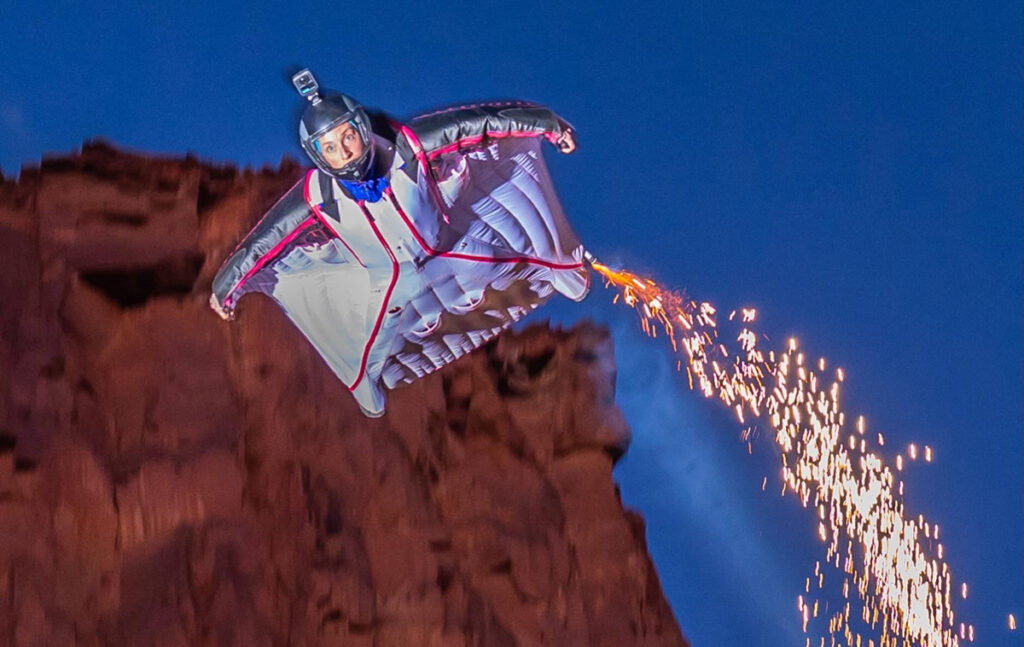
Katie Hansen
Never stop learning under canopy.
I wish I knew that continuing to develop canopy skills in skydiving would significantly improve my safety and canopy skills in BASE.
I started BASE with the minimum number of skydives and was jumping at a small Cessna drop zone. For a period of time, I actually had more BASE jumps than skydives. There was a certain pride in being a “BASE jumper” rather than a “skydiver.”
When I eventually moved to a busy drop zone and started skydiving regularly, I saw a massive improvement in my canopy skills that I hadn’t even realized I was missing. Judging distances, sinking a canopy, flat turns, front risers, dealing with line twists…every extra hour under canopy made me a better pilot. Those skills develop much faster when you skydive consistently.
Vincent Cotte
“Slow is fast.”
Take your time to build your skills, and real freedom will follow. But be careful not to become complacent.
Scott Palmer
Jump numbers don’t tell the whole story.
To me people put way too much focus on jump numbers and not enough focus on diversity of exit points and time in the sport. Jump numbers only tell you how many times someone left an object, not what they’ve actually experienced. Real experience comes from jumping different objects, seeing different conditions, dealing with injuries and fatalities, making good calls and when you don’t, making the tough phone calls, and knowing when to walk down.
I would rather jump with someone who has made smart decisions across a wide range of situations over someone with twice the jump numbers from repeating the same jump every weekend. In BASE, it’s the quality of your experience and training that keeps you alive, not the quantity. Be an asset not a liability.
Keep Yourself Safe
The answers above come from different people, different countries and different styles of jumping, yet they all circle back to the same ideas.
Slow down. Learn from the right kind of mentors. Keep improving. Know when to walk away. And never confuse confidence with experience.
If this article helps even one person make a better decision, these lessons have done exactly what they were meant to do.