





The gap between dreaming and doing is a plan. Drawing on three decades in the sport, Melanie Curtis explains how SMART goals can help skydivers make meaningful progress, one step at a time.
If we don’t know each other yet, first, hi! I’m happy to meet you. For reals. In very short, I’ve been a skydiver for 30 years. I’ve been a life coach for 20 years. I wrote a monthly column for a skydiving magazine for 11 years. All of that sounds kind of insane honestly haha. The only reason I tell you any of this is so you believe me when I start to talk about SMART goals and how they’re not just corporate speak but actually good for your skydiving goals and dreams too.
Over these last 30 years, I have applied this type of thinking and follow-through to my own skydiving skill-building, competition teams and all the world records I’ve been a part of. I’ve also applied it in the coaching I’ve done with others helping them navigate their own paths in this wildly special and truly expansive sport of ours.
SO… let’s do this thang. SMART stands for:
S – Specific
M – Measurable
A – Achievable
R – Relevant
T – Time-bound

S – Specific: “Better” Isn’t a Goal
“I want to get better at flying” is not a goal. It’s a direction and that’s good. But it’s too vague and unclear. If we allow something vague and unclear be the driver behind our decision-making, then vague and unclear results is what we’ll get. Worse, we’ll never know when we’re “there.” It’s basically the skydiving equivalent of “I should eat healthier.”
Specific sounds like:
- Make 100 jumps
- Hold a stable 15-second track altitude aware and on heading
- Compete in a 4-way competition at any level
- Be a part of a belly-flying state record
- Organize a day of head-up flying with friends focused on improving foot docs
You get the idea. Vague goals don’t fail because you didn’t want them enough. They fail because there was never anything specific to target your efforts and resources toward. If we don’t know what we’re going after, we will never know when we get there.
SO, when you think about what you want to do in the sport, start by reflecting and brainstorming. First pick a direction or discipline that interests you. Then pick something specific to work toward both as a big, longer-term goal with that in mind and break that down into the specific sub-goals that will make that up along the way.

M – Measurable: If You Can’t Measure It, You Can’t Reach it
I kind of already mentioned this… if we can’t measure the goal or sub-goals on the way to a bigger vision, we can never really know when we’ve done it.
If it’s helpful, think of yourself as now “training” for whatever skill you’re building toward or whatever larger achievement you’ve set for yourself. Big goals are really just a bunch of little goals that serve as measuring posts along the way.
Plus, it feels really good to check things off the list. Get the bonus hits of dopamine checking the box and also knowing you’re actually doing the work on the way to your longer-term goal.
Instead of, “I’m going to jump on Saturday,” have it be, “I’m going to do 5 sit-fly jumps on Saturday focused on right-hand docs.”

Photo by Ewan Cowie
A – Achievable: Right-Sized, Not Small
Ambition is not a dirty word. Ambition, drive, thinking bigger are all GREAT things. As a keynote speaker, I talk about honoring our ambitions, championing them in the best way, and really giving ourselves permission to set BIG goals if that’s what helps us come alive. For me, I don’t really get excited about something unless I’m REALLY going for it.
Now, we’re talking skydiving here, so that does NOT mean being reckless and pushing ourselves past the bounds of safety. No MF way. What I mean is letting ourselves really contemplate what might be possible for us, and then breaking that bigger vision down into these more achievable goals motivated by that big north star.
When we’re talking “achievable”… this considers where you are right now — not where you were three seasons ago, not where your pal with 400 more jumps is, not where you wish you were, not where you’ll magically be once life calms down. Now.
Be honest. There’s a version of this goal, or a sub-goal on the path that you can actually see yourself being able to make possible even though it still will be a challenge. Keep in mind, it’s usually closer than your ego wants to admit and further than your fear wants to admit. Somewhere in between is where to start.

R – Relevant: Whose Goal Is This, Actually?
Every discipline in this sport is fun. But do YOU want to do it? For example, a ton of people love wingsuiting. Right TF on. I love that for all the peeps that want to do it. I’m just not one of those peeps.
Relevant means checking a sub-goal against the trajectory you have clarified you want to be on — the rating you want, the discipline you’re building toward, the flyer or coach you’re trying to become. Do your best to avoid the shiny squirrel syndrome in skydiving, chasing something just because it’s the cool thing right now.
To be clear, it’s absolutely cool to have goals doing the cool thing, just check yourself against your vision to make sure that what you’re spending your time, energy, heart and resources on is helping get you there.

T- Time-Bound: No Date, No Goal
“Eventually” is not a deadline and “someday” usually ends up as never.
If we really want to do something, if we really want to get something over the proverbial finish line, your goals need to be time-bound. As in, you need to be accountable for your follow-through on the specific, measurable, achievable and relevant goals you’re setting for yourself on this wild and winding skydiving path of yours.
Give your goal a container — a boogie, a season, a specific number of jumps by a specific date. I’ll do X by X time. Weather will mess with it. Currency lapses will mess with it. Life will get in the way. That’s FINE. That is just being a human. A deadline is never a promise that life will cooperate. It is the line that makes you check in instead of drift.
If you don’t put boundaries around the amount of time you’re able to spend on a goal/task, that goal/task will expand to take up whatever time you give it. We need to self-impose the pressure that boundaries and deadlines provide, otherwise our likelihood of getting any of our goals over the finish line is unlikely or lucky.
If you really want to achieve what you’re thinking about, unlikely and lucky is not a strategy. Instead, set timelines for your goals and hold yourself accountable to them. If you do this, you will blow your own mind at how much you can do.
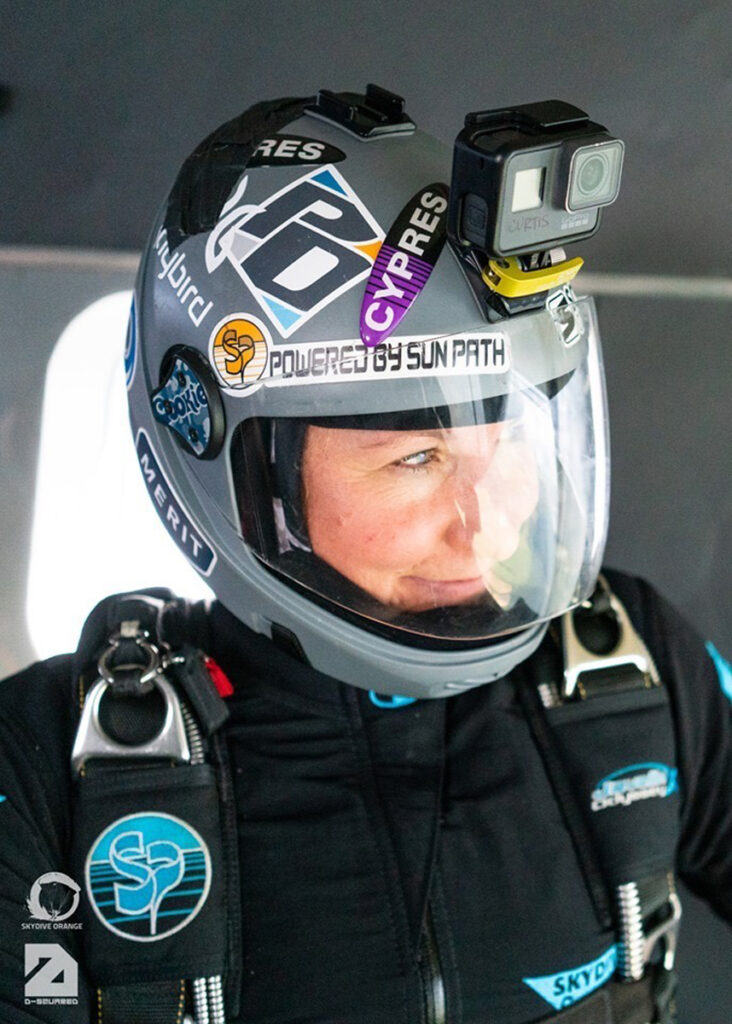
Photo by David Cherry
Actually Do It
Everything we talked about above is key in terms of you actually going the directions you want to go in skydiving and in your life. Cool. Preparation is great. AND… preparation can easily slip into procrastination if we let it.
Get your clarity. Confirm your direction. Set specific, measurable, achievable, relevant and time-bound goals. And then… actually do them.
I mean, that’s the whole goal of learning about goals, ya know? For you to LIVE them. So I’ll leave it there, my friends. You’ve done enough reading for today, time to dig in and actually do the thing. Hit me up if you ever want help. #goteam
Enjoyed this article? Explore the rest of our Goal Setting Series for more practical insights and expert advice to help you progress in the sport.