



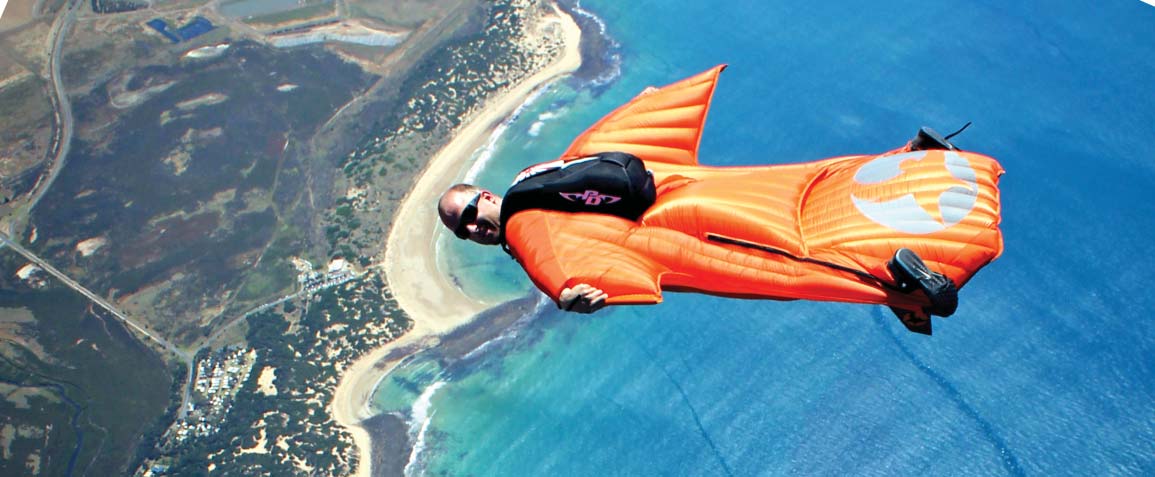
Now that the FAI and IPC have accepted Wingsuit Performance Category as one of the new disciplines for world level competition, there is a strong surge in the interest of Performance-based flying. Wingsuit Performance Flight is an individual sport, pitting competitors against each other in three different areas – Time, Distance, and Speed – using the same suit.
The three tasks take place all within a competition “window” of 3,000 meters to 2,000 meters AGL (9,842 – 6,561 feet AGL). Competitions are scored by Rounds; there being three jumps per round (one Time, one Distance, one Speed). Scores are logged using the FlySight device (PLD) and the Paralog Competition software.
In this article, you’ll find a bit of history, rules and format for Performance Flight competitions. A follow-up article will give tips and strategies for competition, and a third article discusses safety.
#HISTORY OF PERFORMANCE FLIGHT COMPETITIONS
Performance competitions held in the USA have been known as the “Performance Cup,” first appearing at Lake Elsinore, California in 2011, with the author [Douglas Spotted Eagle] as Meet Director. Previous competitions for distance and time had been held at Skydive Utah and Skydive Elsinore; these competitions did not use the Flysight competitors logging system. In 2014, Zephyrhills, home of Skydive City, hosted the first US Performance Cup not held at Skydive Elsinore.

In early 2015, James Hayhurst of the USPA, along with Klaus Rheinwald, creator of the competition format, presented the concept to the FAI/IPC, who accepted the format. The first World Cup competition for Wingsuit Performance will be held at Netheravon, UK, in May of 2015. In March 2015, the United States Parachute Association accepted the Performance Category as a USPA-sanctioned event.
#OBJECTIVE
The objective is to fly a single wingsuit in three separate tasks to demonstrate a combination of best lift (time aloft), best glide ratio (distance) and least drag (speed). Each round of the event is comprised of the three tasks. Each task is performed on a separate flight.
###Time Task
The wingsuit flyer is to fly with the slowest fall rate possible through the competition window. The result will be the time taken to fly through the competition window, expressed in seconds, rounded to one decimal place.
###Distance Task
The wingsuit flyer is to fly as far horizontally as possible through the competition on window. The result will be the straight-line distance flown over the ground while in the competition window, expressed in meters, rounded to whole numbers.
###Speed Task
The wingsuit flyer is to fly as fast horizontally over the ground as possible through the competition window. The result will be the straight-line distance flown over the ground while in the competition window divided by the time spent in the competition window, expressed in meters per second (m/s), rounded to one decimal place.
##Program
An event shall consist of three rounds, with three tasks in each round, for a total of nine jumps. At least one round of three tasks must be completed to determine rankings and declare winners.

#RULES
- Competitors shall not wear additional weight on their body or equipment.
- Competitors shall not use propulsion systems.
- Each competitor must wear a functioning audio altitude warning device on every jump.
- Wingsuits will be inspected and marked by a Judge. Only marked suits may be used for the event.
- Violation of any of the above rules will result in a score of zero for the jump(s) in question.
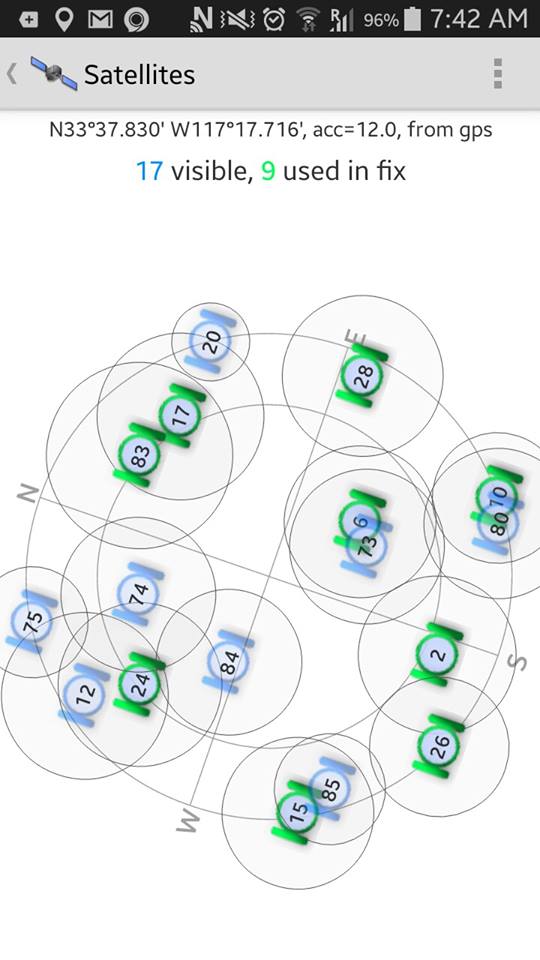
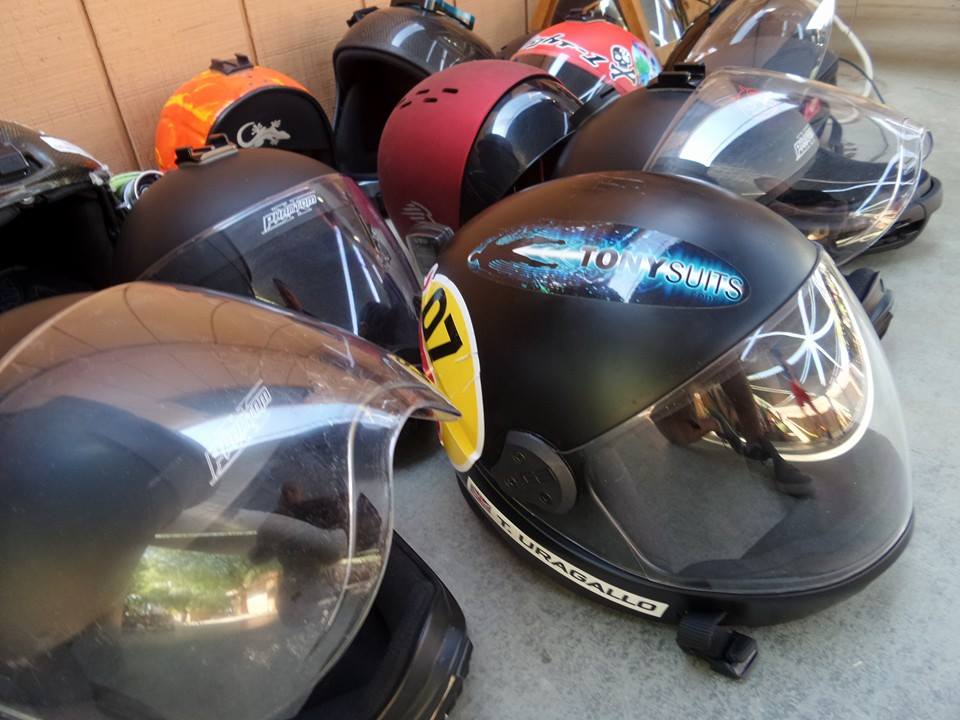
- A competitor should not wear any other electronic devices near the official Personal Logging Device (PLD). If any such electronic device affects the PLD system, the score will be zero for that jump. (The PLD currently used for competition is the FlySight device, although regulations do not require a specific brand or model).
- The same wingsuit, without any changes or modifications of its parts, must be used for all tasks in a round. In exceptional circumstances, a suit may be changed with the consent of the Chief Judge, for example, if the original suit gets damaged and cannot be made airworthy before the next jump.
- Each competitor shall wear one PLD issued by a Judge. The device will be attached on the jumper’s equipment with the antenna having a clear view of the sky, located and positioned to the satisfaction of the Judge. This decision is not grounds for protest.
- The PLD will be attached and sealed in its location by a Judge.
- The PLD will be turned on and off by a Judge, as appropriate.
- Immediately after landing, the competitor shall return the PLD used on that jump to a Judge.
- If the seal is found to be broken after the jump, and if in the opinion of a Judge this was not caused by circumstances beyond the control of the competitor, then no rejump will be awarded and the competitor will receive a score of zero for that jump. This decision is not grounds for a protest.
- If the PLD malfunctions, and in the opinion of a Judge the malfunction was not caused by action or interference by the competitor, then the competitor will be given the option of making a rejump or receiving a score of zero for that jump
#DETERMINATION OF THE WINNERS
Each task in each round will be scored based on the top score of the task performed in that round. The top result will be scored 100%. The other results will be scored as a percentage of the top score, rounded to one decimal. All rounds for each task will be averaged for each competitor for an intermediate result of the task. The three intermediate results for each task for each competitor are added up to give the total result for the competitor.
For example, looking at the scores below, one can see that Spike Harper set the 100% (best) score in the Time Task of the first round. Everyone else’s score is a percentage relevant to Spike’s 100% score. Tony Uragallo set the 100% score in the first Distance Task, and Greg Marcinowski scored the best in the Speed Task of the first round. Other competitors’ scores are percentages of the 100%. Each competitor’s total score/percentage is then added, and the highest percentage total wins the competition. In this particular event, Spike Harper had the highest overall percentage, with Tony Uragallo and Travis Mickle close behind after a two round (six jump) competition.


See Paralog website for scores and more info; the scores are uploaded to this site.
#SUMMARY
All in all, the rules are pretty simple; choose a suit; the suit determines the smallest class one may enter. No weights, propulsion devices, and if other devices are worn on the helmet, it’s the competitors fault if things don’t work. No re-jump is allowed if a device fails due to interference from some other device. Competitors must wear an audible. Pull at your assigned altitude. The dropzone may set additional rules regarding things like off landings, landing pattern, landing areas, exit order, downwind vs crosswind, etc.
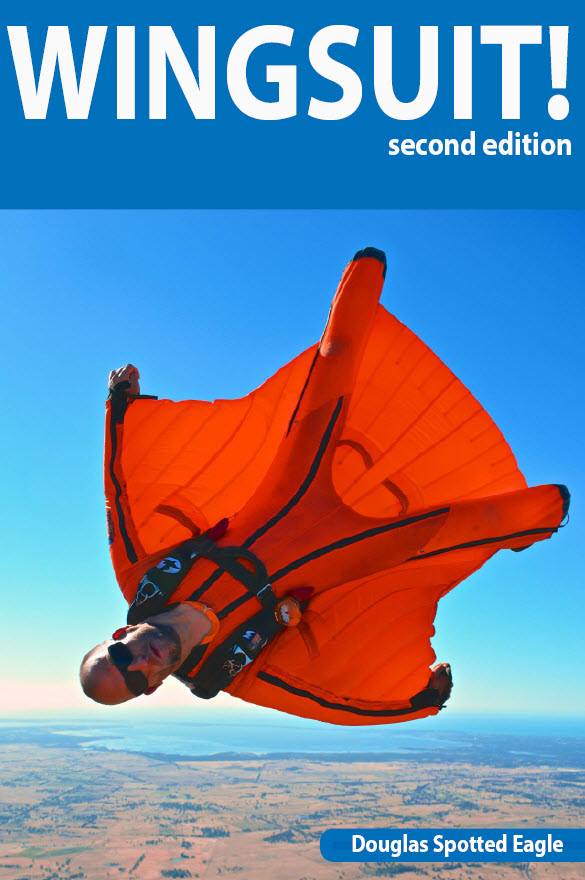
Look out for Part 2 of this article, which will explain the varying techniques for Time, Distance and Speed Tasks
Articles adapted from Douglas Spotted Eagle’s forthcoming book, WINGSUIT!