




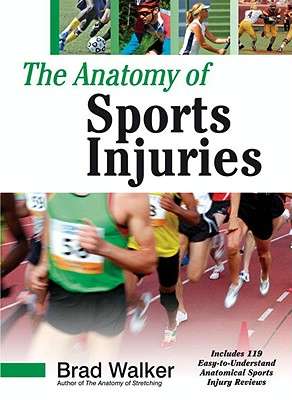
One of the major drawbacks of exercise or sport is
the risk of injury, and this is a big problem in
skydiving. If you haven’t experienced a skydiving
injury, I’m sure you have witnessed or know
someone who has. This book provides an
insight into what you could be doing to help
prevent injuries.
Book: The Anatomy of Sports Injuries
By: Brad Walker
Reviewer: Liz Boniface
Available From: Amazon, Bookstores
Cost: £11.05
Value for Money: 8/10
In a Nutshell: A guide to
sports
injuries, prevention and risk reduction
This comprehensive manual is a guide to
understanding sports
injury and how to
reduce the risk.
Injury Prevention
It starts with an explanation of how sports injuries
are classified, with diagrams illustrating the
physiology. There is then an excellent chapter on
how to prevent sports injury including; warm-up,
cool-down, FITT principles (frequency, intensity,
time/type of exercise principles), overtraining,
fitness and skill development, stretching and
flexibility, and so on. This is a practical guide to
how a training programme can influence the risk of
injury, both positively and negatively. For example,
‘exercise breaks the body down, while it is the rest
and recovery that makes the body strong and
healthy. Improvements only occur during the time
of rest’. This statement highlights how important it
is to have a balanced exercise and skydiving
training schedule that includes rest. A common
mistake is overtraining and not allowing the body
to rest sufficiently. The book explains how to
develop a balanced programme and discusses
symptoms of overtraining.
Treatment
The next chapter goes through sports treatment
and rehabilitation. Specifically, what to do if
you have an injury and how to regain fitness
afterwards. It explains each stage from the first
three minutes, to how to improve over the next
three months.
Specific Injuries
The rest of the book goes through a
raft of different types of injury, from simple blisters
to complex shoulder damage. An overview of each
injury shows anatomy and physiology, causes,
symptoms, potential complications, immediate
treatment, rehabilitation and prevention, and long-term
prognosis. There are examples of exercises to
promote recovery, however the diagrams are quite
small and difficult to follow. Furthermore some of
the examples show poor technique so be very
careful about following the rehabilitation exercises;
however these are the only criticisms I have.
Warning!
This book is only a guide. In the case of
an injury, I can’t stress enough how important it is
to get a professional diagnosis and treatment
programme to ensure a speedy recovery. What
tends to happen is that you get one injury, which
then leads to a succession of further injuries. However, if you want to increase your knowledge
around injury prevention, and understand the risks
involved with potential injuries, then this book is
really going to help.