




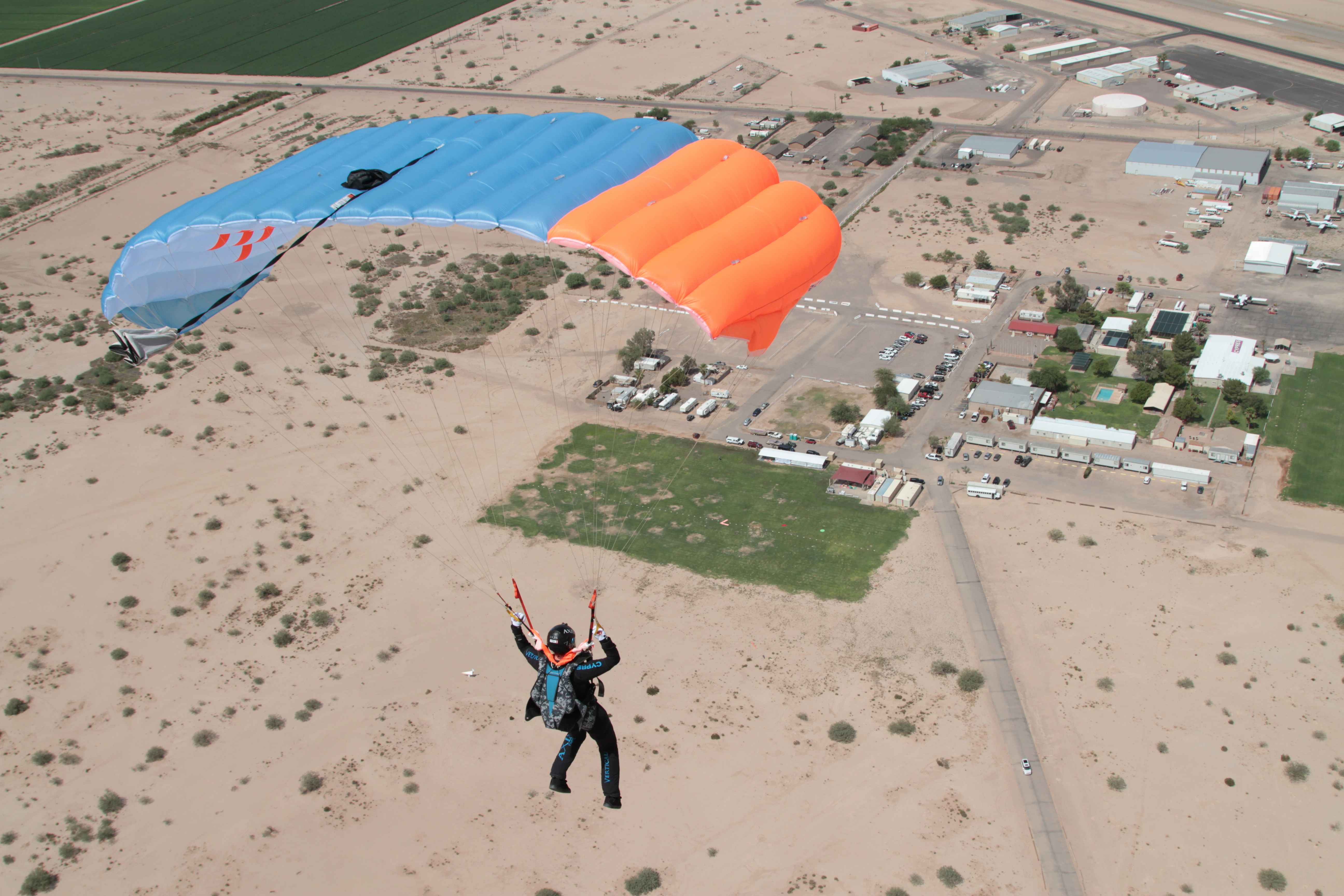
Getting education about canopy flight is the most important thing you can do in this sport. You may not share the same interest in freefall as everyone else on the plane, but in the end, we all need a parachute to land safely. So we owe it to ourselves and our fellow jumpers to fully understand this part of our descent. Statistics show that most injuries occur due to pilot error, rather than equipment failure. Given that most gear manufacturers are now using laser-cutting tools and have great quality control, the equipment is seldom to blame.
##Pilot error
The errors that these pilots commit are not just spent in the last few seconds before they make the incident reports page, but rather an accumulation of poor judgments. Lack of training and information, low currency, and jumping equipment that is outside of the pilots’ competency range…
##Landing problems
Most young jumpers will encounter some or all of these landing problems: flaring too high or low, too much or asymmetrical input, incomplete flare, mechanical problems, challenging wind conditions, terrain, all compounded by switching canopy models frequently while renting.
When you fly a faster parachute, the margin for error gets exponentially smaller
However, newbie jumpers are not the only ones susceptible. In most cases ‘new’ problems can arise seemingly out of nowhere, when in fact some variable (even if very small) has changed. Things like a change in temperature, density altitude, or switching canopy models only reveal problems that were already pre-existing. When you fly a faster parachute, the margin for error gets exponentially smaller. There is no such thing as “maxing out a canopy”. What you can do is learn to fly it very well.
#Are you a victim?
A sign that you are struggling with your current canopy progression is the Victim Factor. Do you find that everyone around you continues to make mistakes that directly influence your way of doing things? If so, you are a willing victim. A good sign that you are on a wing and under complete control is being able to anticipate your own pattern and way of doing things, as well as being able to anticipate what everyone around you is doing. One of the most common things we hear about is how “that guy set a downwind pattern that fucked me up”, “that guy cut me off”, “that guy is flying like a crazy person”, blah, blah, blah. If you consistently find yourself at the mercy of other people’s behavior, that is a bright Red Flag that you are not mentally ready for the speed and variables that come along with that certain type of canopy.
If you consistently find yourself at the mercy of other people’s behavior, that is a bright Red Flag
##Red flag
When we take a look at risk behaviors, we like to label dangerous decisions or actions a ‘red flag’. One flag by itself may not turn someone into an incident report, however, as they start to compound things can become a problem for the individual as well as others. Worse yet, most jumpers (the ones who do not get coaching) fly around with a continuous red flag without being aware of it. So as soon as an unfamiliar situation arises that challenges them to think fast and improvise, their mental system becomes overloaded.
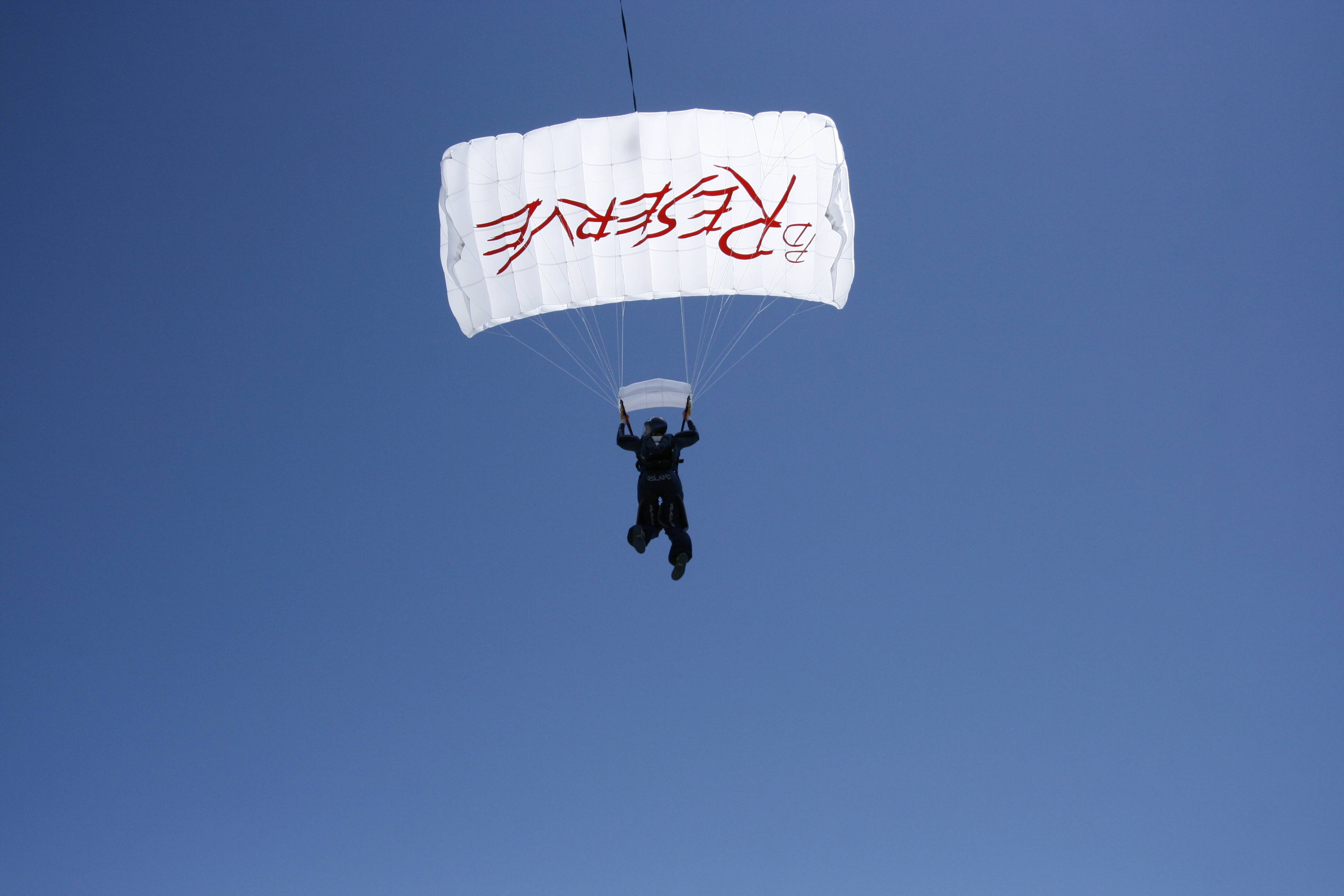
##Have you flown your reserve?
Another thing to note – how much concern do you give your reserve canopy? Many people go hundreds or even thousands of jumps before jumping their current reserve, are you comfortable dealing with all the stated variables under an anfamilar wing?
##Travel
Not all drop zones are big enough to support a gear store with a wide variety with equipment you can demo. However, this is not a good excuse to skip steps. If you want to learn how to surf or ski, then you need to travel to the places that have waves or mountains. If you need coaching and want to demo gear, then you owe it to yourself to travel to the places that can accommodate your needs.
##All-round canopy education
Not everyone wants to be a high performance canopy pilot, but that is just a small area a canopy coach has to offer when it comes to sharing information. Our primary goals while under canopy are to fly defensively in such a way that we:
- Get to the ground safely in a consistent manner, no matter the conditions or what other jumpers are doing around us.
- Make decisions that help create safer situations for ourselves and others
In order to do this we need to further our education. This will help not only with how we fly our parachutes, but in other areas as well, such as being able to make educated purchase decisions for our next set of gear and being able to lay out a realistic path for our canopy progression depending on what our goals are. Keep in mind that learning these skills takes time and practice. However, getting coaching can greatly reduce this time, steepen our learning curve, prevent bad habits from forming if applied early enough, and will greatly offset our cost in the long run.
We spend a lot of time planning and visualizing what we are going to do in freefall – but how often do you honestly think about your canopy ride?
We spend a lot of time planning and visualizing what we are going to do in freefall – but how often do you honestly think about your canopy ride? I’m not just talking about recognizing the wind direction before you go up. I am talking about noticing where you are within the exit order, knowing where your holding area will be, maneuvers you will be performing, and what pattern you will fly.
##Summary
Fast food coaching is available anywhere – especially the packing mat. This is where a student gets a quick burst of information, tries to apply it, and only listens to what they want to hear. You get what you pay for.
View coaching as an investment, not at how many more jump tickets the coaching cost could have gotten you. You will gain much more knowledge and experience in that short amount of time that you wouldn’t have if you had spent the money on jumps. Invest in knowledge, fun, your health and – ultimately – the health of the sport.