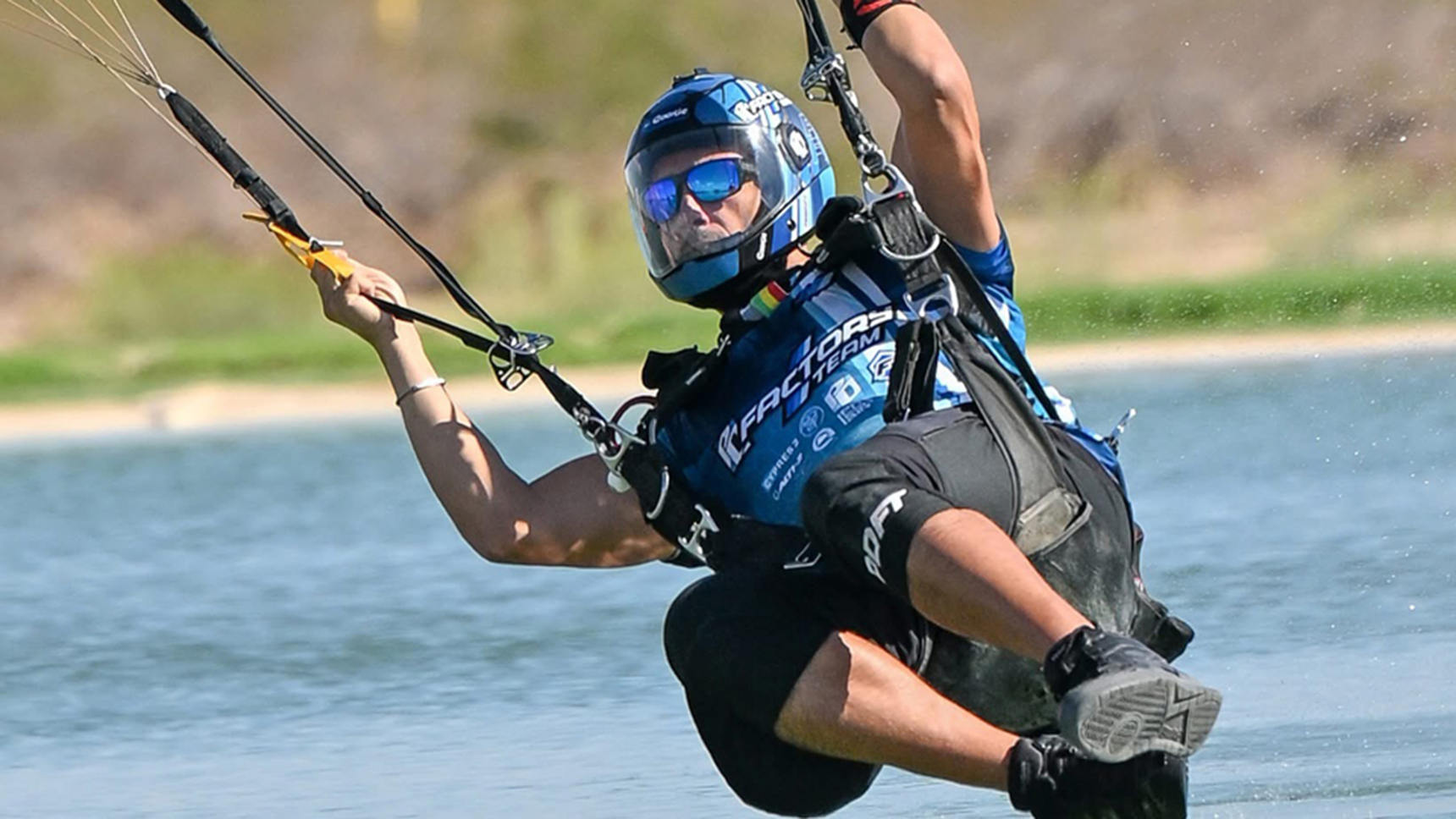





Flight-1 coach Armando Fattoruso with solid advice for anyone looking to downsize their canopy safely or begin to swoop
Downsizing your canopy and high-performance landings represent a critical transition in a skydiver’s canopy progression. At this stage, the canopy no longer masks technical errors, it exposes them. Smaller, higher-loaded wings increase airspeed, reduce reaction time, and lengthen recovery arcs. Without solid fundamentals, this combination quickly turns small mistakes into serious incidents.
Before downsizing or beginning any form of swoop training, these five technical areas must be clearly understood and consistently demonstrated.
1. Pattern Control and Landing Accuracy
Before increasing wing loading, a pilot must show repeatable control over the entire landing pattern.
This includes the ability to:
- Fly predictable, traffic-aware patterns
- Adjust base and final legs for wind strength, direction, and canopy performance
- Land consistently within a defined target area
Accuracy is not about hitting a cone once—it is about reducing variability.
A canopy pilot ready to downsize should be able to:
- Recognize early when the pattern is long or short
- Modify glide using rears or brakes instead of forcing late turns
- Accept a straight-in or braked landing when the approach is not ideal
If accuracy relies on last-second corrections, the foundation is not yet stable.
2. Understanding Recovery Arc and Energy Management
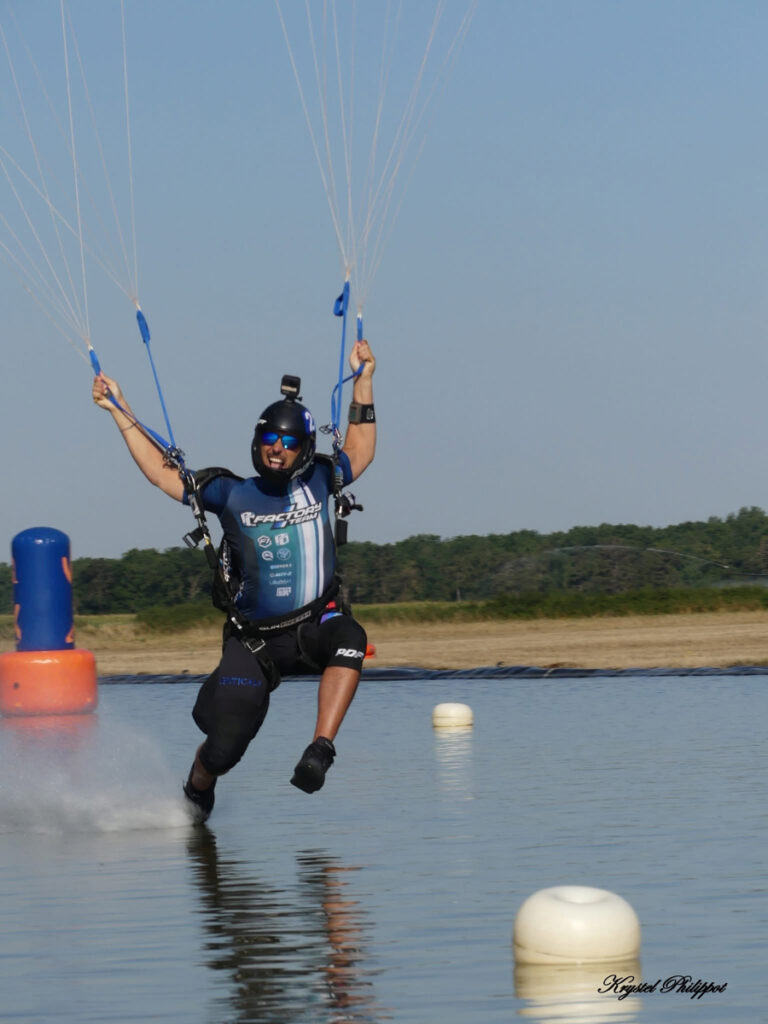
One of the most misunderstood aspects of downsizing and swooping is recovery arc behavior.
Pilots must understand:
- How wing loading, planform, and trim affect dive and recovery
- The difference between speed generation and altitude consumption
- How long their canopy takes to return to level flight after a turn
This knowledge must be predictive, not reactive.
A ready pilot can answer questions like:
- How much altitude will a 90° front-riser turn consume?
- How does this change with density altitude or wing loading?
- What input stops the dive, and which one extends it?
Without this understanding, learning to swoop becomes guesswork—and guesswork at speed is unforgiving.
3. Precision in Control Inputs and Body Position
High-performance flight demands clean mechanics.
Before downsizing, pilots must demonstrate:
- Symmetrical toggle and riser inputs
- Controlled rear-riser flight during approach and landing
- Stable body position that does not unintentionally influence roll or yaw
As wing loading increases:
- Small asymmetries create significant heading changes
- Over-input leads to steep dives and loss of margin
- Poor timing reduces flare efficiency and range
Technical precision is not about strength—it is about timing, symmetry, and awareness.
A pilot who cannot consistently perform smooth, balanced inputs on a larger canopy will struggle on a smaller one.
4. Altitude Gates and Decision-Making Discipline
Swooping is not an improvisational skill. Before beginning high-performance turns, a pilot must operate with:
- Defined altitude gates
- Clear initiation and abort points
- A pre-planned response to imperfect setups
This means:
- Knowing exactly when a turn starts and must end
- Being willing to stop the maneuver early
- Choosing safety over outcome, every time
Discipline under canopy is a trained behavior.
If a pilot regularly “adjusts on the fly” or rationalizes low turns, downsizing will only reduce the time available to correct those decisions.
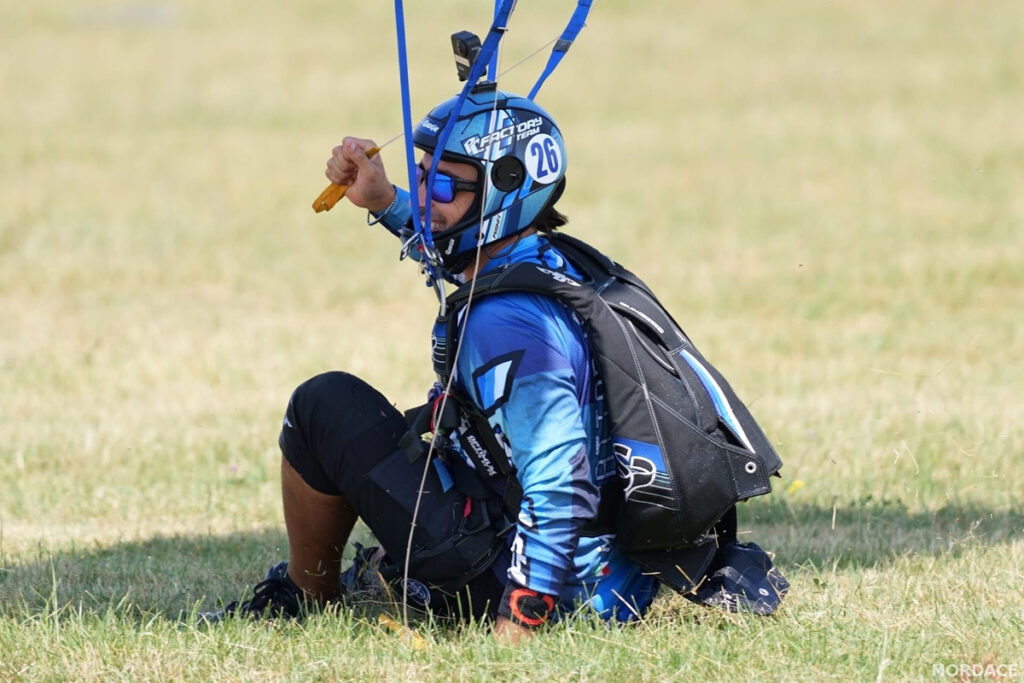
5. Structured Training and External Feedback
Canopy piloting progression should follow the same logic as freefall training:
- Defined drills
- Objective evaluation
- Qualified coaching
Before downsizing or swooping, pilots should:
- Train with experienced canopy coaches
- Use video and data to analyze performance
- Progress through measurable skill benchmarks, not jump numbers
Self-assessment alone is unreliable, especially as confidence increases.
The most successful canopy pilots are not self-taught; they are well-coached and continuously evaluated. Downsizing and swooping are not natural evolutions, they are technical transitions.
Higher performance canopies:
- Increase speed
- Decrease tolerance for error
- Demand deeper understanding and discipline
When fundamentals are mastered, progression becomes controlled and sustainable. When they are not, performance simply amplifies risk.
The canopy does not care about experience or ambition…only about physics and inputs.
Read more of our articles on canopy piloting.