




A look inside the new tunnel competitions by Downunder Dynamics
Mason Corby of Downunder Dynamics has introduced an exciting new tunnel competition: the Body Piloting Championships (BPC). Recognizing the need for a fresh competition model with fairer judging criteria and greater room for creativity, Mason launched BPC, and after three successful events, it’s clear this competition is making its mark. Mason shares insights into what BPC truly represents, how he envisions it shaping the future of our sport, and how it’s more than just a competition—it’s creating new job opportunities within the community.
What inspired you to create the Body Piloting Championships, and what gap did you feel it filled in the indoor competition space?
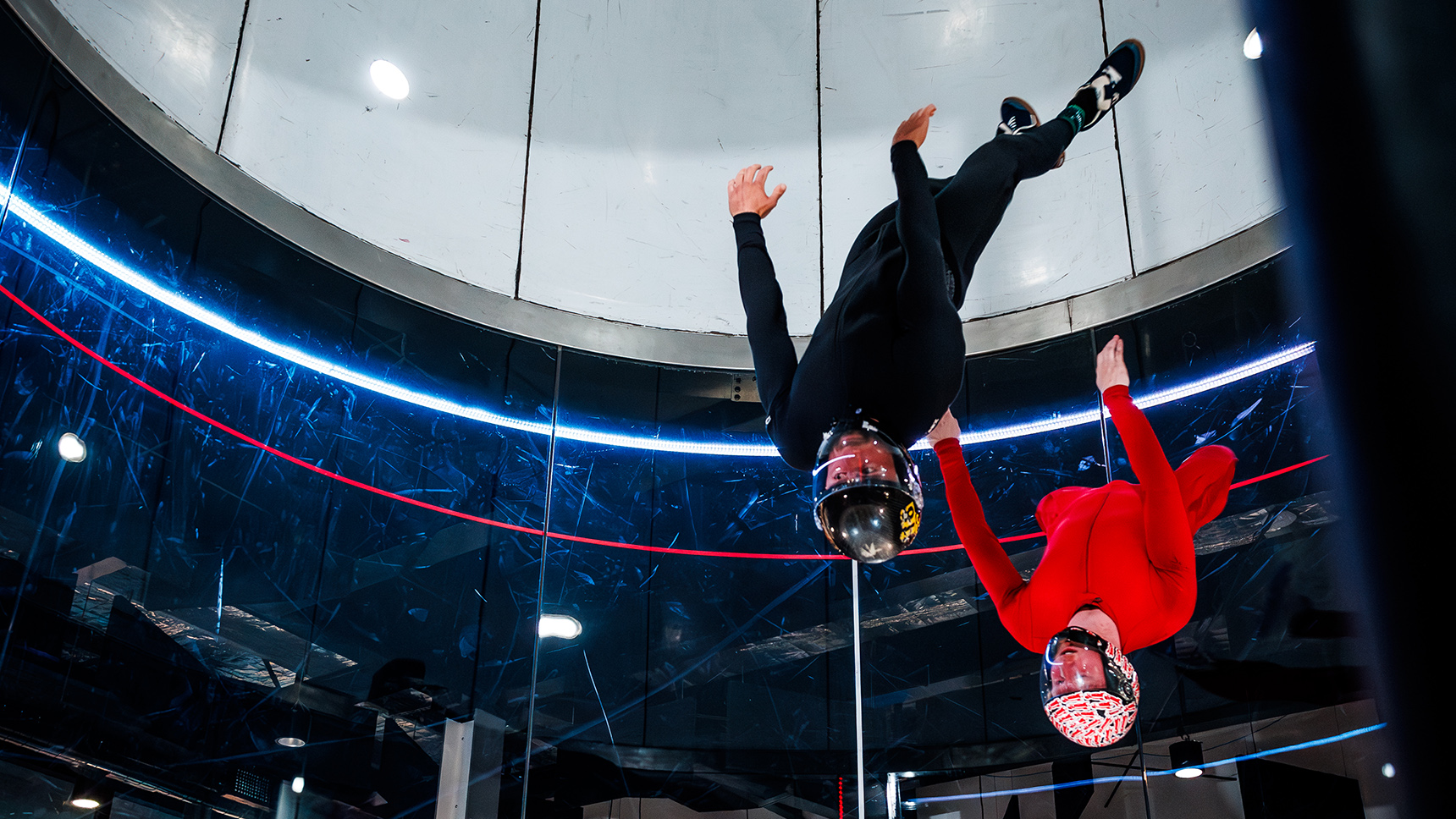
The Body Piloting Championships (BPC) was inspired by a desire to create a clear, accessible, and engaging competition format for dynamic flying that both experienced pilots and new spectators could easily follow. Unlike traditional freefly competitions, which rely heavily on subjective judging for routines and free rounds, BPC is designed with a “Follow the Leader” format. This approach reduces judgment based on personal interpretation, making the event both fairer and more captivating for audiences allowing the competitors to compete in a competition format more similar to what we fly regularly for fun. Follow the leader.
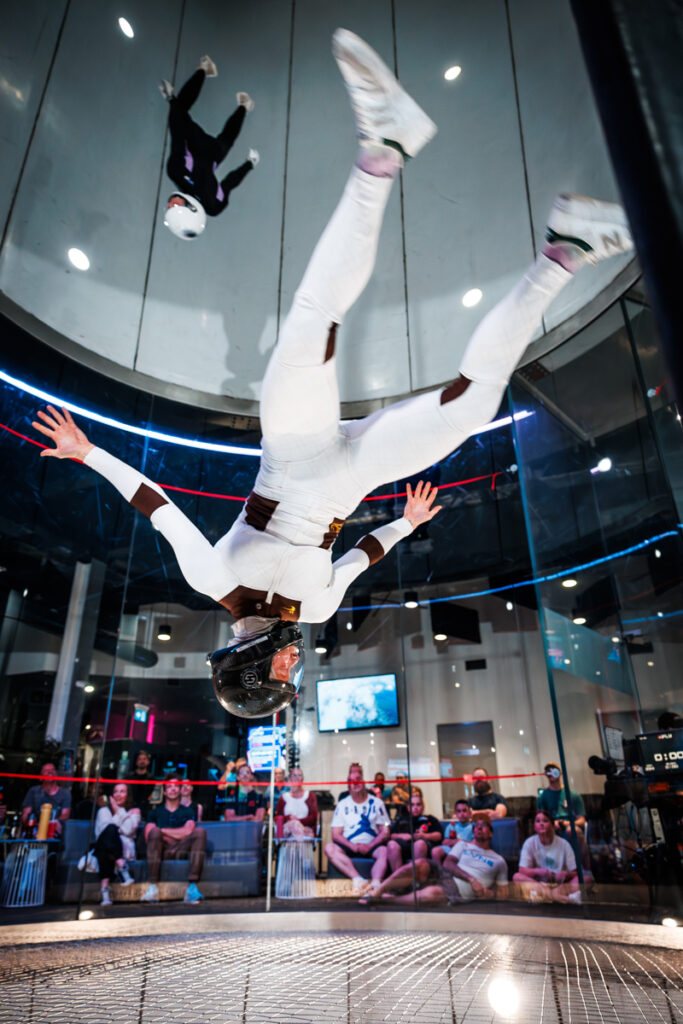
Photo by Jimmy Cooper
Could you explain the competition format for Body Piloting Championships? What are some of the elements that make it stand out from other indoor skydiving events?
Each match consists of two players: one designated as the leader and the other as the follower. The match has two games per set, with roles switching after each game. The player with the fewest points (or penalties) after the defined sets wins.
Scoring Zones & Arena Layout
- Top Zone: The area above the top line, including the diffuser.
- Middle Zone: The space between the top and bottom lines; this is primarily for tricks rather than scoring.
- Bottom Zone: The area below the bottom line, closer to the net.
Scoring Rules
- Only the follower can score points by “busting” (making errors) into the top or bottom zones.
- The middle zone does not award points for line entries but allows for points on executed tricks.
Bust Types & Scoring
- Line Busts: If the follower fails to follow the leader’s entry into the top or bottom zones, they receive +1 point.
- Trick Busts: Failure to replicate the leader’s trick, including any rotation or complexity, results in +1 point.
- Penalties: Unsafe actions, such as collisions, blind tricks, or repeated stops, incur a penalty point for the flyer at fault.
Tricks & Lines Rules
- Tricks: The follower must replicate the leader’s trick with the same orientation and path, and each trick can only be performed twice on each side per round. Blind tricks are allowed only twice before being considered visible.
- Lines: The follower must enter the same scoring zone as the leader to avoid a bust. No points are awarded if the leader doesn’t enter a scoring zone.
Entry & Exit Rules
- Entry: The leader chooses the trick or line to begin the round, and the follower must replicate it. A failure results in +1 point for a bust.
- Exit: The follower must replicate the leader’s exit, with failure resulting in a +1-point bust.
Judging & Timekeeping
- Referees & Judges: Each match is overseen by one referee and two zone judges.
- Timekeeping: Matches are played in four 2-minute sets for open categories, with a 1-minute break between sets. The timer begins once the leader’s foot leaves the door.
Misconduct & Safety
- Misconduct: Physical aggression or interference with the opponent results in a penalty.
- Safety: Dangerous flying, collisions, or intentional blocking of the opponent is not allowed and will result in a penalty.
Winning & Progression
- Winning: The player with the fewest points (busts) at the end of the sets wins. In case of a tie, previous rankings are used to determine the winner.
- Progression: Flyers advance through skill categories by demonstrating mastery of various tricks and lines.
This is very different from all the other dynamic/freefly competitions as the competitors are not working in teams to do routines or set moves, they have freedom to do what they want and are competing at the same time as their competitors.
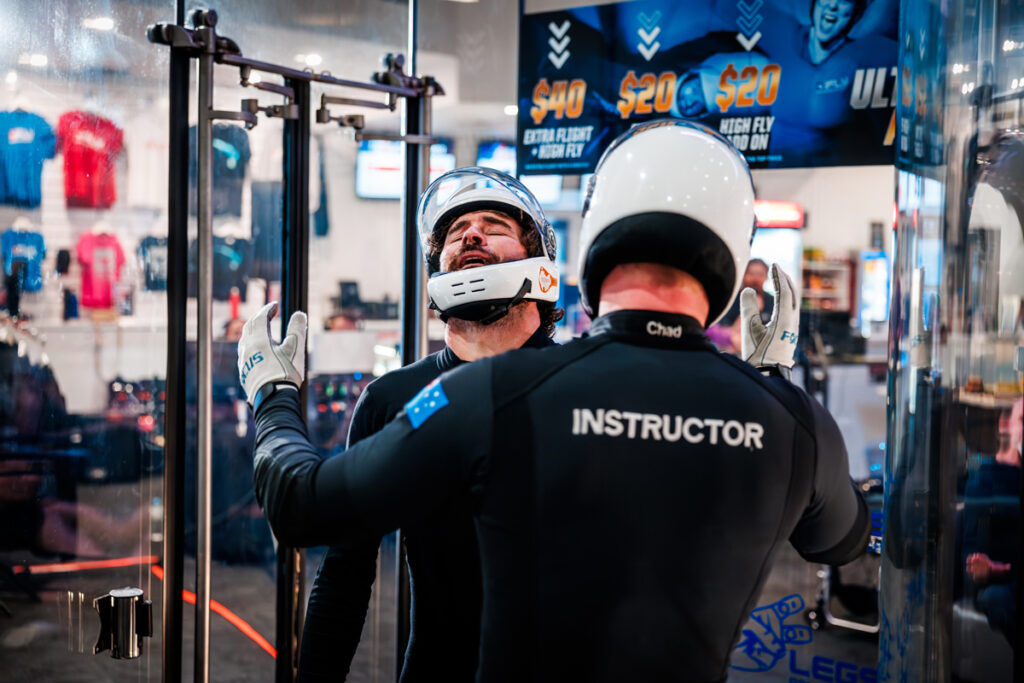
Photo by Jimmy Cooper
What kind of flying does this competition emphasize, and how does it challenge athletes differently than other indoor skydiving competitions?
The Body Piloting Championships (BPC) emphasizes dynamic movement and creative expression in a head-to-head “Follow the Leader” format, which differentiates it from other competitive formats in indoor skydiving.
Unlike Dynamic 2-Way (D2W) and Dynamic 4-Way (D4W), where athletes perform set patterns, BPC emphasizes creative replication. In D2W and D4W, rounds are divided into “speed” and “free” categories, with teams performing complex sequences in the fastest possible time or showcasing routines with artistic merit. The judging in BPC, however, centers around how well the follower replicates the leader’s moves. This allows more freedom for individual expression while maintaining a clear standard for judging, as the focus is on execution accuracy rather than stylistic interpretation.
In BPC, only the follower can score by busting into specific zones or failing to replicate a trick, leading to clear penalties for inaccuracies. In comparison, Vertical Formation Skydiving (VFS) and traditional freefly competitions in the sky focus on formation consistency, orientation changes, and controlled exits, with a stronger emphasis on synchronized group execution rather than individual creativity.
The BPC format includes a progression table that enables athletes from beginner to advanced levels to compete, whereas D2W, D4W, and artistic freefly competitions are generally more restrictive, requiring a high level of technical expertise from the start. BPC’s scoring zones and structured replication allow new and advanced flyers alike to participate, encouraging broader engagement across skill levels.
By using a “Follow the Leader” approach, BPC is designed to be spectator-friendly, reducing the complexity often seen in the subjective scoring of free rounds in dynamic competitions. This feature aims to captivate not only skydiving enthusiasts but also those new to the sport, making it an inclusive, engaging event for a wider audience.

Photo by Jimmy Cooper
How has the response been from the community and athletes about this new competition style?
The response at first was slow as people didn’t understand the competition format properly and what it entailed. Recently it has gained a lot more traction with more and more people becoming interested in it. The format has definitely intrigued a lot of people as it’s different but also seems to be very similar to what a lot of us do in the tunnel just for fun.
What are the goals for the future of the Body Piloting Championships?
Expanding Accessibility and Inclusion: BPC’s progression-based format allows pilots at different skill levels to compete, fostering mentorship and broadening engagement across experience levels.
Setting New Standards for Dynamic Competitions: BPC’s focus on clear, expressive judging aims to set a standard for fair, objective scoring while encouraging creativity.
Broadening Audience Engagement: With a “Follow the Leader” format that is engaging and easy to follow, BPC aims to draw audiences beyond traditional skydiving fans, appealing to general audiences interested in extreme sports. This goal will be supported through strategic partnerships, live streaming, and a stronger media presence.
Creating Longevity for Athletes and the Sport: BPC is committed to supporting the long-term careers of pilots by providing opportunities beyond competing or tunnel instruction. The goal is to offer career paths in coaching, event management, judging, and media roles, allowing former competitors to stay connected to the sport and contribute their expertise. This approach not only benefits individual pilots but also strengthens the sport’s ecosystem.
Inspiring Innovation in Body Piloting: By encouraging new moves and techniques, BPC continually challenges the boundaries of body piloting skills, fostering a culture of innovation and exploration.
Strengthening Community and Cultural Impact: BPC aims to be a defining event that promotes respect and camaraderie within the body piloting world. Over time, it seeks to become a global leader in body piloting competitions, nurturing a sustainable, supportive culture that ensures both growth and retention in the sport.
Are there any partnerships or developments planned to bring the competition to more locations or larger audiences?
Absolutely. Currently, my focus has been on fine-tuning the judging criteria, competition structure, and overall delivery to ensure a seamless and engaging experience. This process required running multiple trial competitions, which I chose to hold at a single tunnel. Keeping it at one location allowed for quick adjustments and consistency, helping build a following and interest from other tunnels.
After over a decade of refining this vision, I wanted the initial release to be solid, without gaps in the format or execution. This approach has helped create anticipation while ensuring a stable foundation for future expansions.
Where do you envision the Body Piloting Championships within the next five years in terms of influence on the sport?
I see the Body Piloting Championships (BPC) becoming a global standard, with its judging system used in tunnels worldwide. This system was designed not only to evaluate competition but also to collect detailed match statistics, enabling participants to track their performance and recognize areas to improve. My hope is that BPC can foster a community where flyers can easily connect—not just for competition but also for training, social flying, and skill-building.
I’d like to see the BPC format lead to various low- and mid-level competitions, creating a pathway for pilots to advance to major events. The vision is for BPC to grow from a personal project into an international platform, where I can host events that provide more support for participants and encourage people to fly for fun, build skills, and find like-minded flyers. In the next five years, I want BPC to be both a competitive and social fixture in body piloting, making the sport as accessible and mainstream as possible.
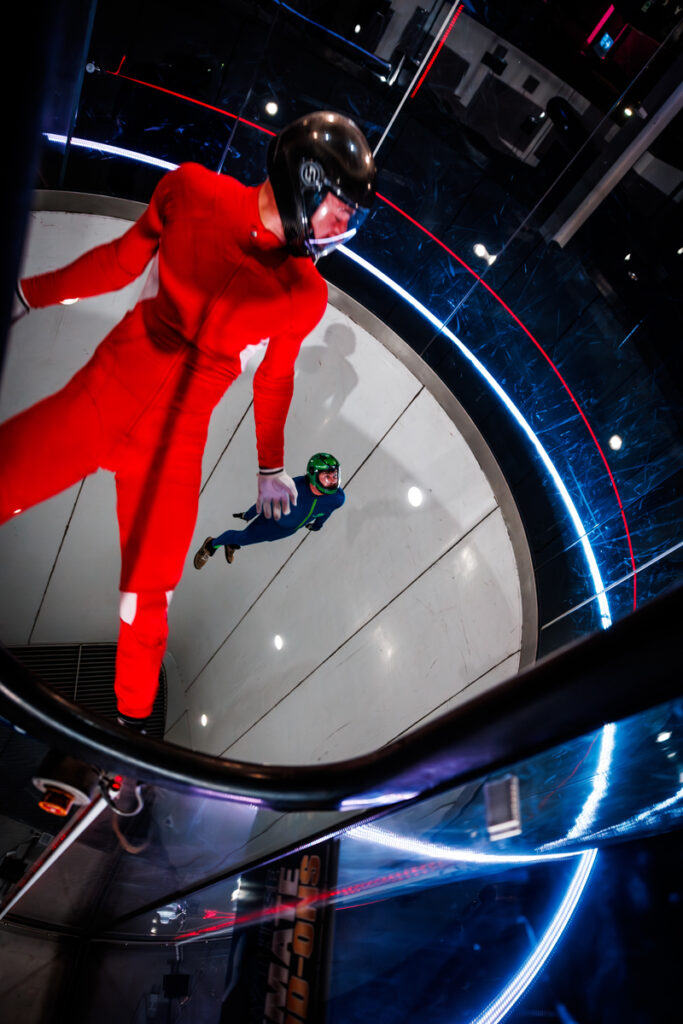
Photo by Jimmy Cooper
How did you design the judging criteria for body piloting, and what is most critical to ensuring a fair competition?
The idea came to me years ago while competing in D4W with Southernfly at Indoor Skydive Bottrop. Frustrated by some of the subjective outcomes in competitions, I recognized the same issues that often appear in freefly comps. I felt a new approach was needed—something more objective that could fairly assess each pilot’s skill.
Reflecting on how we often flew for fun—using a “follow the leader” format—it struck me that this could be a competition format itself. After meditating on this idea and testing different scoring options, I came up with the structure we use now, designed to be accessible for all skill levels. I tested it with beginner flyers first, and it worked. As I moved to intermediate and then advanced pilots at FlySpot, the format held strong with only small adjustments over time.
The critical element for fairness has been minimizing subjectivity in judging. The structure is designed for clear, straightforward scoring, where the only subjective call is on “blind” moves—those that can’t be followed if unseen. This is why experienced flyers are essential as judges. As skill levels improve, we’re finding that even “blind” moves are less of a challenge to follow, reinforcing the format’s fairness and adaptability across all levels.
I’m curious what kinds of challenges you faced in setting up BPC?
There were countless challenges along the way. Some of the people I respected initially criticized the concept, even saying it might harm the discipline. I also faced last-minute withdrawals from participants and a significant financial burden, investing over $40,000 of my own money and countless hours over ten years as well as stress on personal relationships. There were times I came close to quitting due to a lack of support and nearing financial strain.
What kept me going was a deep gut feeling that BPC had the potential to be something transformative for the sport—something that could help it grow, provide pathways for up-and-coming flyers, and create roles for seasoned athletes beyond competition, like judging or commentary. My goal isn’t just to offer medals; it’s to build a sustainable career path within the sport, so competitors and staff can earn a living doing what they love. The vision of a self-sustaining community that rewards the dedication of athletes and supports the industry as a whole is what drives me forward.
I remember the last time I was about to quit and said to my partner Sonnica I am over it, I just want to give up and throw it all in. I don’t know what to do, She looked at me with loving eyes and said “what else are you going to do?”

Photo by Jimmy Cooper
Where can people follow to find out more info and see the previous competition?
For updates and past competition footage, check out my YouTube channel, where I’ve uploaded videos from previous events. I also have a website that includes detailed rules and a history of competitions, which I’m continually updating. Since I’m currently managing most of it myself, it’s a work in progress, but as BPC grows, I’m starting to get more help to keep everything updated.
- YouTube: Watch BPC competitions
- Website: BPC Official Site
Facebook: Downunder Dynamics Facebook Page