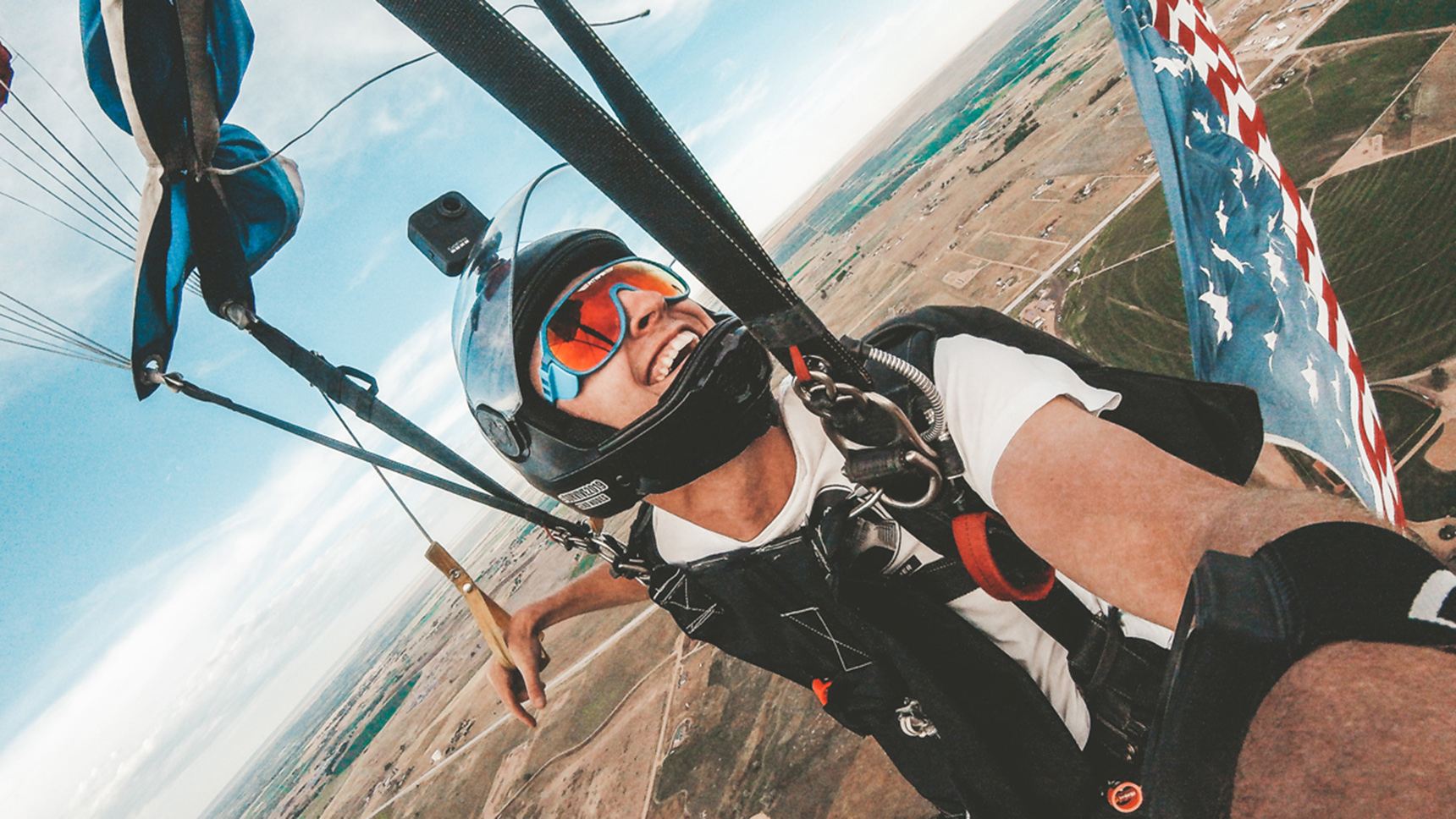





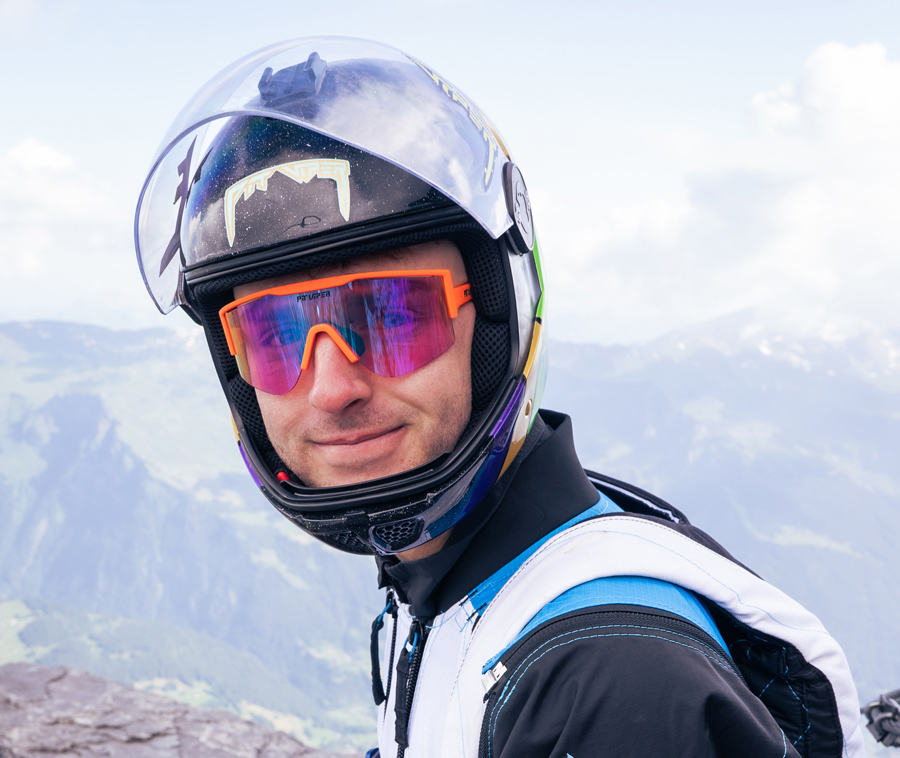
When it comes to living a life around air sports, few do it with more passion and dedication than Dante Wardlaw. With over 4,000 skydives, 1,800 BASE jumps, and a passion for speedflying and paragliding, Dante has carved out a life that thrives on precision, resilience, and pure love for the sky. From his first tandem skydive at 18 to living a nomadic life among Europe’s most iconic cliffs and mountains, Dante’s journey is a testament to following passion over convention. In this conversation, he shares his beginnings, the challenges of mastering high-risk air sports, and the lessons learned from the exhilarating highs and sobering close calls of his career.
What drew you into the sport?
When I was young my father would take me to the airport and watch skydivers.
That was a thing we did often. Growing up, obviously I saw skydiving and base jumping on YouTube and social media… Well not so much social media, mostly on YouTube back then 😊. It was always in the back of my head as something I wanted to do.
I grew up in America, in Colorado. The earliest age you can skydive there is when you’re 18 years old. So, for my 18th birthday, my parents bought me a tandem skydive.
I was hooked 😊. I started following these activities on social and sometime later I organized a meeting with this guy that I met through Instagram. We climbed a crane in California on a construction site and he did a base jump off of it. The moment I saw that I thought “I need to do this!” and the next week I booked an AFF course and never really looked back.
How many skydives did you have when you started base jumping?
When I started skydiving, I also started learning to speedfly, so that made a difference. When I started base jumping, I had about 50 skydives and 100 speed flying flights.
Did you know then that air sports would be a lifelong pursuit?
I wasn’t sure. It was never like, ‘I want to do this for the rest of my life’.
Even now it’s not so much that, it’s more I’m having fun with it, I’m enjoying it at the moment, and I want to keep doing it. So, now it’s shifted into more of a lifestyle thing where I’m participating in air sports every day. And, yeah, here I am, nine years later, still doing it.
Describe yourself in 5 words or less
I like to have fun
What were the biggest challenges you faced when learning to BASE jump?
I would say being young and base jumping is often looked at in a negative way. Especially when you do a lot of BASE. People think, and I agree with this, that when we’re young we are still developing our minds and figuring out life, so we sometimes don’t make the best decisions.
Base jumping is a sport where you need to be smart with your decisions and really mature. So, when you’re doing a lot of jumps and you’re young, people see that and they think you’re trying to kill yourself.
So dealing with the social pressure of people saying, ‘well, you shouldn’t do this’, that was tricky. But over time and with more experience, having the chance to show people that “hey, I’m not dead, I’m making good decisions, doing the right thing”, you earn the trust.
Regarding base jumping, how do you approach skill progression in such a high-risk sport?
Base jumping is an activity where you can’t push the limits in a safe way. What I mean by that is, when you go rock climbing and you practice rock climbing, you can try to climb any rock. And if you can’t climb it, you can’t climb it. But with base jumping, it’s a really easy thing. You hike up and, whether it’s a hard jump or an easy jump, you’re still doing the same. There’s not a lot of room to push. So, my approach is doing a lot, but keeping my threshold at something like 50%. I try to do half of my skill level on everyday jumps. And over time with enough repetition, you do get better at things. You don’t see your improvement so much, but you are learning and growing in a safer way.
Are there any training routines, mental exercises, or physical practices that help you stay sharp?
Yeah, I mean, the physical side of things – you want to be fit and I try to do my best here. Also being well rested, in a good state of mind, that really helps 😊.
And mentally, it’s visualization. Whatever you’re going to do, you need to go over it in your head before, with your desired outcome, every step. And then do the same, but imagining all the different ways it can go badly and how you’re prepared for it. Usually things don’t go badly, but if you’re prepared in your mind, you know what to do and how to fix the situation.
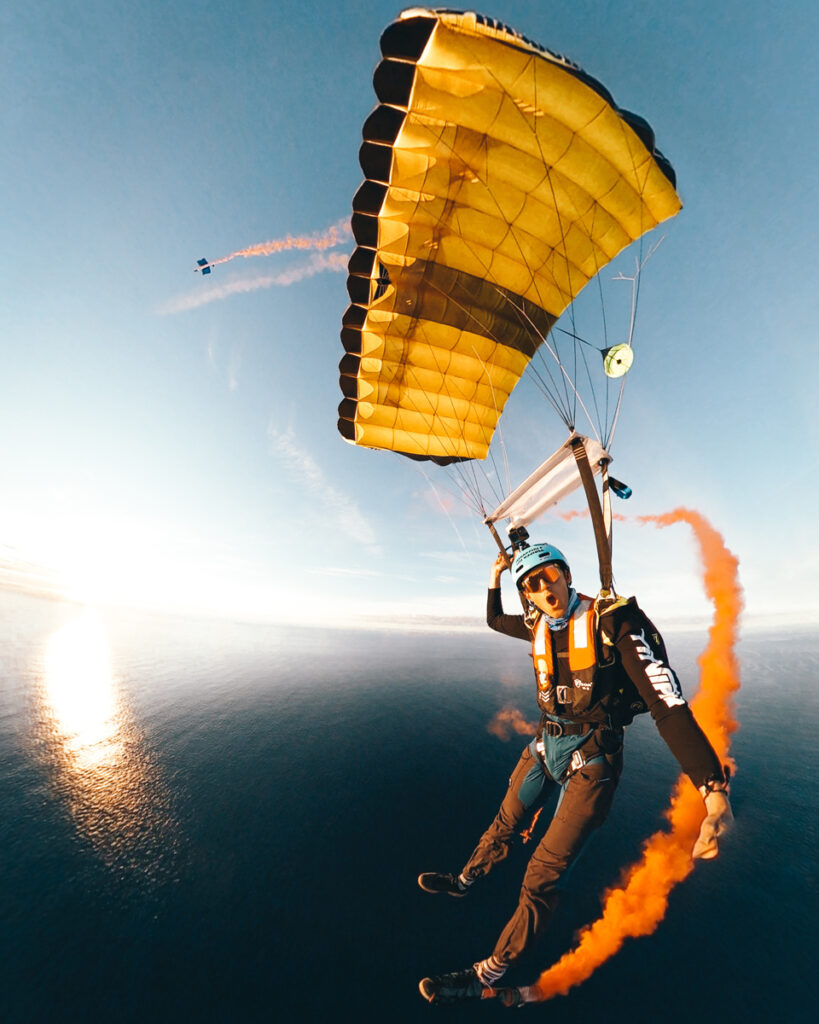
How do you balance fear and confidence when pushing your limits?
I think for me there’s always fear, right? Jumping off a cliff, base jumping, it’s not a natural thing. Humans weren’t born for this. Whenever you’re standing at the edge of a tall cliff, everything in your mind says “NO, you shouldn’t jump”. But it’s about trusting in your training and in the equipment and your prior experiences and then making the decision, yes, this is something I can do and that makes sense. I have the skills and knowledge to perform this safely, and that’s a way to get past the fear in my opinion.
“Dante is successful as a BASE jumper because of his approach. He is equal parts self-aware, passionate and motivated. He is more interested in learning than being the man. Oh, and he has the best tattoo in the history of BASE jumping.”
Matt Laj
What advice would you give to someone interested in starting skydiving?
I would say the same thing most people would say. If it’s something you’re interested in, go and try a tandem skydive, see if you like it. And if you like it, there’s a lot of avenues to learn and pursue it these days. You can do an AFF course or static line course to start with. If you like it, keep doing it. There are dropzones pretty much in every corner of the world. In my opinion, the biggest challenges are the fear – which can be dealt with, you can hang out at the drop zone, talk to people, do a few more tandems – and also money, it is expensive. If you’ve made up your mind to pursue this, I would recommend saving up the money before and having that set aside so you don’t have to think about it during that process of learning to skydive where you’re wanting to focus on other things.
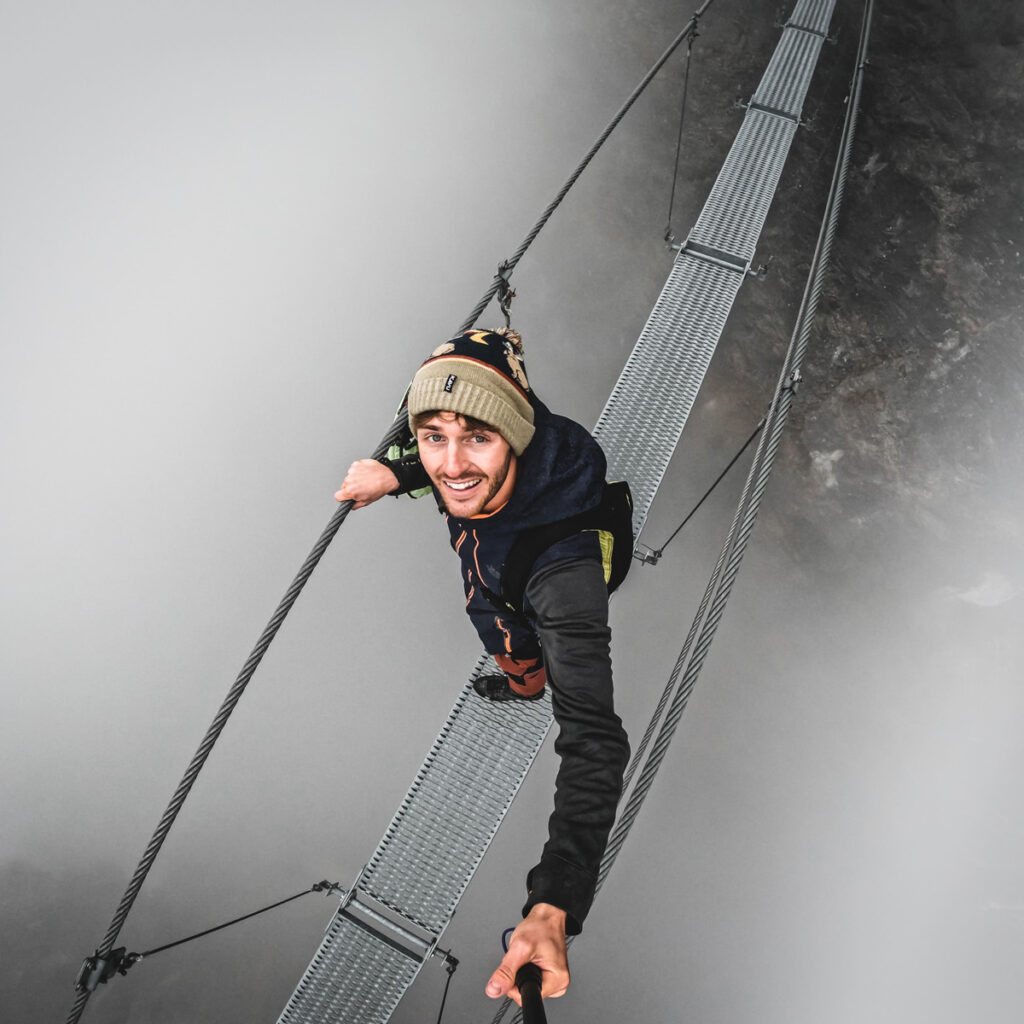
How about the transition from skydiving to base jumping?
I know people with 10,000 skydives who don’t base jump and I know people who base jump and either never skydived or they’ve done less than 50-100 skydives and it works for them. I don’t think this is the best route into the sport.
Nowadays, the recommendation is 200 skydives. That usually sets you up in a good way to have canopy skills and the awareness to learn base jumping. I would say 200 skydives and the ability to land your parachute wherever you want, in all conditions, is the most important part. This is the most crucial skill. Base jumping is more about the canopy knowledge and the canopy skills than the freefall.
The biggest advice I have is, ‘don’t rush‘. Sometimes you can feel pressure, especially with social media, but you have a lifetime to pursue these things and enjoy them. There’s no reason to rush, especially with how dangerous this activity is. So take your time. Try to learn as much as possible. And enjoy the process.
It’s the same in skydiving – you see the guy with the 60sqft small canopy swooping and you aspire to do that. But once you’re at that point, there’s no smaller parachutes to fly. There’s not much more to do with that. And learning is the most fun part of it. So, enjoy the process, you’ll get to where you’re going okay.
Who were your biggest inspirations?
I would say the people that I was meeting in the sport and that I was surrounded by. But first, it was my mentor, Max Leziak, who taught me to base jump and taught me a lot about skydiving. He’s one of my best friends, we were even roommates for two years, and we have lots of great memories together.
Also Matt Laj, Ryan Katchmar, Fred Fugen are big inspirations. And if I think about speed flying, it’s Bridger Henriksen who I’ve looked up to for many years. Over time, it’s been the people I’ve been lucky to surround myself with, people I look up to in all the different sports. There’s a long list! 😊
“Dante when I first met him was an enigma. I was and have consistently been awestruck by how little he would let anything constrain or define him. From scaling random skyscrapers in Asia to quickly advancing his speedflying skills. He’s just Dante and is very, very good at it. Always catching me off guard going from talking through the science of whatever flying shenanigans were at hand to showing me something he found on some quirky corner of the internet.
He is 100% the kind of human that, regardless of what activity is occurring, makes it a damn good time. He claims I mentored him but I’d say he did the same for me.”
Bridger Henriksen
Have you ever had a close call that changed your perspective on the sport?
If you base jump long enough you’ll have things that happen, close moments to getting very injured. That’s going to happen to everybody.
For me, I’ve had one particular instance when I got super lucky and I didn’t get injured badly or died. It was during a building jump where I entangled myself in the static line and basically I was in a bridle wrap in freefall jumping a low building. By sheer luck I was able to get out and didn’t die.
That shifted my perspective quite a bit, I didn’t have any pressure to jump after that. Even now, it’s a choice, because base jumping is not something that’s worth dying for. I don’t think I gave it much thought before this incident, but afterwards I truly felt it, this is not something that’s worth dying for. I want to pursue it safely and I want to do it for a long time – that’s the right approach in my opinion.
If you practice skydiving or any air sport you’re going to lose people at some point. Unfortunately, in base jumping, it happens a lot more. You need to know this going into the sport.
Base jumping is not something that’s worth dying for
Dante Wardlaw
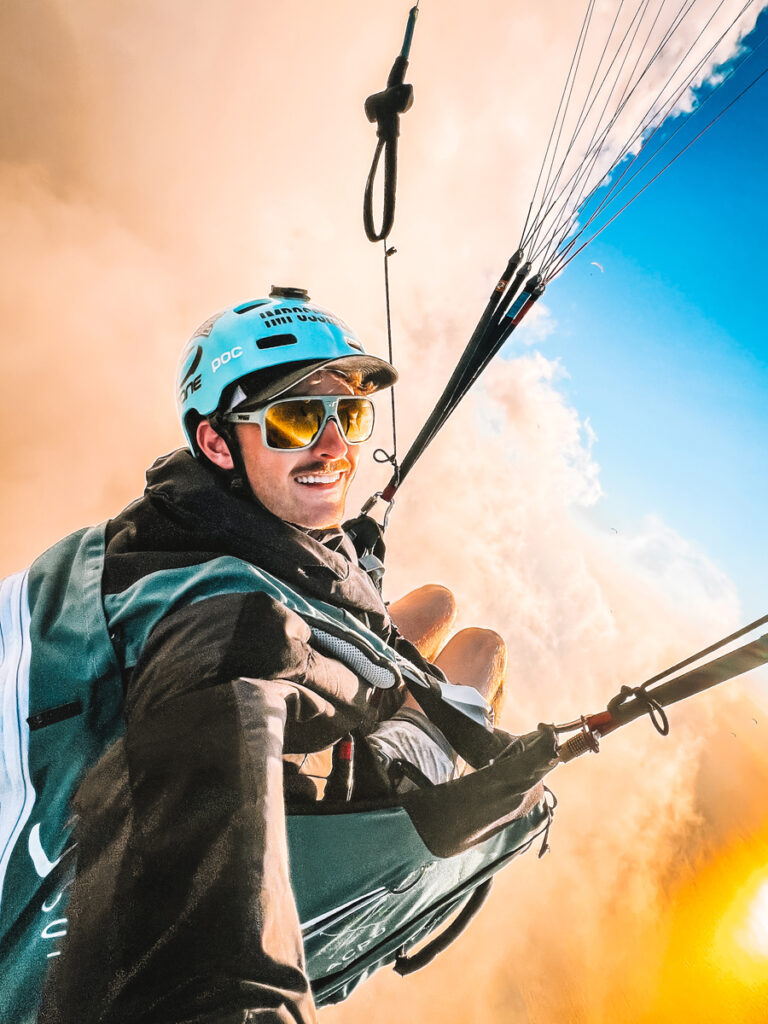
What has been your scariest jump to date? How about the most technical?
Obviously, the incident where I nearly died was definitely very scary.
But on a daily basis, anytime I’m jumping something new or opening up a new jump, that means being the first one to do that. It always comes with some fear because you know nobody’s done it before, so not being exactly sure how it will be like, how it will work, adds a lot more fear to the mix. Also with suboptimal weather or not a good landing zone, if you’re jumping in the city, if there’s a lot of cars around, or any variables that make a jump complex – when those get added together it gets a little bit scarier, but also makes you focus more.
Regarding technical jumps, I’ve done some very low base jumping. I think the lowest was 24 meters. They just get technical because you’re doing so much science on the backend. You have a lot less margin for error. So it’s similar to a stunt. When you have to add up all the different elements and they have to work with weather, height, gear configuration, all those things, that’s when it gets really technical. I’ve done a few in the United States that were super technical low, as well as in Portugal.
What do you think are the biggest misconceptions about base jumping?
I think the biggest one is that base jumpers are idiots and reckless and trying to kill themselves. If you’re base jumping there’s clearly some thought and some good decisions behind it to do it sustainably and over a longer period of time. So, I think the fact that a lot of people think base jumpers are making bad decisions isn’t true. That they’re making good decisions and keeping themselves safe. It’s a very polarizing sport. You’re either gonna like base jumping or hate it. It’s hard to relate if you’re not someone who can see yourself doing it personally.
You took the decision to move to France some time ago? Why?
It’s a perfect playground for air sports! Base jumping in America, we only really have what’s called slider-down base jumps. That’s the most accessible. These are jumps that are shorter where you’re not using a slider on your parachute. And it’s a lot of fun doing these jumps, but the other half of base jumping is slider-up jumping. So that’s tracking, slick, wingsuit… and sadly in America there’s not a lot of access to these types of jumps.
The best place to do these and learn and train for these, is in Europe. So it was always in the back of my head. I wanted to spend time in Europe. A lot of Americans go for short trips every year. But for me, I knew I wanted to spend a lot of time here and explore the Alps, and the best way to do that was by moving here.
So, at some point, I picked up everything from the States, sold a bunch of stuff that I didn’t need, and I moved to Europe in a van and I’ve been doing that for the last two and a half years – traveling around, chasing good weather, cool places, learning more about base jumping and air sports.
“Dante has never been afraid to dream big in pursuit of the next amazing adventure. What sets him apart from most are his relentless motivation and fiery passion that drive him to turn those dreams into reality. Anyone lucky enough to share in parts of his journey has witnessed his ability to lift up everyone around him with infectious positivity and compassion.”
Max Lesziak
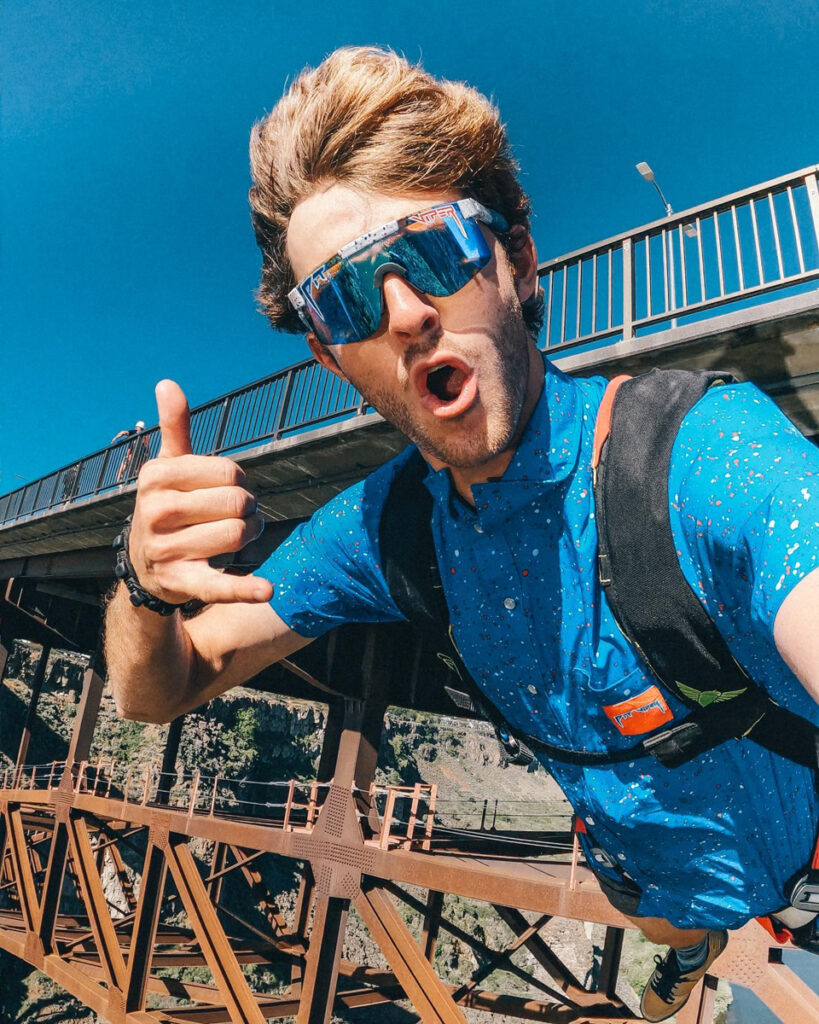
How do you make ends meet?
I do a little bit of coaching here and there, but my main source of income is tandem skydiving and paragliding. That’s what I was doing before I moved and what I do here as well.
I always had another job to be able to jump and travel. That’s the trade-off. With tandem skydiving or working in air sports, you’re not going to be rich, but with a cheaper, less expensive lifestyle, you can manage enough to pay your bills and put food on the table. This way I can live the dream. And it’s great because you’re surrounded by parachutes and flying a lot.
What are the best and toughest parts of your nomadic lifestyle?
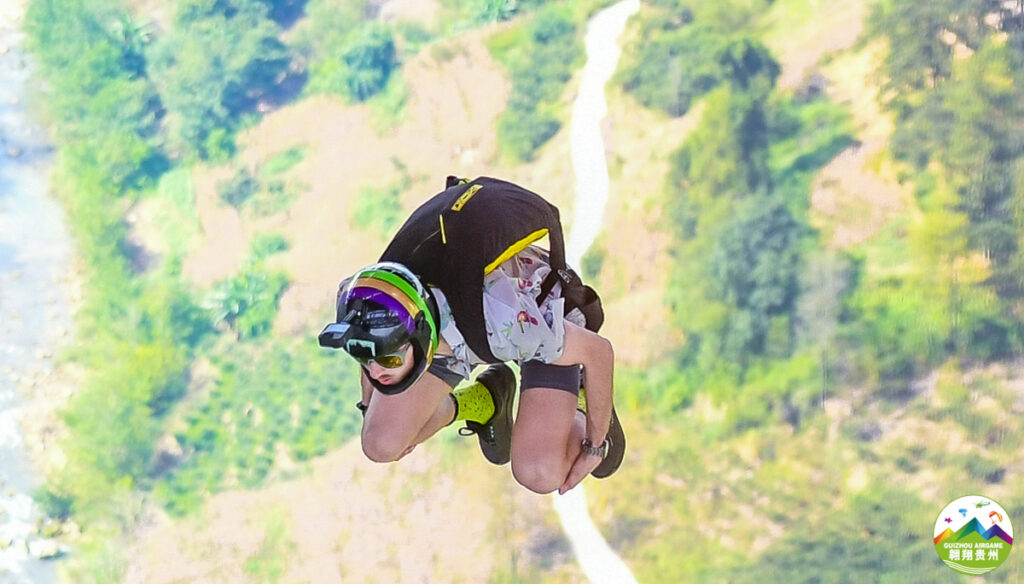
Living in a van in the Alps has its benefits. If the weather is good in Switzerland one week you can drive there and you’ll have a home base, have a bed, have a vehicle and be able to do what you need. But the downside is that you’re always on the move, you don’t have a lot of consistency in life. And you have a lot of change between seasons, between countries and cultures you’re not familiar with. So yeah, the best parts are you can go and do what you want when you want. The downside is you don’t have that stability that most have when they’re in one place. But that’s a personal choice, and I can change it anytime. For me, right now, being able to pursue my passions and go do the things I want is more important than having a home or the stability that you get from normal life.
Is there a dream location or a type of jump you would love to do?
I would like to go to Greece. There are some famous places like the Shipwreck. I would love to explore more of Southeast and Eastern Europe. There are so many jumps people haven’t done or nobody’s gone to yet.
How do you stay motivated for keeping the progress in all the air sports you do?
I just have so much fun with it! 😊 I really enjoy it, I love this stuff. I can’t see myself doing anything else. It’s brought and it’s added so much to my life. I feel lucky every day. I’m addicted to learning new things, going to different places, meeting new people and sharing incredible experiences with friends.
What’s your pet hate?
Chewing with your mouth open and being late.
Do you have specific goals in skydiving or base jumping for the near future?
Quite a few 😊. My freefall skills are not the best. For the next year or two I really want to improve my freeflying skills and do a lot more skydiving, especially since the last few years were very intensive on base jumping and speed flying. And I’m also newer to acrobatic paragliding, learning more with that, getting better, just diversifying and improving skills in this realm.
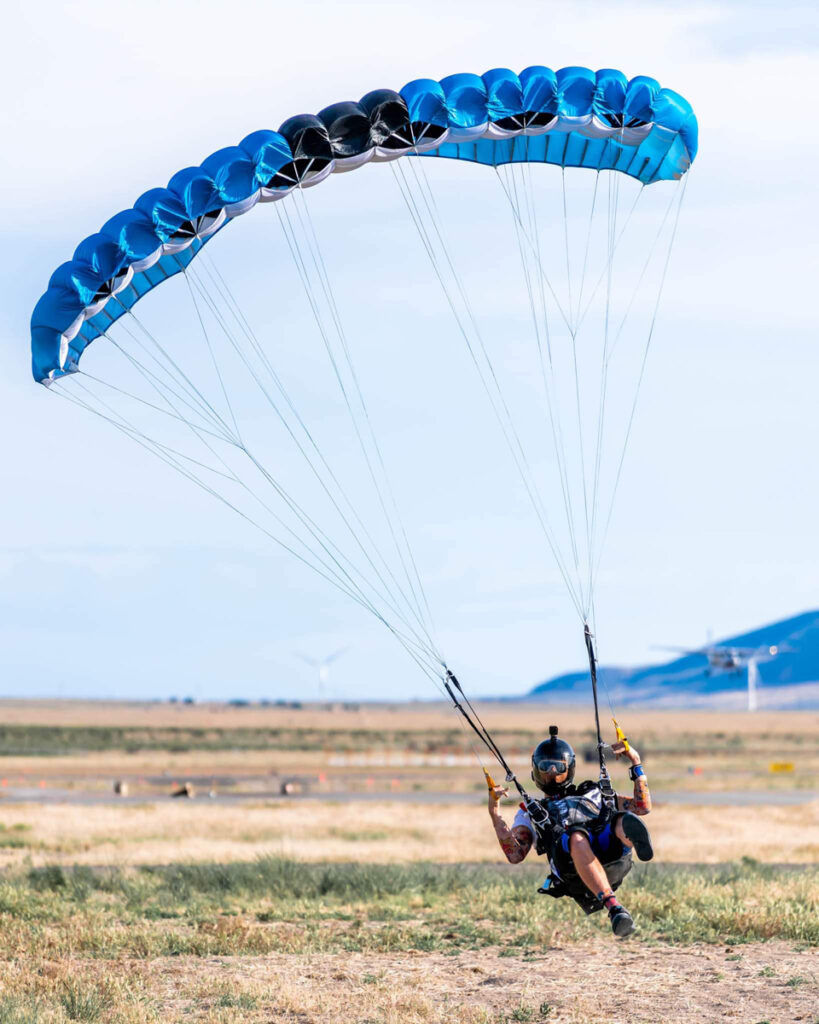
I do wingsuit skydiving and wingsuit base. Proximity not so much. I don’t have so much interest in it mainly because of speed flying. With speed flying I can have the same sensation of flying close to the ground. I have more experience with this and I also feel like I have more margin and safety, and I have more fun as well. Maybe you’re not going as fast as in a wingsuit, but you can be more dynamic, you can do barrels, have more choices in the lines you fly. And you also get to fly a parachute, which is my favorite thing. I love flying canopies. So, you get a swoop, you get a longer time in the air and I really love that.
Do you have a motto?
“If the sun isn’t shining, we are”
Any sponsors?
I am very proud to be sponsored by Squirrel. They make the best wingsuits and base gear. They’ve supported me a lot through my base jumping. Ozone paragliders, they make paragliders and speed wings. And outside of air sports I work with Pit Viper, Chubbies, and GoPro.
“Dante is a rare breed. He is 85% calculated, 15% goofball, 30% social deviant, 69% dedicated, 45% phenom, and 110% amazingly awesomely incredibly true friend. Math was never my strong suit! I am so very grateful to have gotten to know Dante over the years, and to call him a “friend.” His natural talent is only outmatched by his ability to be simultaneously a perpetual 15-year-old at heart and well-ahead-of-his years when it comes to decision-making. I wish we had more Dantes in this world.”
Zach Carbo, SQRL