



From static formations to dynamic flow, the next evolution in canopy flocking
Unless you’re new to the sport, or not the social media type (in which case you probably won’t see this either), you’ve seen images and video from OperationVK in November 2023. OperationVK was the brainchild of Javier “Buzz” Ortiz from Performance Designs and started with one basic question:
Do you think we can put 36 Valkyrie pilots out of multiple aircraft and form a large, slot-specific canopy formation?
This question was posed to Matt Leonard of Momentum, and his answer was simple: Yes.
Was it simple? Not in the least. But after all the planning, travel, and bad weather, 36 PD athletes created some amazing formations. If you haven’t seen it, check it out here: [OperationVK: The Movie].
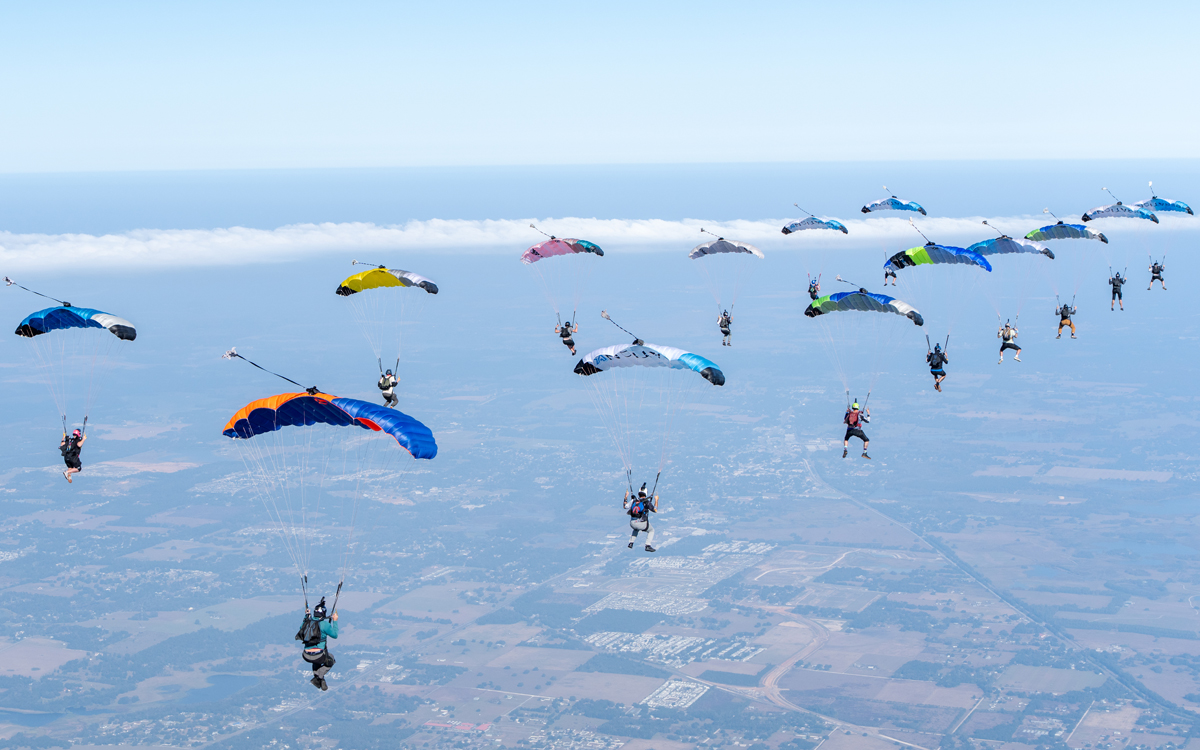
Leveling Up the Legend of OperationVK
I honestly thought OperationVK was a one-and-done kind of thing. Don’t get me wrong, it was super sick, and I was honored to be part of the first, but how would PD top it? Plus, we all know the sequel is never as good as the original… except for Top Gun: Maverick and The Dark Knight Rises. Okay, so maybe sequels aren’t always worse, but you get what I mean. It’s hard to one-up something that turned out so great.
Despite my reservations, when the follow-up to OperationVK was proposed last November, I quickly changed my mind. This new chapter would be titled OperationVK: Dynamic Flow. This wasn’t going to be the same. Yes, it would still include 36 pilots, but the dynamic element offered PD the opportunity to demonstrate the incredible range of the Valkyrie (IMO, the best 7-cell canopy ever made). No manufacturer has been as supportive as PD when it comes to canopy flocking, so when they ask—the only answer is “Absolutely.”
It also gave the flocking community a platform to highlight the tremendous evolution of the discipline in just two years. So They’ve Named It Dynamic Flow—Cool. But What Is It? You hear the terms dynamic and static all the time in skydiving, but what do they actually mean? In the simplest terms, they mean moving and not moving, but there’s nuance, and plenty of subjectivity.
My personal definition of dynamic flocking, from the perspective of a canopy pilot, is this: A sight picture or reference point that is constantly in motion. Yes, at some points you may be still, but not for long. And according to ChatGPT, dynamic means energetic, constantly changing, or full of movement. Close enough.

Assembling the Pilot Roster
When exiting two Twin Otters in formation with 39 pilots, you have to start with a static formation first. From there, you can transition into smaller, more dynamic formations.
The challenge is this: We exit at 15,000 ft (no one looks good in a nasal cannula) and break off around 6,000 ft to reduce congestion in the landing area. That gives us about 9,000 ft, or roughly four and a half minutes, to exit, build, break, and execute the rest of the dive flow before shifting focus to getting to the DZ and landing safely with our groups.
This is a long way of saying: If you want to do something cool, you need pilots who can build the initial formation fast. Which means selecting the right team was imperative. During the first OperationVK, the crew consisted of PD athletes, chosen for their skill and reputation as quality canopy pilots. This year, PD was very transparent about their selection criteria: Are you competent, current, and advancing the discipline of canopy flocking? Questionnaires were sent to prospective candidates almost a year prior, and of those who replied wanting to participate, 36 received the official invite.
The final team was diverse: industry professionals and weekend fun jumpers. Many were PD athletes, but not all. These 36 pilots represented canopy flight organizations throughout the sport: Alter Ego, Flight-1, Momentum, and others. In short: An extremely talented crew that has no problem building a 36-way formation by 11,000 ft. (Honestly, I didn’t think that was possible.)

Dive Flow Design
While OperationVK: Dynamic Flow was led by Performance Designs, they delegated the creation and planning of the jumps to Momentum, specifically, Matt Leonard. Matt was the lead engineer during the first OperationVK, so it only made sense to lean on him again for this chapter. PD gave their guidance: Make it dynamic, with an emphasis on teamwork, community, and inspiration. The rest was left to Matt and the Momentum team.
This was a five-day event, and with a perfect weather forecast, it was going to be grueling. For those who haven’t flocked, it’s hard to explain how mentally and physically exhausting it can be. It’s one of the only disciplines where you need to be switched on the entire time, about 6–7 minutes per jump. With that in mind, four jumps a day was the max.
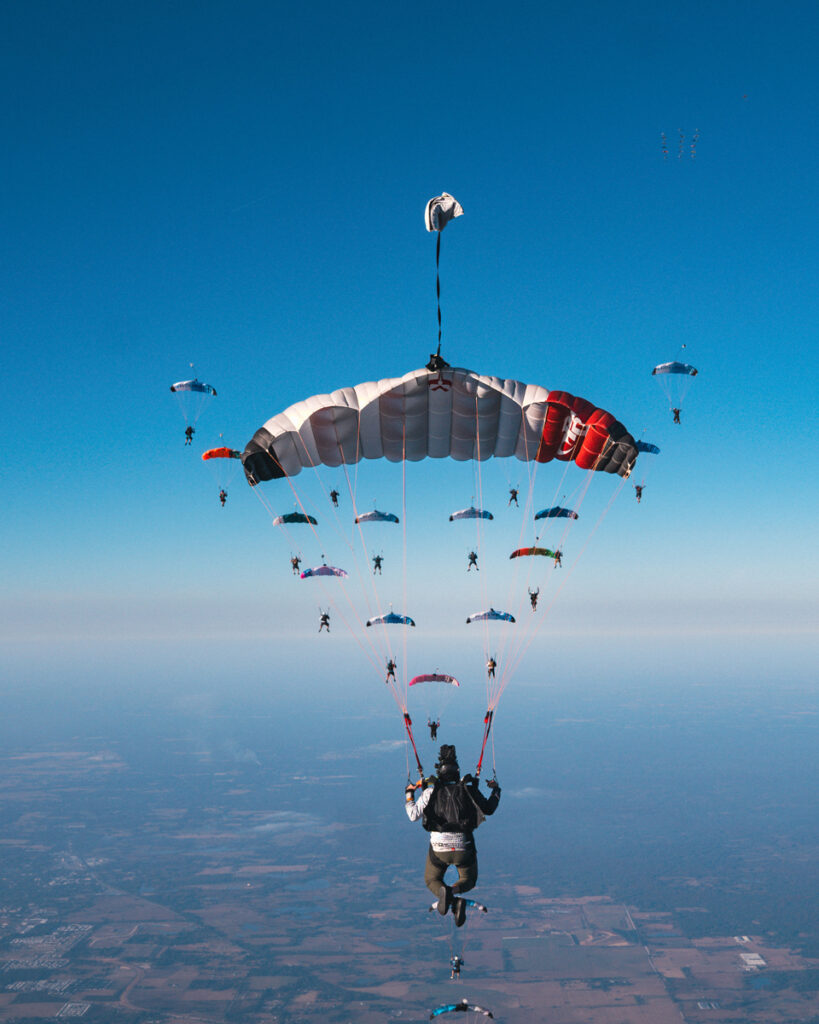
Bringing Dynamic Flow to Life
After extensive planning, it was decided that Monday and Tuesday would be smaller groups o 12 to 18 ways. This allowed groups to build cohesion quickly and learn how each person flies. This non-verbal communication is essential in an environment where the stakes are high and the margin for error is small.
Day three, we put all 36 pilots together out of two Z-Hills Otters. More static-type formations, but essential building blocks for later in the week. Thursday, we stepped back to 18-ways. Leaders were given the freedom to plan and execute dynamic dive flows they’d had in their minds but didn’t have the crew to fly it. With so much talent in the sky, the restraints came off, allowing teams to experiment with things we’d probably never attempt at a skills camp.
The final day brought more 36-ways. This time, using the fundamentals built over days 1–4, we created large static formations, broke them in interesting ways, and, of course, added dynamic movements prior to six, six-way team landings. The last jump was a multi-level sunset cruiser. The perfect way to end the event. Good vibes and high fives all around.

Teamwork, Community, and Inspiration
Did Dynamic Flow match the legacy of OperationVK while forging tighter teamwork, elevating the flocking community, and lighting the path for future generations?
I may be biased, but after a couple of weeks to reflect on an amazing week with an even more amazing group of pilots, my answer is yes…100%. The teamwork required to pull off an event like this is next-level and multi-dimensional. Teams within a team, all working as one to make this happen.
At the heart of it was the Performance Designs team, with Scott Robinson and Javier ‘Buzz’ Ortiz leading the charge and driving the vision of what this event could be. Other vital teams: the video crew who always make us look good; the staff and pilots of Skydive City; and lastly, the Momentum team, especially Matt.
Personally, I hope OperationVK (or Operation insert the name of a wing that will surpass them all) lasts as long as the Fast and Furious franchise. If so, count me in. Just leave my walker in the boarding area. I’ll come back for it.
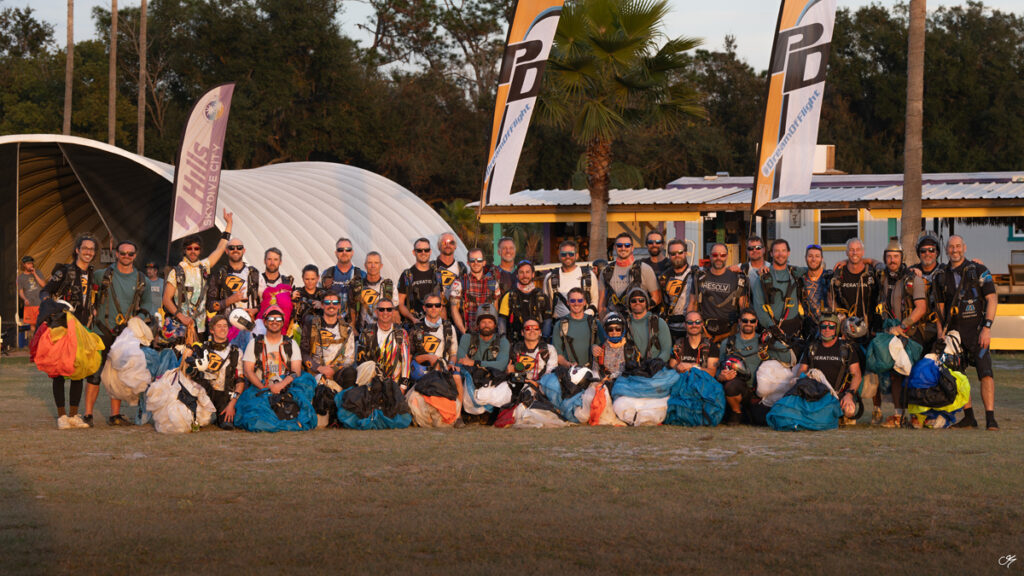
Photo by Chris Bess