




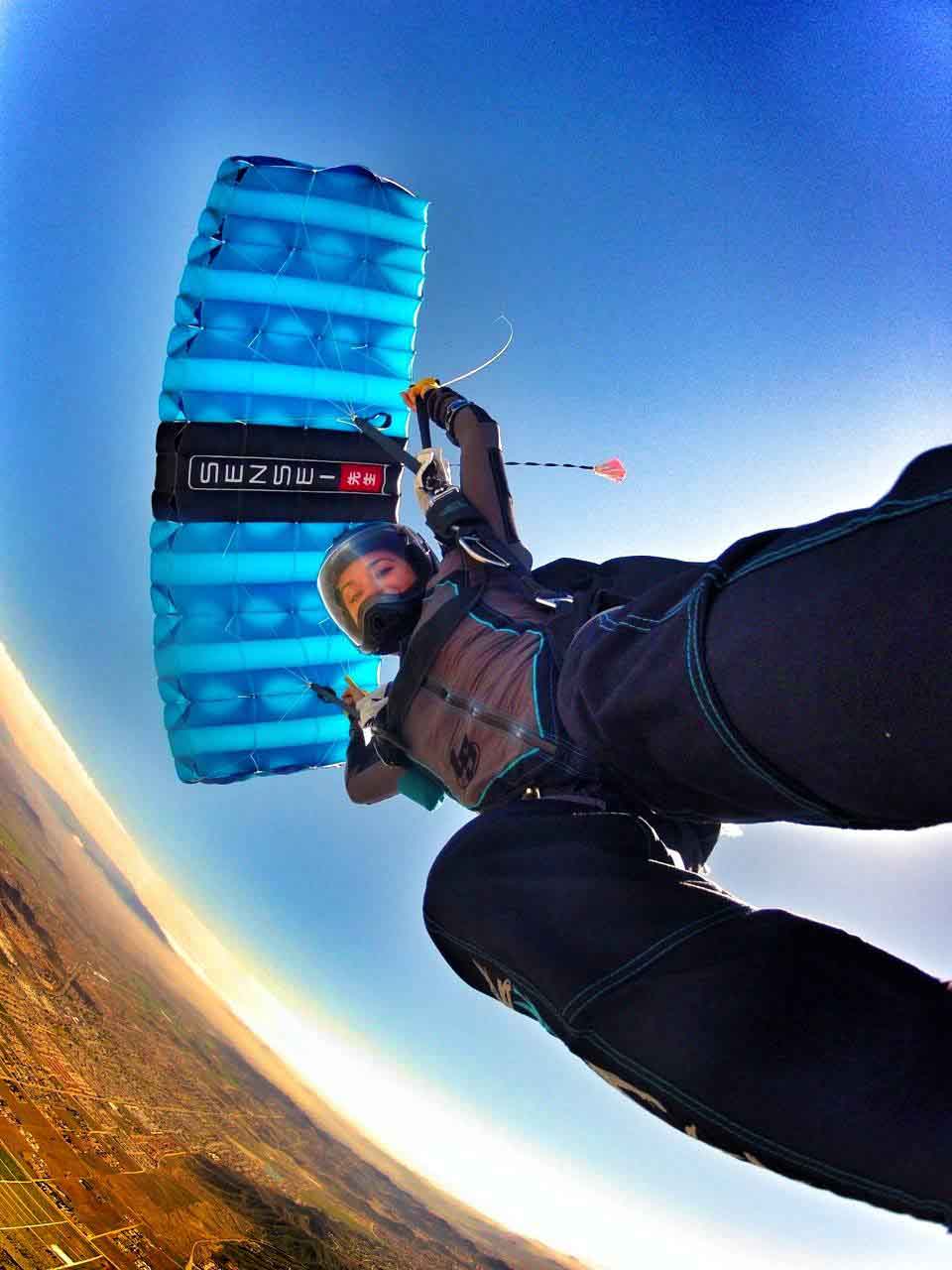
The Sensei is a 7-cell cross-braced design which has 21 chambers, ie, each cell is sub-divided into three. It incorporates a ‘Fat Tail’ design, which Aerodyne claims creates ‘superior stability when manoeuvring with rear risers’. It comes with a choice of 450 or 350 HMA line. Interestingly the brake lines are made of Dacron. I have personally had 700lb HMA brake lines fail on me three times – and I religiously change them every 200 jumps – so I welcome this feature. If you are an out-and-out competition swooper, doing everything to reduce drag, you may not be so keen on this.
Sizes
Aerodyne Research is manufacturing the Sensei in sizes 71, 81, 91, 101, 111 and 121 square feet.
Pack Volume
Cross-braced parachutes pack up bigger than non cross-braced ones because of the extra material involved in their construction, and this has traditionally caused problems for people buying their first cross-braced parachute. If you have been jumping a traditional 100 square foot canopy and you want to go cross-braced you have to go much smaller to get it in the same container. However Aerodyne offers the Sensei in a material called ZPX, which packs much smaller. The Sensei 101 that I was jumping was packed into an Icon I2 container, which normally only accepts a 104 ‘traditional’ main. This may be a selling point for people looking for their first cross-brace. I only did six jumps on the 101 but now have done about 50 jumps on the 91 at a 2.3 wing loading. The 91 I’m jumping is made of traditional ZP material and packs comfortably into a bag made for a 120.
Reviewer Background
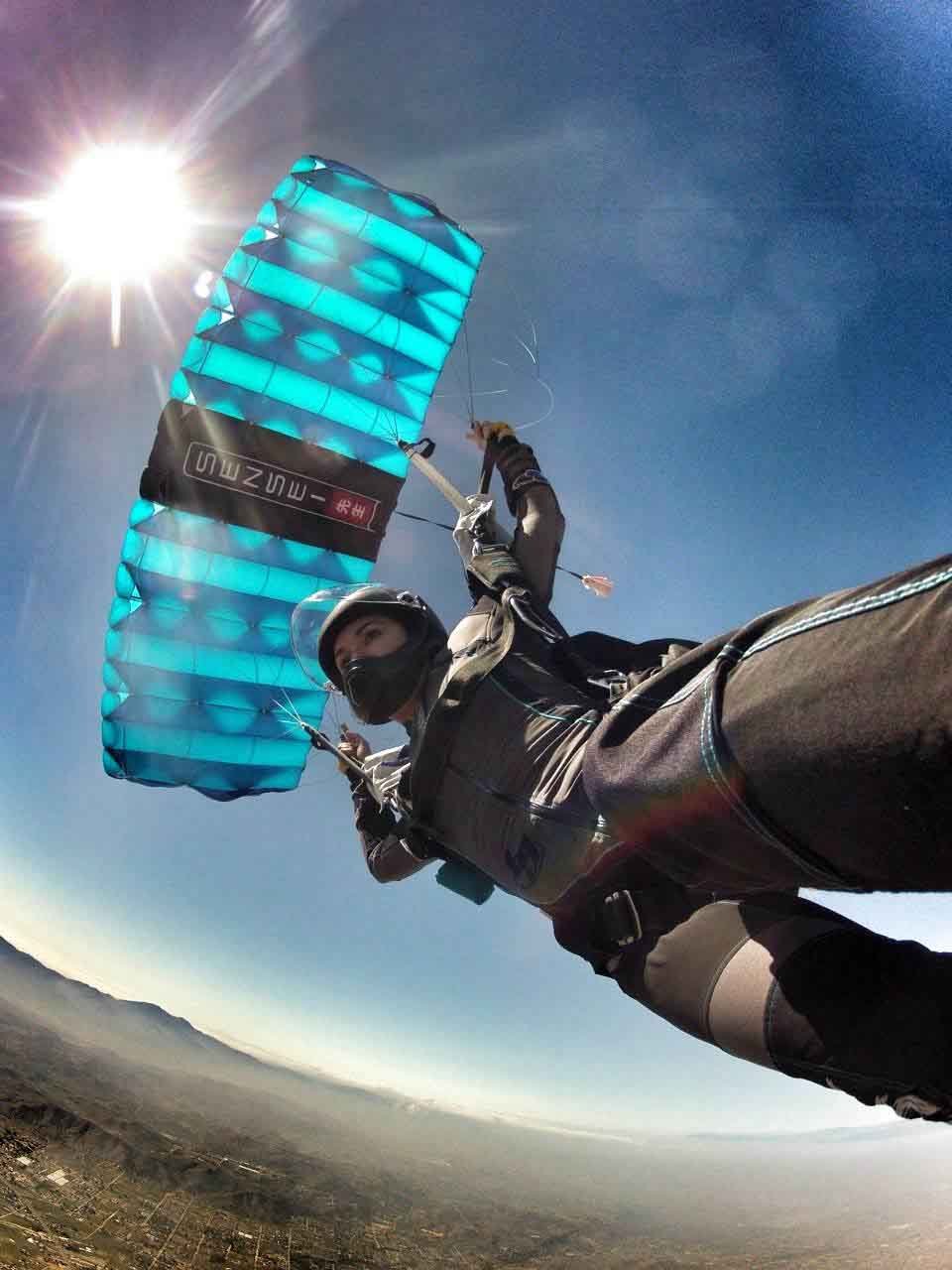
I have competed in two World Cups of Canopy Piloting, which made me realise that competitive swooping and recreational swooping are worlds apart. I have virtually retired from competition canopy piloting but really enjoy being under canopy and swooping for my own pleasure so I was very interested to fly the Sensei. My computerised logbook told me this was the 72nd different main canopy I had jumped!
Openings
Fact – high-performance parachutes have high-performance openings! The design features that make a canopy high-performance mean that you have to be much more aware of packing and body position on opening. Having said that, the Sensei is (so far) the best opening cross-braced canopy I have jumped. The canopy ‘hunts’ for its heading on opening a little, but not as much as other cross-braces that I have jumped. I am quite happy jumping the Sensei with my regular camera helmet.
Flight
The canopy feels a bit bigger than the posted square footage. I felt that the 101 was more like a Velocity 111 than a Velocity 103. When you take the brakes off you really start to motor. The angle of attack is perhaps not quite as steep as a similar sized Velocity but in full drive it’s certainly very fast! In deep brakes you can stay in the air for a surprisingly long time and it still feels very stable when flown this way.
Fact – high-performance parachutes have high-performance openings!
It’s very easy to perform harness turns. If you start a front riser turn, then lean into it, the canopy just falls from the sky. In fact, my favourite way to fly the canopy, when traffic allows, is to cruise around with my hands on the rears, and steer just using harness and rear riser input. The front riser pressure can feel a little high if you are not used to cross-braced canopies but it is perfectly manageable and I didn’t feel it was noticeably higher than other similar designs.
On rear risers the canopy feels more responsive than any other I have jumped. On this canopy it seems a great way of getting back from a long spot and they feel very powerful on landing.
Landing
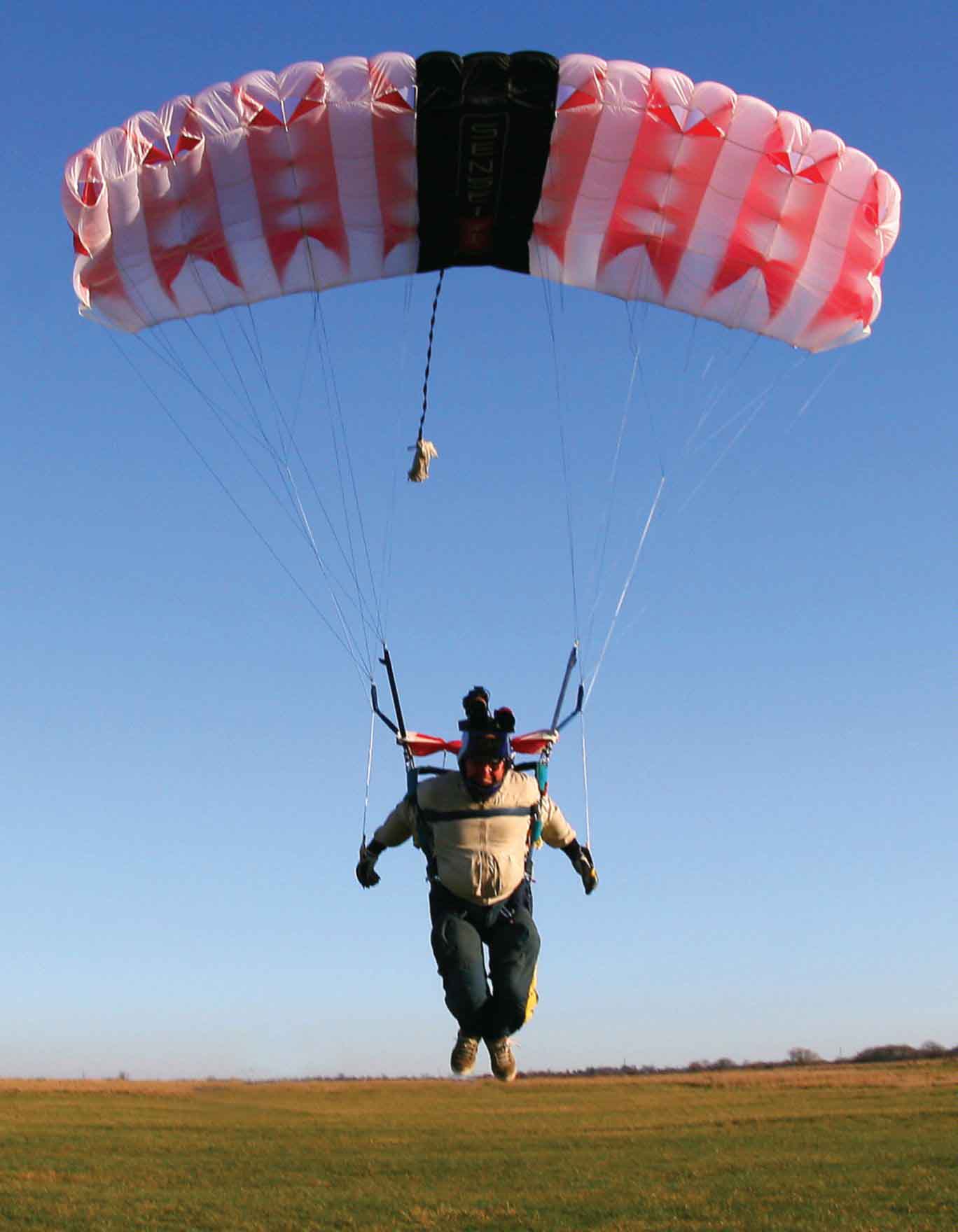
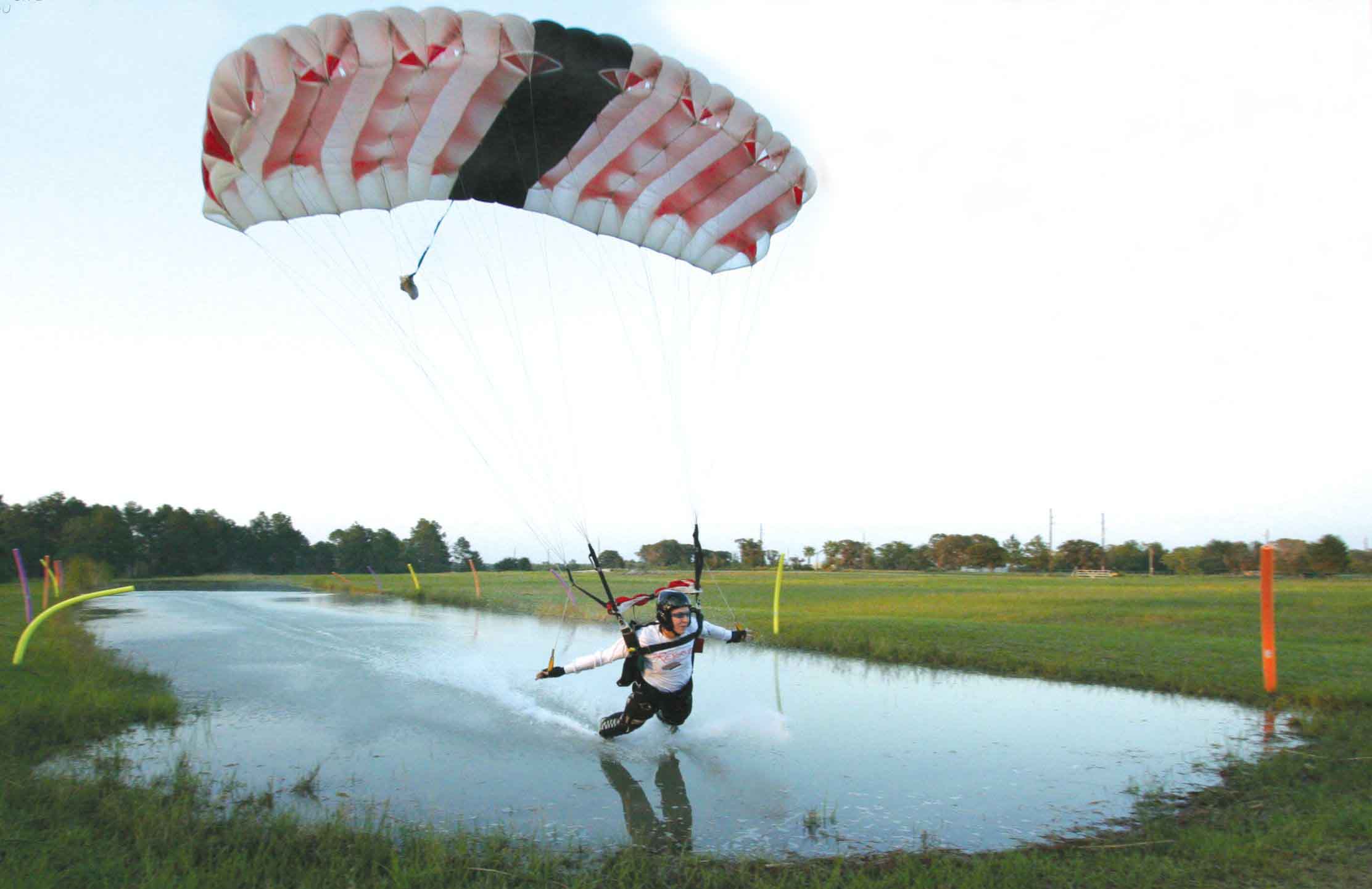
Let’s face it, this canopy is aimed at the high performance landing crowd. It lands very nicely indeed! A lot of speed can be generated through the landing approach and it just keeps on going. Most people who have jumped this canopy say that the recovery arc is shorter than the Velocity. I found the recovery arc of the Sensei 91 to be shorter than the Velocity 96, but not by much. By today’s standards, a 270 turn (my normal rotation) into land is quite conservative with a lot of competition jumpers doing at least a 450. I wonder whether the guys who are doing the bigger rotations would notice a bigger difference in recovery arcs. It took me a few jumps to get to grips with the responsiveness of the rear risers – however I now love them! Also, I lengthened the brake line by about two inches as I felt that this gave me a more comfortable flare.
Comparisons
The question people keep asking is, ‘Does it go further or faster than a Velocity?’. To me, the speed and distance feel very similar to the Velocity 96 – however this isn’t a measured comparison. I’d be interested to hear feedback from a current competition canopy pilot.
I have not had the chance to try the Competition Velocity but have heard very good things about it. However, as the name suggests, this is aimed at competition pilots and as such comes with 300lb line that needs to be replaced much more frequently, and a removable deployment system (RDS) as standard that is not recommended for terminal openings.
Suitability
The only people who should be considering a canopy such as the Sensei are those people who are already flying high-performance canopies and want to make the next step. It is often said that these type of canopies only really come into their own at a wing loading of around 2lbs per square foot and higher. This is extreme and should not be taken lightly – the margin for error on these canopies, at these wing loadings, is small and you should carefully consider if this is the right choice for you. There is a lot of information available about canopy flight these days. I recommend taking a course to ensure that you are flying safely and getting the maximum performance from your current canopy. I cannot recommend this highly enough!
Summary
If you are looking for a very high-performance canopy with good openings and great landings then this could be for you. This is particularly true if you are looking for your first cross-braced parachute and don’t want to downsize too much to fit it into your container.
If you are looking for a very high-performance canopy with good openings and great landings then this could be for you.
Originally published in Skydive The Mag