




What can skydiving learn from the fire service? Paramedic, firefighter, helicopter pilot, and skydiver Tylor Gilbert shares the risk management principles that have shaped his career and how they apply to skydiving and BASE jumping
Skydiving is inherently risky. Every jumper understands that the sport carries consequences that most people never willingly accept. Yet while we spend countless hours discussing equipment, canopy skills, and emergency procedures, many of the factors that contribute to accidents have little to do with gear and everything to do with decision-making.
Effective risk management is not about eliminating risk. If that were the goal, none of us would ever skydive. Risk management is about understanding risk, evaluating it honestly, and making deliberate decisions that align with our personal goals and our tolerance for consequence.
The reality is that many skydivers are far better at assessing the excitement of a jump than they are at evaluating its risk-to-reward ratio.
Understanding Risk
At its core, risk is simply the chance of loss, injury, or another negative outcome. In skydiving, that translates to many different forms:
- Canopy malfunctions
- Landing off the DZ
- Weather-related incidents
- Human error
- Equipment failures
- Midair collisions
- Loss of altitude awareness
While these hazards are well known, the challenge is that most incidents do not occur because skydivers are unaware of risk. They occur because risk is often underestimated, ignored, or normalized.
The most dangerous risks are usually the ones we become a little too comfortable with.
Challenges of Risk Management In Today’s Generation of Skydivers
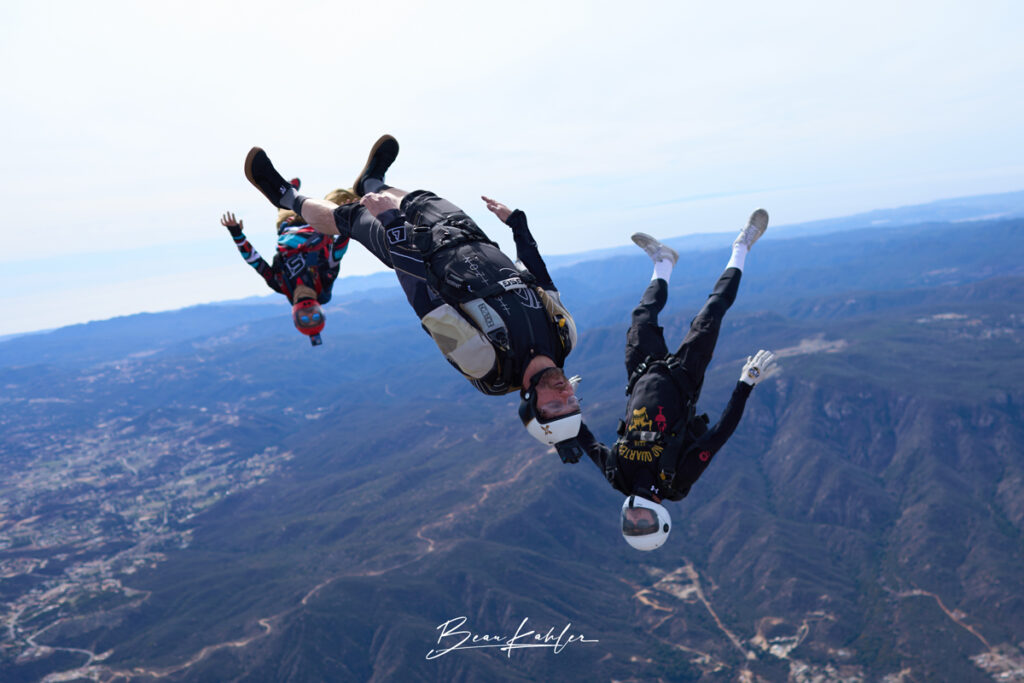
Skydivers today face pressures that previous generations never experienced.
Social media has added a layer to our sport that drives new risk, and has made it easy to compare ourselves to others while creating incentives to pursue increasingly aggressive or visually impressive jumps. What we don’t see are the close calls, the poor decisions, or the incidents. Videos that get posted typically showcase the reward while concealing a lot of the risk.
Another challenge is overestimating our abilities. Psychologists describe this as the Dunning-Kruger effect, a cognitive bias in which individuals with limited competence in a skill area overestimate their proficiency because they lack the experience necessary to recognize their own shortcomings. This is a common theme in the skydiving and BASE communities.
It’s pretty common to see a jumper with a few hundred jumps who feels highly competent but still severely lacks the experience needed to understand the risks that more seasoned jumpers identify immediately.
Ironically, risk can also increase when we are jumping frequently. Hyper-currency often creates confidence, but confidence can gradually evolve into complacency. Familiarity with risk can lead us to accept conditions, behaviors, and decisions that would have seemed unacceptable earlier in our skydiving careers.
Over time, extreme behavior can become normalized.

Photo by Chris Bess
Decide Your Personal Limits Before You Need Them
One of the most valuable tools a skydiver and base jumper can develop is their own understanding of their limits. I’d be willing to bet that if you asked your friends what their wind limits are for jumping, the majority of them couldn’t give you an immediate and concise answer. The fact is that a lot of skydivers and BASE jumpers don’t put the time into setting their own limits.
These limits should be defined way before they’re needed. In the moment, emotions, peer pressure, excitement, and ego can all influence judgment. Predetermined limits make it easy to stick to when the conditions aren’t right.
Limits should include, but is not limited to, factors such as:
- Wind limits
- Weather tolerances
- Experience level
- Current proficiency
- Comfort with specific jump types
- Personal goals and priorities
- Etc.
The key question is simple:
Is this jump worth the risk for ME?
Every skydive represents only a tiny fraction of a lifetime in the sport. Missing one jump, one load, or even one day of jumping rarely matters in the long run. The consequences of a poor decision, however, can be fatal.
In the fire service we have extensive training on risk management, but I won’t bore you with too much of the details. One very basic, yet useful philosophy is:
Risk a lot to save a lot. Risk little to save little. Risk nothing to save nothing.
The point is, not every reward justifies every risk.
Strategic Decision-Making
Good decisions are what give us the best shot at a long enjoyable path in the sport. Effective decision-making is based on:
- Assess the situation.
- Identify the risks.
- Consider alternatives.
- Make a conscious choice.
This sounds simple, but under pressure it can be difficult. In emergency services, aviation, and other high-risk professions, decision-making failures often occur because individuals skip steps, become emotionally invested in an outcome, or fail to reevaluate changing conditions. Skydivers and BASE jumpers face the same challenges.
Understanding how to view challenges in our sport, what our limits are and how to make good decisions is the goal. We can be safer when we create a process that consistently leads to better decisions.
Lessons from My High-Risk Professions
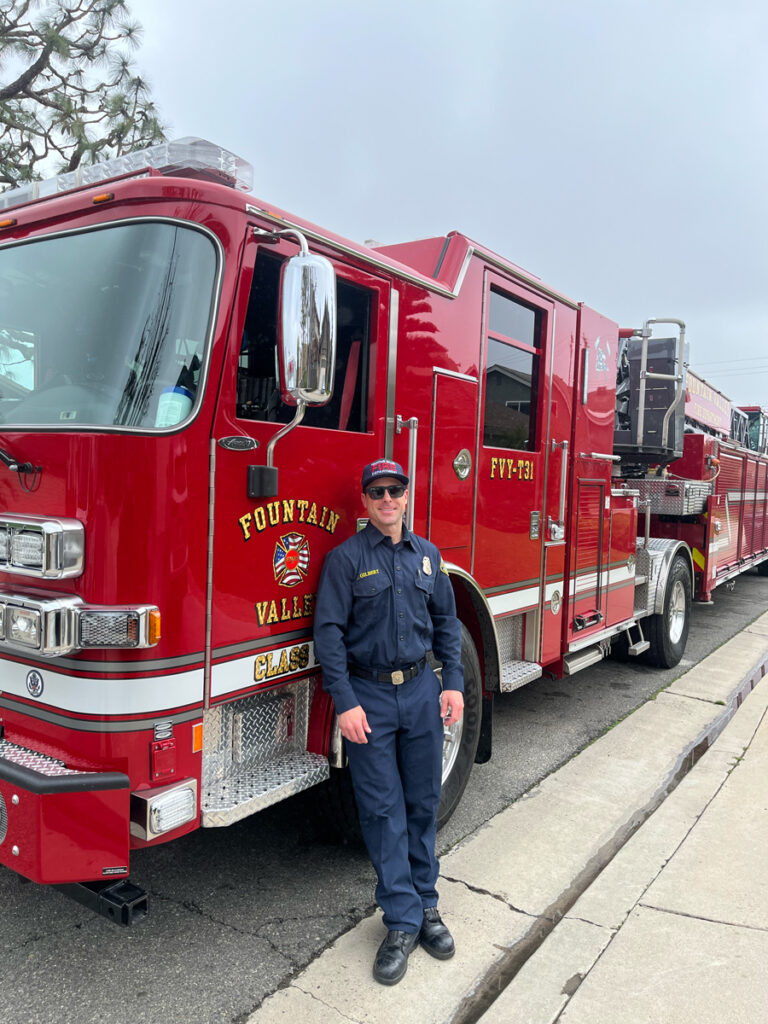
During my career as a firefighter, paramedic, and helicopter pilot, I have observed several recurring themes that contribute to tragedy.
One is the culture of the “can-do” mindset.
Highly capable people often develop a reputation for getting difficult jobs done. While confidence and determination are valuable traits, they can also encourage individuals to push beyond reasonable limits. The belief that “we can make it work” sometimes replaces a realistic assessment of risk.
If the plan doesn’t feel right, don’t force it.
Another challenge is excessive trust in leadership or expertise. Strong leaders are essential, but experience should never eliminate healthy questioning. In many accident investigations across high-risk industries, individuals recognized concerns but failed to voice them because they trusted the group’s direction or deferred to a respected authority figure.
If you don’t know, ask! Regardless of someone’s experience level, you should never hesitate to respectfully ask for more information.
The third challenge is groupthink. Groupthink occurs when the desire for harmony or consensus overrides critical evaluation. People may recognize warning signs but remain silent because everyone else appears comfortable with the decision. This should raise major red flags if you are experiencing a groupthink situation.
These same dynamics exist in skydiving and BASE. We’ve all seen jumpers on jumps they were not fully prepared for, downsize canopies before they were ready, jump in questionable weather, etc.
That is often a lack of independent thinking.
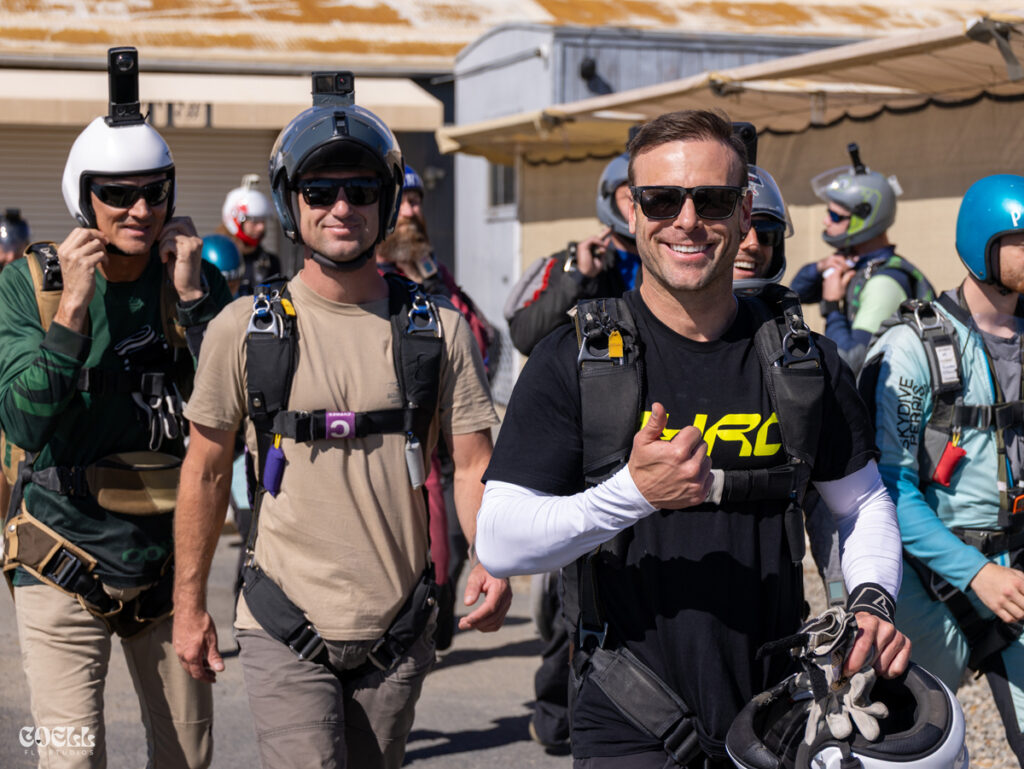
Recognizing Groupthink at the Drop Zone
Skydiving and BASE are social sports. Which is one of the greatest strengths of these sports. It can also be one of our greatest vulnerabilities.
When a respected organizer, coach, or experienced jumper is enthusiastic about a plan, others may hesitate to challenge it. When a group collectively accepts elevated risk, that behavior can quickly become normalized. The safest way through this is to maintain personal accountability.
Ask yourself:
- Would I make this decision if I were alone?
- Am I relying on someone else’s confidence instead of my own assessment?
- Am I ignoring concerns because everyone else seems comfortable?
The ability to say “not today” may be one of the most important skills a skydiver can develop.
Critical Thinking Saves Lives
Critical thinking is one of the most effective risk-management tools available. It requires us to question assumptions, recognize red flags, and evaluate situations objectively rather than emotionally.
Before every jump, consider:
- What are the hazards?
- What has changed?
- What could go wrong?
- Is the reward worth the risk?
Most importantly:
Is this risk worth it for ME?
The answer may differ from one jumper to another, and that is okay. Risk tolerance is personal. The key is ensuring that the decision is intentional rather than automatic.
One Last Consideration
Every jump should be approached with the expectation that it will later be reviewed and analyzed. If a decision contains obvious red flags before the jump, those same red flags will almost certainly be visible afterward.
Be conservative when conditions warrant it. Set an example for newer jumpers. Look out for those around you. Build a personal risk-reward profile before you need it, and stick to it when the pressure is on.
In my line of work, even under ideal circumstances, with immediate bystander CPR before EMS arrival, the odds of saving a cardiac arrest victim are often only 15 to 30 percent. If the information I’ve shared with you changes the decisions you make and the example you set, you will 100% save a life…maybe multiple. Much better odds than CPR.
Skydiving and BASE give us a unique opportunity that emergency medicine often does not: we can prevent the emergency from happening in the first place. That is a return on investment no skydive can match.