
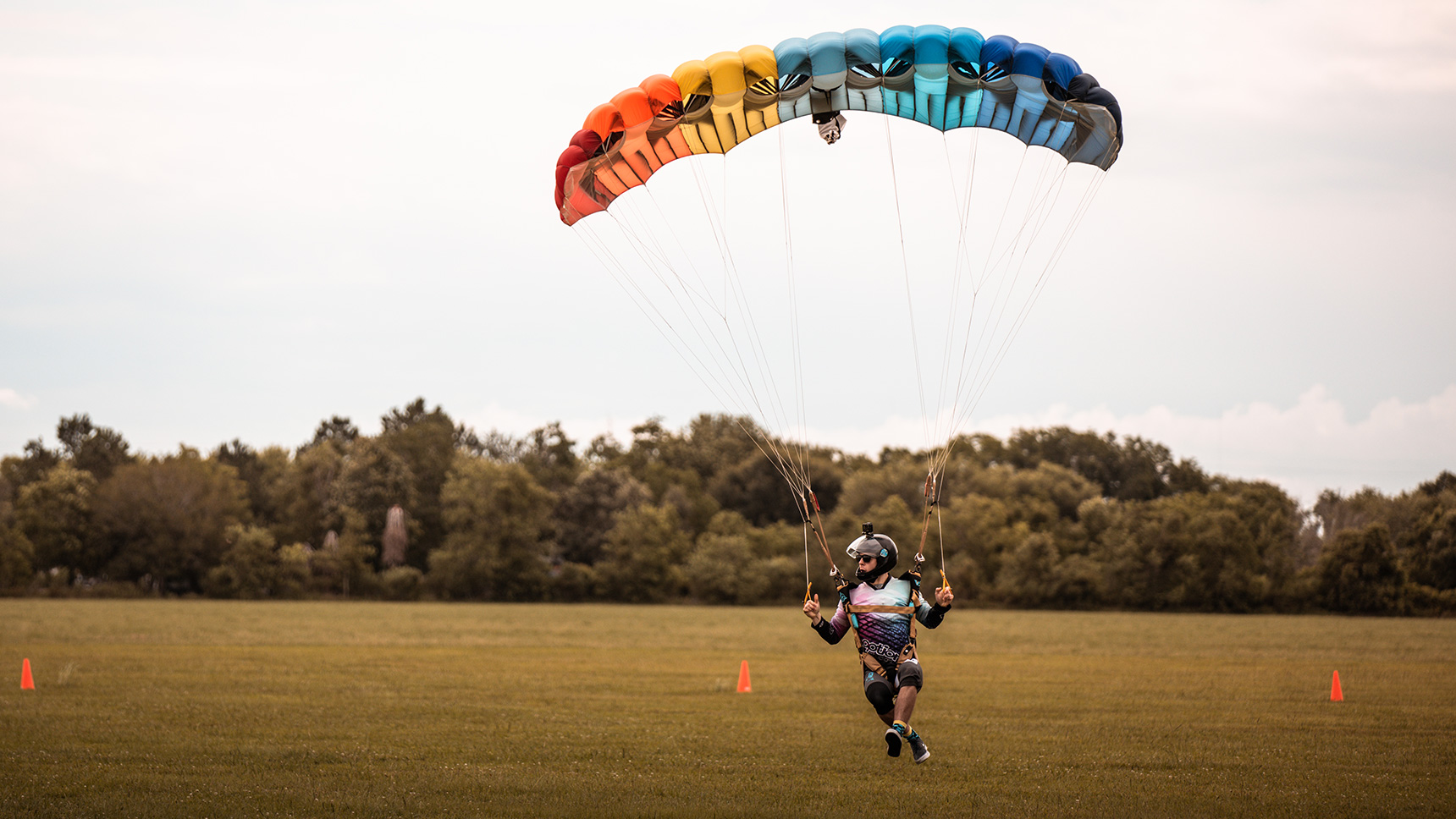




In this article, we dig into wind limits to help you fly more safely…
“One of the hardest weather holds to be on, I’ve found, seems to be the weather hold due to winds. There’s something about being on the ground when the skies are blue and it appears otherwise perfect jump conditions that makes people anxious to be back in the sky. When it’s raining, people stand down easily. Thunderstorms, no problem. Clouds with no visibility, people understand. But when it’s windy, there seems to be a time limit to how long people are willing to wait.
“I see it over and over again, people pull off loads or stand down due to high winds or high wind gusts, only to jump back on loads after a while without any change in the conditions. I also meet a lot of skydivers who’ve never considered or defined their wind limits—especially regarding top wind speeds and max spread. This series is here to educate us on the dangers of high winds, how they affect our canopies, why we need personal limits, and what wind spread really means—shared through insights from athletes in our sport.” – Alethia Austin

Cara King of Flight 1 discusses wind limits
One of the most important things to understand in choosing a wind limit for yourself is your wing loading and forward speed and being able to use that data to arrive at a real-world decision. As an example, a 1:1 wing loading on an entry level 9 cell canopy, which is typical in the A and B license range, can expect to have a forward speed of around 22-24 knots. Therefore, if you are flying into a headwind on final approach of 22 knots, you would be going straight down with no forward groundspeed. Any increase in wind speed beyond your canopy’s forward speed means you would be going backwards on final and that is not desirable for a safe landing.
In order to move forward over the ground on final while facing into the wind, the atmospheric wind speed must be less than the forward speed of your canopy. To ensure you are penetrating the wind and flying towards your landing target, make sure the winds are well under that 22-knot point. How much under? Rule of thumb, 10 knots less. That gives you a 10-12 knot wind speed limit (14 mph), which is what the USPA recommends for students. It’s a great place to start.
When is a good time to consider increasing your wind limits? I recommend once you have taken a professional canopy course and/or completed your B license canopy proficiency card. After that, it depends on additional factors like gusts, turbulence, currency, personal comfort level, general landing, competency and more.
I would define these as: If all other factors are the same; Home DZ, same gear, steady clean winds, no gusts, etc., and you have jumped many times (minimum of 25 jumps) in 14 MPH winds and have consistently good landings, you could reasonably consider increasing my wind limit incrementally IN THOSE CONDITIONS by 2-3 MPH.
If two or more other variables on the jump have changed, don’t raise your wind limit. Conditions are things such as a new DZ, new canopy, not being current, even a new free fall plan could be distracting. These are examples of times when it may not be smart to have additional risk factors like increasing your wind limit.

Photo by Jesse “Tex” Leos
Gusts and Turbulence
Keeping above math in mind, when we know it is gusty, leave room in your ground speed calculation for the MAX wind to ensure penetration/forward speed during landing. If the wind conditions are 16 knots gusting to 23 knots, then you would want to assume the worst case scenario at the time of landing and if 23 is over your limit, then don’t jump.
Quick Tips on Gusts:
- If it recently gusted to or past my limit, how long should I wait to see if it comes down? Minimum 30 minutes.
- If the winds were calm and just recently started to gust strongly, wait longer than 30 minutes because that likely means a front is approaching and gusts will get stronger and could even sheer in direction as well as velocity.
- Max spread: Conservative is 5 knots and less, more experienced is 5 – 7 knots. 10 is going to be high risk.
Most simply stated, turbulence is any shift in wind speed and direction (horizontal or vertical direction) which can affect our wing. Technically speaking, turbulence can drastically and rapidly change the pitch of the wing. Pitch changes affect our airspeed and therefore effectiveness of our control inputs. If we are in the landing phase of our flight and turbulence suddenly alters our pitch and airspeed just as we execute our flare, we may not get the response we need to slow our descent to land with a level wing over our heads, which can lead to significant injury. Gusts and turbulence can also affect our wing asymmetrically affecting level flight and creating a dangerous turn low to the ground. A Flight-1 course teaches survival skills in all these scenarios and more. If there is any doubt about gusts and turbulence, it’s always best to wait, watch, and learn.
- Reminder that personal wind limits must apply to landing your reserve canopy as well.
- Consider wind limits for alternate and off landing sites that may be required.
It’s common advice to suggest watching the more experienced jumpers, and if they aren’t jumping, you shouldn’t jump. While that is a good rule of thumb, it’s important to learn the deeper explanations and how to arrive at your own personal safety decisions.
Be educated, be empowered, be safe!
Wind Limits 2
Check out our second article about Wind Limits, by Pete Allum, Flight-1 instructor…


