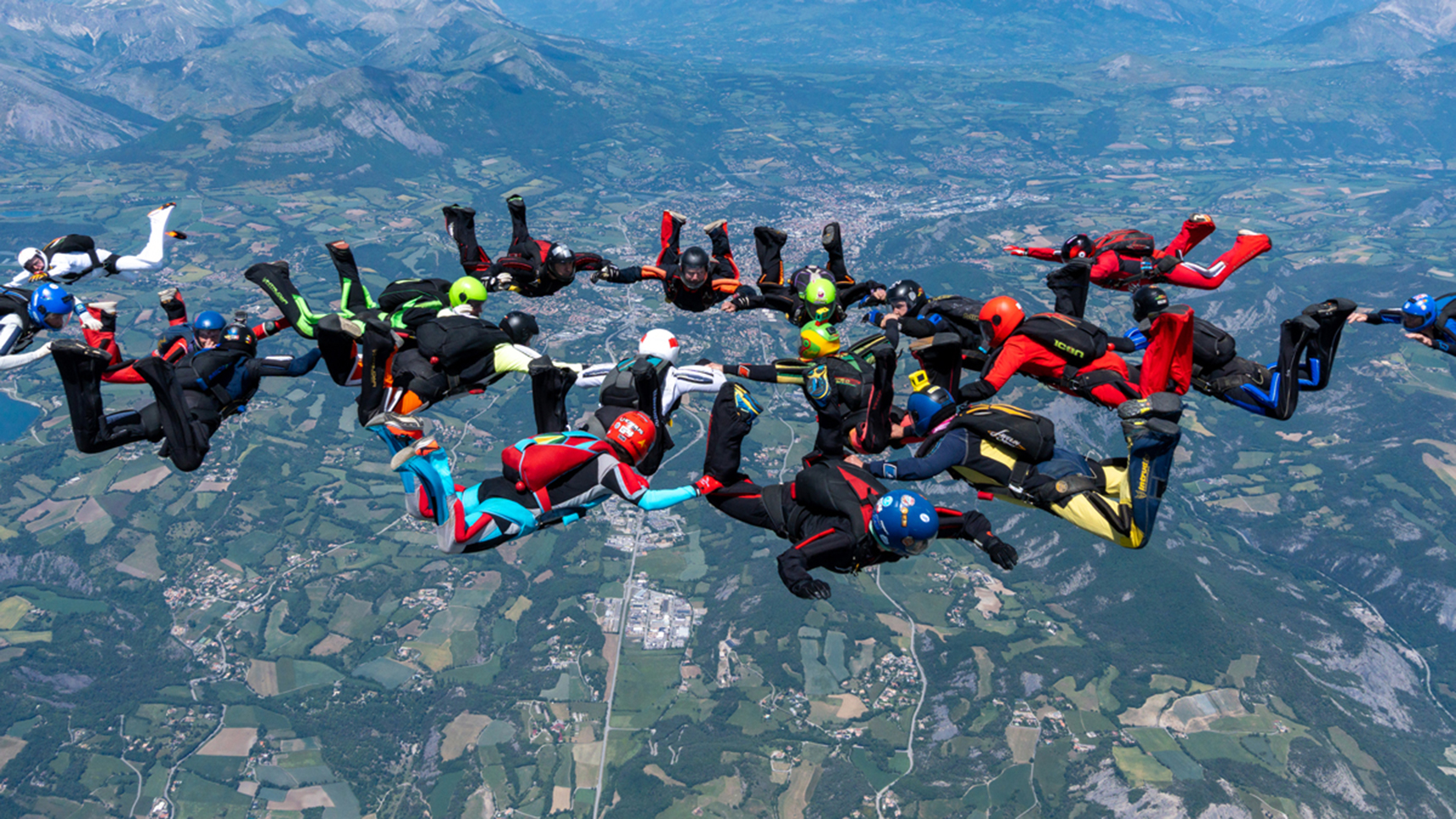





Inspired by Angelo’s School of Bigway (ASOB), Casey Pruett shares a practical roadmap for progressing from your first formation jumps to record-sized bigways.
Angelo Declerck has spent a lot of time, effort, money, and thought on bigway belly flying since he started jumping in 2011. Fads come and go in skydiving (whatever happened to skysurfing?), but bigway belly flying is a fascinating discipline that demands mastery of the solid foundations used in every other skydiving category. Thus, he started Angelo’s School of Bigway (ASOB) to help jumpers safely and successfully progress into the challenging and exciting world of bigway formation skydiving.
Angelo sees seven primary stages of development. Each stage includes important steps that should be mastered before progressing to the next in order to excel in bigway formation skydiving. It’s important not to rush and to truly invest the time, effort, money, and practice into each stage. In his experience, trying to skip steps only costs you more in the long run.
It’s important to enjoy and invest in the journey. Each person is unique, learns in different ways, picks up things at different paces, and struggles with their own distinct challenges. But engaging in the process and putting in the effort always pays off. Because bigway formation skydiving includes so many diverse factors and variables, there is never a guaranteed path to success.
By its very definition, bigway formation skydiving is multiple individuals all striving together to achieve something great. It takes every person’s active collaborative spirit and effort to reach the goal. Thus, before joining a bigway formation skydive, it’s crucial to establish mastery of the basics.
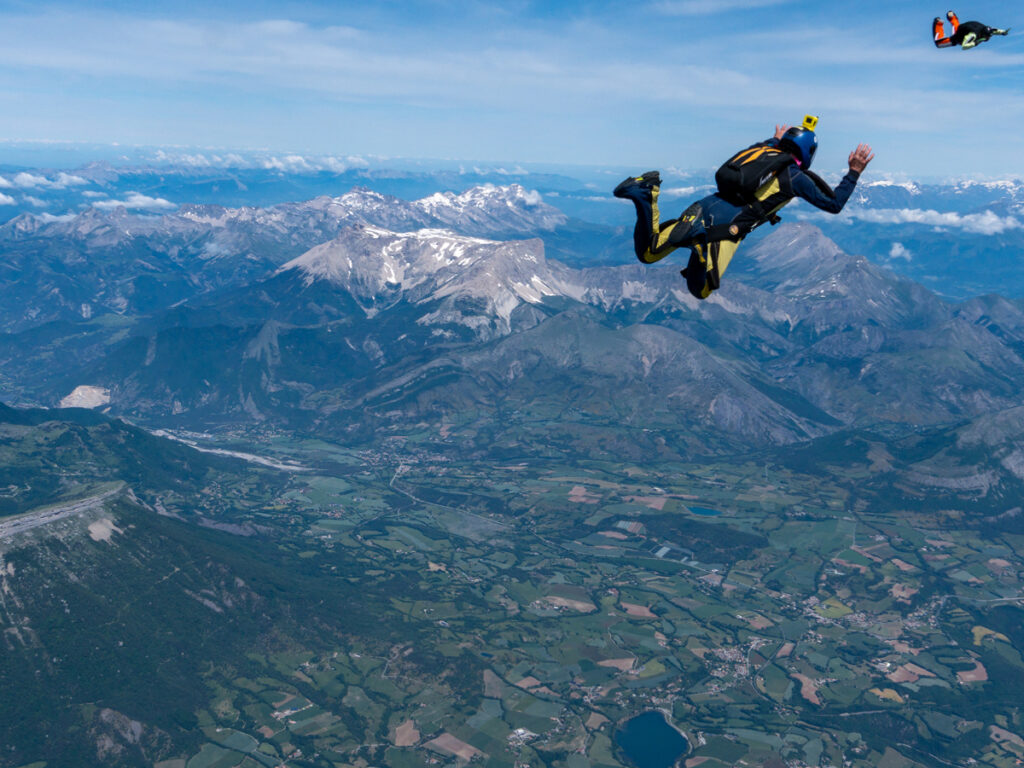
Stage 1: The Basics
This is likely the most important stage. It is crucial to develop solid basic skills that will become the foundation upon which all future development is built. Thus, it is a great idea to invest the time and money here to save time and money in the long run. That’s not always easy for a new jumper, but experience shows this to be an effective approach.
Getting a good coach to properly teach skills like solid exits, stable body positioning, effective turn starts and stops, using booties and the proper suit, learning to adjust fall rate, proper grips, formation names, level, slot, dock, tracking, and canopy control will pay huge dividends.
Try to spend as much one-on-one tunnel time as possible with a coach. The tunnel is an amazing tool that provides focused practice and immediate feedback. Once you have mastered these skills, you can truly begin your journey.

Stage 2: The Beginning
With your newly acquired formation skills, you can start to enjoy 4-way formation skydiving. This will quickly improve and build upon your skills. Sharing tunnel time with three other skydivers is already a cost savings and teaches you how to safely share space with others.
It is just as important to become comfortable with others docking on you as it is for you to properly take a dock. These are the key foundations for bigway formation skydiving that you should always come back to.
A good coach can teach your 4-way group proper exits, new formations, efficient transitions, breakoffs, tracking, and how to deal with the inevitable funnel. Nearly every discipline of skydiving will benefit from mastering 4-way formation skills, which means you can strengthen these skills while having fun.
Stage 3: Fun
At this point, you know just enough to be dangerous, so why not start expanding into new areas of skydiving? But seriously, it is important to keep skydiving fresh and challenging. At this stage, you are probably interested in learning more about wingsuiting or head-up/head-down body orientation relative to others while flying.
These other disciplines provide opportunities to improve your visual and air awareness around others. Falling at different rates, traveling over greater horizontal distances, and learning new ways to control your body all contribute to becoming a better overall skydiver.
These are also great opportunities to improve your tracking skills. Every jump you participate in with at least one other person should include a proper track at the end to give each jumper a safe column of air in which to deploy their canopy at the correct altitude and in a stable body position.
You should absolutely take a canopy course. This will teach you how to become more comfortable around others under canopy, learn how to fly your canopy better, and safely land in different circumstances. It is never too early to take a canopy course. Now that you are starting to improve, you can begin joining larger groups.
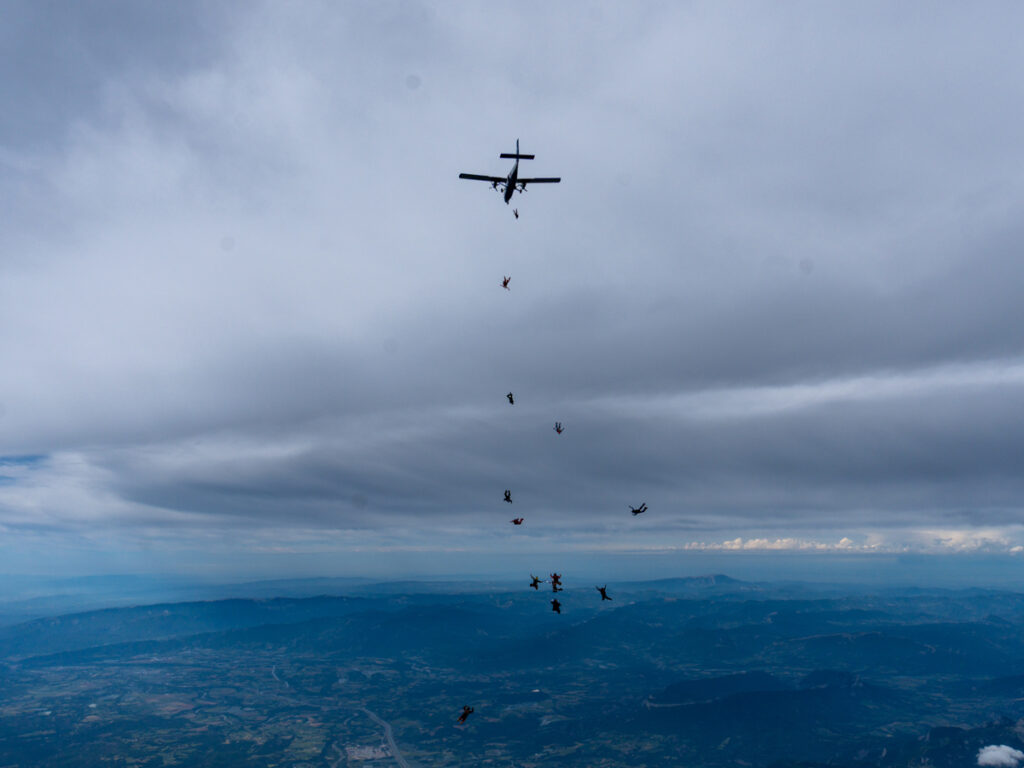
Stage 4: 6–10 Ways (Beginners)
You should spend a very long time in this stage because there are so many things to learn. This is a relatively safe environment and group size in which to learn the finer elements of bigway formation skydiving.
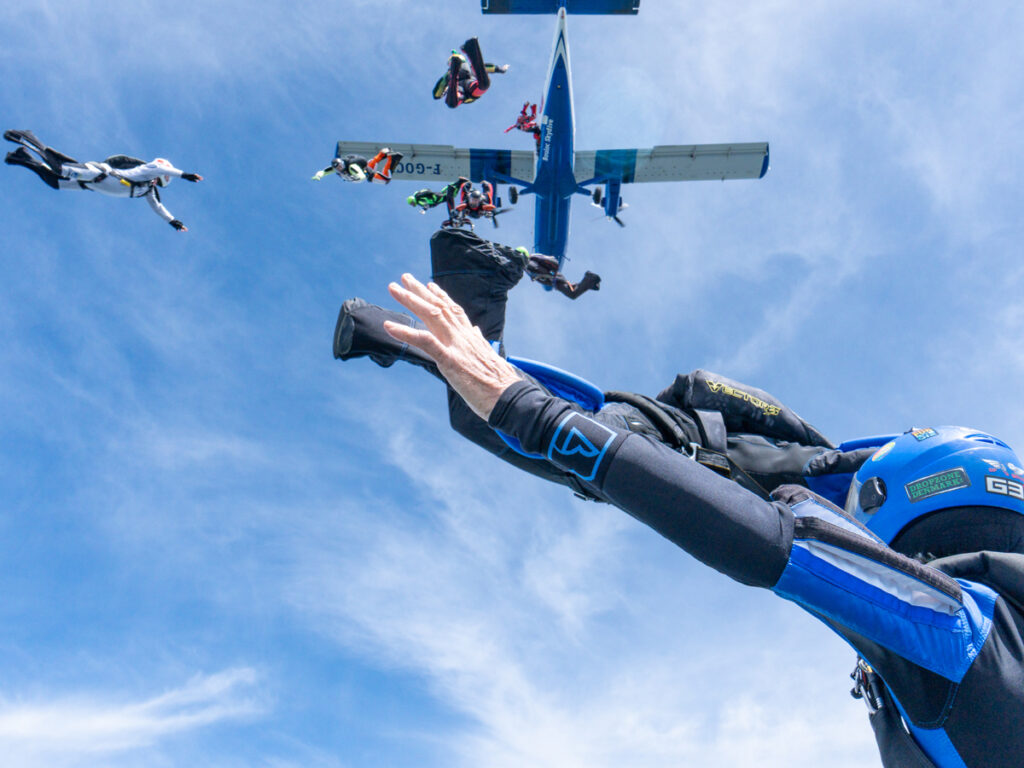
With a good coach, you will be able to learn and practice the different exits and their associated positions, quadrants of approach, stadium approach to the formation, positions within the formation, and the visuals of more people flying together in the sky.
It is typical for these groups to have more success flying multiple points. This gives each person a chance to truly fly more, including total breaks, when everyone completely releases every grip before moving into position and taking the next grip. This requires everyone to actively fly their body throughout the entire skydive to remain relative to one another and work together.
It is even more important to improve your tracking, since more people means less individual space for everyone involved. Make your track a competition on every jump, as if your life depends on it. Because it does. Learn more about the proper transition to float up into your track, accelerate as flatly as possible, and keep your head on a swivel at all times for situational awareness.
That same principle also applies under canopy. Now there are more people around you, all wanting to land as close to the hangar as possible. Resist this urge, remember your canopy course training, and focus on flying a safe and predictable pattern for everyone’s benefit. Because it’s only going to get more challenging.
Stage 5: Going Bigger (Bigway Camps for Intermediate/Advanced Skydivers)
Now you will begin to realize and appreciate the investment you made in all the previous stages.
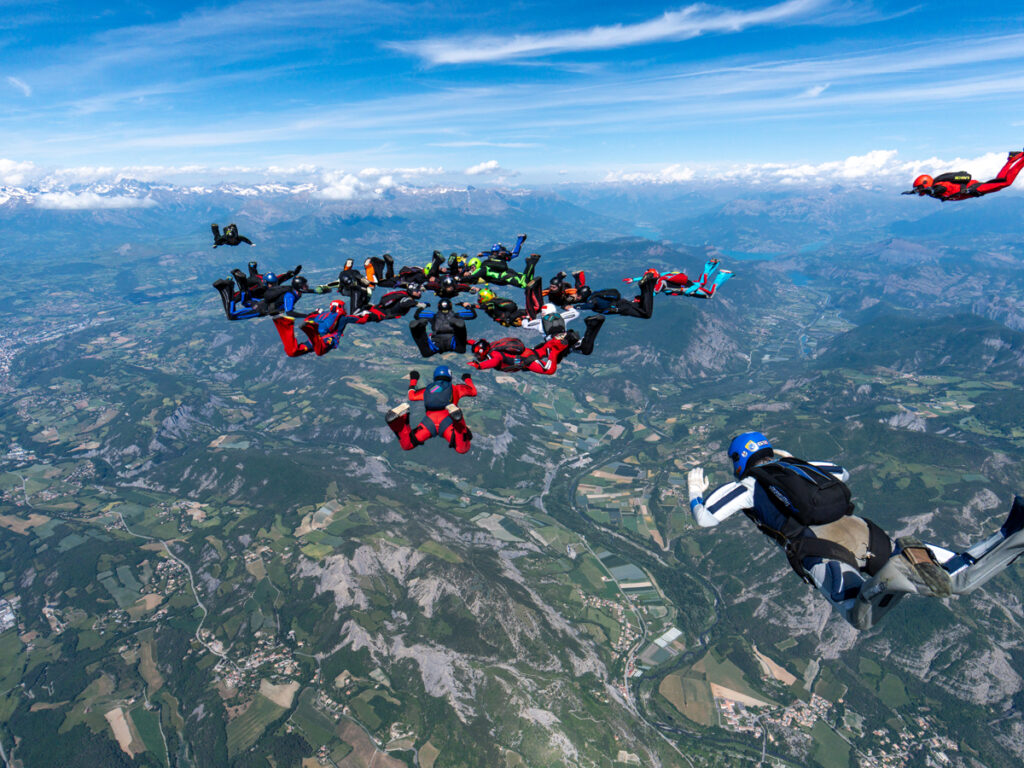
Bigway camps are usually 12–20 jumpers in size per coach or organizer. This step means you have already safely demonstrated the basics and want to learn how to progress in bigger groups and more challenging formations.
Camps are not always focused on completion but on refining component skills and giving participants the opportunity to try new things they typically don’t do.
For example, maybe you always dive because you enjoy that thrill. It is also important to learn how to float or be part of the chunk that leaves with the floaters. Maybe you have never been part of the base and dismiss it as being boring. A good coach will establish a clear agenda for the participants and allow people to try new things while continually refining their existing skills.
A good coach will also set challenging goals throughout the camp to work toward bigger and more complex formations. The goal is not necessarily to complete every formation but to learn from mistakes and understand how to improve. That way, you can begin participating in bigway challenges.
Stage 6: Bigway Challenges (Advanced)
This is where the payoff comes from all your hard work.
By now, you should be a consistent and reliable skydiver. You can often debrief yourself, understand where, how, and why you made a mistake, and know how to fix it. Of course, a good coach will utilize outside video to help debrief and highlight both what worked and what still needs improvement.
The goal here is at least one completed point on every jump. It can be frustrating at this level if people still struggle with fall rate, level, slot, dock, or remembering their position. Frustration is part of bigway skydiving and something everyone must learn to deal with constructively.
However, a lazy track, poor canopy handling, or failing to land in the correct direction are absolute no-gos at this stage because they are dangerous and can seriously injure or kill yourself and others.
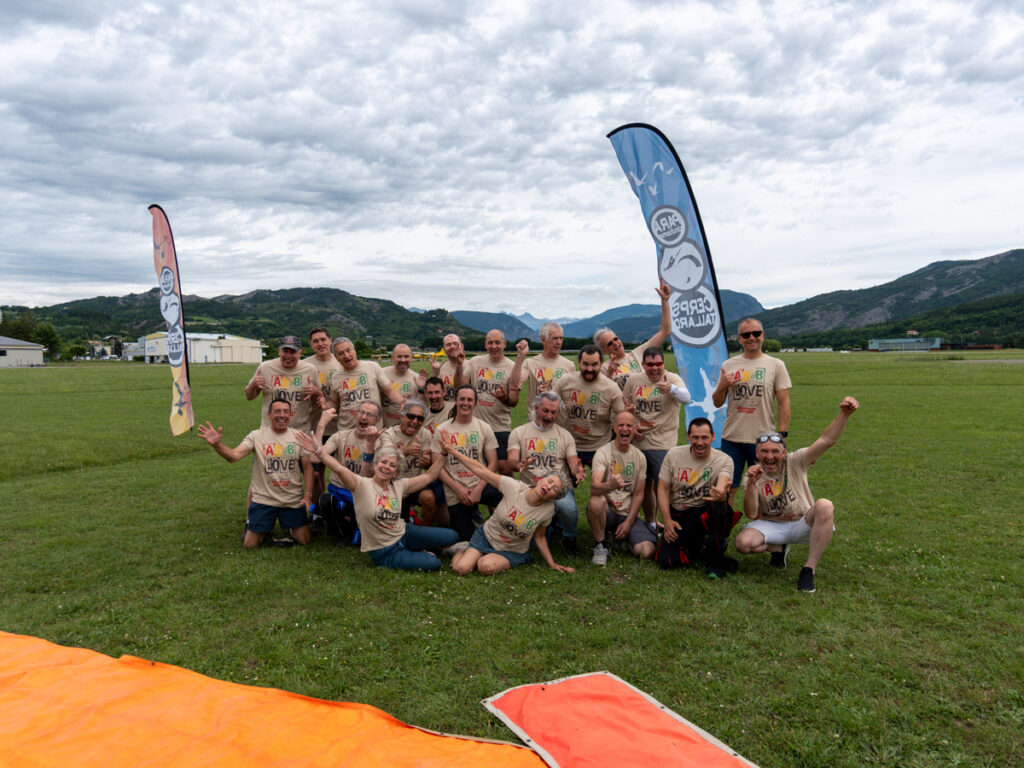
At this level, you will notice there is often a common group—or a skydiving family—that travels together to different DZs for events. These tight-knit groups look after one another due to the inherent danger of having so many people on a jump together. You will earn a slot in these events once you have proven yourself to be a competent, safe, and reliable skydiver.
Once that begins to happen, welcome to record attempts.
Stage 7: Record Holder (Expert)
Congratulations! Hopefully by now, you fully recognize the value of following this recommended path, avoiding shortcuts, and making the necessary investments along the way.
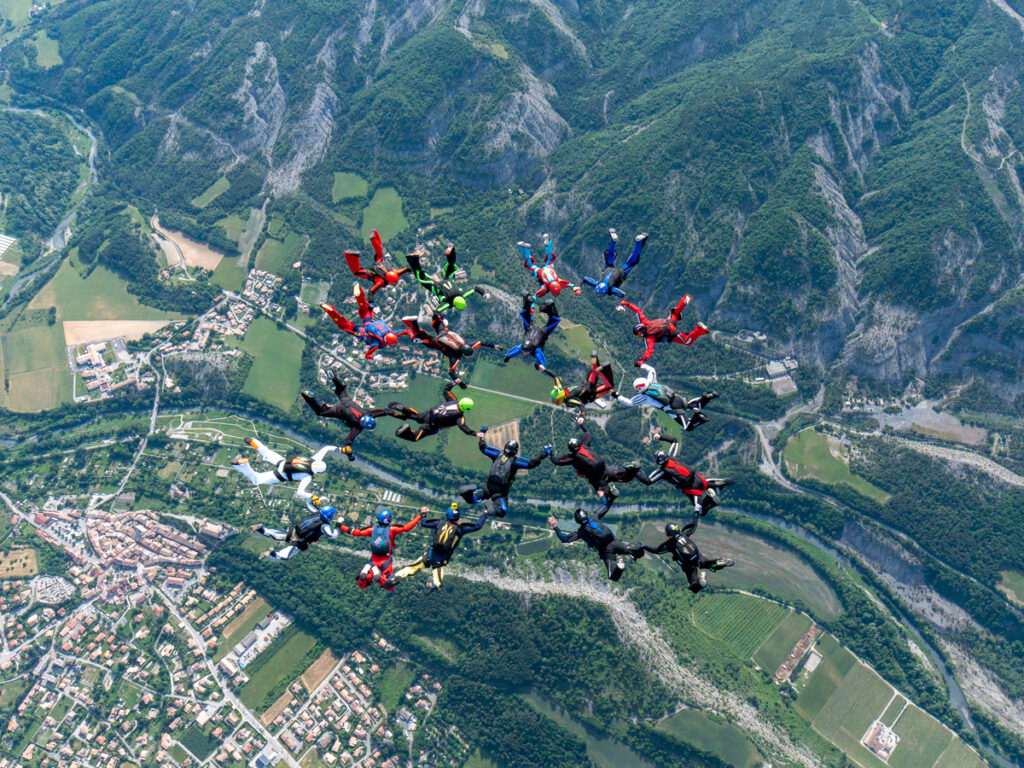
If you follow this path correctly, you will know that you are a solid skydiver whom people trust with their lives—literally—to build beautiful, complex, large formations in the sky while falling gracefully at 200 km/h.
Now is when the real learning begins, and you can continue learning on every single jump. This is also when you begin sharing your knowledge and experience with others. Always take time to listen, add new tools to your toolbox, stay humble, and remember that no one knows everything about skydiving.