




Having flown every edition of Mixology, Mingo reflects on the planning, friendships, and flying behind one of the sport’s most ambitious dynamic bigway events.
If you are reading this, your Instagram feed has probably been hammered over the last few days with videos of smoke bombs, streamers, big-way angles, and people skydiving in some pretty questionable neon-colored shirts.
From the outside, Mixology can look like a wild collection of ambitious skydives built for the camera. But once you are inside the event, you realize just how complex building something like this really is. So how does an event like Mixology come together?
Imagined and created by Alethia J. Austin, coached by Kai Kai Bucholz and Rafa Dunin, Mixology is a movement and dynamic skydiving event built around creative bigway skydives. The visuals are captured by Jesse “Tex” Leos behind the lens and editor of the final film.
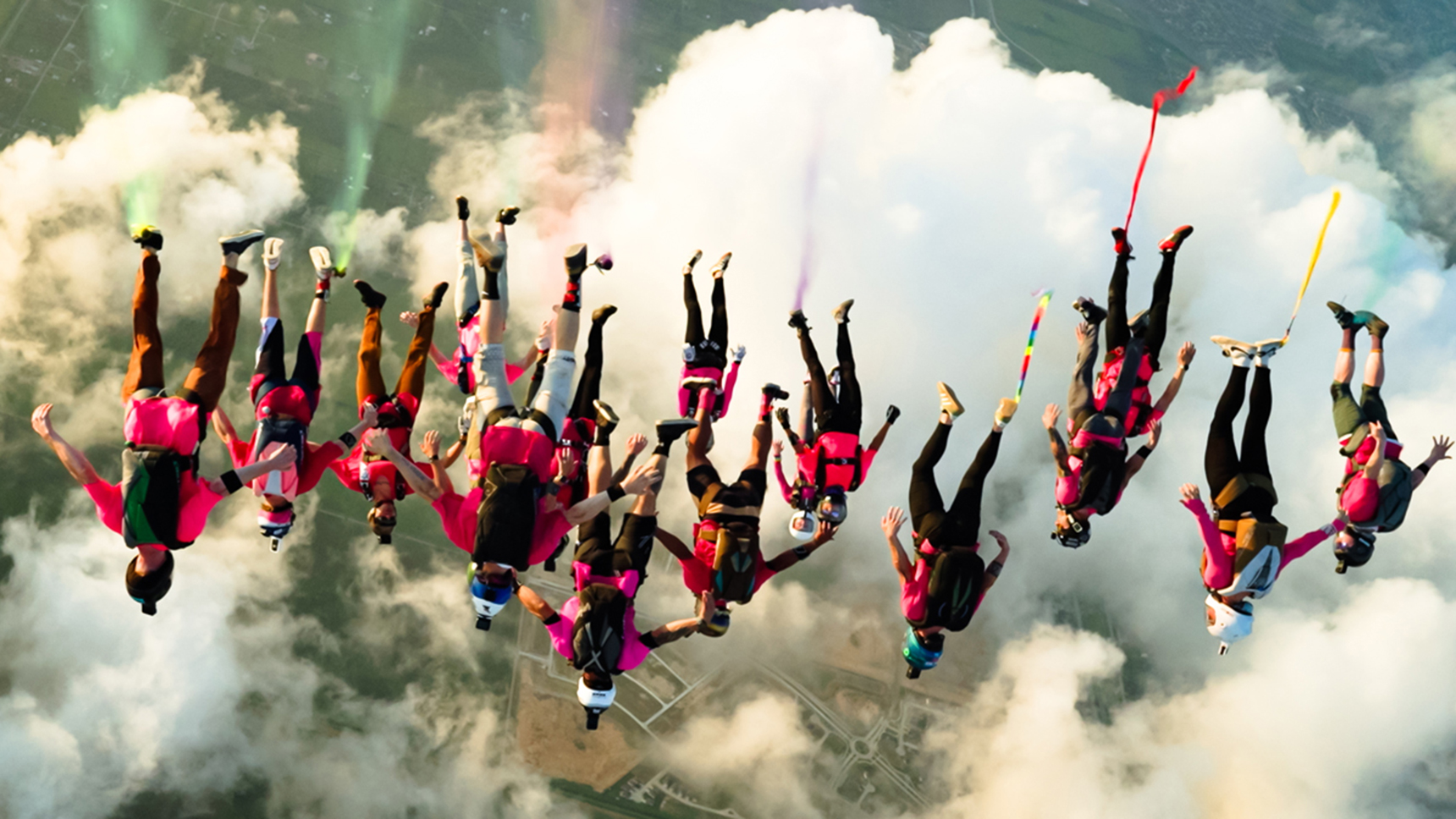
The event takes the principles of movement flying and combines them with the evolution of dynamic, angle-based jumps to create multi-group formations that produce some of the most outrageous visuals in the sport and skydives that had never been flown before.
Even though the jumps can look complex from the outside, the idea behind them is simple:
- Build strong groups.
- Fly with discipline.
- Trust the plan.
- Create skydives that are both technically solid and visually powerful.
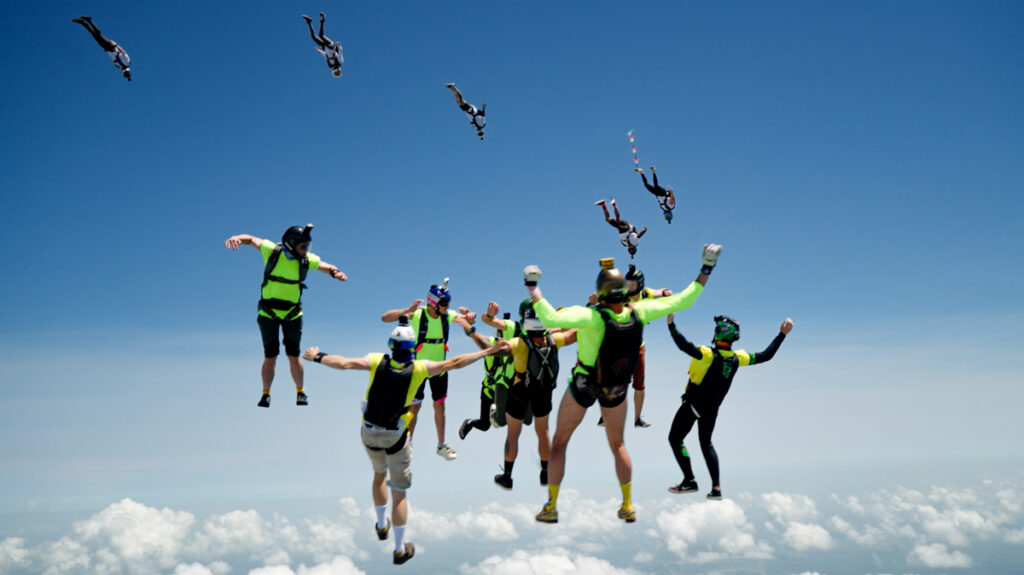
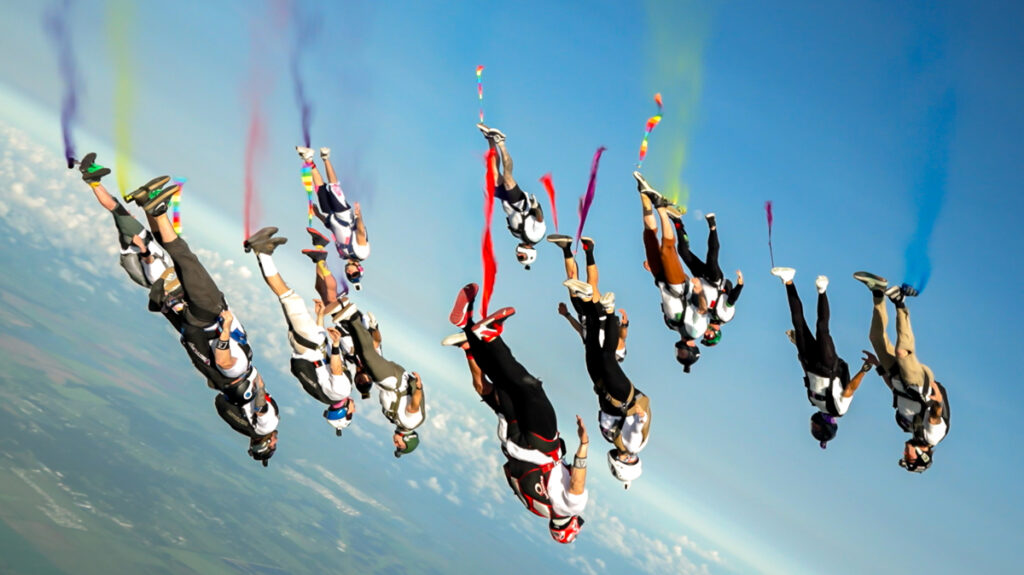
Some of the jumps included groups carving around each other, head-to-head crossings at unreal closing speeds, groups flying through other groups, mixed formations, and, of course, the occasional full-load cruiser.
Back to Basics
In principle, Mixology is simply the basic principles of formation flying taken to a bigger scale. The engineering behind the jumps is what makes the event stand out. Multiple groups coming together, crossing, and carving around each other, but as a flyer, your job ends up being simpler than you’d think: go back to the basics, fly a good approach, stay on level, and fly your slot.
That was one of the biggest lessons Rafa Dunin gave me on day one:
Narrow your focus. Look at your reference. Look at your group leader.
Don’t get distracted by the other groups or by the size of the skydive. The more you try to watch everything, the less useful you become to the team. Taking that seriously makes you hyper-focused on your one job: be there, perform, and let go of every distraction.
Done right, it means watching the video back afterward and thinking:
“When did we do all that in a single jump?”
Engineering the Jumps
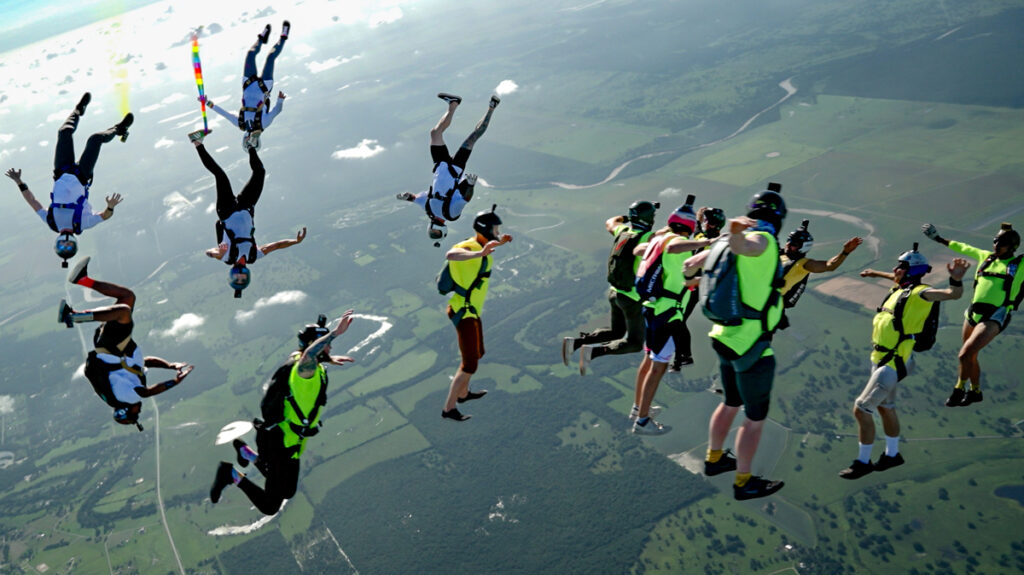
In some ways, the jumps are engineered so they feel like a 2-way or 3-way, sometimes even a 4-way for the group leaders.
Kai Kai, Rafa and Alethia build and fly the jumps by referencing each other and the other groups, with total trust from the flyers following behind them. That makes it easy for the rest of us to simply follow while leaving the leaders responsible for everything else. The amount of effort and time the coaches put into designing the jumps is probably one of the most impressive parts of the event.
By the time you show up, you’ve already been assigned a specific slot for every skydive, which says a lot about how much preparation happens before the event even starts: researching every flyer, understanding their strengths, and building skydives around that.
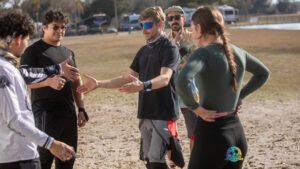
The pace of the event is definitely intense. I never thought a one hour call could feel short. Walk the jump. Jump. Pack. Debrief. Brief the next one. Walk it again. Get on the load. Repeat. In practice, it’s part of why the flying works. We walk the jumps so thoroughly that there’s no margin left for doubt once we’re actually in the sky.
An Event That Keeps Evolving
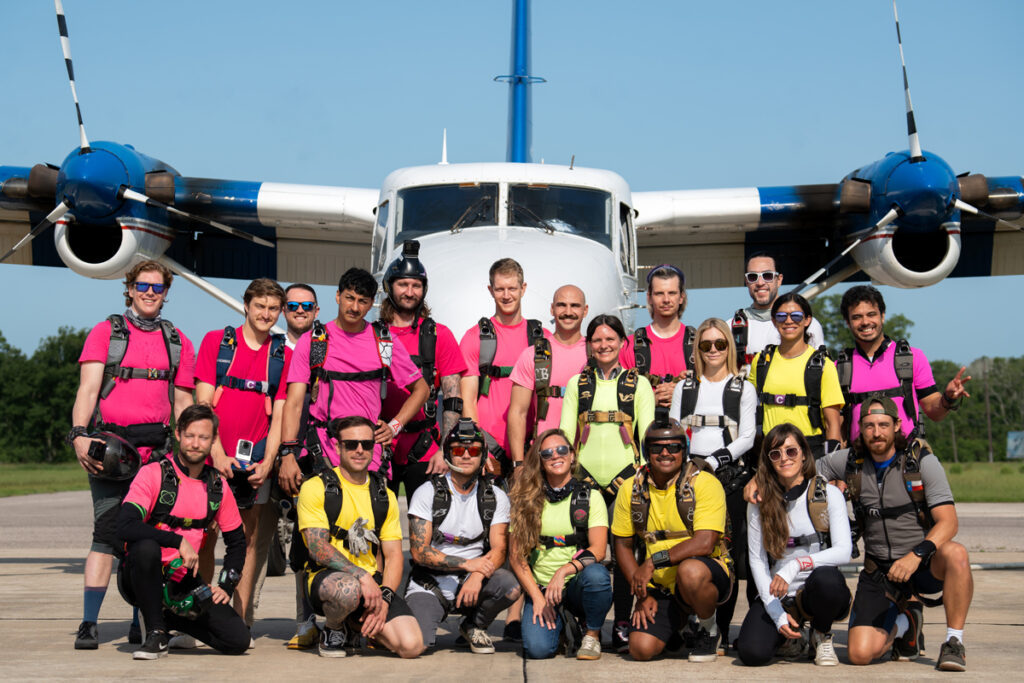
Having done all three editions of Mixology so far, I’ve watched it evolve into something with its own identity.
It’s not the first event of its kind, but it has grown into something distinct. Mixology has built on its own strengths each year, taking dive flows that worked in past editions and evolving them under the same principles. This year we saw a rise in dynamic flows, with more carving and crossing elements, and a shift away from building jumps on the vertical toward building them on an angle.
That shift made approaches faster, build times quicker, and the jumps more compelling on camera.
The Atmosphere
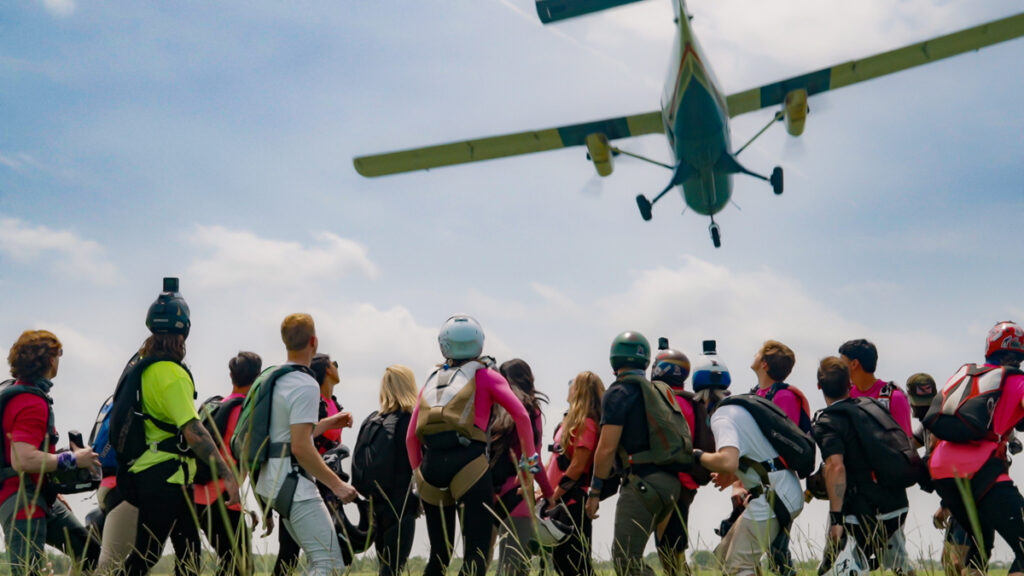
Another part of what makes Mixology stand out is the atmosphere.
Having a group of flyers this skilled, most of them coaches and organizers at an international level, set their egos aside and simply focus on flying their slot and being a team player is impressive on its own.
Credit for that goes to Alethia Austin, who each year selects not just a group of shredders, but a humble, caring, chill group of humans. The vibe is one of the best parts of the event: relaxed, even though the jumps themselves are challenging, mentally demanding, and the pace can become overwhelming.
That atmosphere is what pulls everything together and keeps everyone relaxed and focused.
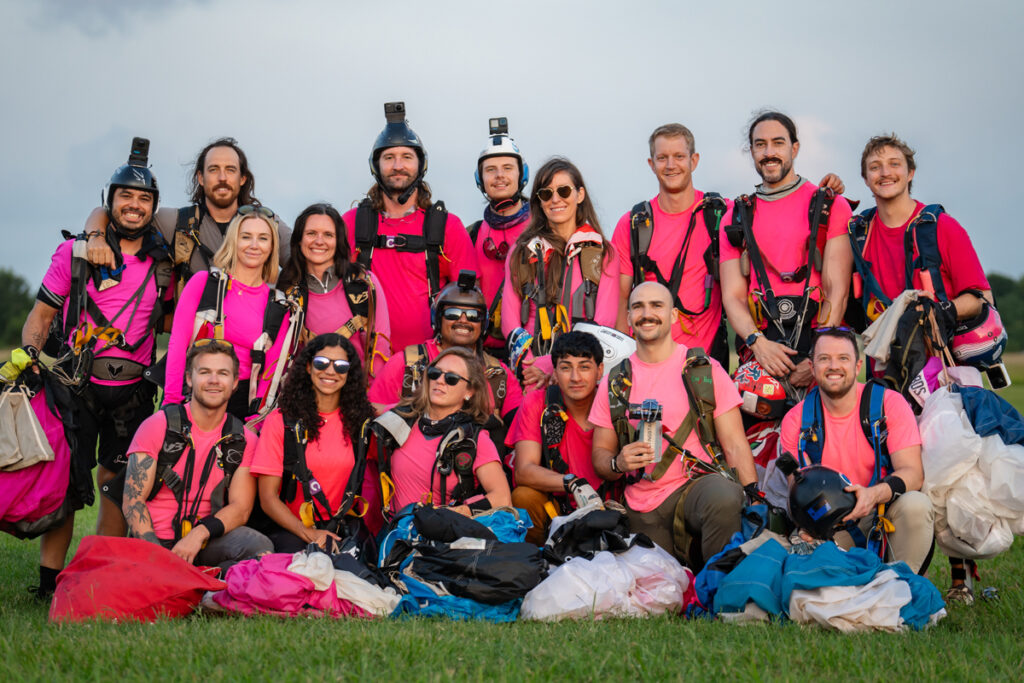
We could be doing the most insane skydives I could never have dreamed up, and it still feels like a day of fun jumping with 22 friends.
There is no way people perform like this without that atmosphere, and it isn’t easy to sustain. Long briefings can drain a group quickly if the energy is off. But Kai Kai, Rafa, and Alethia keep everyone locked in without it feeling heavy. There is a calm intensity to how the event runs, serious, but never tense. And no ego leaves everyone feeling like it’s a group creation.
More Than Skydives
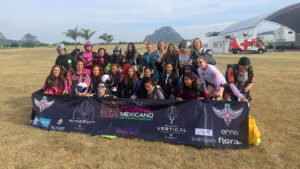
Having the opportunity to spend four days with so many talented and humble skydivers means coming home a little depressed that the event is over, but also with 23 new friends from around the world.
This year I had the chance to share the event with my longtime friend and coach Josh Ruiz-Velasco, talk canopy flight with Rogerio from Brazil, plan a tunnel trip to Sweden with Olle, swoop the pond with Chris, share the camera step with Amanda, drink countless glasses of water with Sivi from Australia during the briefings, and create countless other moments that turned an incredible skydiving event into friendships that will last a lifetime.
Flying for the Team
There’s a skill in these jumps that doesn’t get talked about enough in the industry: being a team flyer. Sometimes that means getting put in an uncomfortable spot and simply pushing through it. Here’s the example I always come back to.
This past edition, there was one jump where I was almost the last diver, with only three people behind me. On the exit, I got compressed by the divers behind me and ended up spiraling out the door (freestyling). In the moment, I had no idea what had happened and figured I’d hesitated and slowed the exit down for everyone behind me.
Then we watched the video back.
It turned out whoever was behind me had done a great job pushing me out, and between that and getting compressed, we got the rest of the divers out faster than we’d planned. We made it standard procedure after that.
What feels quick and clean from your own point of view isn’t always what’s quickest for the team.
The jump build isn’t complete until the last diver and first floater have arrived at their slot. So if you get a little compressed or thrown out here and there, that’s fine if it shaves a couple of seconds off for the people behind you.
Your job is not to make the skydive feel perfect and comfortable for you. Your job is to help the formation work.
This is what I have learned about team flying from Mixology. That’s a big part of the mindset Mixology preaches. The real goal is the group picture, not your own skydive.
If the plan asks you to be patient, you’re patient. If it asks you to take an uncomfortable exit, you take it. If it asks you to fly on brakes instead of straightening your legs and looking pretty for the camera, you fly on brakes. Talent alone doesn’t get you onto a jump like this. What makes it work is a group of flyers who are open to listen, disciplined, and committed to the group picture over their own individual moment.
Smoke, Streamers and Spectacle
The smoke show, always supplied by SSK, brings everything together.
My very first smoke jump happened at Mixology I, and I still remember being first floater, leaving on my back while repeating to myself:
Where’s the smoke? Where’s the smoke?
For the first few seconds there was nothing.
Then the colored trails suddenly came alive, pointing me straight toward my group.
Since then, smoke has become part of the Mixology experience.
Seeing those trails in freefall adds another layer of depth to the jumps and makes the formations look even more spectacular. As impressive as they are in the air, you don’t truly appreciate them until you watch the event movie afterward with a bit of color grading, when the smoke really comes to life.
Big Thanks
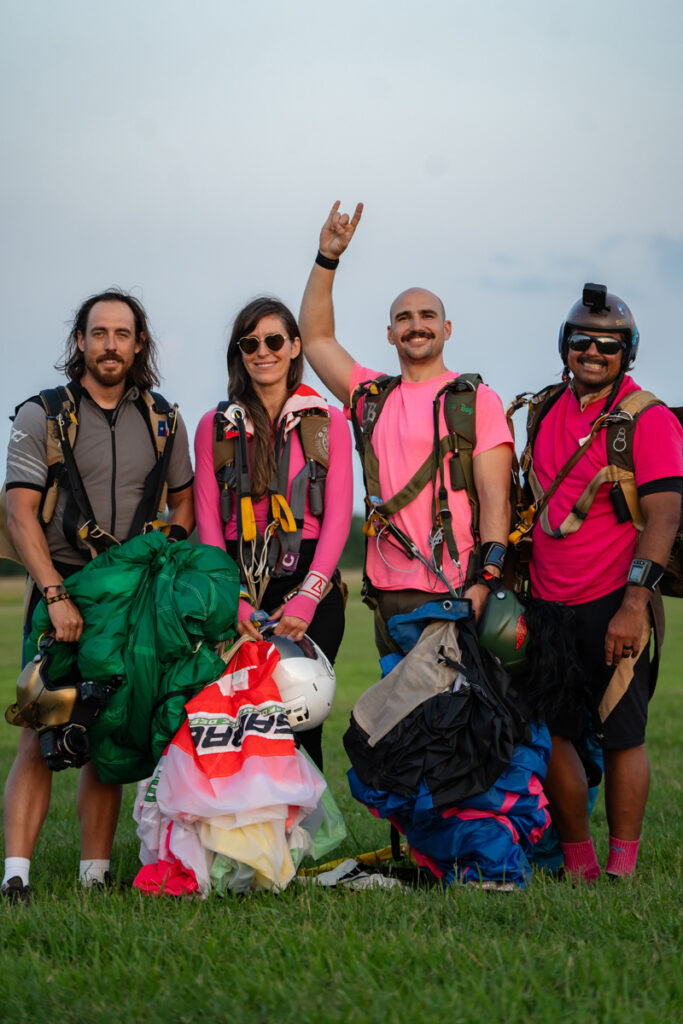
A huge thank you to Rafa Dunin, Kai Kai, and Alethia for the work, patience, and attention they put into every jump.
Thank you to Alethia for organizing the event and keeping the energy high from beginning to end, and to the entire DZ staff, manifest, packers, and ground crew who kept everything running smoothly behind the scenes. A special thank you to the pilots for taking care of us and keeping us safe in the air.
And, of course, without someone so talented behind the lens, capturing skydives like this wouldn’t be possible. A massive shoutout to Jesse “Tex” Leos for filming and editing the entire event movie. If you haven’t already, I highly encourage you to take 35 minutes, settle into the sofa with some popcorn, and watch it here.