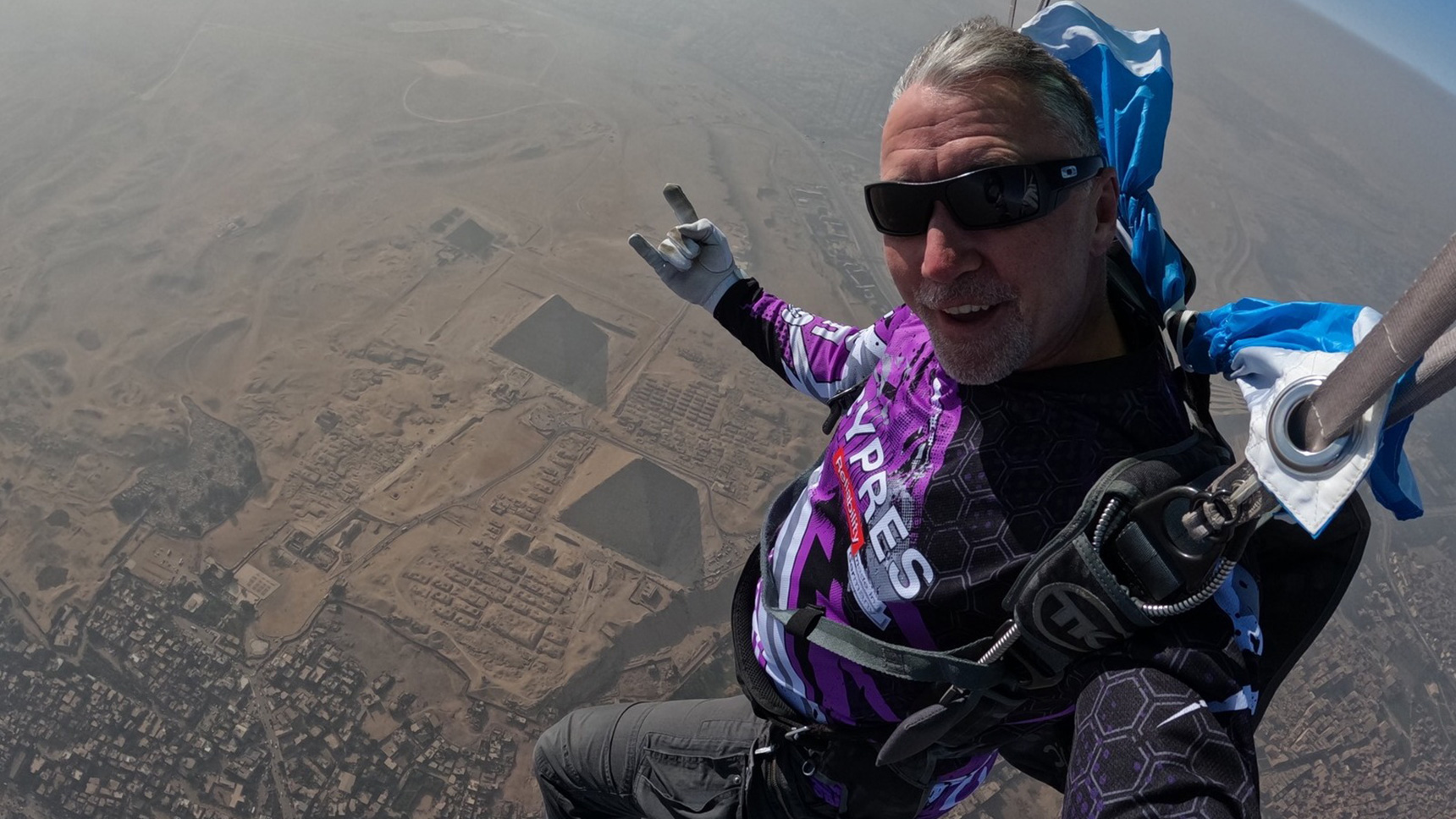





True or false? – Do you know the answers?
There are some ‘bonfire myths’ in the sport about the CYPRES AAD. This article examines some of the misinformation, provides the correct answers and some useful information…
The CYPRES unit, manufactured by Airtec in Germany, was the first AAD for experienced jumpers and has been on the market for more than 30 years. Due to our fast-growing sport, the product has changed with time, to adapt to new advances. XRW is a good example of the challenges facing the industry – when pilots under high-performance canopies can match freefall speeds of wingsuiters, AAD activation parameters must be amended accordingly.
Some ‘facts’ have been superseded, but may still be circulating, because it takes a while for the word on the street to catch up. This is why you should never rely on what you’re told in the DZ bar, especially about something important to do with gear. If you have any questions about any part of your skydiving equipment it is always best to contact the manufacturer directly. What is true for one canopy, rig or AAD may well not apply to the others.

True or False?
Which of the following statements are true and which are false?
- CYPRES is an acronym for Computer Pulls Your Reserve in Emergency Situations
- The CYPRES AAD arms after take-off at 500 feet
- The unit measures air pressure twice a minute, on the ground and in the aircraft
- CYPRES switches off after 12 hours, so turn it off & on again for a long jumping day
- Landing in water with a CYPRES will damage the unit
- The batteries must be changed regularly when the unit displays ‘BAT’ for low battery
- All CYPRES units must be returned to the factory for maintenance every four years
- The service life for all units is 12.5 years, after which they expire and the unit is worthless
- You can’t safely jump a CYPRES for high-performance landings
- The user cannot change the activation altitude permanently
- You can convert your changeable CYPRES to a speed/expert one by sending back to Airtec
- If you have a CYPRES fire, you must send the unit back to the manufacturer
- The value of your unit is reduced after any Cypres activations
- After a CYPRES activation you can re-use the old cutter
- Airtec pay for your CYPRES Save story.
Answers
ALL the above statements are FALSE.
Let’s look in more detail at the current CYPRES models, how they work and show why none of the above statements are true…
1, CYPRES Name
“CYPRES is an acronym for Computer Pulls Your Reserve in Emergency Situations” – FALSE!
CYPRES is an acronym of “CYbernetic Parachute RElease System”. Cybernetic means “self-regulating”, as the unit is constantly measuring air pressure and adjusting accordingly.
2 and 3, CYPRES Operating Parameters
“The CYPRES AAD arms after take-off at 500 feet” – FALSE
“The unit measures air pressure twice a minute, on the ground and in the aircraft” – FALSE
On the ground the CYPRES measures the air pressure twice a minute. This allows it to adjust for changing weather conditions, giving a very accurate calibration of ground level.
In the aircraft, the CYPRES arms itself at 1,500 feet (not 500 feet). So be aware if you leave the aircraft below this height (for example, in an emergency), your CYPRES AAD is not active. It doesn’t make much sense to arm at a lower altitude, as the jumper would need some time to exceed a speed of 35m/s and the reserve will also need some time to inflate fully.
Once the device is armed and airborne it measures the air pressure at least 8 times every SECOND.
4, Active Time
“CYPRES switches off after 12 hours, so turn it off & on again for a long jumping day” – FALSE!
When you switch the unit on, it will perform a self-test of all critical functions, then display the ‘0’, showing it is armed. The device is then active for 14 hours – not 12 as above – before it turns itself off. It is therefore highly unlikely for ‘normal’ jumping anyone would need to turn the unit off and on. This would only be necessary for night jumps, or exceptionally late jumping.

Image by Nikko Mamallo
5, Water Landings
“Landing in water with a CYPRES will damage the unit” – FALSE!
All models produced after 2003 are waterproof for up to 24 hours down to a depth of eight feet (2.5 meters). The units have a water-resistant casing, sealed plug connections, a sealed cutter, a sealed control unit, and a filter, which keeps water away from the inside of the unit.
If you have contact with water on your jump, switch the unit off immediately afterwards. The filter must be replaced before the next use by a rigger. The rig and the reserve should also be dried according to the manufacturer’s instructions. After that, you’re good to jump again, provided the self-test shows a ‘0’.
6, Battery Life
“The batteries must be changed regularly when the unit displays ‘Bat’ for low battery” – FALSE!
A CYPRES will self-test the battery and displays ‘Bat’ for low battery. However, a unit normally operates perfectly around 50,000 times before battery life would be an issue.

7, CYPRES Maintenance
“All CYPRES units must be returned to the factory for maintenance every four years” – FALSE!
Maintenance is voluntary for units manufactured from January 2017. Maintenance is recommended at five and ten years after the date of manufacture. At the maintenance, every part of the device is checked, and it will be individually pre-adjusted for the next cycle.
8, Cypres Life
“The service life for all units is 12.5 years, after which they expire and the unit is worthless” – FALSE!
Units manufactured from 2017 onwards have a service life of 15.5 years. Earlier models have a life of 12.5 years.
Airtec has a trade-in program for expired units, so customers receive a credit towards their new unit. This is valid for one year after the end of service life. You can receive a $70 USD credit for a unit with a cutter, or $60 USD if the cutter has been used or is not present. Give your old device to your dealer when ordering a new one to receive the discount. So, an expired CYPRES is not worthless, and not all units expire after 12 years.
9, Activation Altitudes
“The user cannot change the activation altitude permanently” – FALSE!
In 2013, Airtec introduced the possibility for users to reset their activation altitude permanently. Previously it was only possible to reset it for single jumps, for example when taking off and landing at a different elevation. Many skydivers have chosen to raise their activation altitude permanently, as an extra precaution. Of course, if this option is chosen, the jumper must be aware of a higher risk of a 2-canopy scenario. But, since minimum opening heights have increased by a thousand feet since the launch of the CYPRES in 1991, the margin between main and reserve openings is similar.
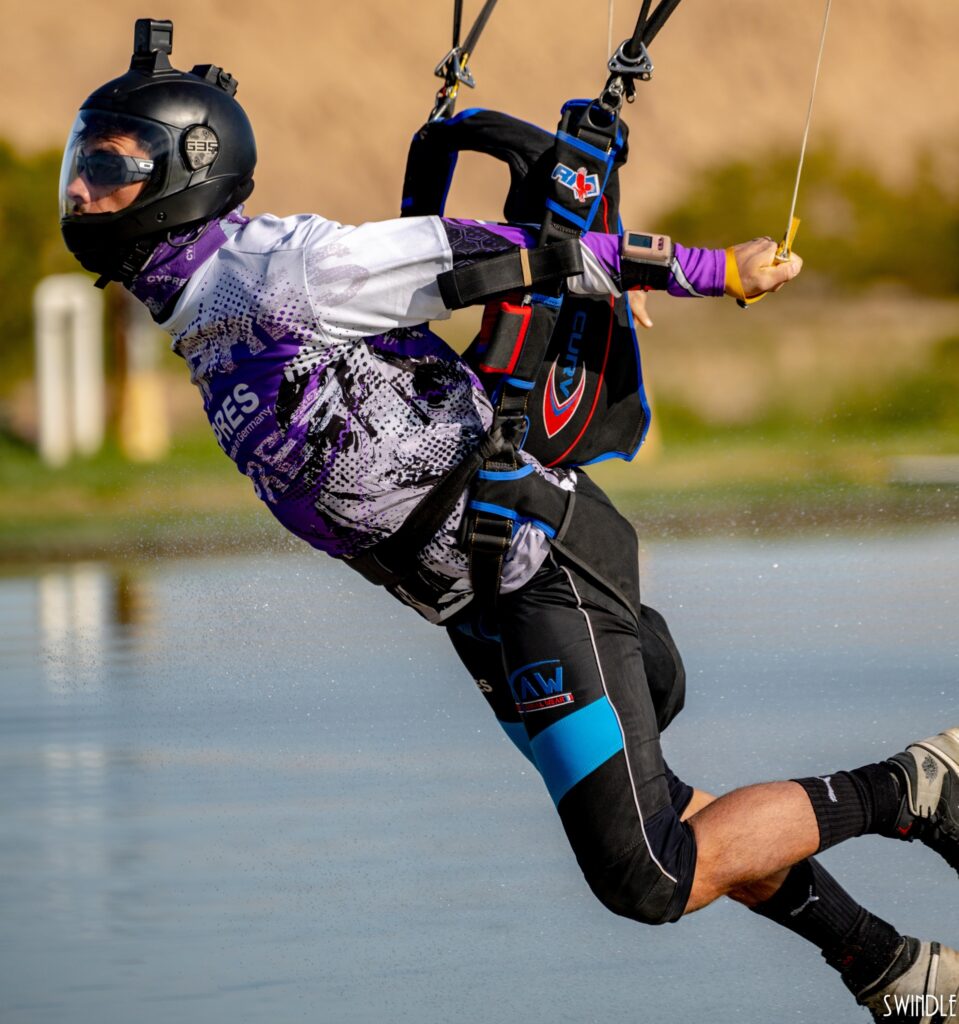
Image by Alex Swindle
10 and 11, Cypres Models
“You can’t safely jump a Cypres for high-performance landings” – FALSE!
In 1991, when the CYPRES was launched, there were three models; Expert, Student and Tandem. The Expert model, for experienced skydivers would activate at 750 ft if the freefall speed was 78mph (35mps) or higher. The Student CYPRES had the same freefall settings but also activated under canopy at 1,000ft, if the descent rate is below freefall speed and above 29mph (for example, if the student had a partially opened canopy). The Tandem version had a higher activation altitude of 1,900 ft (580m) AGL, due to the higher opening height. These parameters have not changed over time.
In 2005, the Speed CYPRES was introduced, designed specifically for extreme canopy piloting, with a high activation speed of 102 mph and a feature that switches the unit off below 330 feet.
“You can convert your changeable CYPRES to a speed/expert one by sending back to Airtec” – FALSE!
In 2013, the C-Mode (Changeable) was launched, this model has the capacity to switch between any one of four CYPRES models – Expert, Student, Tandem or Speed. However, it cannot be converted to one of these modes. The single mode units (Student, Tandem, Expert, Speed) can be converted to another single mode unit, by returning to Airtec.
In 2016, the Wingsuit CYPRES (WSC) was launched, with two sets of parameters. The first set is for freefall. The unit will fire at 750 feet if the vertical speed is 45 mph (20 m/s) or higher. When the WSC detects the main canopy opening, it switches to canopy parameters. For the canopy flight the WSC can be set to Expert or Speed. It can be used for all other disciplines.
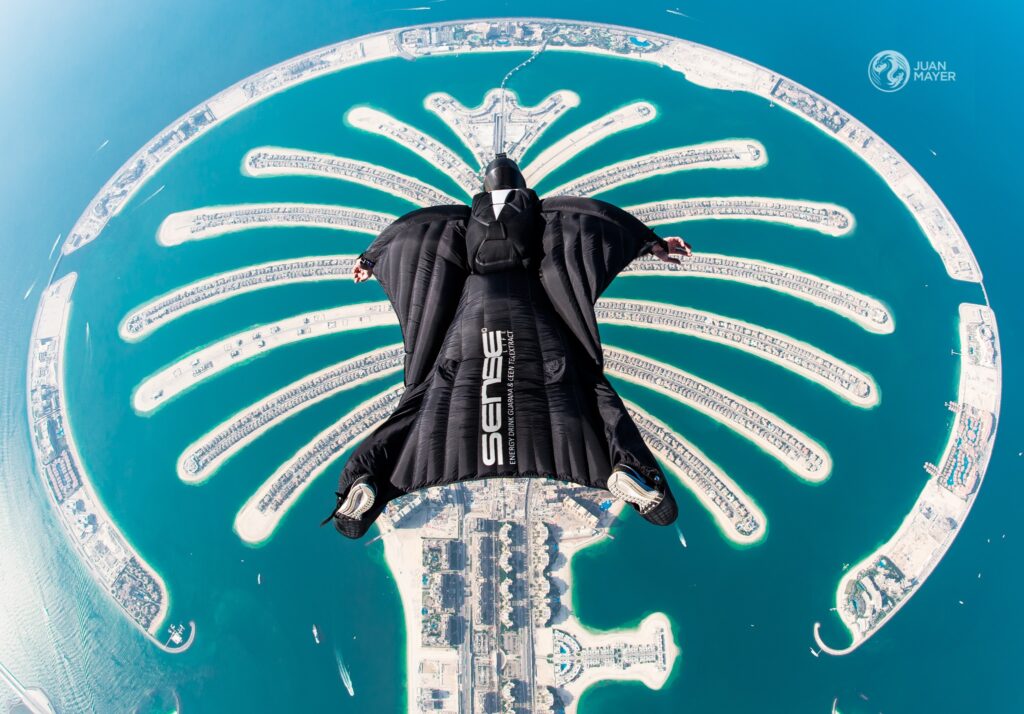
Image by Juan Mayer
12, 13 and 14, Cypres Fires (Activations)
“If you have a CYPRES fire, you must send the unit back to the manufacturer” – FALSE!
“The value of your unit is reduced after any activations and should be declared if reselling the unit” – FALSE!
The original CYPRES units needed to be returned to Airtec after an activation. However, this has not been the case for over 30 years. All you need to do is replace the cutter with a new one (from your rigger or Airtec) and turn the unit on. A ‘0’ after the self-test indicates you are good to go.
Having an activation does not reduce the value of your device and you do not have to declare any activations should you sell it.
“After a CYPRES activation you can re-use the old cutter” – FALSE!
Do not re-use the old cutter. Please. The cutter is designed for one-time use only, to be reliable.

15, CYPRES Save stories
“Airtec pay for your CYPRES Save story” – FALSE!
CYPRES Save stories are reported on their website, and make a fascinating read with some valuable takeaways. If you choose to send your story to Airtec to add to the CYPRES Saves list, and are happy to give an interview, this is a fantastic thing for the sport, because it helps everyone learn. Airtec do not pay for your story – but they give you a replacement cutter for free!
In Conclusion
It’s important to make the right choice of AAD for your skydiving preferences and to understand exactly what that model will do. An electronic device will perform its function precisely as programmed. If only humans were so reliable! We need to understand the operating parameters, and use or adjust accordingly – not just rely on our AAD to magically rescue us from any situation we put ourselves in. Detailed information about the six CYPRES models is on their website, with the user manuals for each device.
Knowledge is power, dispels fear and helps keep us alive.
NB: The above applies only to the CYPRES AAD – for information on other AAD operation, contact the relevant manufacturer.
Further reading
More information can be found in these articles:
- Activation Altitudes of Leaders – Top athletes in our sport share their chosen AAD activation altitude and their reasons
- 30 Years of CYPRES – Timeline of CYPRES history and development
- CYPRES ‘How to’ Videos – Short videos on every aspect of CYPRES operation, including resetting your activation altitudes