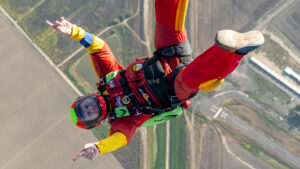





Vera Kuznetsova explores how skydiving may be one sport, but every region plays by its own rules.
In an era of multinational record attempts, international training camps, and a truly global skydiving community, it’s becoming not only more common but more necessary for athletes to fly across borders.
I’ve participated in formation skydiving events throughout Eastern Europe, across Western Europe, and in the United States. The fundamentals may be the same, but the way we prepare, communicate, and build trust as a team varies significantly from one region to another.
Eastern Europe: Discipline and Structure
In the Eastern Bloc, especially in Russia, skydiving is often shaped by legacy systems rooted in military or national sport programs. Training culture emphasizes discipline, repetition, and hierarchical leadership. Slots are assigned early and rarely changed. Jumpers are expected to follow instructions with discipline, and feedback is direct, sometimes minimal, and rarely emotional.
This culture traces its roots back to the Soviet era, when skydiving was embedded in state-led military-patriotic programs. Funded through organizations like DOSAAF, the sport saw mass participation and rigorous centralized instruction. Coaches were often state employees, and athletes progressed through a highly structured path, from army service to national teams.
Even today, many drop zones in Eastern Europe preserve this legacy: high ground time, detailed grip repetition, and strict adherence to plans. Teams may continue dirt-diving even in the rain, emphasizing mental conditioning and control.
What to be ready for when jumping in this system:
- Prepare mentally for high-volume ground work. Conserve your energy wisely.
- Stay focused — even when repetition feels unnecessary.
- Don’t expect verbal encouragement for small wins; recognition is subtle and earned over time.
- Respect the system — it prioritizes order and discipline, not debate.

Western Europe: Collaboration and Efficiency
By contrast, in Western Europe, while some countries like France, Germany, and Poland also developed their parachuting traditions through military-linked aviation clubs, the approach has evolved toward greater autonomy and decentralization. Since the 1990s, most drop zones have become privately managed, and training is often led by independent coaches within well-organized but flexible systems.
In countries like France, Germany, and the Netherlands, the formation skydiving culture today is collaborative, modular, and efficient. But this wasn’t always the case. Many Western European nations also developed their parachuting structures through state-supported aviation clubs, often linked to military or national federations.
In France, for instance, the government still funds national teams and supports elite training. Yet most drop zones today are privately operated. Athletes are expected to arrive prepared, manage their performance independently, and work within coach-led but flexible frameworks. Long dirt-dives are rare unless necessary.
Feedback is often brief, direct, and peer-level corrections are common and welcomed. In many Western European teams, harsh or blunt criticism during debriefs is not only accepted but expected, especially when safety or performance is at stake. This open confrontation may feel uncomfortable to those used to more positive-only environments, but it plays a critical role in pushing both individual athletes and full teams to a higher level.
By contrast, in the U.S., where the atmosphere tends to prioritize encouragement, such direct critiques are rarer and sometimes avoided to maintain morale. The result is that while the U.S. system fosters confidence and enjoyment, the European approach can lead to sharper performance gains over time.
What to be ready for when jumping in this system:
- Be prepared and alert. Your professionalism is assumed.
- Expect feedback to be concise, occasionally minimal — but always purposeful.
- Accept peer corrections as collaboration, not criticism.
- Use time wisely. You’re trusted to work on your skills between jumps.
United States: Encouragement and Adaptability
In the U.S., skydiving has always been a civilian-driven activity. Unlike the centralized or military-supported models of Europe and Russia, the American approach grew from grassroots communities, private drop zones, and organizations like the USPA (United States Parachute Association).
While the government does not fund general sport parachuting, it supports infrastructure like airfields and regulates safety through the FAA. Military teams such as the Golden Knights train separately. The broader skydiving scene is built by entrepreneurs, athlete-led teams, and privately funded coaches.
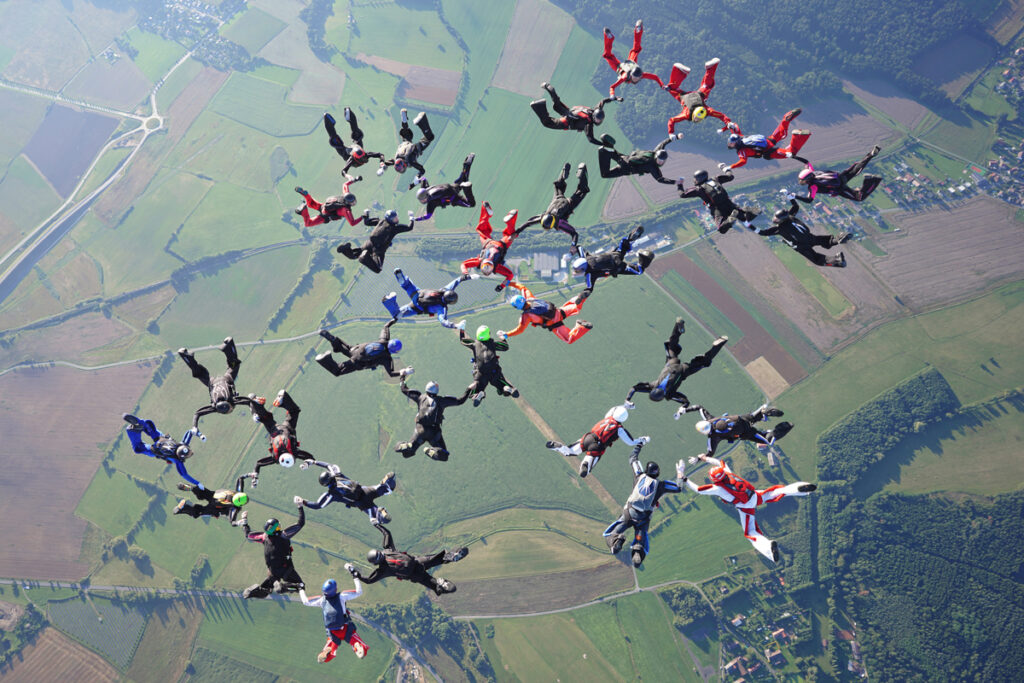
Training camps, especially big-way events, are logistics machines. Dive flows, video debriefs, sector leads, break-off altitudes: everything runs on a system. But what defines the American model is the strong mix of high standards and high encouragement. Performance is measured precisely, but positive reinforcement is constant.
What to be ready for when jumping in this system:
- Be ready to adapt quickly. Slot changes are part of the game.
- Take initiative. Study the plan, ask questions, engage your leaders.
- Enjoy the praise — but don’t rely on it. Consistency is key.
- Embrace the system. It’s there to make you better.
Cultural Context and Key Takeaways
Each region’s skydiving model has evolved from its unique cultural and political backdrop:
- Eastern Europe: Many drop zones still reflect a top-down legacy of state-led training. These environments excel in technical control but may feel rigid for athletes used to more fluid systems.
- Western Europe: A balance between old institutional structures and modern, commercial flexibility creating teams that are both disciplined and adaptable.
- United States: Drop zones thrive as independent ecosystems. Coaches are often business owners, teams are community-led, and growth comes from internal drive.
Understanding how each system evolved helps us better understand our teammates and the training environments we enter.
Formation skydiving across countries isn’t just about the formation, it’s about cultural awareness. Whether you’re joining a record in Arizona, a sequential camp in France, or a 100-way in Klatovy, understanding your team’s mindset helps you integrate faster and fly more effectively.

Lessons from International Experience
Here’s what years of international experience have taught me:
- Observe before you act. Every group has its own rhythm. Learn it before trying to lead.
- Drop assumptions. Feedback norms vary, what’s public in one country may be private in another. Respect both.
- Stay humble and consistent. A clean dock builds trust; overconfidence erodes it.
- Adjust your communication. Be clear, brief, and calm. English is the common language but clarity beats vocabulary.
- Maintain professionalism in all conditions. Weather delays, long calls, or tension? Stay composed. That’s leadership.
If you want to thrive in international events, don’t just study your slot, study your team. Don’t just train your skills, train your awareness.
Wherever your next jump takes you, remember: It’s not just about flying well. It’s about flying well with others.