



What does flying on a trapeze underneath a wingsuit pilot feel like?
What equipment do you need and what safety considerations are there?
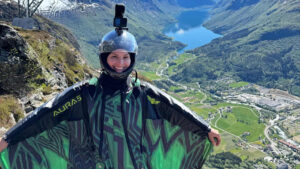
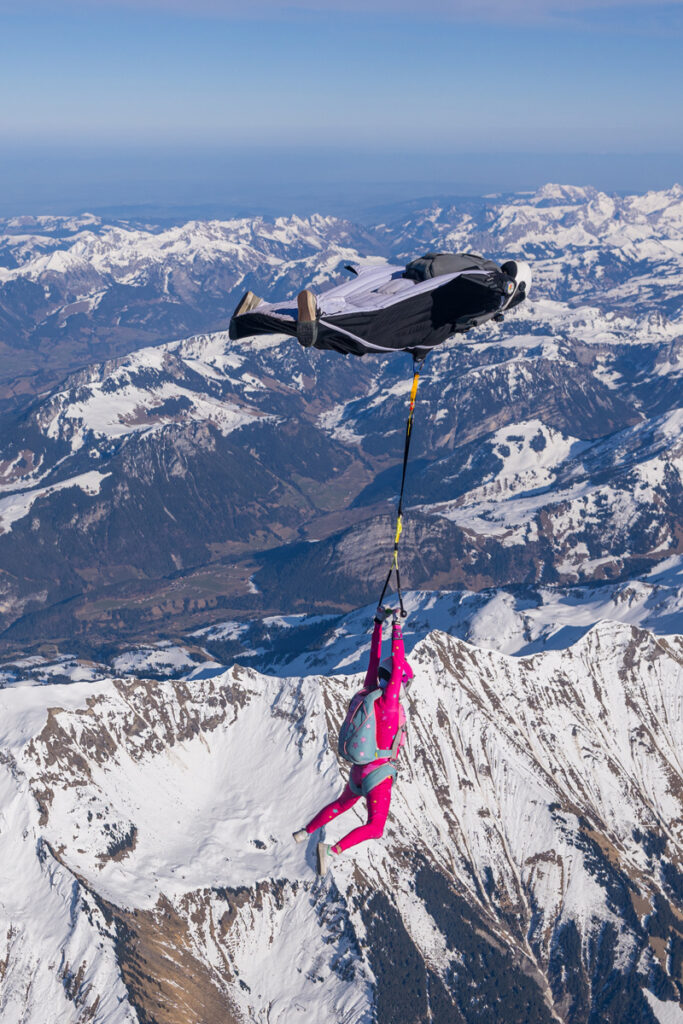
Jenny Cova describes the unique and beautiful experience of flying under a wingsuit pilot holding into a trapeze…
“What I value most in our beautiful sport is the connection with the amazing people who make up this community, the breathtaking perspective we get to experience of our planet, and the creativity that soars in the sky—whether it’s something technically intricate or simply fun, beautiful, and effortless to watch.
“When Reto reached out to me with the idea of giving Wingsuit Trapeze a go, I didn’t hesitate for a second. Even though I had never done it before, I’d seen a BASE video of the stunt, and it looked like a whole lot of fun.
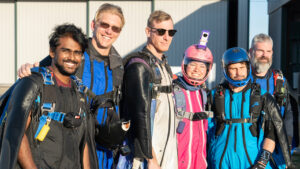
“The day I arrived at the dropzone, Sam Verri (wingsuit taxi) and Reto Nyffenegger (photographer) briefed me, and we were immediately at ease, sharing laughs and good energy. In skydiving, the vibe with the people you jump with is everything. For me, it’s essential. I’m someone who takes their time learning; what may take others a few jumps to grasp can take me a little longer. Over the years, I’ve learned to be patient with myself and with the pace at which I learn. That’s why it’s so important that my coaches understand and embrace what I call ‘the Jenny pace’.
I had no idea what to expect with this stunt. I’m not exactly a muscle-bound type, so I didn’t know whether I’d need strength or if it would come naturally. I wasn’t sure if I’d just let go right at the exit or if something else would unfold. Sam, however, was confident that we would nail it, and off we went. Much to my surprise, Sam was absolutely right—the exit was smooth.

At first, I felt like a sack of potatoes dangling beneath him, but soon enough, I began playing around, exploring how we could turn this into something graceful and beautiful. Some of the positions I tried didn’t quite work out, while others felt surprisingly smooth and gentle.
But the magic wasn’t just in the movement; it was in the beauty surrounding us. As I hung there, suspended in the sky, it felt like I was hitching a ride over the Swiss Alps—each peak and valley below a colorful masterpiece, painted with the vivid hues of the landscape. What a way to experience such a stunning view on a Sunday morning! Moments like these remind me how incredibly lucky I am to call this place home.
The highlight, though, came when Sam made a sharp left turn before it was time to separate. Wheeee! That moment of wild, uncontained joy is one I won’t forget.
I’m already excited to play with this again. There’s something so freeing about just being in the moment, floating in the sky, with no worries but the beauty around you. I’m sure there are a few more fun variations to try, and I can’t wait to see what we come up with next.
Every day, I’m filled with gratitude for this sport and the experiences it gives me. It lights up my heart to have such an incredible playground as my backyard, and I look forward to each new adventure in the sky.
Description by Jenny Cova
- Jumpers: Jenny Cova (Trapeze), Sam Verri (Wingsuit), Reto Nyffenegger (Photographer)
- Location: Skydive Switzerland
Building a Wingsuit Trapeze
Refo Nyffenegger gives an overview of how they put this stunt together…
These are the parts needed to construct a trapeze:
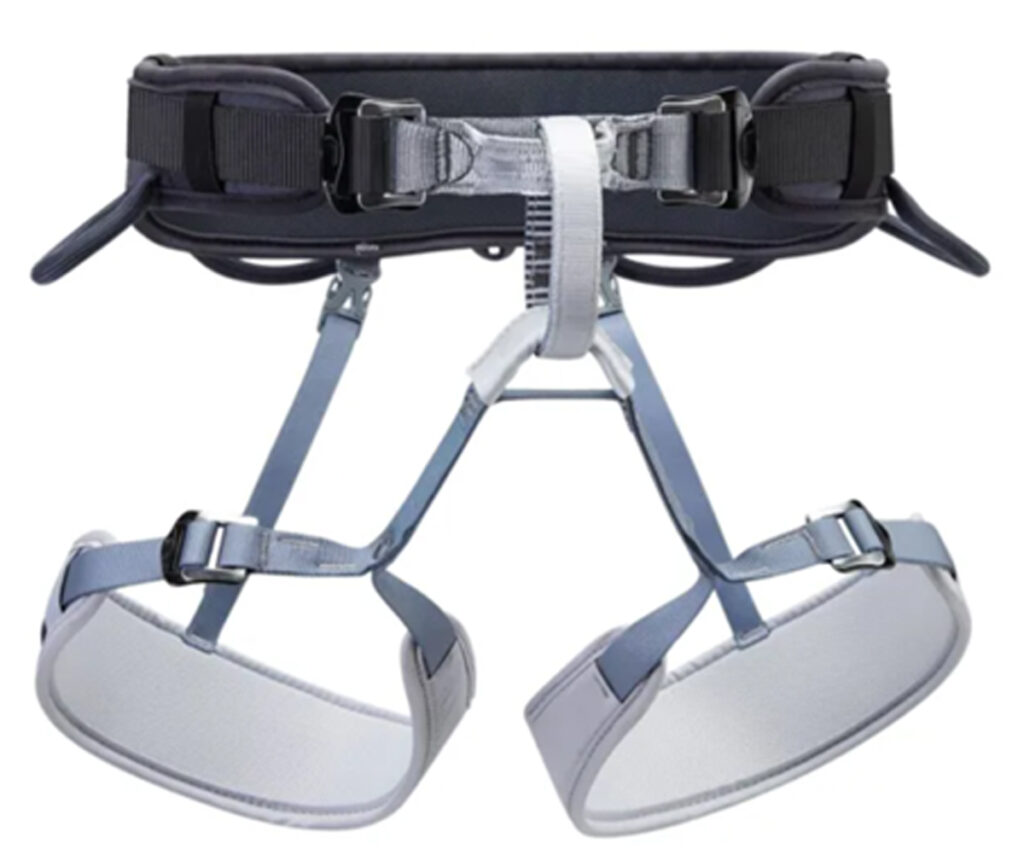
Climbing harness: Cost: 70€, and screw lock carabiner (25€)
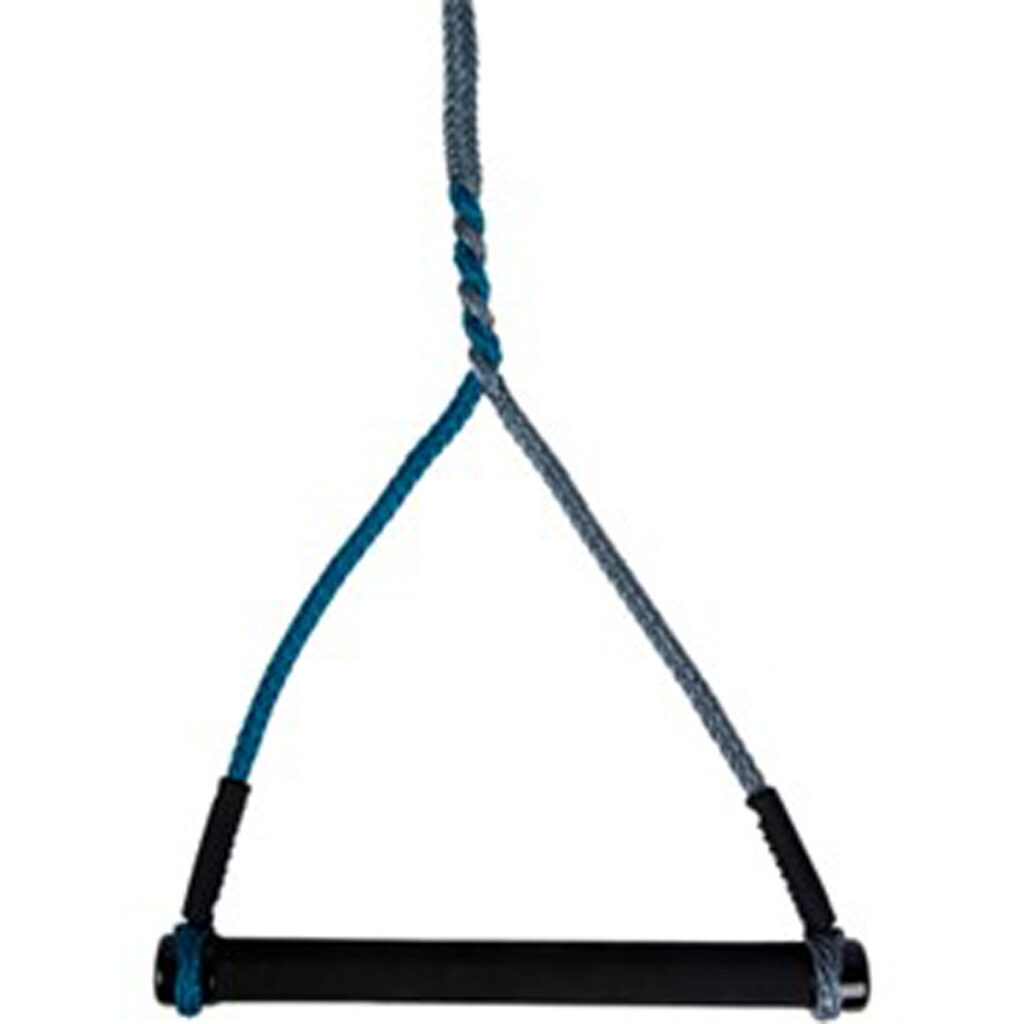
Wakeboard handle: Cost: 50€
3-ring riser (safety system): Cost 180€
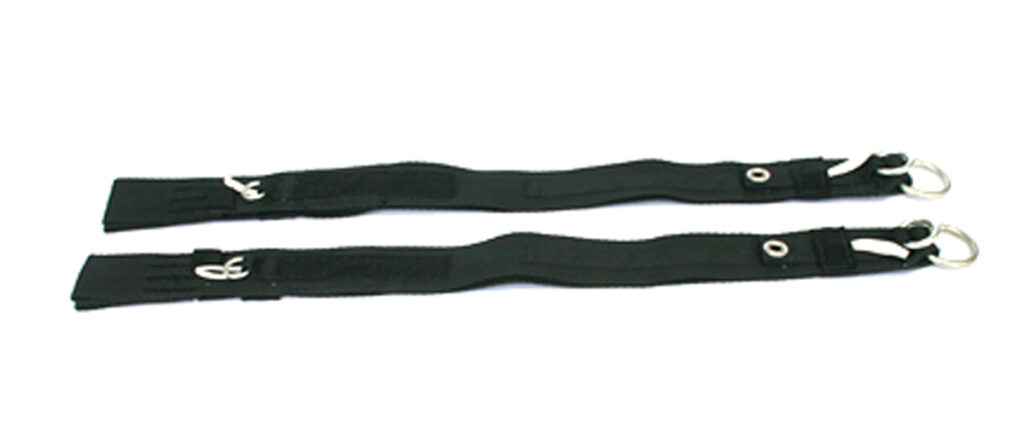
A toggle or cutaway handle for the riser: Cost: 50€, and soft-link (12€)
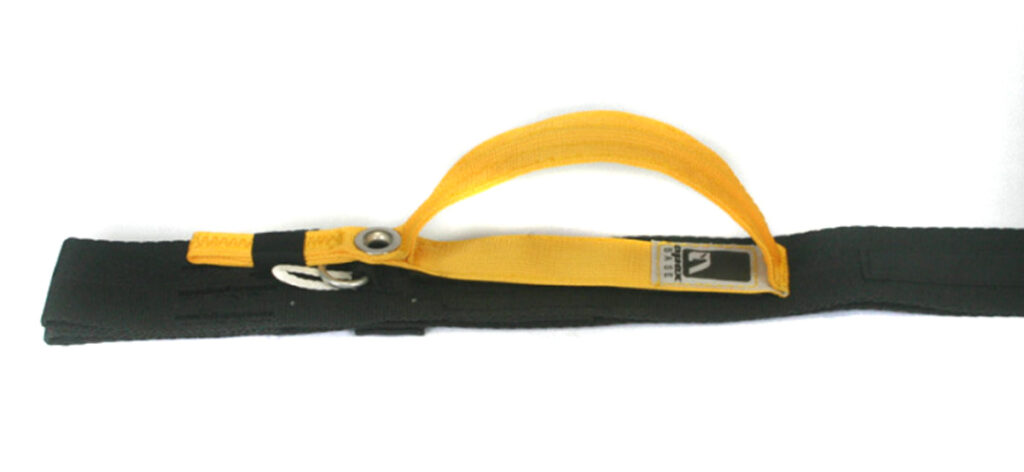
Total material costs: 400€
Construction
You probably need the help of a rigger or saddler for the construction with the sewing and some boat knots.
Attach the 3-ring riser with the cutaway handle with the carabiner as close as possible to the harness so you can reach it in the case of an emergency.
Shorten the wakeboard handle rope, it is about the length of your legwing. On the other side of the riser, attach the wakeboard handle with a soft-link or a boating knot. Make sure this not too long or too short, so make the line length adjustable if possible. Securely stow excess material, so nothing is flapping around in freefall, to minimize the risk of a possible entanglement.
For safety reasons make sure the trapeze line is not too long, so the trapeze is not able to trail behind the container or above the wingsuiter, which could create a hazard on opening when it is in the way.
Trapeze Safety Considerations
Trapeze jumps can be a lot of fun, but also pose additional safety hazards you would not have on a normal jump. So, consider this on your jump plan, think through everything that could go wrong, and make it as safe as possible!
Preparation
Before putting on the wingsuit, make sure the climbing harness is tight, and closed properly. It should sit higher up towards your bellybutton than if it were used for climbing. The reason is that the bellycam-openings on most wingsuits are usually placed a little higher than ideal for this endeavor. It’s easier to detach the trapeze from the harness, and re-attach it after putting on all gear after the first gear check. In order to keep the cutaway toggle as close to the body as possible, we found it to be helpful to clip the carabiner directly onto the leg-straps and waist-straps of the climbing harness, leaving its connection loop aside/unused.
In case of any entanglement or ending up stuck with the feet or any other body part on of the wingsuit flyer or the trapeze jumper, we made a 3-ring cutaway system, right at the attachment point on the climbing harness. So, the wingsuiter can release the trapeze in case of an emergency. It is highly recommended to have a cutaway system.
It is highly recommended to have a cutaway system
The wingsuit pilot and the trapeze jumper should agree on an emergency sign, like flapping the wings or something similar as a sign to let go in case it becomes uncontrollable or uncomfortable for the wingsuiter.
Check the attachment points on the climbing harness and make sure the carabiner is closed and locked properly.

Exit
On the exit, it is important to keep the rope and the handle stowed and give it to the jumper only after the wingsuiter is ready, so it will not trail out of the door and possibly entangle with any part of the airplane. A trapeze jumper pulling the wingsuiter out of the door must be avoided at all costs! Both must exit simultaneously.
Break-off
On break-off the jumper just lets go at the previously agreed break-off altitude. At this point no one should fly below him! Adjust the flight pattern, so the trapeze jumper can make it back home to the dropzone.
Opening
On the pull, give yourself more time with a higher separation and pull altitude. We recommend at least 500 meters more than your normal opening. We find it best is to just fly, and let the trapeze trail between the leg-wing, not trying to roll it up or grab it before the opening.
Wearing a full-face helmet will be beneficial for the wingsuiter, in case of a pendle of the trapeze on the opening,
After the opening once under canopy, clip the trapeze in the carabiner so it is out of the way on the landing.
Malfunctions
- In case of a normal line-twist, just untwist it and care about the trapeze later as it will probably be hanging downwards.
- In a spinning spiral or other malfunction, follow normal cut-away and reserve procedure.
- In case of pilot-chute thrown through the trapeze, execute canopy cutaway and reserve procedure and consider to cutaway the trapeze first.
- In case of the trapeze wrapped in the canopy lines, cutaway the trapeze first, before cutting away the main canopy. Act immediately, as reaching for the toggle may take some time! It’s way easier to reach your regular cutaway handles than the trapeze-release, as it may be dangling around and sits considerably lower.
- In case of trapeze entangled with reserve in some way, cutaway the trapeze.
- Also carefully consider your RSL or Skyhook settings for a trapeze jump if you have one.
Check and get approval from the DZ Safety Officer
Always check with the STA (Safety Officer) before making a trapeze jump! Normally there are no DZ rules yet 😉