




Dr. Taylor Wolin, PT, DPT breaks down the shoulder strength and stability flyers need to handle long sessions in the wind and under canopy, including simple training drills you can start using now
Previously in The Bodyflier’s Blueprint
In Part 1, we established that flying well actually starts on the ground. In Part 2, we zoomed in on the hips as the command center for stability and power in flying in the tunnel and in the sky. With a strong base in place, it’s time to address the body part that takes the most abuse in the wind: your shoulders.
When Your Shoulders Tap Out Before You Do
If you’ve ever ended a tunnel session shaking out your arms, rubbing your shoulders, and wondering why your flying fell apart halfway through, here’s the answer: your shoulders likely hit their endurance limit.
Shoulders in bodyflight aren’t just moving. They’re stabilizing, resisting wind forces, maintaining position, and making constant micro-adjustments. When that system lacks strength or endurance, control can start to disappear fast. More tunnel time alone usually doesn’t solve the problem.
Why Shoulder Strength Is Non-Negotiable in Bodyflight
From an orthopedic and neurologic rehab perspective, the shoulder is a stability-first joint. It sacrifices stability for mobility, which means it relies heavily on muscular control, especially from the rotator cuff, scapular stabilizers, and thoracic spine.
When we fly, our shoulders are responsible for:
- Holding prolonged arm positions against wind pressure
- Transmitting force from the trunk to the arms
- Making precise directional changes without collapsing
- Preventing overload to the neck and elbows
When shoulders lack endurance, flyers compensate with tension, shrugged posture, or excessive arching, all of which drain energy and increase injury risk.
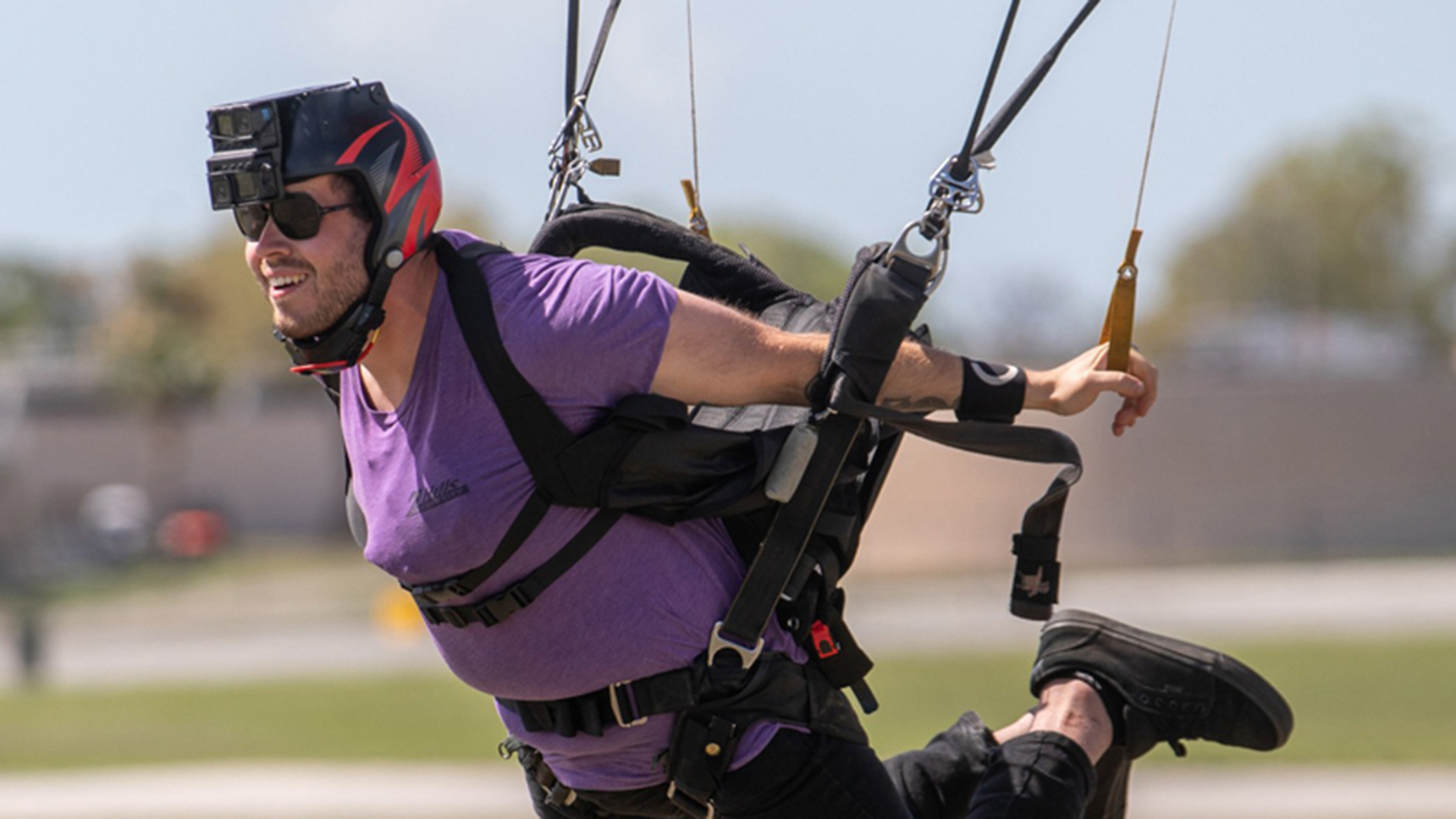
Why Shoulder Health Matters in Canopy Piloting
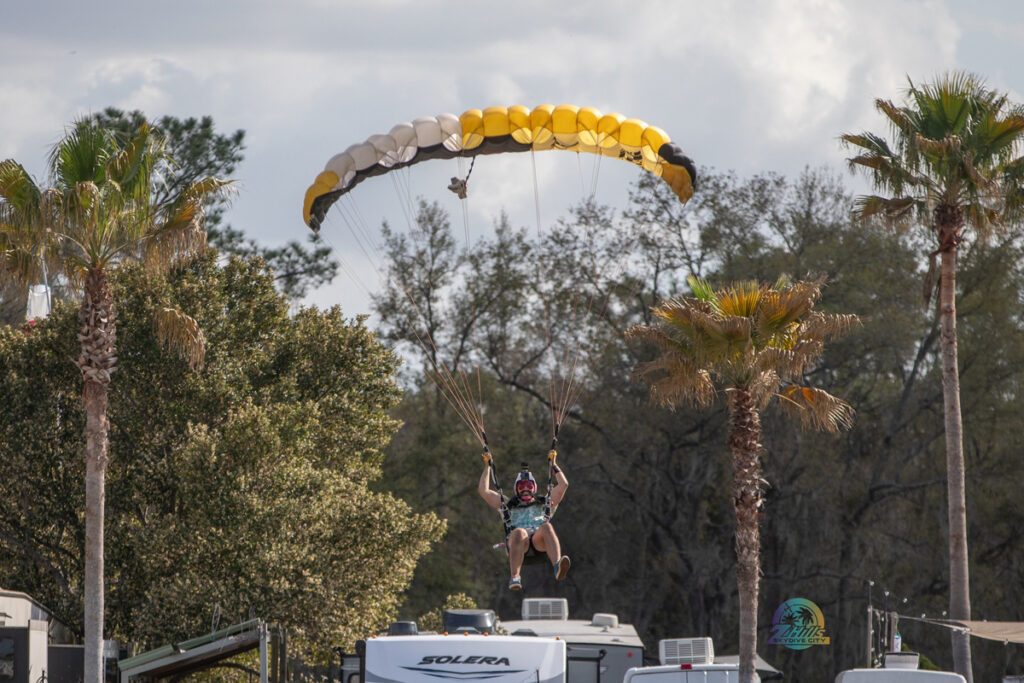
If you’ve ever spent a day doing high pulls, most likely you felt the fatigue in your upper body. Most skydivers associate shoulder issues with freefall or tunnel time, but canopy flight places just as much demand on your shoulders. Every flare, riser input, toggle turn, and flock relies on shoulder stability and endurance.
When shoulder strength or mobility is lacking, compensation shows up as uneven inputs, early fatigue, or delayed reactions, all of which increase stress on the neck and elbows and reduce control under canopy.
In short, strong, resilient shoulders don’t just help you fly better in freefall. They help you land better, fly safer, and more consistently, especially on long days with multiple jumps.
Common Shoulder Issues in Skydivers and Tunnel Flyers
These patterns show up repeatedly in both performance training and rehab:
- Overactive upper traps, underactive mid-back
- Poor scapular control during prolonged arm elevation or overhead positioning
- Weak rotator cuff endurance
- Limited thoracic extension that forces the shoulders to overwork
Your shoulders may function fine day to day, but still not be conditioned for repeated wind load and long sessions.
The Groundwork: Shoulder Training That Survives the Wind
These exercises focus on endurance, stability, and control, not bodybuilding. If it burns in a controlled way, you’re doing it right.
1. Face Pulls
Why: Strengthens upper back and scapular stabilizers.
How: Pull a band or cable toward your face while keeping elbows high and shoulder blades down and back.
Link to flying: Improves arm endurance and posture during long tunnel sessions.
2. Prone Y-T-W Raises
Why: Targets deep postural muscles and shoulder stabilizers.
How: Lying face down, raise your arms into Y, T, and W positions with control.
Link to flying: Builds endurance for sustained arm positioning without shoulder collapse.
3. Serratus Wall Slides
Why: Activates the serratus anterior for scapular stability.
How: Place forearms on the wall and slide arms upward while keeping ribs down. Add a loop band for more resistance.
Link to flying: Helps maintain clean arm lines and smooth transitions.
4. Side-Lying External Rotation to Overhead Reach
Why: Builds rotator cuff endurance.
How: Lie on your side and externally rotate the top arm parallel to the floor, then reach overhead while holding a light weight (1–3 lbs).
Link to flying: Improves overhead shoulder control under wind load while building strength and endurance.
5. Bear Crawl Hold
Why: Integrates shoulders with core stability.
How: Hover knees slightly off the ground while maintaining a neutral spine and stable shoulder position. Actively push away from the floor and keep your weight stacked over your shoulders.
Link to flying: Reinforces shoulder endurance during dynamic movement and load.
Flight Homework: Strengthen Your Shoulders
For the next two weeks:
- Perform 2–3 rounds, 2–3x per week
- Focus on slow, controlled reps
- Stop before fatigue turns into sloppy movement
The goal is control and consistency, even under fatigue, the same demand your shoulders face in the wind.
Next Up
Part 4: The Core Connection: Stabilizing the Midline for Balance in the Air
Shoulder strength works best when it’s supported by a stable trunk and core system. Next, we’ll look at how to train the system that keeps you centered, efficient, and controlled in freefall.