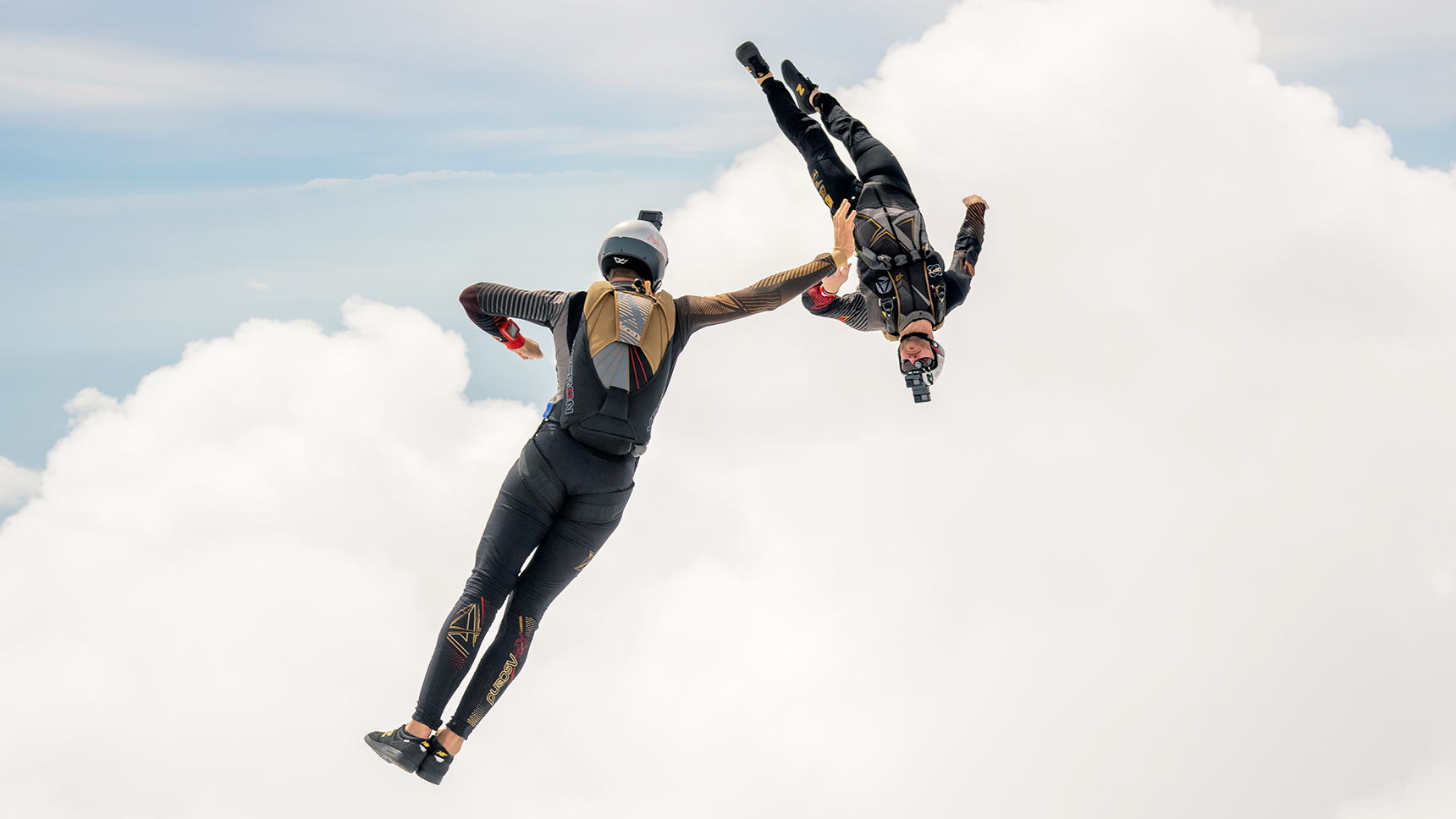





Dive into the unparalleled skill, teamwork, and determination that propelled this freestyle team to world champions…
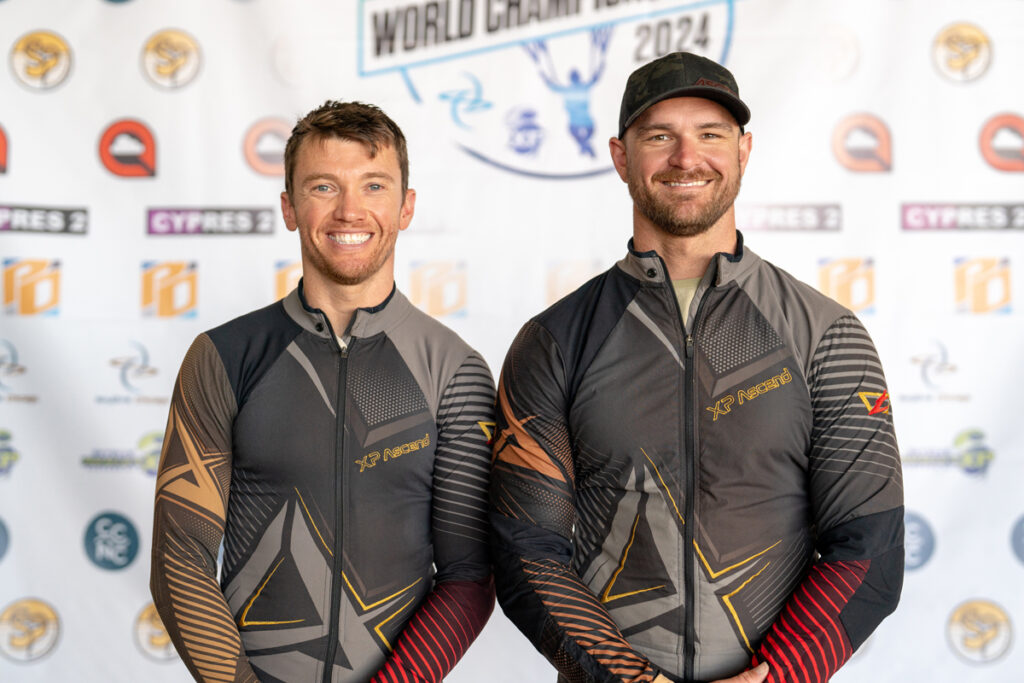
Photo by Chris Bess
Alright guys, I just want to say – excellent flying! Where are you both from, where is your home DZ, what are your jump numbers and what titles/records do you have?
Jake: I’m from Florida. Skydive Paraclete XP is our home DZ. 6200 jumps. 2 World Championships, 1 world cup, 6 national championships.
Jason: I’m from Barnardsville, North Carolina. I have 7300 jumps. 2 world championships, 1 world cup, 8 national championships.
How was XP Ascend Freestyle Team built – when did it come together and how?
XP Ascend was started in late 2021. Jason was interested in being a performer after flying camera for a different freestyle team. Jake was interested in flying camera. We had both been flying a lot of two ways in our free time, so the team made sense. We also knew each other’s work ethics and willingness to do what is necessary to achieve the goal of becoming world champions.
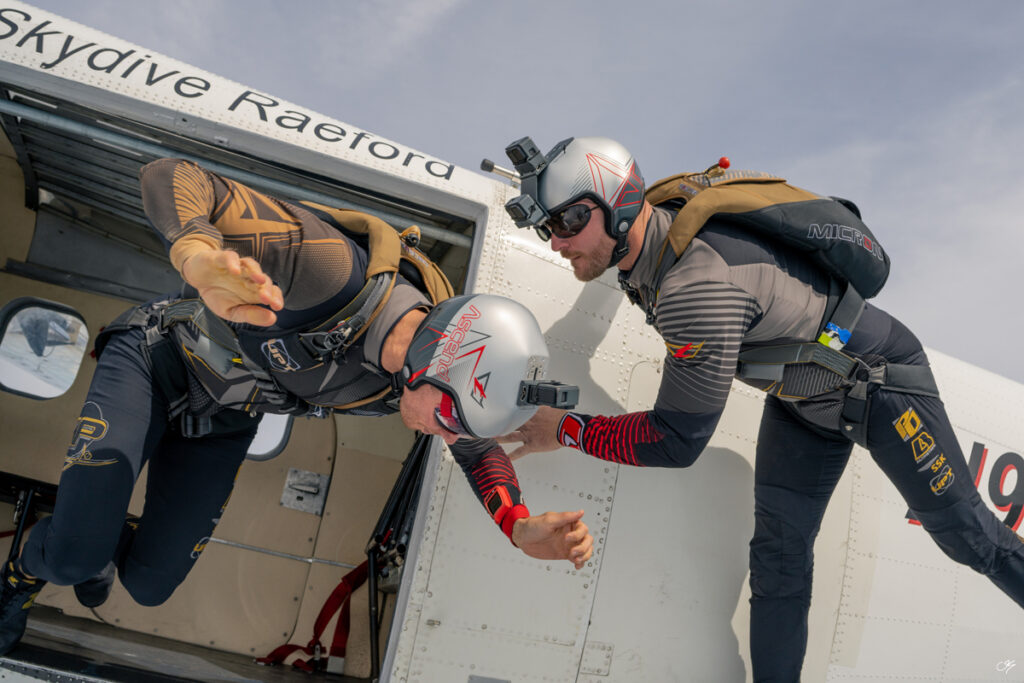
Photo by Chris Bess
Can you describe the moment when you realized you’d become freestyle world champions? What did that accomplishment mean to you personally and as a team?
Our first world championship was in 2022. At the time the US hadn’t won a world championship in freestyle in nearly 20 years. The French team had been dominant and was incredibly experienced and talented. We made nearly a thousand training jumps that year because we knew we were going to have to out-work the French. We were a new team going after our first world championship. Going into the final round we had a healthy lead and knew that we just needed to execute our last jump without any major mistakes. We both knew we had done it the second we broke off at the end of the jump and were both celebrating while tracking away from each other. Both as a team and as individuals we found a lot of purpose and drive to do all that was necessary to experience that brief moment at break-off. Anyone who has truly dedicated themselves to something no matter what it is, will know the feeling of that moment.
What were some of the biggest challenges you faced on the road to the world championship, both in training and in competition?
2024’s biggest challenge in preparation for the world championships was getting the training jumps we needed to be ready to compete at our highest level. Weather played a huge factor in 2024. We usually train only at our home dropzone, Skydive Paraclete XP. However, last year we trained at 5 different dropones in 4 states to be sure we hit our numbers.
How did your team’s approach to training evolve as you went from national to world champions?
There is always a fairly short period of time between the National and World championships. The way we train is always based on what we see as necessary to get the routines to the level of execution that allows us to arrive at the competition with confidence. In 2024 we felt we still needed a lot of work after nationals. We traveled to the best weather in the US and did as many jumps as we could. We ended up making 170 jumps in 15 days to be able to be ready to compete at world level.

Photo by Chris Bess
Did you add any new elements to your routines or preparation?
We always look to bring new elements to our routines. Whether they are a new approach to fly the routine or innovative moves. This year in freestyle, we wanted to bring a new approach to how the camera flies. We wanted to incorporate side stalls and bigger head down spin. We also wanted to incorporate precise timing on certain moves to create specific visuals that can only happen if both team members execute their job at the exact right time.
Freestyle requires such a high level of precision and creativity. What does a typical training session look like?
A typical training day for us when the weather is good is 12-16 jumps. We turn every load 12-16 times in a row and debrief each jump on the airplane ride up to the next jump. This year with bad weather, we had several days where we were only able to make 2 or 3 jumps and some days where we didn’t make any. To make up for our missed days, we also had many days where we did as many as 24 jumps in one day.
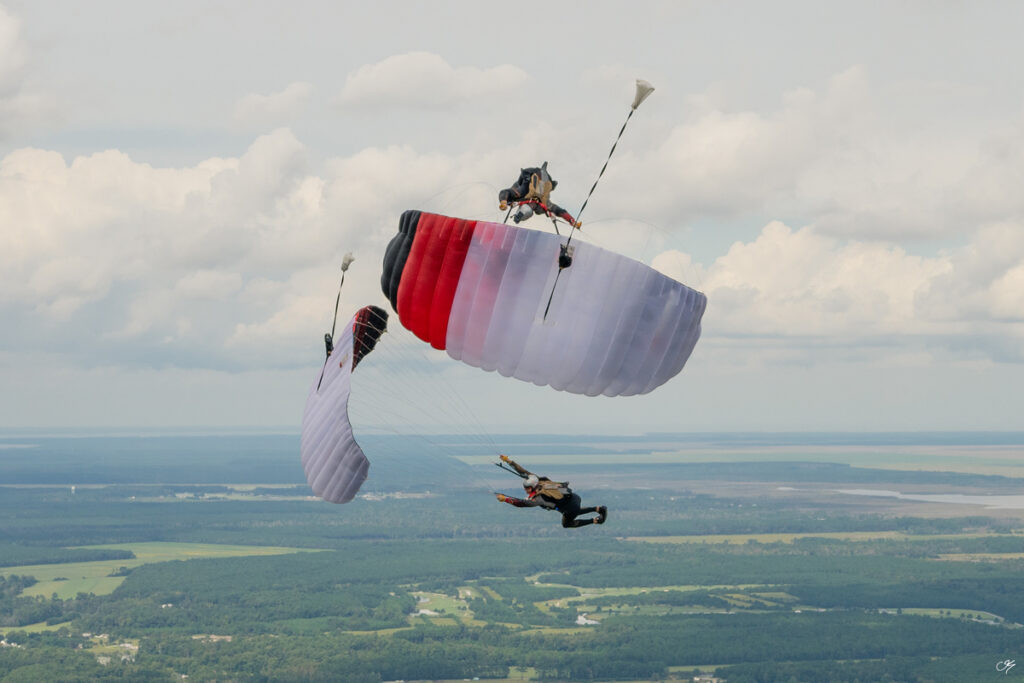
Photo by Chris Bess
How do you create these routines?
Our standard way of creating a routine is to make ‘no plan’ two way jumps early in the year. These jumps normally create natural, flowy visuals that can be aesthetically appealing because the flying is so organic and natural. So, we see these visuals, we pick out the ones we like most and start to tie them together in a more structured dive flow. The moves never tie back together exactly as they were originally flown, so they usually evolve into something more elaborate or technical as we fly them more and begin to feel more comfortable flying each move.
Do you have any pre-jump rituals or mental exercises that help you prepare for a big competition?
Jake: I personally believe in the phase “Compete like you train” rather than the more common phase ‘Train like you compete.” We did a lot of training jumps every year but only 14 competition jumps. With that concept it’s more logical to me to carry the habits we have on a daily basis into our competition approach. So, I do the same thing on the plane I always do, which is usually play chess and crack a few jokes. We found if we try to be too serious for comp jumps we don’t fly as well as we do when we just have fun.
Jason: I’m not sure I really have rituals, but if I want a jump to be successful, I make sure to see the jump in my head in detail. I play that jump in two ways. One, I play it out at normal speed, seeing the timing/direction/visuals of others and then a second time in fast motion (20 second skydive). If I can visualize the entire jump in detail in fast motion without hesitating anywhere, it’s typically more successful. If I do hesitate at any point I go back and visualize that section connecting more with what I’m doing during that part. Usually if I hesitate in my visualization it’s where I will brain lock on the jump.
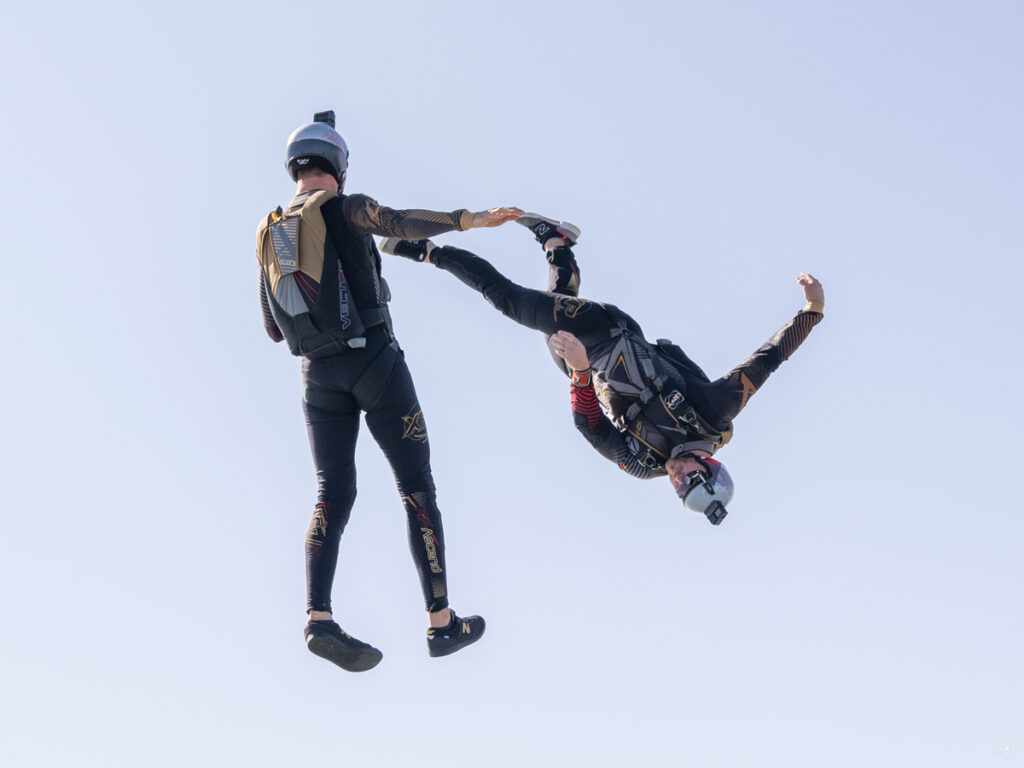
Photo by Chris Bess
How do you maintain strong communication and chemistry within the team, especially in competition settings?
One of the big things that we are able to do together to maintain the chemistry is to be accountable to each other. If something isn’t working, we are more likely to first look at what we are doing to keep it from working, rather than what the other person is doing. This approach allows us to find fixes to any issues in the routine that we might have faster, and communicate in a more honest way.
What are some misconceptions people have about competitive skydiving, particularly in the freestyle discipline?
The biggest misconception about freestyle is what the modern form of discipline has become. A lot of people hear freestyle and imagine the earlier approach where a performer does a lot of head up spins while a camera flyer films it while belly flying. The modern form of freestyle is dynamic two way flying that incorporates high level dynamic tunnel flying to the big blue sky. So, much of today’s flying culture is migrating towards angle flying. More specifically the dynamic form of angle flying. Few people realize that there is a way to compete in that type of flying. It’s called freestyle.
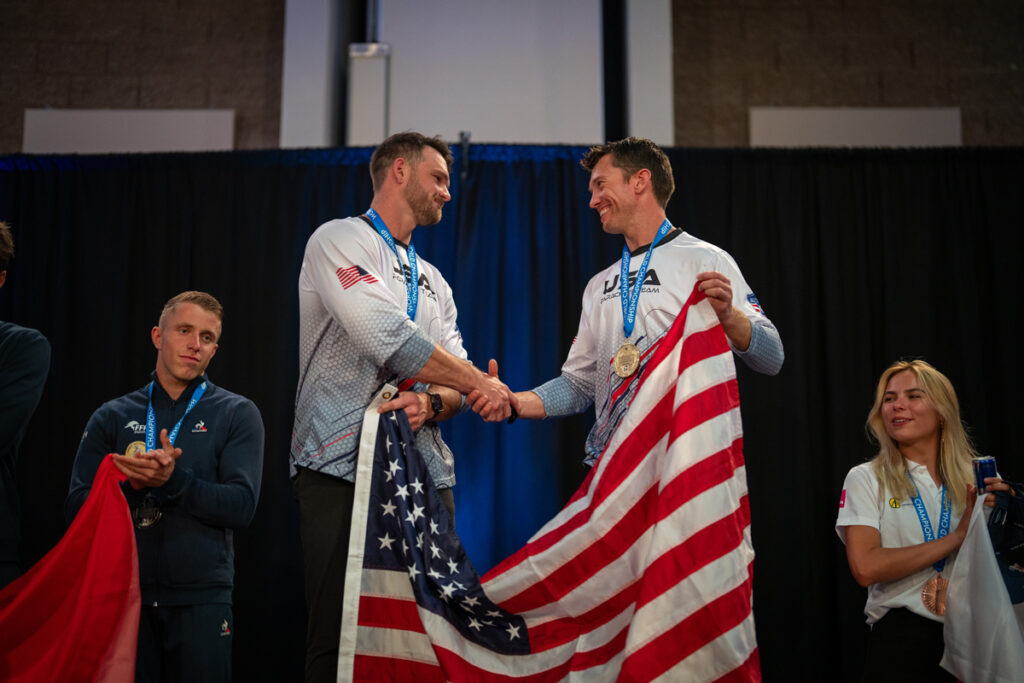
Photo by Chris Bess
How do you think the sport can continue to grow and attract new athletes, especially in freestyle?
The sooner people realize what freestyle is in the modern sense, the sooner people will pursue it.
What does a typical day look like for each of you, both when you’re training and when you’re off the clock? Do you have sporting interests outside of skydiving?
When we are in training season, everyday is generally a training day. However, on good days, our training days will be done by noon or a little later. At that point we both like to prioritize fitness in our lives and will generally work out everyday at some point throughout the day. Jason owns several Airbnbs and will often have to deal with those logistics, as well as coaching in the tunnel and any other issues of the time that need to be addressed so we can focus back in the next morning for training. Jake also will often coach some of XP’s tunnel members in the tunnel and outside of training enjoys playing golf, rock climbing, speed flying and anything else that can be done outdoors.
Do you guys have lifestyle routines that keep you fit for skydiving?
Jake: I have what I call my ‘non negotiables’, a routine I do every day to maintain my fitness level in life and in flying. These are things that I will prioritize over everything else in my day to make sure they are completed. My list consists of going to the gym, a minimum of a mile walk after my last meal, 100 pushups and situps before I get in bed. To complement this I also try to complete a long hold style stretching routine a few times a week to ensure my strength and mobility are up to par for the level at which I need to be able to fly.
Jason: I try to just stay active and get a few workouts in each week. Mostly exercises that help with core stability and general function.
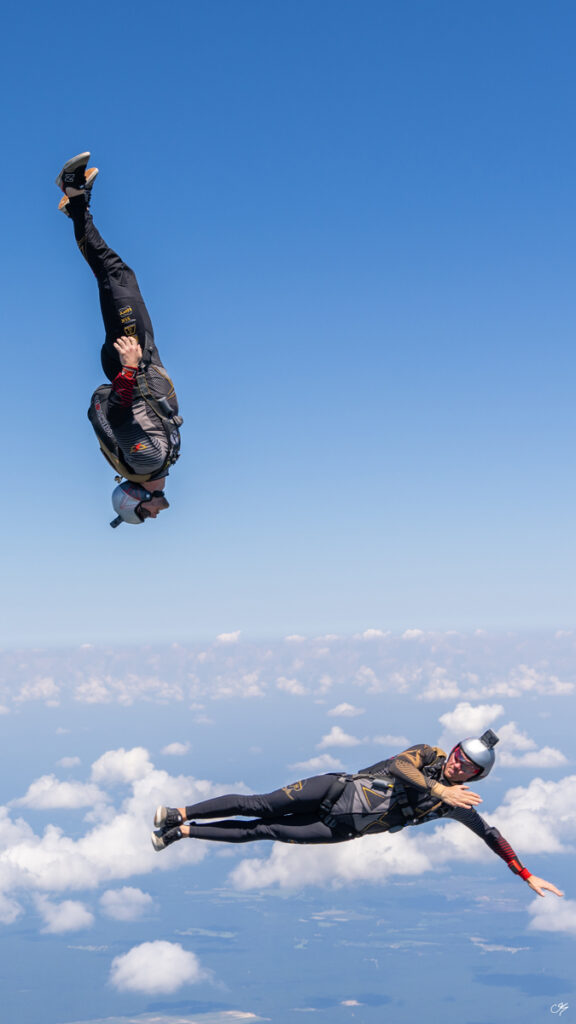
Photo by Chris Bess
How important is fitness to you and how important would you say it is to flying at this level?
We both believe our fitness routines are crucial to not just our flying, but feeling good throughout the day. Many of the things we do in the sky require a strength that we believe is founded in a good fitness routine.
What’s something you’ve learned from another sport or athlete that you’ve applied to skydiving?
Jason: I used to race motorcycles several years ago and found the path of riding through curves on the track similar to the lines we fly. Seeing the trajectories and approach for the turns may have helped me a little.

Photo by Chris Bess
What’s ahead for you guys?
Good question, life has been full on since Worlds wrapped up so we haven’t quite laid out what’s next. We have achieved the goals we set when we first started back in 2021 but I’m sure we will continue to be involved with the sport at some level.
Any final thoughts / advice for our readers?
There are many things we could mention here but consistency would be one of the most important things. Keep doing the work and progress will follow.
Who are your sponsors?
Where can we follow you?
You can find us at xpascend.com or on Instagram: @xpascend @Jbrigmon125 @Jakecarlton