




Leaps of Hope is a nonprofit using skydiving to help veterans, first responders, and survivors of trauma transform fear into purpose and healing
Do you remember how you felt during the scariest, most uncertain time of your life?
For some, these parameters didn’t encompass one singular event but instead became a repeatable crucible that began to feel familiar over the course of their lives. The first RPG that flew over your platoon’s convoy; the first time you found your mother unresponsive from an overdose; the first pediatric homicide you responded to as a firefighter, cop, or EMS provider; the first time your parent raised their fist at you; or realizing that the last time you would ever see your father or mother was when they left for deployment.
Trauma, situationally, is different. The physiological responses, however, have many similarities regardless of the circumstance. When you find yourself in that moment of fear and uncertainty, the sympathetic nervous system raises your heart rate, blood pressure, and breathing rate. You may become hyperaware or frozen in place by the overwhelming feelings you are experiencing. With repeated exposure to trauma, one can begin to associate these physiological symptoms with the anticipation of an incoming threat or punishment—something we see regularly in patients with PTSD.
The Door
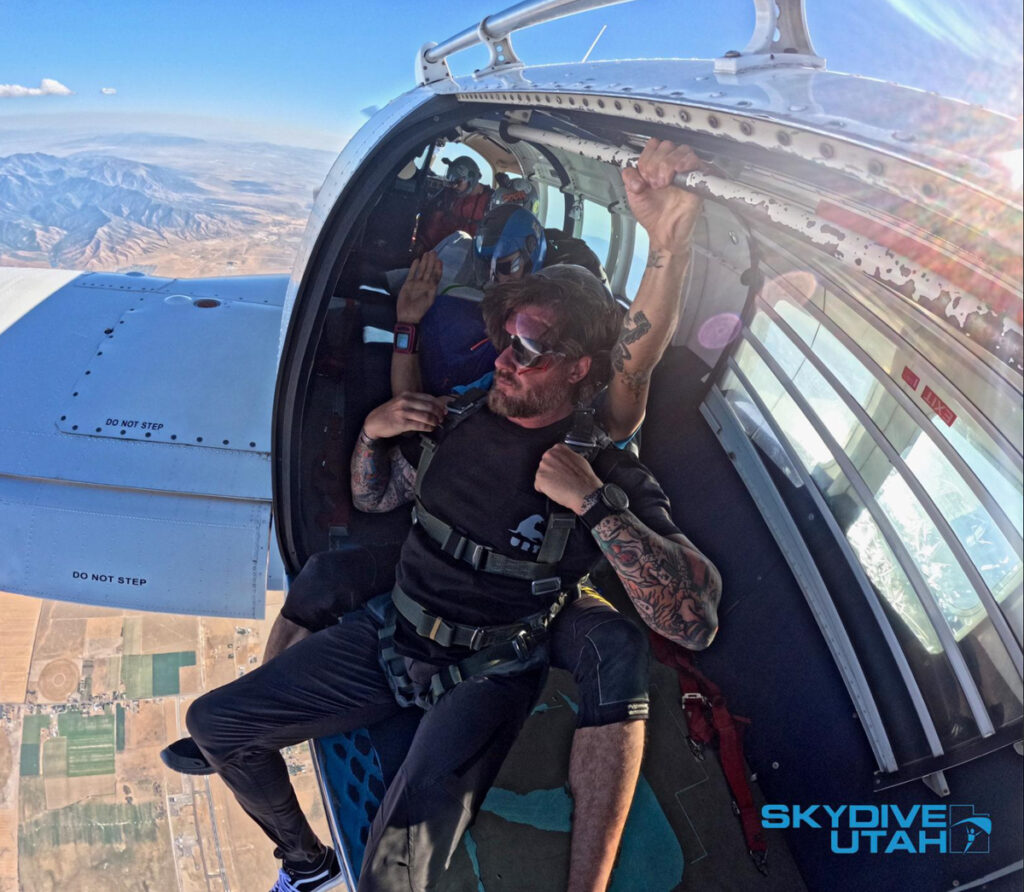
Now, I want you to try to remember the first time you threw your legs over the edge of the door. Do you remember the overwhelming feelings you experienced leading up to your first time in freefall? I do. I remember it well. It changed the entire trajectory of my life.
Coming from a childhood of adversity, serving in the United States Marine Corps, and having the privilege of serving my community as a paramedic, I have had humbling exposure to trauma.
I put my legs over the door, and there it was—a feeling I was all too familiar with: fear, adrenaline, shock, and uncertainty. My heart rate spiked, and I started to inhale and exhale rapidly. I knew something was coming, but I didn’t know what to expect. My instructor gave me the good old “out, in, out,” and we departed the aircraft.
Rewiring the Response
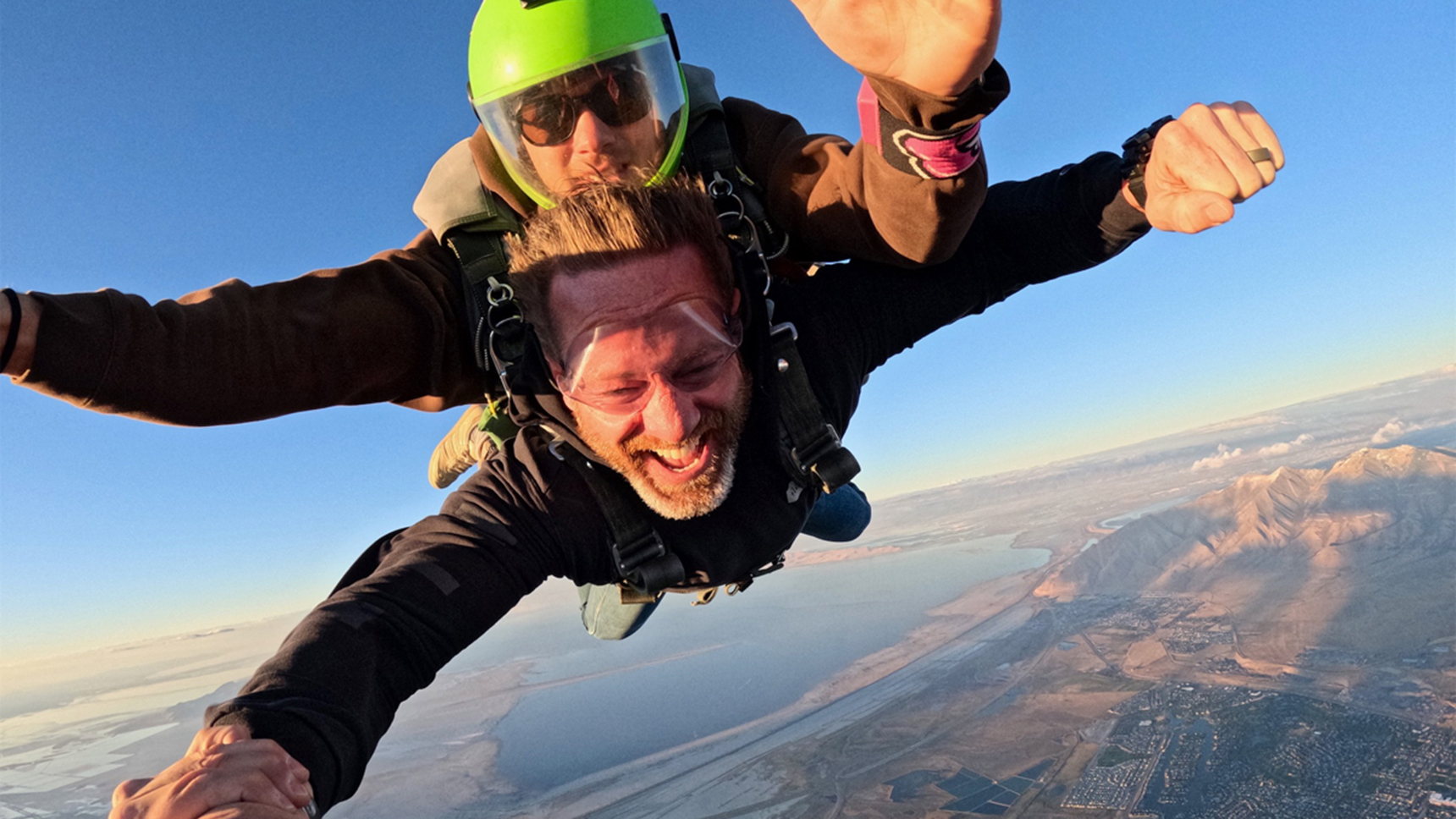
Suddenly, it was the first time I felt those sensations and was overcome with joy, exhilaration, excitement, and empowerment.
For the first time in a long time, I was present and free of the long, sullen feeling of hopelessness that had plagued me for years. It was incredibly powerful.
I knew immediately that skydiving was something I needed to pursue. From that point on, I quit my job, moved across the country, and began pursuing a career in the sport.
Now, close to 1,000 jumps later, those feelings I once associated with the anticipation of an incoming threat or punishment are feelings I now associate with happiness. I anticipate autonomy and empowerment. I anticipate community and healing. I anticipate purpose, leadership, and service. I anticipate being present.
Perspective in the Sky
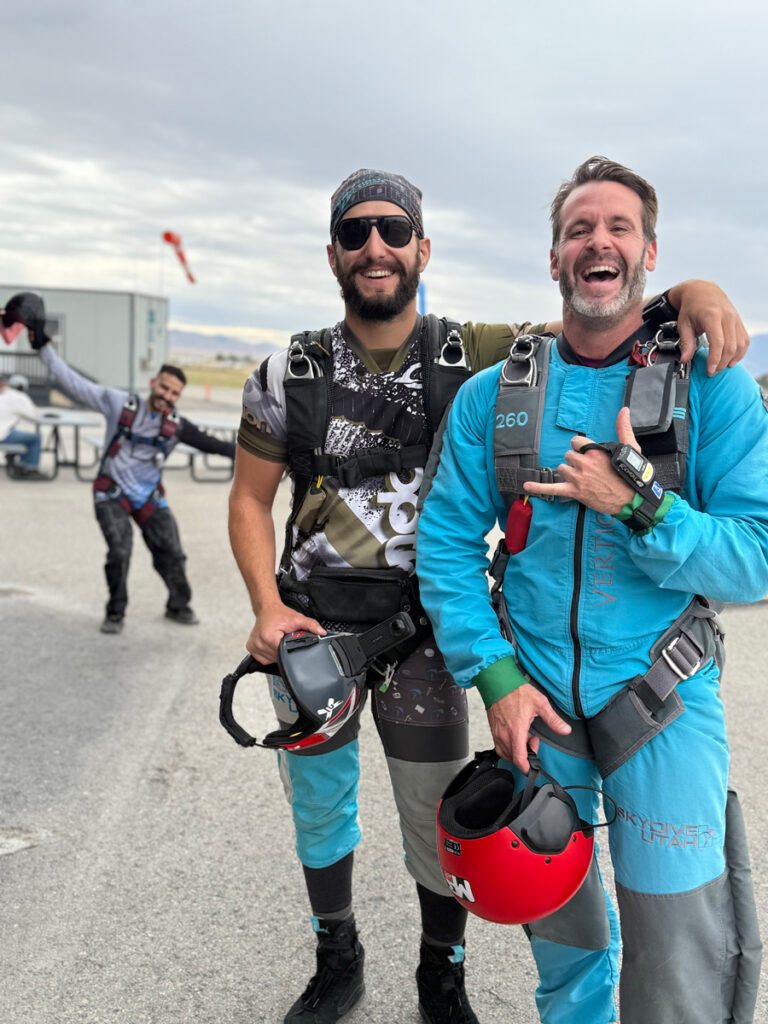
Every time I stand on that camera step outside the door of the plane, I take a moment to look at my friends setting up for their exits with nothing but smiles on their faces. I look down at the Earth and then out toward the horizon.
In that moment, I’m reminded how thankful I am to be alive. Skydiving gives us many of these moments.
Giving It Back
Four years later, I felt like my cup was full enough to once again pour a little back into others. I felt ready to serve once more—but in a different capacity. Service comes in many forms, and this is how we serve.
We are Leaps of Hope, a 501(c)(3) nonprofit organization that empowers veterans, first responders, survivors of child abuse, and children of fallen heroes through the sport of skydiving.
We not only introduce them to skydiving by sponsoring their first tandem jump, but we also award a select few the opportunity to receive an AFF scholarship through us.
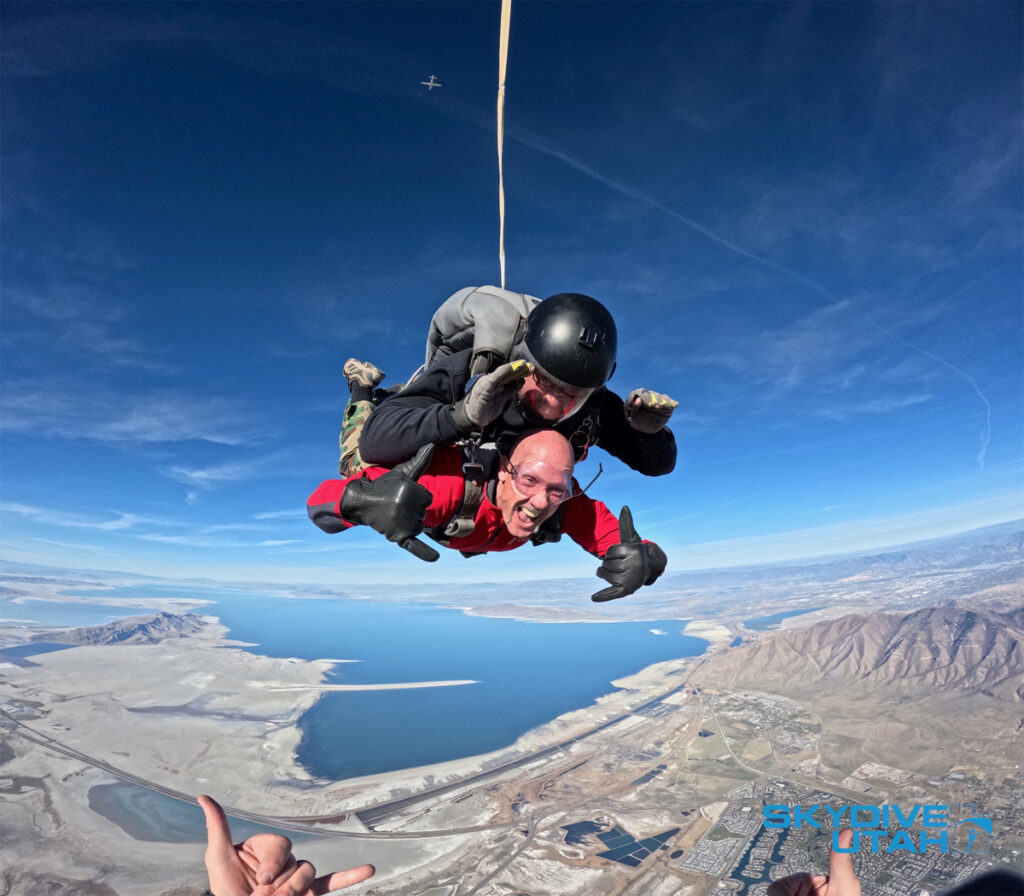
Photo courtesy of Leaps of Hope
Reinterpreting Trauma
Time and time again, we have seen the power of leaving that door.
We believe that every time you say “yes” to departing that aircraft, you allow yourself to reinterpret all of those physiological effects you once associated with traumatic events into something positive and incredibly tangible.
We are attempting to reinterpret trauma and give those who need it most a sense of presence, empowerment, and autonomy.
The Ripple Effect
At Leaps of Hope, we regularly discuss the “ripple effect.”
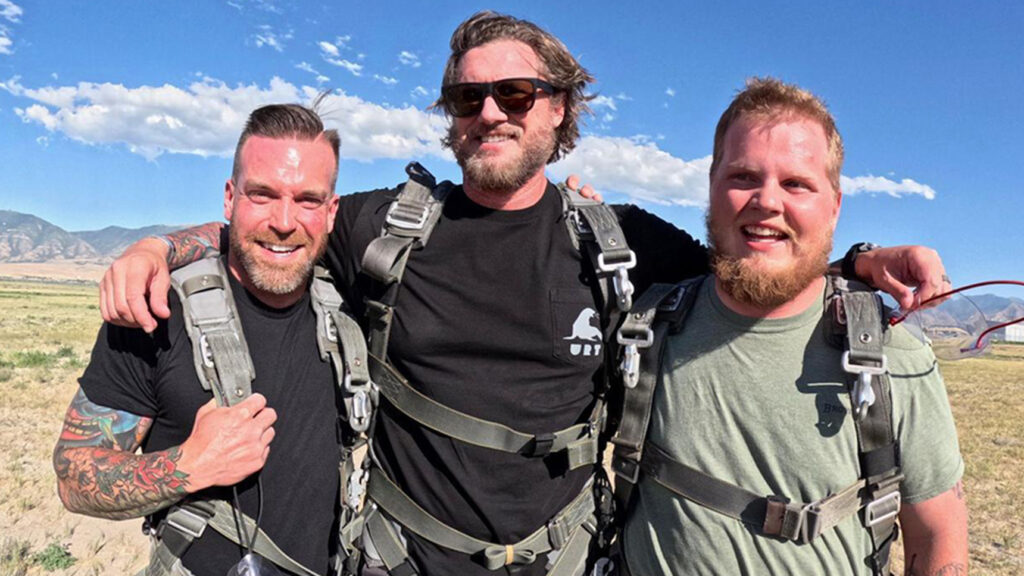
When we take an applicant on their first skydive or award them an AFF scholarship, we see them standing taller, smiling more, and rediscovering their capability and their ability to push through fear and adversity.
Our hope is that our skydive will not only serve them but will help them become better versions of themselves—better fathers, mothers, husbands, wives, sons, daughters, and friends.
Our impact reaches past the borders of the drop zone and into the local communities where our candidates reside.
That is the ripple effect to us.
What We’ve Built
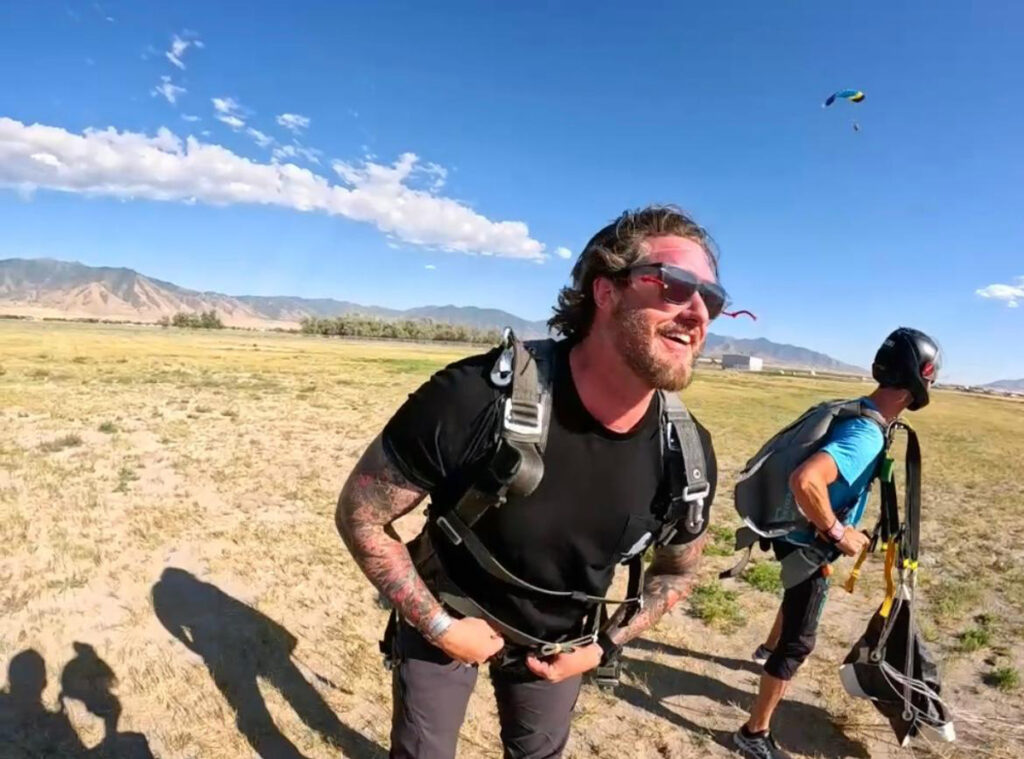
Since April of 2025, we have taken 17 Leaps of Hope candidates on their first skydives. We have awarded seven AFF scholarships, followed by fully funded wind tunnel training.
In April of 2026, we will hold our first Leaps of Hope Skydiving Retreat. We have funded airfare, accommodations, and A-license progression for three deserving candidates.
For eight days, they will learn from some of the best skydivers in the world and will be hosted at one of the best drop zones in the country, Skydive City.
Looking Ahead
In 10 years, we expect to be the largest skydiving nonprofit in the nation, serving hundreds of individuals every year. Leaps of Hope will play a role in service at every major drop zone in the country that wants to be part of giving back to those who have given to us.
We will host one of the largest AFF events ever organized, employing the best instructors in the world and licensing dozens of Leaps of Hope candidates annually. We will publish peer-reviewed research showcasing the positive mental health benefits of air sports and their application for people who come from lives shaped by trauma.
Why It Matters
At Leaps of Hope, we are fully aware that there is a large population of people in the world who are struggling internally. Some of them believe they have nothing left to give, that no one is coming to help them, or that they may be better off simply not existing.
We are going to do everything in our power to search for and find these people—so we can give them hope, and so we can show them how lucky they are to be alive.