




From hairstylist and fashion photographer to one of skydiving’s most recognizable visual storytellers, Raymond Adams reflects on the people, passion, and moments that shaped his life in the sport
For people who may not know you yet, who is Raymond Adams outside of the camera and the dropzone?
First off, thank you so much for reaching out to feature me on this. It is always such an honor.
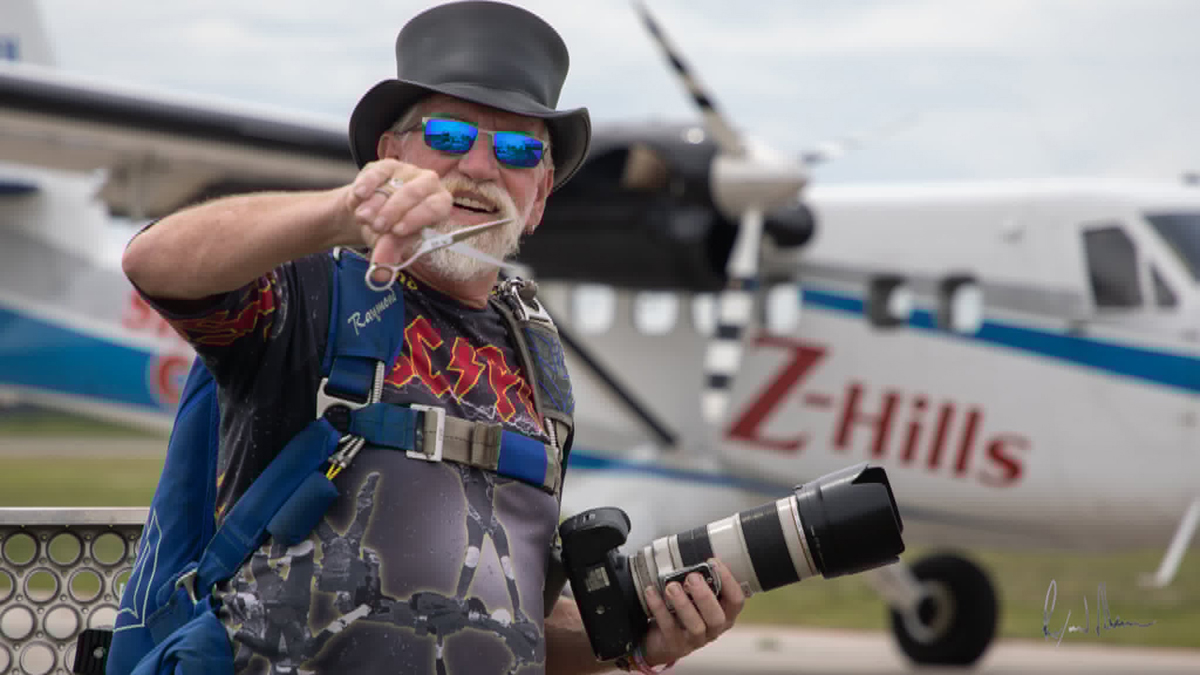
I have felt like my purpose is to make people feel better about themselves. This started with hairdressing. When you get a great haircut, it gives you more confidence, and that helps with your outlook on life. Next came photography. When I’m able to capture someone in their element, doing their thing, whatever that thing may be, and they love that photo — it’s the photo they want as their profile pic because it captures them how they want to be seen. Words cannot describe how rewarding that is to me.

Photo by Raymond Adams
Before skydiving photography, you worked as a hairstylist and art director. What did that chapter of your life look like?
The hairdressing company I worked with literally led the industry in continuing education for hairdressers. They were based in London, which is the nucleus of hairdressing. We would introduce new collections of haircuts every year with books and videos featuring step-by-step breakdowns of the cuts and coloring techniques involved in the new collections. They first came to the US in Dallas. I was part of the first graduating class of the first US academy and went on to become an art director and educator for the company.
On top of taking clients at the premiere location, I was a platform artist and would cut hair on stage in front of hundreds of people, as well as teach hands-on programs. At one point, however, I became disgruntled with some of the politics and stepped down from the extracurricular things I was doing with the company and just focused on my clients.
It was then that I turned my focus to skydiving.
How did skydiving first enter your world? Was it something you always wanted to do or did the sport find you unexpectedly?
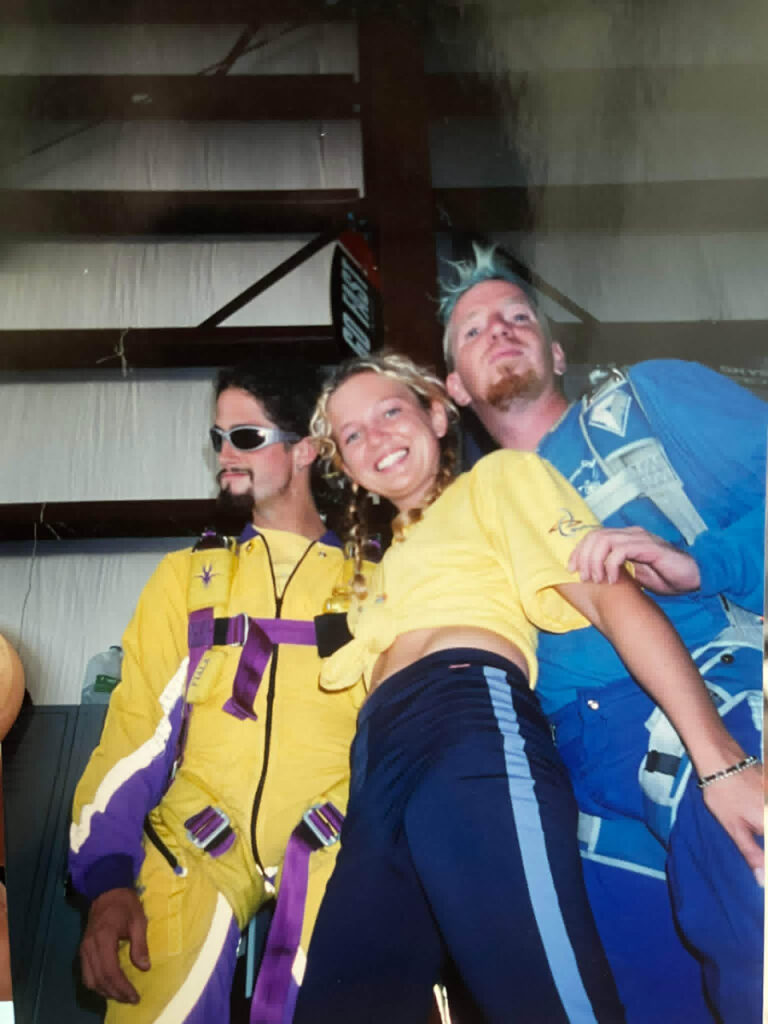
It was mainly watching a show called The Extremists that introduced me to people flying their bodies in freefall. I never knew that was possible. I thought skydiving was jumping out of an airplane, deploying a parachute, and landing safely. Then I saw Patrick de Gayardon on a skysurf board, and I was locked in. I started right into AFF because I wasn’t just going to make a jump. I was going to become a skydiver.
Do you remember your first jump clearly? What stayed with you from that experience?
I do remember it very clearly. I remember standing on the step of a 182 with an instructor on each side. I had to give the count and just let go. You realize at that moment you’re letting go of a lot more than just that airplane. You’re letting go.
There was a hesitation between “set” and “go” in which I thought about my family, my friends, my coworkers, even the new couch I had just bought. Then, go! The instant I let go, any doubt or fear I might have had was gone. It was a little too late for any of that at that point.
I remember that we rotated 180 on the hill. My instructor was very impressed during the debrief that I noticed that on my first jump. I was very aware.
At what point did skydiving stop being something you did occasionally and start becoming a real part of your identity and life?
It was when I met The Flyboyz, the first freefly team. Being busy with the art team and other things in life, I only made 30 jumps in my first two years in the sport, then didn’t jump for 2½ years. After stepping down from the art team, I made 300 jumps my first year back, jumping one day a week on Sundays, doing a lot of solos and working toward jumping with a skyboard.
When I met The Flyboyz in ’98 and was watching their videos, I realized that no one was going to get to that kind of level doing anything one day a week, no matter how much I was banging it out. Also, for them, it was a lifestyle. Whereas for me, up until that point, skydiving was an activity that I participated in. I would go out Sunday morning, bang out several jumps, and go home.
I switched my schedule to work Monday through Thursday in the salon, giving me Friday, Saturday, and Sunday to skydive. Therefore, I was spending nights at the drop zone, turning it into a lifestyle.
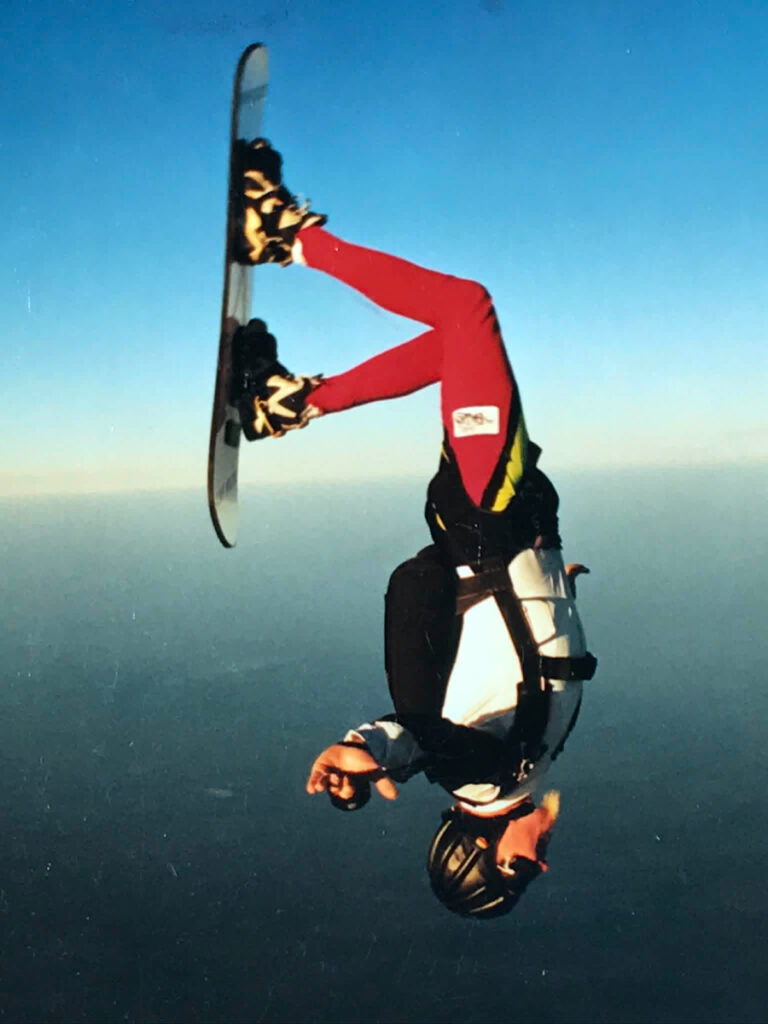
Photo by Gary Haass
How did the transition happen from jumping for fun to becoming deeply involved in skydiving photography and living full-time at the dropzone?
Getting into the sport, I never wanted to work in the sport in the traditional sense — working with the school, taking tandems, shooting tandem videos, or doing AFF. On the weekends, I wanted to go jump with the experienced jumpers doing cool group jumps and pushing the sport. Being busy in the salon, I could afford to just go play, freeflying and swooping. I was doing up to 900 jumps a year.
Then, after traveling to a few boogies around the country, I decided I just wanted to be with these people. I left the salon, a job I loved and a clientele I had built up over 10 years that afforded me the ability to do that, got rid of everything, and set off around the country living in a tent and cutting hair at drop zones to make my way around. I did this knowing I wouldn’t be able to make anywhere near the number of jumps I had been making, as I wouldn’t have that same cash flow and I would be busy cutting hair to make it to the next place.
I found myself at Elsinore and met the girl of my dreams. There’s a beautiful fairytale that goes with that, but it’s too much to get into right here. I then went to England to meet her family. Seeing the TONI&GUY salons all over the place, seeing the hair and fashion on the streets of London, and feeling the need to put down a solid foundation with her, I knew that it was time for me to focus back on the salon.
It was then that we moved to Atlanta, as my mentors in the salon had moved there to create a similar empire to what TONI&GUY had established in Dallas.
I became very disconnected from the sport, as I had ambitions of starting my own partnership salon with the company.
Next came my focus on Photoshop, as we were constantly doing photoshoots between the few salons we had, as well as art team shoots where we would bring in models, get them dressed in fashion, and do their hair and makeup. The photographers would send me the raw images, and I would retouch them and make the colors pop before I graduated into doing special effects and becoming a master of Photoshop.
It was then that I decided to get a camera (20 years ago this month) to take pictures of hair. I had great success with this and was setting up photoshoots on a weekly basis with models and doing the hair, makeup, wardrobe, lighting, and photography. I even did some work for record labels, weddings, restaurants, travel photography, and much more.
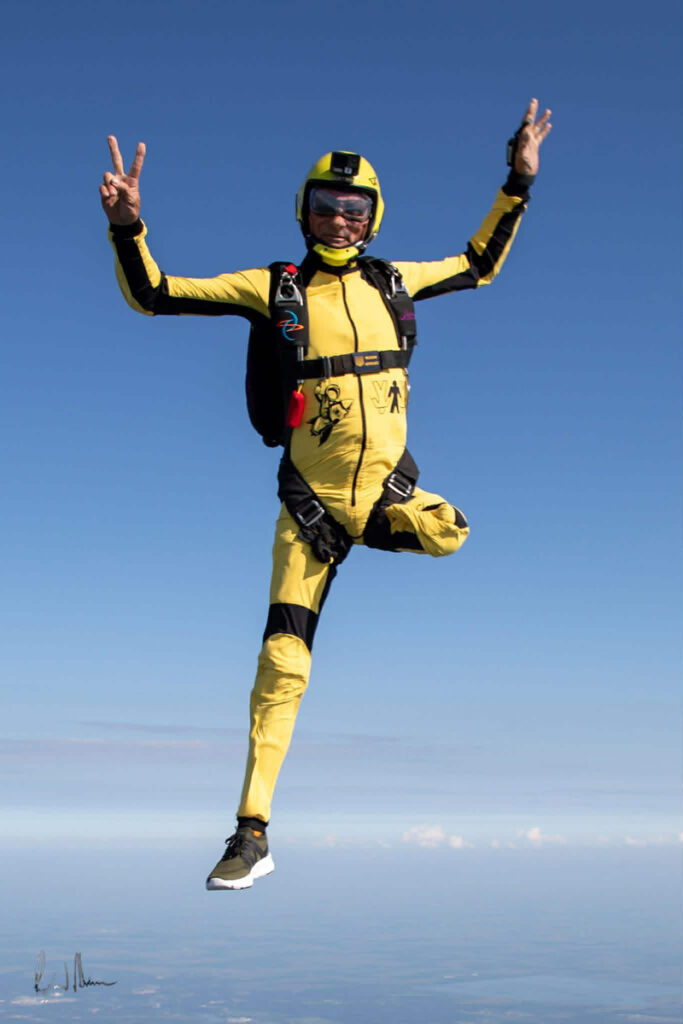
Photo by Raymond Adams
What drew you toward photography specifically inside the sport?
It was then that I decided to put the camera on my helmet. I had previously gotten myself to a skill level where I could go to any event and freefly with the best. I could fly head-down, dock, and turn points. But I was kind of rusty, and the sport had progressed in the years I had been out of it. Rather than having them wait for me to get in, I could just fly around the outside and take pictures.
My friend Eric Deren had helped organize a new discipline, VRW 4-way, and put together Team Mandrin. He asked me to take pictures of them training for Nationals. This was the first year it was included in Nationals.
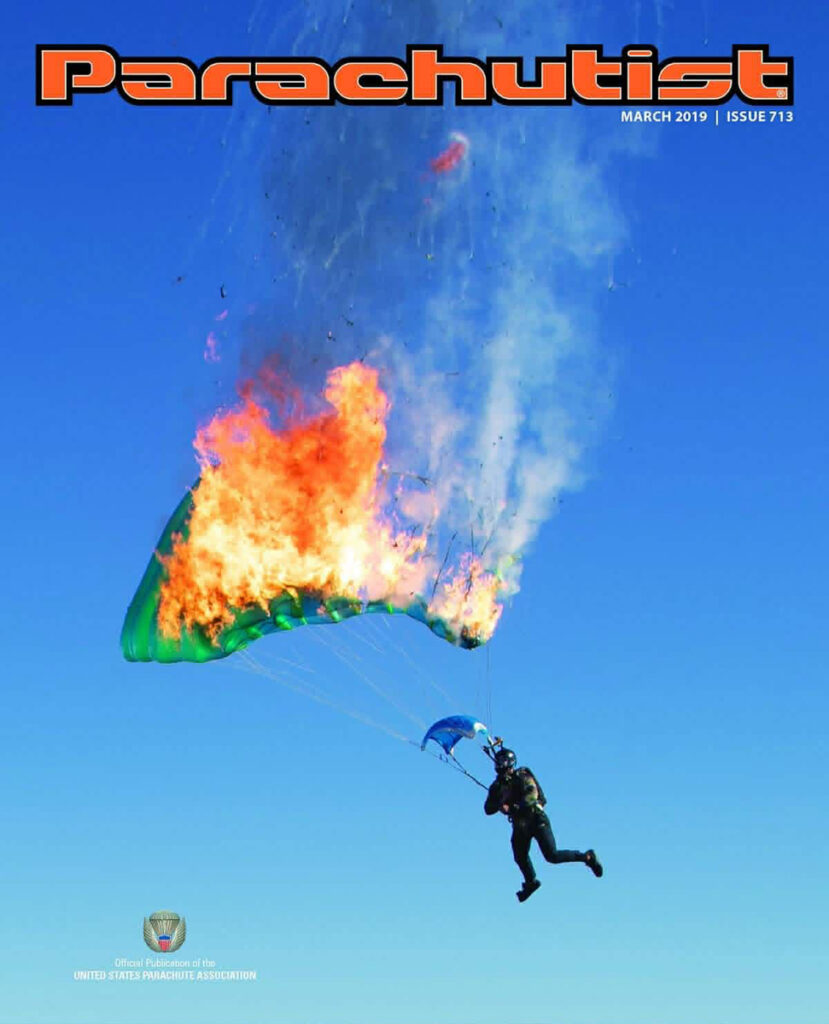
All of these things considered, I had my camera for six weeks, and the first thing I ever submitted to Parachutist landed on the cover.
I started seeing endless possibilities with photography and where it could take me. I started thinking that being a salon owner wasn’t the direction I wanted to go, as that would be an anchor — not to mention the responsibilities of being a business owner. I gradually left the salon and started working from home. Plus, my wife’s career was really taking off, and I was able to just freelance.
Ultimately, as she started traveling with her job, we kind of drifted apart. I found myself with free time to get back out to the drop zone and into the arms of my sky family that I had known for years.
I was asked to shoot video for a VFS 4-way team. That’s really what got me more active in the sport. I did that for a few years with great success. One year, I had a total of zero video busts at Nationals, the only time that had been done in that discipline, and it culminated with the team standing on top of the podium.
It was during that time that I found myself getting camera slots for events and spending most of my time at boogies. Then COVID put a pause on that and changed a lot of things.
Do you think your background in hair, fashion, and visual art changed the way you see skydivers and movement compared to someone who came purely from an action sports background?
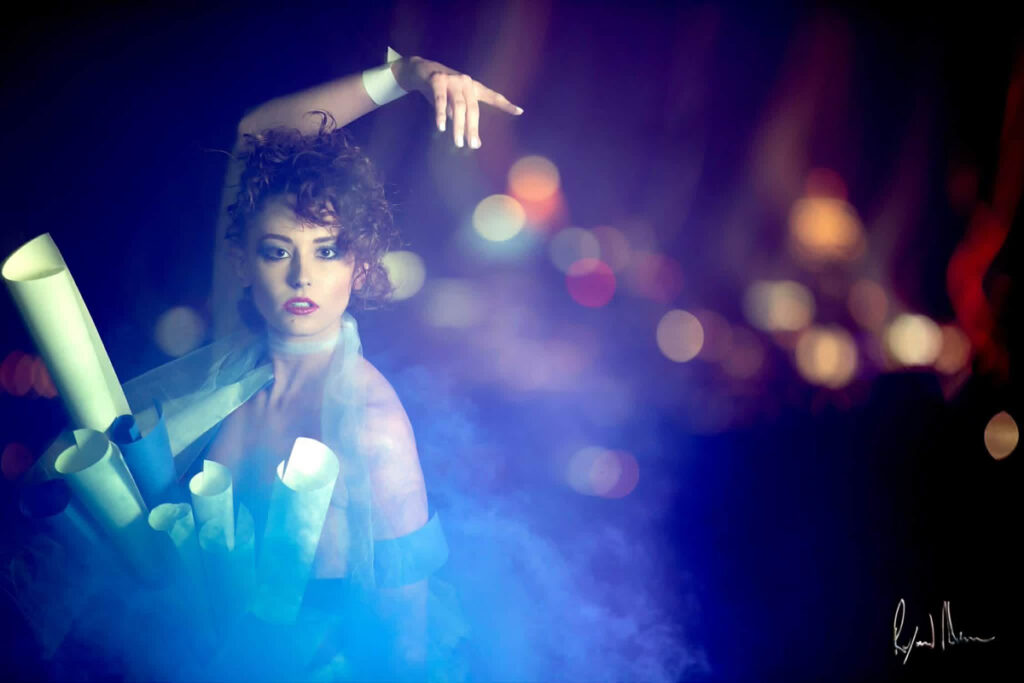
I don’t really know the true answer to that, as I just see things the way I see them. I’m definitely always thinking about angles, lighting, and framing.
I can say that on group shots and movement jumps, my goal is to get everyone in the shot. I don’t want there to be a sick shot where one person is eclipsed by someone else.
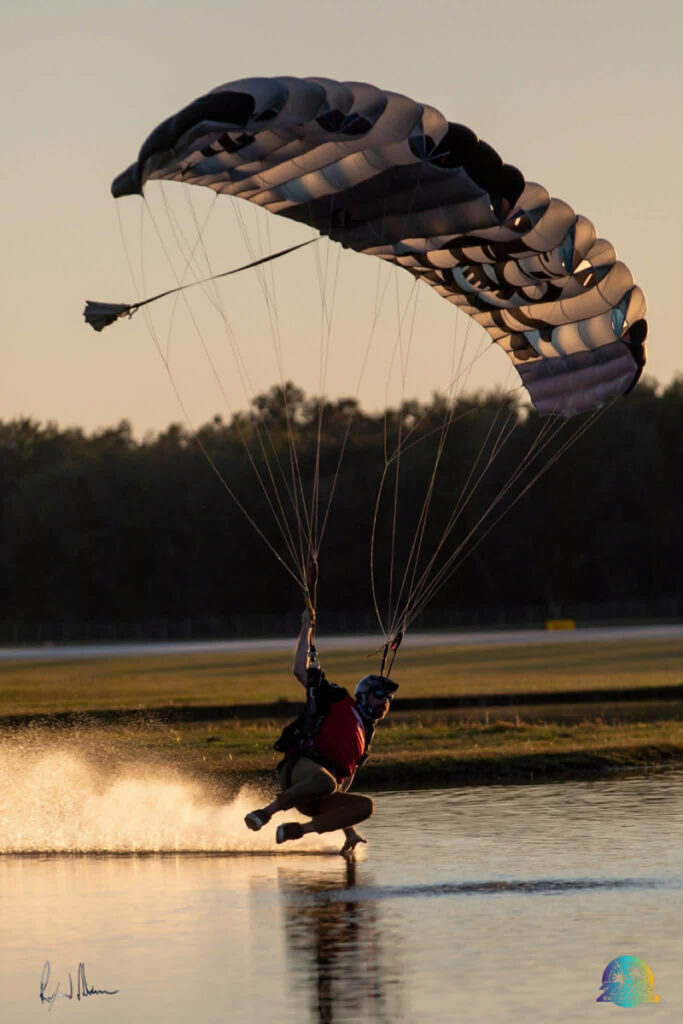
Photo by Raymond Adams
You now spend your life documenting skydiving day after day at Skydive City. What does a normal day look like for you there?
When I finally moved out of the condo, my plan was to get an RV and hit the road again. I traveled around for a few months and made it to Z-Hills. I knew I was home and decided to put down roots and make a commitment to the team, as I needed time to process everything.
I had previously made this my home away from home, coming to multiple events per season for a few years. Seeing what was going on with the new owners and how this place was growing, I wanted to be part of it. Not only with the pictures and capturing the vibe, but I’ve also been involved with some construction projects. It’s nice to see my thumbprint on this place too. Now I even have my styling station set up in the bar.
I jump every now and again, but not that much. I just need to find something that draws me back into the sky. It’s an incredible opportunity that I can just get in the air whenever I’m inspired, and I keep thinking I’ll get more active.
Honestly, I am just as fulfilled taking pictures on the ground. I love hanging around on the deck, making connections with people, and getting those candid shots of people having fun. I’ll then head out to the landing area to get shots of the swoops, the landings, and the high fives.
It’s a lot of work, actually. People might not realize how much goes into it. But it’s a labor of love. It’s so rewarding when I get a great shot of someone, knowing how much they’re going to love that photo.
I keep running back to my RV throughout the day, narrowing down and editing the photos as I watch FlightRadar for when the plane is on jump run so I can be back out there.
Then it’s meeting new people, sharing stories, and sharing lessons to keep them safe and jumping for years to come. I even try to connect with the tandem students in hopes that it will help ensure this is more than just a once-in-a-lifetime experience.
Then I try to make that post every day. I have to stay on top of it or they’ll stack up like dishes.
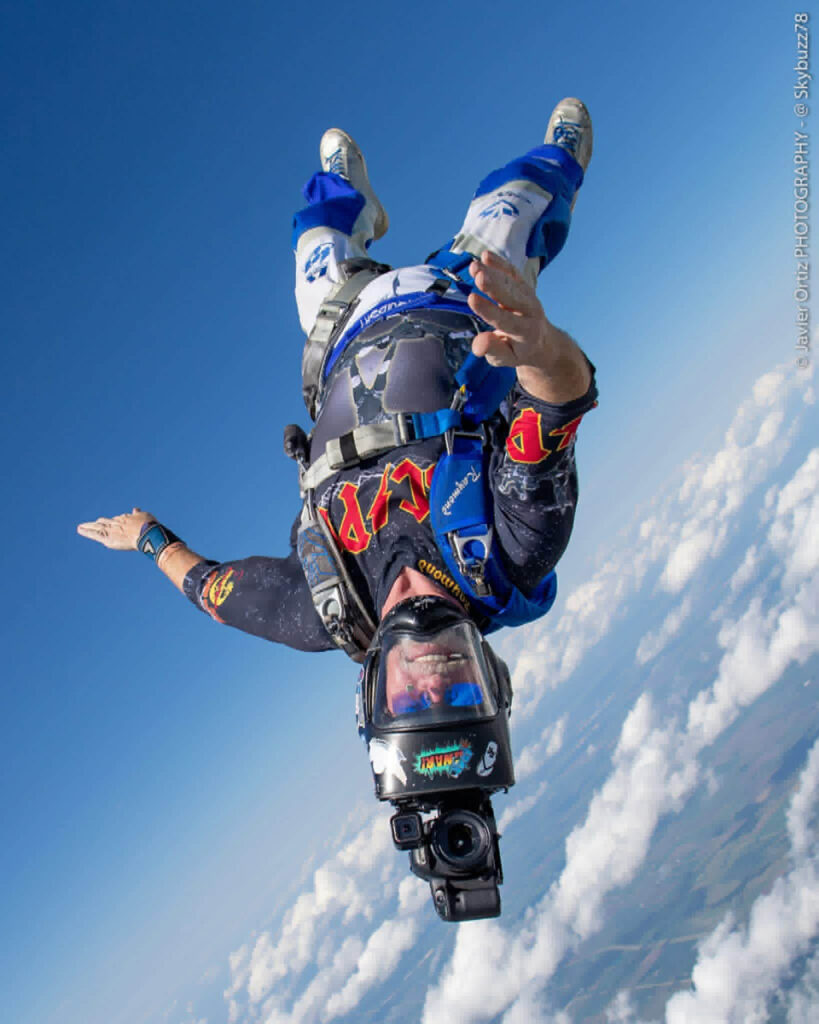
Photo by Buzz
After seeing thousands of jumps through a camera lens, what have you learned about people in skydiving?
I’ve learned that people are amazing!!!
The opportunities I’ve had to jump with some of the best of the best in the world have blown my mind. You see the pictures and the videos. I saw that shit with my own eyes. The things I’ve seen my friends do never cease to amaze me. Sometimes I feel like I’m not worthy. But hey, I’m there getting the shot.
What separates a powerful skydiving image from just another freefall photo?
The first thing would be when they’ve accomplished something SICK! Then it’s having the right angle, lighting, and framing. Sometimes, though, it’s one that really captures the stoke. There’s something awesome about being able to feel the energy from a picture. This can be anything from a shot in freefall to a shot in the landing area.
Centerfold photo by Raymond Adams
Favorite photo you’ve captured in the sport?
This is a tough one, as there are so many, and it’s usually because of the story behind them.
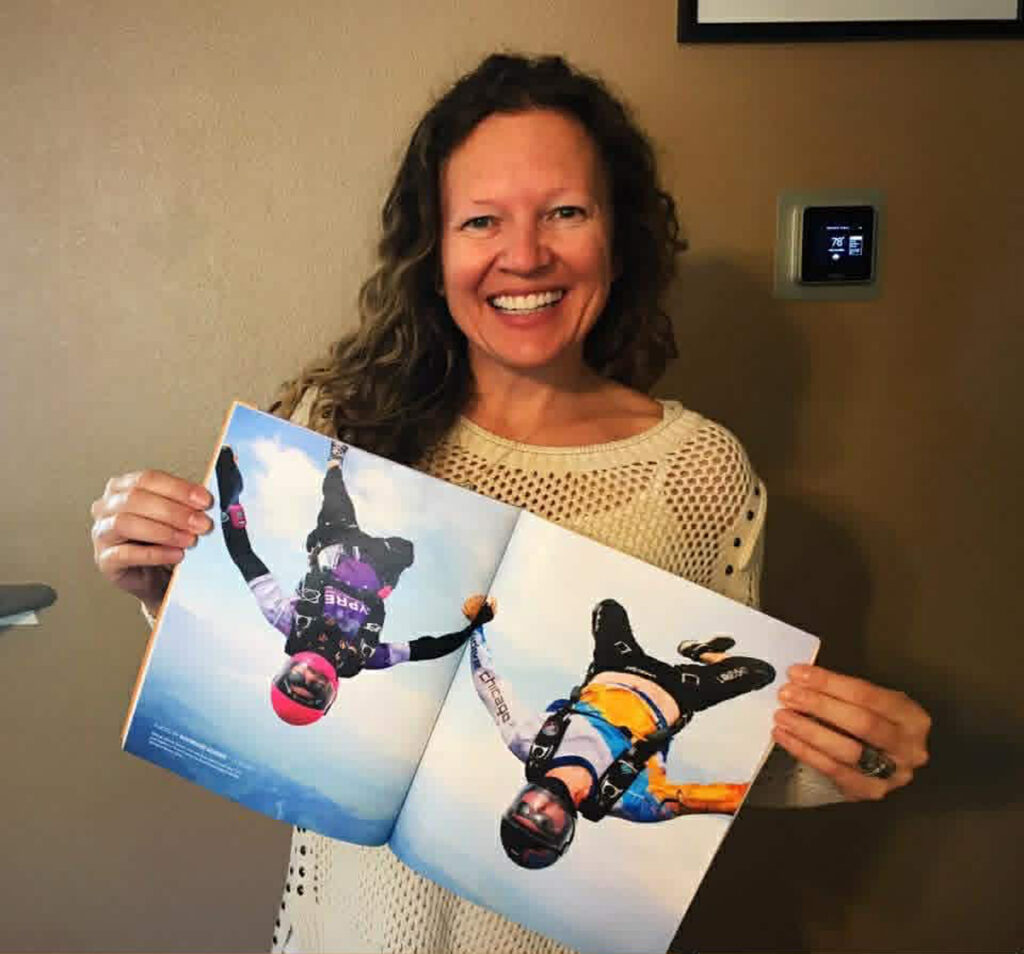
There are three main ones that come to mind. There was one that was manifested as “The Fucking EPIC Hybrid,” in which I got a perfectly centered shot the instant the last grip built before I took off carving around my friends, blown away by what I had just watched build.
There was one of Laura Golly from a catalog shoot I was doing for PD. The story always makes me cry.
But it’s hard to top the time I got Rook and Melissa together for a fun jump for the first time in 14 years after spreading their father’s ashes in freefall. It was emotional, and there were tears in the loading area. I was so proud to have been able to help repair the bond between brother and sister, and I believe family is so important.
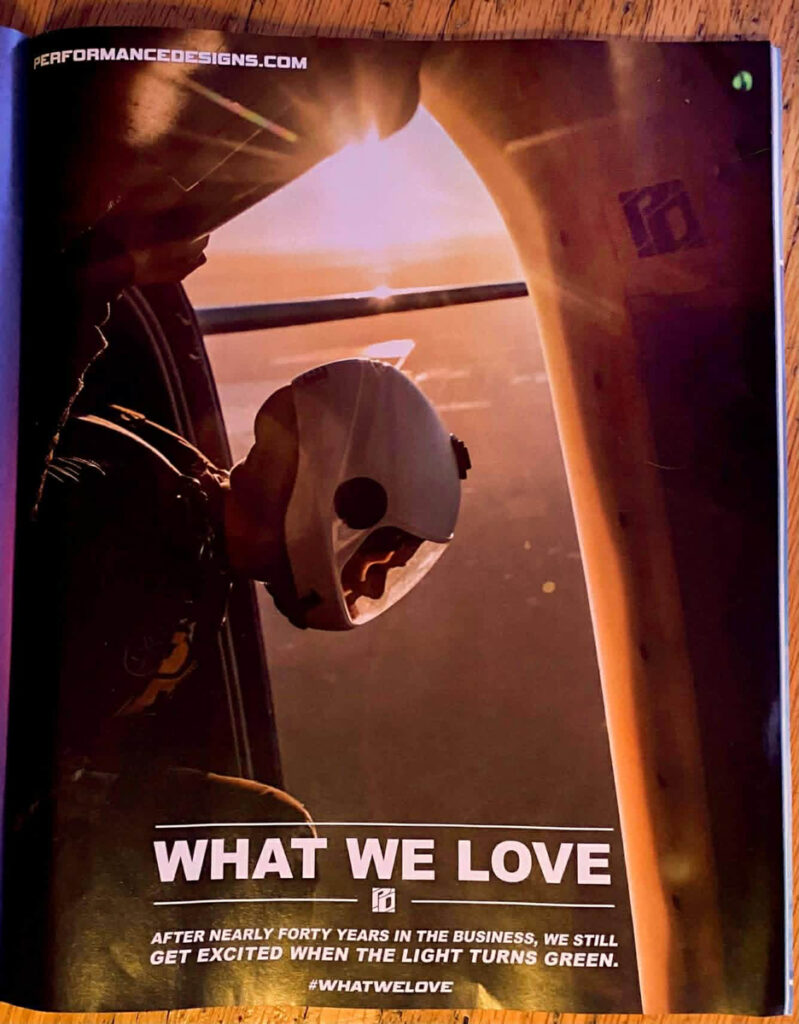
Photo by Raymond Adams
Has constantly being around the sport changed the way you think about life or human behavior?
These people have integrity. The community has always been something special. It’s been said for a while that people get into the sport for the sport and stay in it for the people.
Let’s just say that there’s a reason I’ve chosen to cut away from the corporate world, where I was making really good money at a job that I actually loved, to live day to day at the drop zone and yet feel richer than millionaires.
Living full-time at a dropzone is a very unconventional life. What has that lifestyle taught you over the years?
From my first time cutting away to travel from drop zone to drop zone, it was to stop stressing so much about the future that you miss today. It’s about putting out good energy and having it come back tenfold. Sometimes it can be easier said than done, but I try to just relax, trust the process, and not stress over fears of what could happen but probably won’t.
This has been my first time living at a drop zone full-time. What an amazing place I’ve chosen.
How does one become great?
By surrounding themselves with greatness.
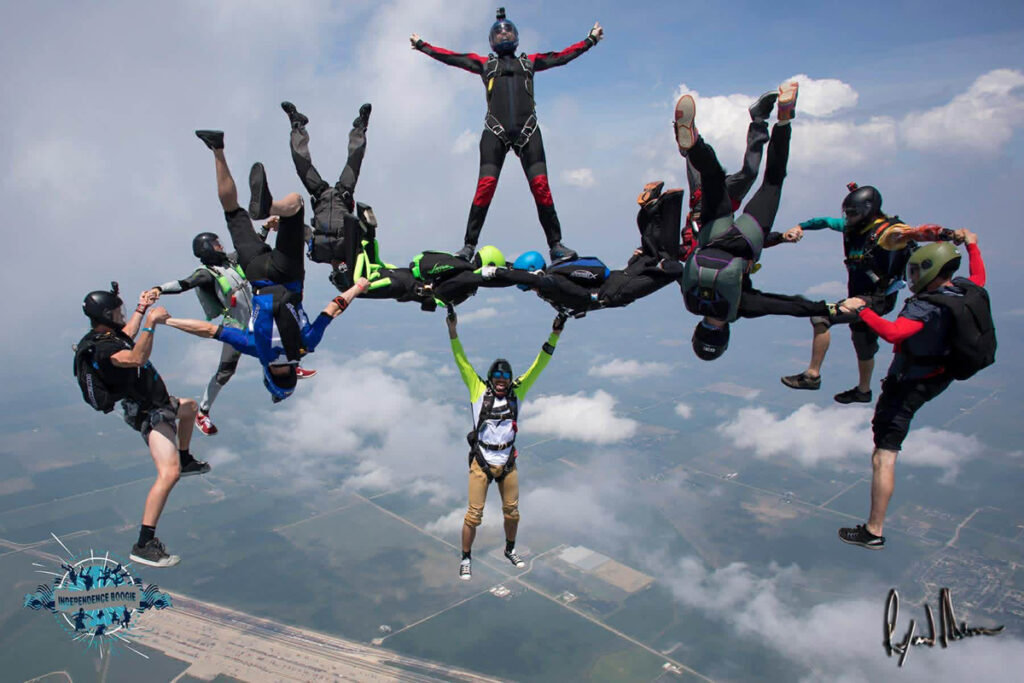
Photo by Raymond Adams
Have there been periods where you struggled creatively or personally inside the sport? How did you move through them?
Maybe this is one of those times? Not jumping so much, I do sometimes feel stagnant in the sport as I watch how quickly the sport is evolving. Focusing on the pictures I’m taking on the ground is a big part of what is getting me through.
Also, this has finally gotten me to work on my book. I have so many stories to tell, and it’s hard to figure out where to start. I have been talking about this for a while. Getting guidance from Olav Zipzer and meeting Joe Jennings and seeing his documentary Space Cowboy were very inspirational for me to get started.
The questions you have posed for me here have been a big help in the process. Some of the stories I’ve alluded to will definitely be included in the book.
What makes your perspective or approach different from other skydiving photographers?
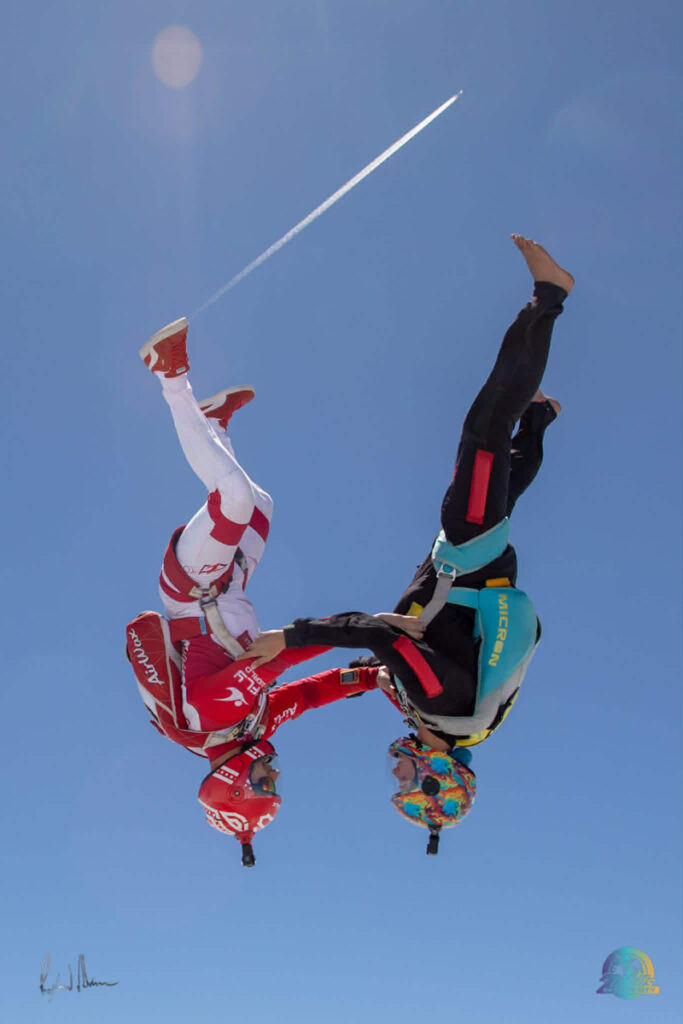
Is it really that much different from other skydiving photographers? I’m not sure. I don’t think there are that many top-level photographers who focus so much on freeflying. That’s certainly something that sets me apart from most.
I have this arrangement with my friends: You guys go build some cool formations, and I’ll go carve around them and take pictures. They say that I make them look good. I think they make me look good with what they do in the sky for me to photograph.
Is there an image or story you still haven’t captured yet but hope to someday?
There is a shot that I have been thinking about lately. I have done some flash photography in the sky. I was first inspired seeing what Lazlo experimented with 20 years ago. I’ve gone out head-down with the flash on my foot.
There’s a shot I want to get flying close-up with someone at dusk. It will be a cover shot for sure. I just need the right subject at the right time.
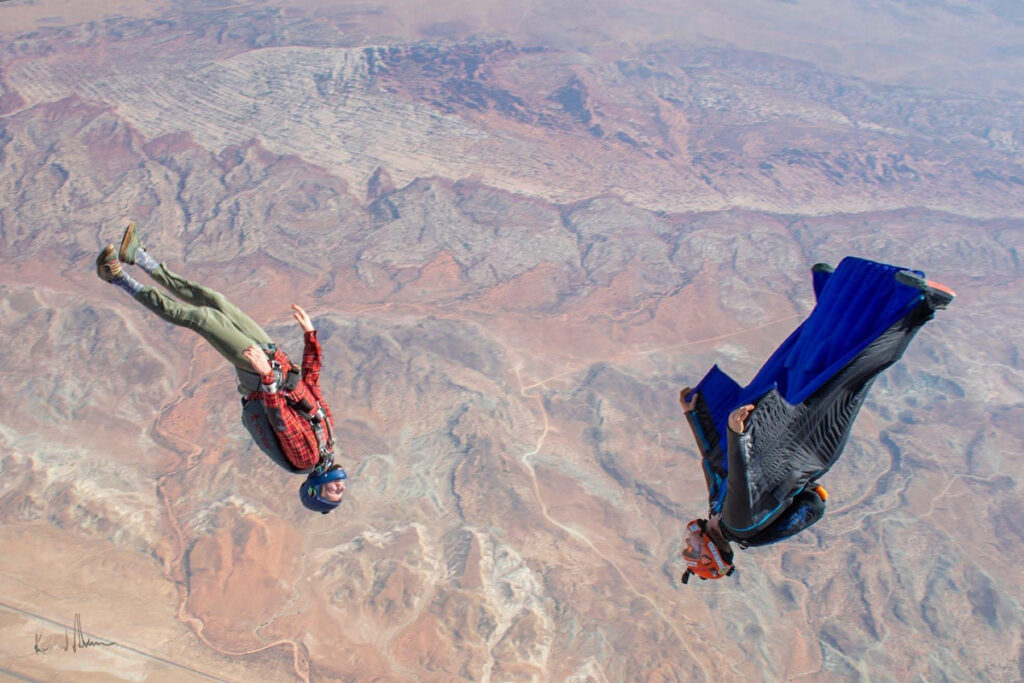
Photo by Raymond Adams
For newer jumpers or creatives entering the sport, what advice would you give about building a meaningful place for themselves in the skydiving world?
Take your time. Build quality personal relationships and focus mainly on one discipline at a time. Having fewer variables and consistency is the best way to master anything.
There’s the old saying about someone being a jack of all trades but a master of none. I feel that I am a jack of many trades and a master of each one of them. I did this by focusing on one at a time.
First was hairdressing. Then in skydiving, I spent a lot of time focusing on freeflying. Next, I directed my attention to swooping and competing in the early days of the Pro Swooping Tour. Getting back into the salon, I spent a couple of years mastering Photoshop before getting a camera.
I’m still working on mastering that, as I am now able to combine my skills. It would be much more difficult to master these things at the same time.
What is one piece of advice you’d give to the sport?
Always keep your chin up and eyes forward. This is definitely key to safe landings. Also for anything else in the sport. It’s ever-evolving. Be the change and keep it safe.
What sponsors would you like to thank?
Peregrine Manufacturing Inc
PD
LB Altimeters
Tony Suits
SSK
Skydive City