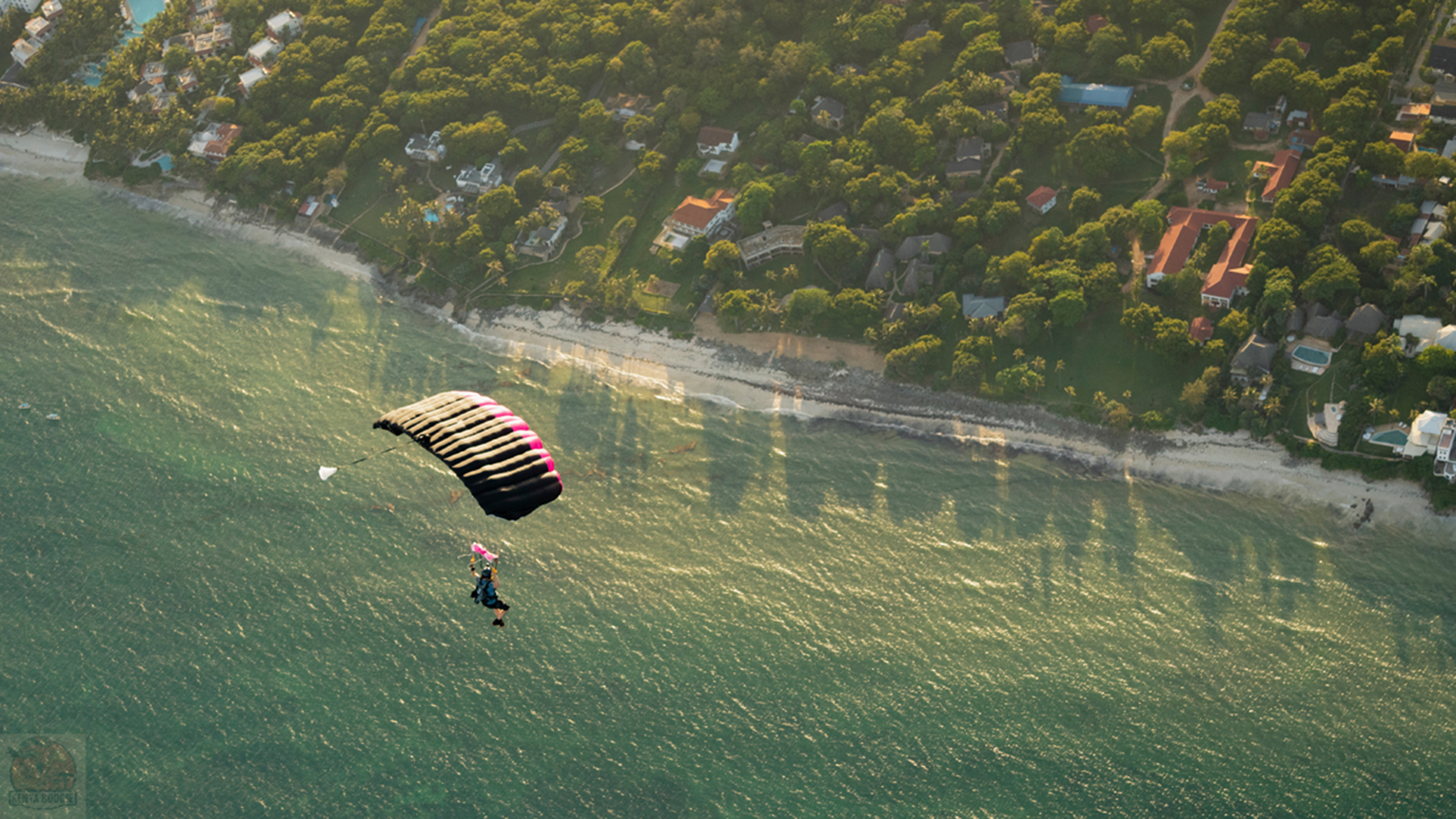





Long spots happen. Winds change. Sometimes you’re under a reserve. Whatever the reason, every skydiver should be prepared for the possibility that making it back to the landing area isn’t an option. In those situations, the goal isn’t to make it back. The goal is to land safely.
Landing off doesn’t have to be a catastrophe. Trying to force your way back to the dropzone when you’re too far away can turn it into one. Here are a few reminders to make sure your off-landing doesn’t turn into a disaster.
Decide Early
One of the biggest mistakes is waiting too long to realize you’re landing off.
Once you’re under canopy, figure out where you are and whether the DZ is realistically within reach. The earlier you make that decision, the more options you have. Student training teaches choosing an alternate landing area by 2,000 feet if you can’t confidently make your planned pattern. The exact altitude isn’t the point, but the principle definitely is.
A lot of important altitude can be wasted trying to decide when you could be choosing an alternative area and setting up your pattern safely. Once you’ve picked a safe place to land, commit to it. There are numerous incidents where jumpers were seriously injured or killed trying to get over trees, roads or power lines when a perfectly good landing area was already available.
Choose the Best Open Area
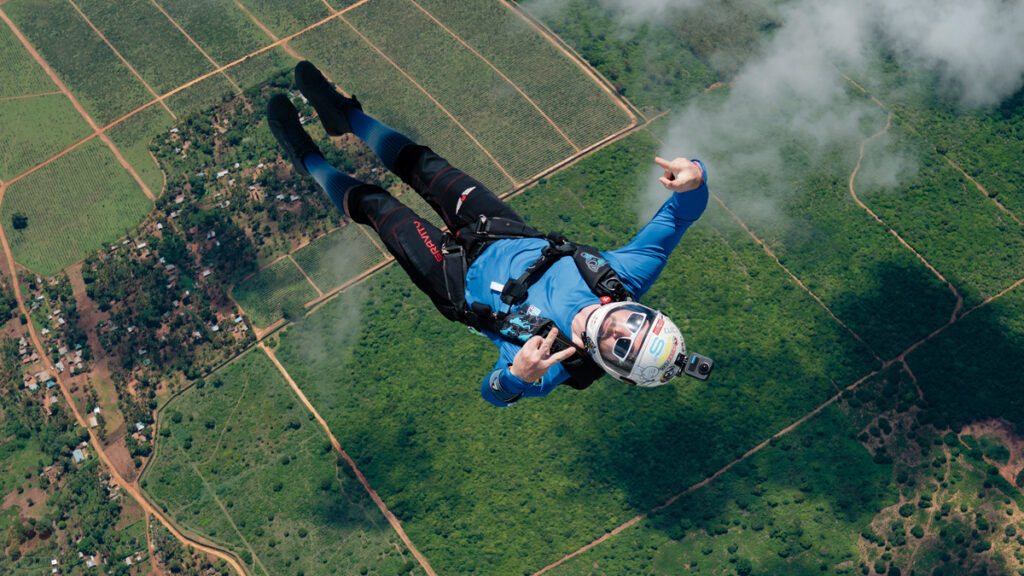
Look for the biggest, clearest field you can find. Stay away from roads, buildings and tree lines whenever possible. Power lines and wire fences can be nearly impossible to see until it’s too late. If you see poles, assume wires connect them.
Fly a Normal Pattern
One mistake that can kill is forgetting all the basics of canopy flight. Landing off doesn’t change the fundamentals. If you have the altitude, fly a normal pattern. If you don’t have the altitude for a normal downwind, base, final pattern, fly your canopy and your landing like normal. Your canopy will function the same whether you’re landing into the wind or downwind. Take a deep breath, remember the basics and fly your canopy like normal.
Don’t put yourself in danger trying to face perfectly into the wind. A level wing and a full flare is far more important than making a low turn just to land into the wind.
Be Ready to PLF
Keep in mind the PLF when you’re on final. You might be landing in a field with uneven terrain, rough ground, high grass or or otherwise. The PLF is a great tool for any kind of unplanned out landing.
After Landing
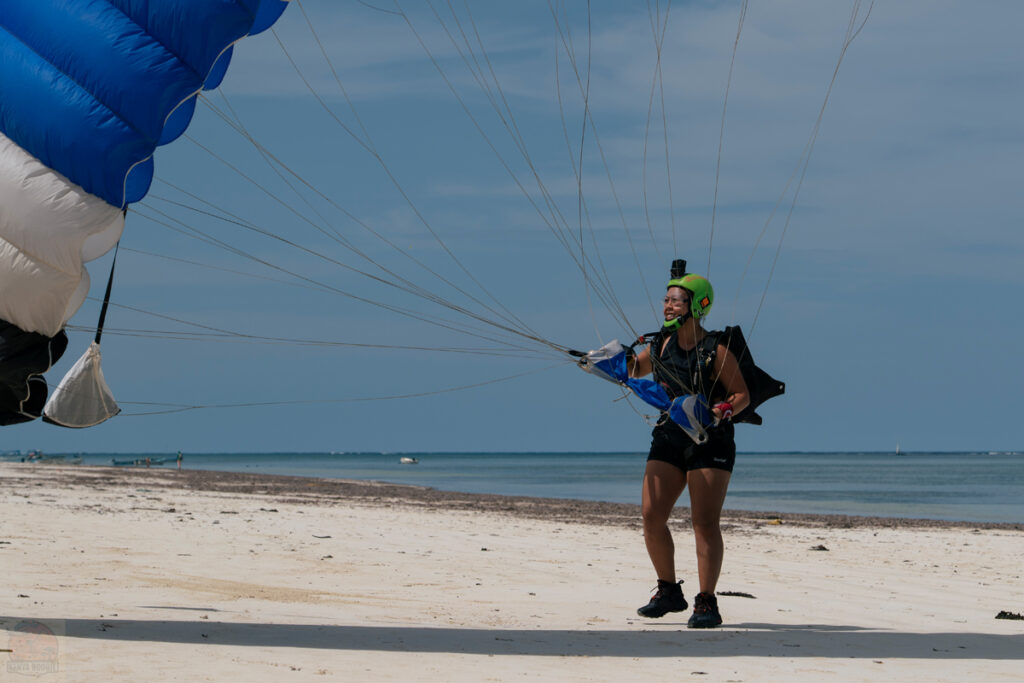
If you have your phone, let the dropzone know you’ve landed safely and where you are. If you’re on someone’s property, respect crops, livestock and fences. Walk to the nearest road or driveway if possible, it’ll make it much easier for your ride to find you.
Remember: Landing Safely Is Always the Priority
Off-landings that end badly are usually caused by decisions that are made too late.
Recognizing early that you can’t safely make it back to the dropzone and committing to a good alternate landing area is good canopy piloting. Once you’ve made that decision, fly your canopy normally and focus on a safe landing.