




In Part 3 of our PT series, Dr. Taylor Wolin explores the link between core stability and better flying, with practical exercises to help you move more efficiently and fly stronger
In Part 1, we focused on the hips as the primary driver of stability and control. In Part 2, we addressed shoulder strength and endurance, essential for surviving sustained wind.
Now it’s time to connect the system that makes all of that usable in the air: your core.
If Your Core Is Leaking Energy, Your Flying Will Show It
Ever feel like you know exactly what you want your body to do in the air, but the signal gets lost somewhere between your brain and your limbs? Sometimes that’s less about skill and lots to do with a core issue.
Your core isn’t about six-pack abs or holding a plank for bragging rights. In body flight, the core’s real job is to transfer force, maintain alignment and keep your body strong when the wind tries to pull you in different directions.
What “Core” Actually Means for Skydivers
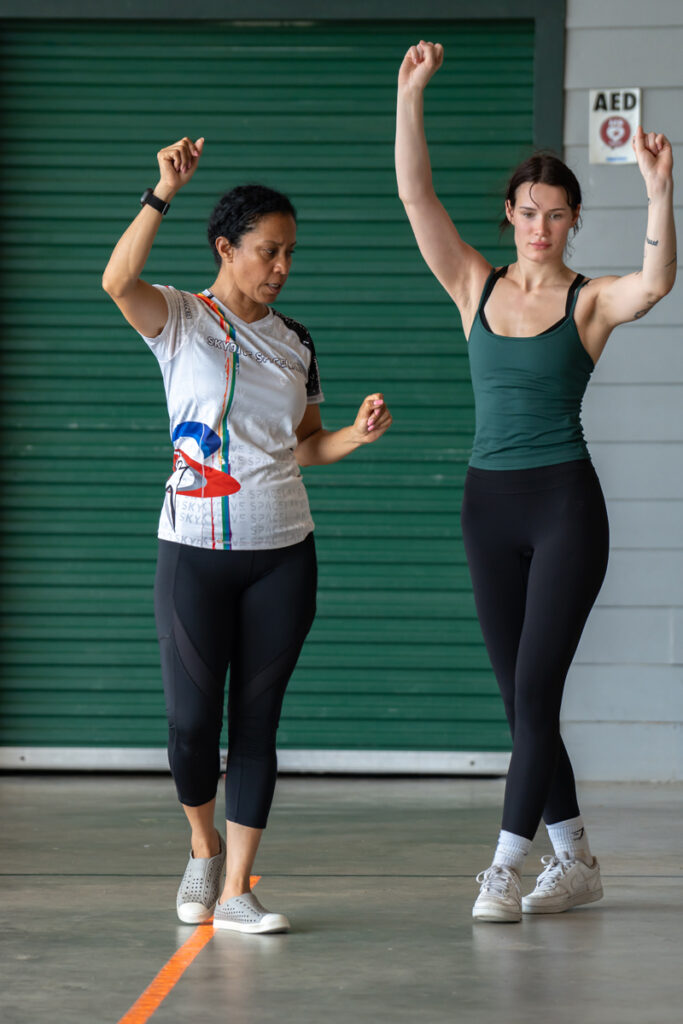
From a physical therapy and performance standpoint, the core is a 360-degree system that includes the deep abdominal muscles, spinal stabilizers, diaphragm, pelvic floor and hip musculature. Its primary role isn’t movement. It’s control.
In skydiving and tunnel flying, your core:
- Maintains midline stability during transitions
- Allows precise pitch, roll and yaw adjustments
- Connects shoulder input to hip output
- Prevents excessive arching or collapsing under wind pressure
When the core isn’t doing its job, other structures pick up the slack, usually your lower back, hip flexors or shoulders, and efficiency drops fast.
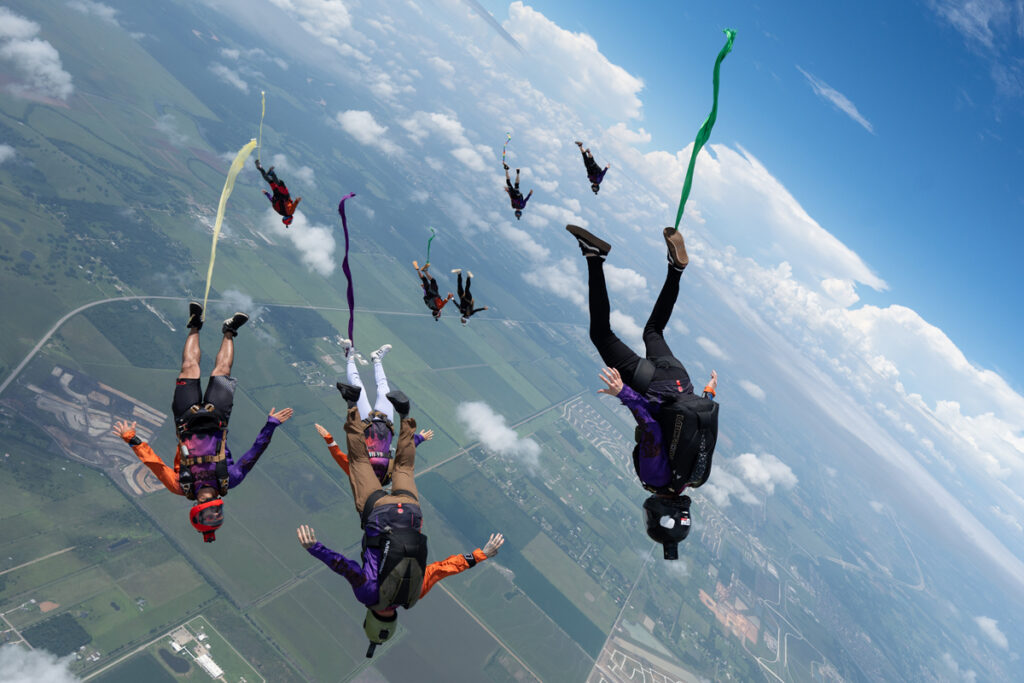
Common Core Mistakes in Body flight
These are patterns I see repeatedly in both rehab and performance settings:
- Over-arching instead of stabilizing
- Excessive rib flare during arm movement
- Inability to resist rotation during transitions
- Fatigue-related loss of body shape mid-jump
These aren’t problems solved by doing more sit-ups. They’re solved by training anti-movement: resisting extension, rotation and side-bending under control.
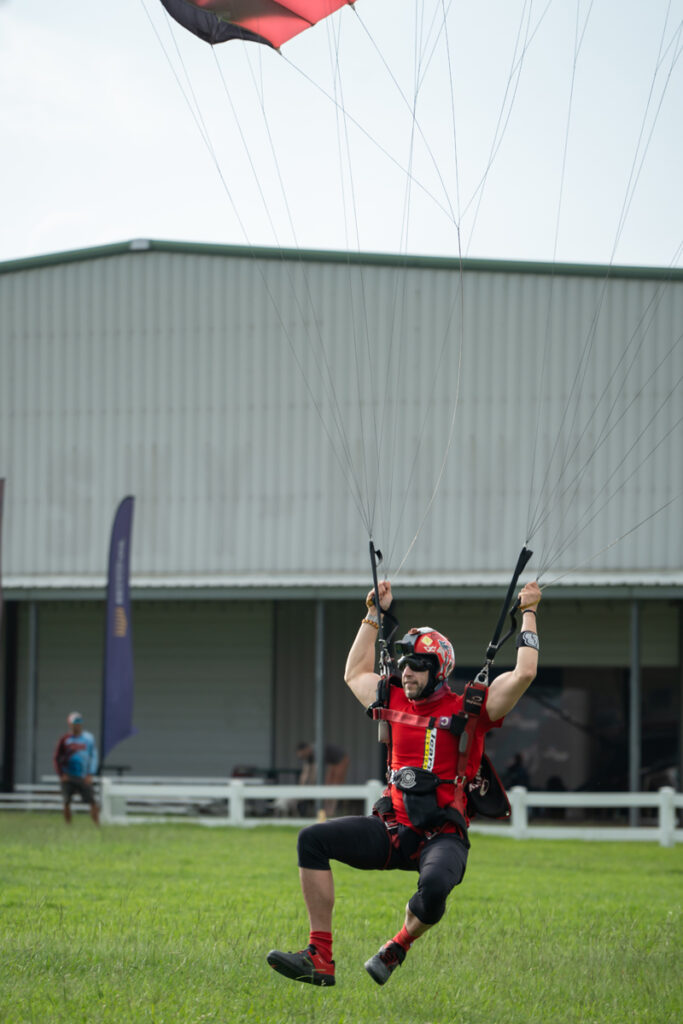
Core Training That Shows Up in the Sky
These exercises focus on midline stability, coordination and endurance, all of which translate directly to better flying.
1. Dead Bug (Progressed)
Why: Teaches limb movement without losing spinal control.
How: Lie on your back with your low back pressed into the floor. Keep your knees at 90 degrees, hips slightly lower than your waist and arms reaching in front (think back-fly position). Alternate reaching the opposite arm and leg while maintaining contact between your low back and the floor. Use controlled breathing throughout.
Flight link: Improves precision during transitions and sustained positions.
2. Bird Dog with Reach
Why: Builds cross-body coordination and spinal stability.
How: Start on your hands and knees. Extend the opposite arm and leg, then slowly reach forward and back while maintaining control.
Flight link: Enhances balance and awareness during dynamic flying.
3. Pallof Press
Why: Trains anti-rotation strength.
How: Stand or kneel with a resistance band or cable positioned perpendicular to your body. Press the band straight out from your chest while resisting any rotation.
Flight link: Improves control during carving and directional changes.
4. Plank Shoulder Taps
Why: Integrates shoulder stability with core control.
How: From a plank position, alternate tapping each shoulder while maintaining level hips and a neutral spine.
Flight link: Reinforces midline stability during arm movements in flying.
5. Hollow Body Hold (Modified as Needed)
Why: Builds anterior core endurance.
How: Lie on your back and maintain a hollow body position while keeping your ribs down and lower back controlled as you lift your arms and feet.
Flight link: Improves body tension control without excessive arching.
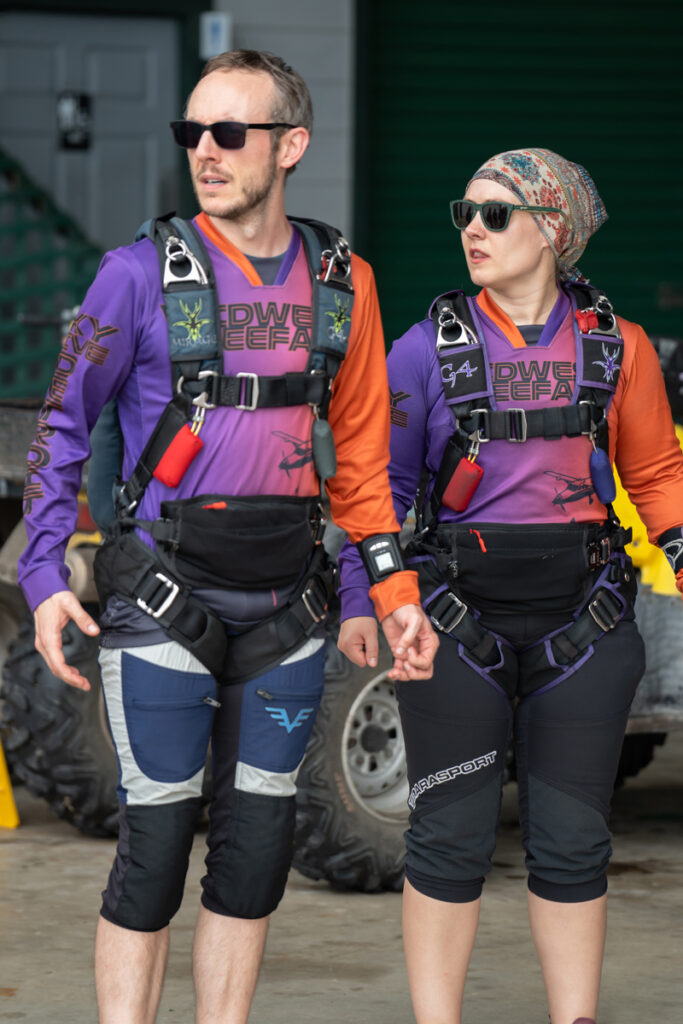
Skydiver Homework: Train the Core
For the next 10-14 days:
- Perform 2-3 rounds, 2-3 times per week.
- Prioritize quality over quantity.
- If you lose control, reset. That awareness matters.
In the sky or tunnel, notice how transitions feel smoother, how you find center faster and how less energy leaks out through unnecessary movement.