



Exit pressure is real. But just because the green light is on doesn’t mean you have to get out. We hear from three busy dropzones about spotting, second passes and why asking for another pass can sometimes be the safest call.
I was on a dropzone this year where conditions throughout the day were making jump run more challenging than usual. Based on the forecasted winds, the aircraft should have been running directly into the wind. However, load after load, groups deeper in the exit order were left farther from the dropzone than necessary and a view under canopy that most locals weren’t used to.
On one of the last loads of the day, an incident occurred. A freshly licensed skydiver exited with a belly group. After deployment, the jumper experienced line twists. Combined with an already poor spot, the jumper found himself outside the ability to get back to the dropzone and with visuals he wasn’t used to.
The jumper initiated a low turn that resulted in a serious impact and was airlifted to a hospital. There were several contributing factors in this incident. But in this article I want to focus on one topic that doesn’t get discussed nearly enough: Exit pressure and the second pass.
You Don’t Have to Exit
Over the years I’ve met a surprising number of skydivers who don’t fully realize something very important: You do not have to leave the aircraft.
A lot of jumpers get on the plane and unconsciously hand over all decision making to the pilot, the groups exiting ahead of them or whoever is leading their jump. But getting on a load doesn’t remove your responsibility for your own safety.
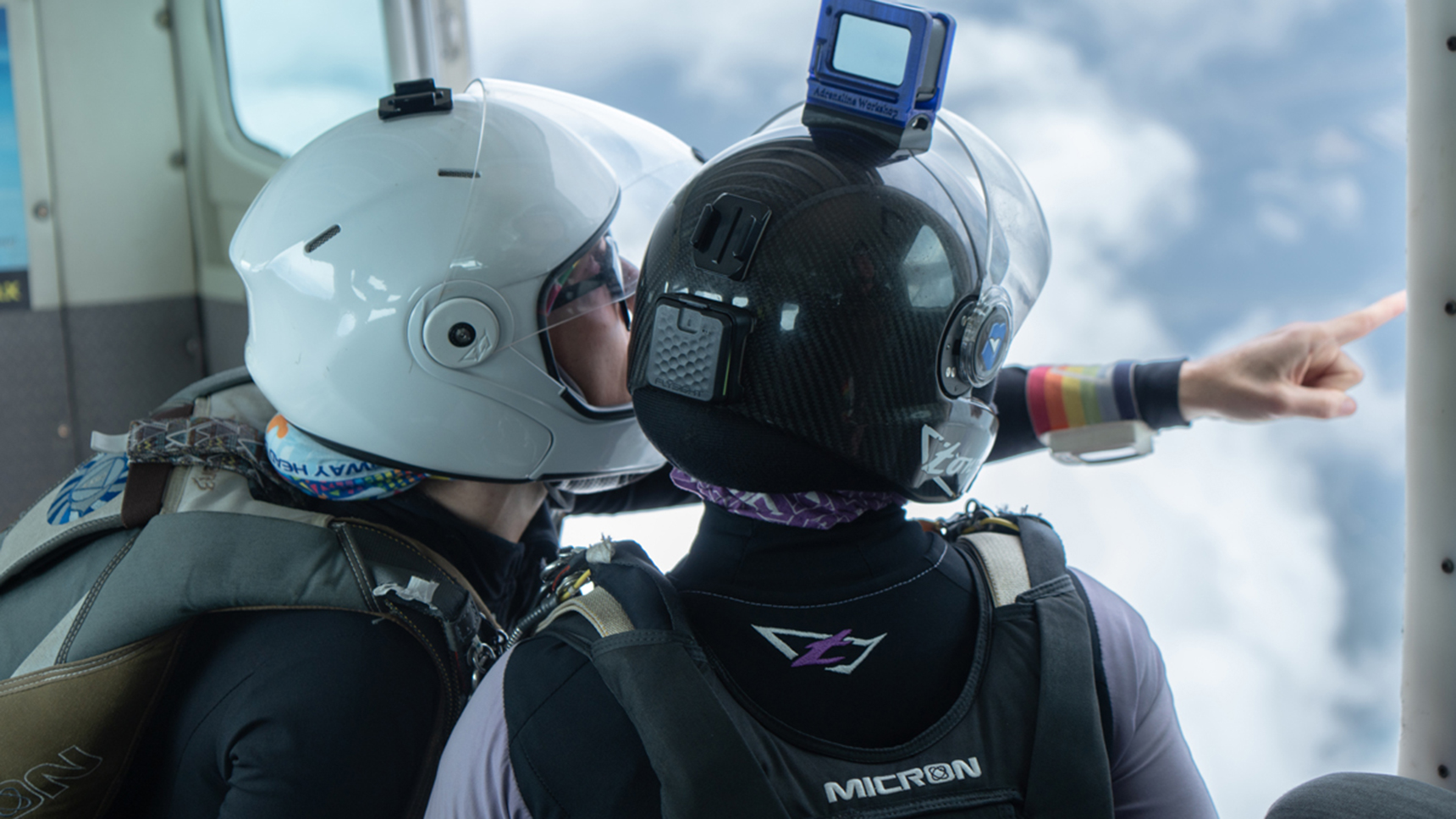
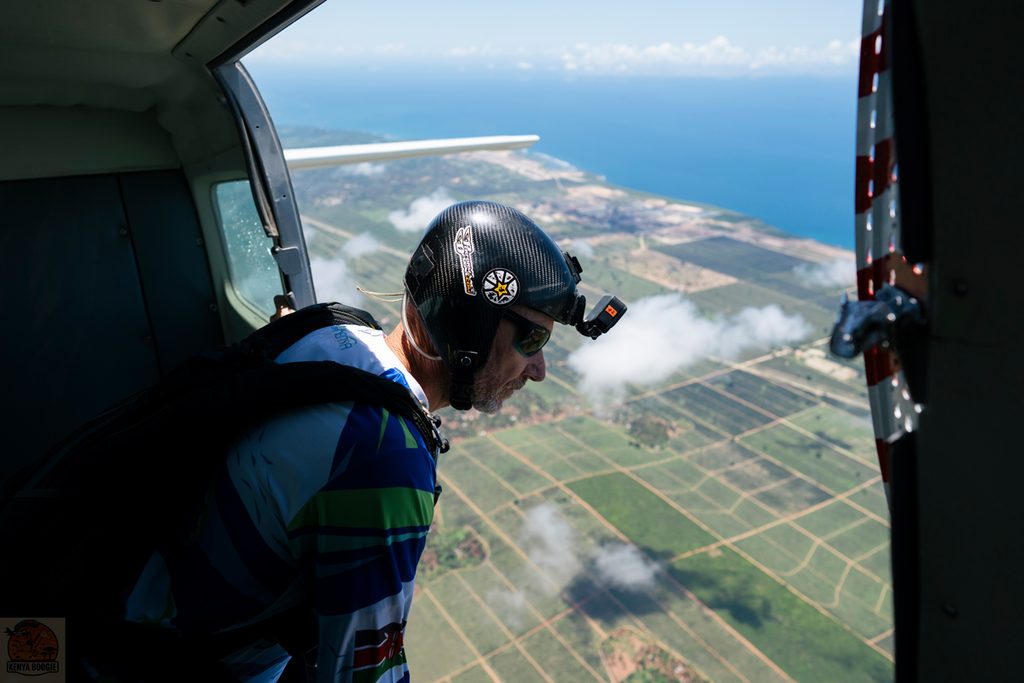
As an angle coach, I spend a lot of time at the door checking the spot for my groups. Whether we’re first out or somewhere further back in the exit order, my thought process is always the same: Do I like what I see?
If the answer is no, I’ve got options:
- Ask for a second pass.
- Ask for a third pass (doesn’t hurt to ask!)
- Stay in the airplane and ride it down.
I’m comfortable checking my spot/conditions for however long I need. If I need to communicate something to the groups behind me, I do. If I’m not satisfied with the spot or the conditions, I say so.
There can absolutely be pressure, whether real or perceived, to exit. Nobody wants to be the person holding up the load from exiting. But in a sport where a poor spot or the lack of visibility/large clouds can have life-changing consequences, the inconvenience of another pass, an irritated pilot, or an impatient tandem instructor simply doesn’t outweigh safety.
How Do Dropzones Actually Feel About A Second Pass?
After this incident, I started wondering what a second pass actually costs a dropzone, not just financially, but operationally. And how multi aircraft, busy DZs feel about them. So I asked three busy dropzones that routinely deal with these decisions: Skydive City, Skydive Perris and Skydive Spaceland Houston.
Here’s what they had to say.
Skydive City
DZM Matt Adamson
Second passes can be a very intimidating thing to newer and even experienced jumpers since there is a price tag associated with them and there is a timer on the board. Our philosophy when it comes to second (or multiple) passes at ZHills is that no amount of money is worth sacrificing safety. It costs ZHills about $200 whenever a second pass is done, aircraft dependent. That is a small price to pay to make sure everyone on the load makes it back to the DZ safely, and a lot cheaper than the alternative of someone landing off and getting hurt. If you are even questioning whether you need a go-around, you should ask for one.
Properly requesting the pilot to go-around is imperative to a smooth and efficient second pass. Generally, the jumper calling the go-around should communicate to the jumper nearest to the pilot, who can then directly ask the pilot for a second pass. If everyone is yelling at the pilot, it can be unclear to them what is needed and will delay the go-around from occurring. With ZHills Otters specifically, at the door we have two buttons under the jump lights that can be pressed in a quick alternating manner, which will directly indicate to the pilot a go-around is needed.
The biggest hazard when doing a second pass is who already exited the aircraft on the first pass. This will dictate how long the go-around needs to be or if an offset may be necessary to avoid interference with jumpers already in the air. The ground crew and airboss at ZHills are constantly in communication with the pilot. This allows us to ensure no one gets out unless it is safe to do so and the second pass is performed correctly.
Skydive Perris
DZM Dan Brodsky-Chenfeld
When to do a second pass is not an exact science. The goal at any DZ is to operate as efficiently as possible without sacrificing safety. Several factors determine whether everyone can safely exit on one pass or whether a second pass is needed:
- The type of aircraft, how many jumpers it holds and its speed.
- The layout of the DZ and available landing areas. Tight DZs with big planes require more passes than wide-open DZs.
- The type of activity. Is it four-way teams or a mix of FS, freefly, movement, wingsuiting, CRW and students?
- Are there many small groups that require more time to exit with adequate separation?
- Is it a bunch of wingsuiters who don’t care where you put them out?
If a load includes four four-way teams or two eight-way teams and the DZ has adequate space, everyone getting out on one pass may be perfectly safe. If it includes a speed flyer, one four-way team, two belly three-ways, three freefly two-ways and two AFF students, it is doubtful everyone can safely exit on one pass with the additional time required.
That being said, it is also simple. We can’t put skydivers out on top of skydivers, and we can’t drop jumpers so far away that they have difficulty finding a safe place to land. Second passes are sometimes necessary. When we do one, there must be safe separation by either time or horizontal distance from the first pass.
At Perris, we can drop a second pass half a mile offset from the first. If horizontal separation isn’t an option, we wait until the first-pass canopies are low enough that there is no chance of someone freefalling past or opening near them. For regular sport jumpers, that’s a minimum of two minutes between passes, or three minutes when following students who pull higher and have larger canopies.
We also have someone on the ground watching the sky who can tell the pilots when it’s clear to drop. Time or horizontal separation works when everyone does what’s planned, but someone could pull high or fly toward the area where the second pass is planned. Someone needs to be watching for that. If a DZ doesn’t have someone doing so, more separation may be necessary.
At DZs, I truly believe we’re all on one team. The DZ needs jumpers to understand the plan and back it up. At Perris, we usually plan for one pass. Everyone may not get exactly the spot they want, the first group may be a little short and the last a little long, but both should be perfectly safe.
The DZ also needs to understand that situations can arise where jumpers need a second pass even when the spot is fine. There could be an equipment or health issue, or a small aircraft underneath that the pilot wasn’t aware of. There isn’t time for a big debate. If jumpers ask for a second pass, we give it to them and discuss it later.
Of course, a second pass costs the DZ more. It’s not just fuel; it’s additional aircraft time, which gets more expensive every year. At P3 events, if we plan a second pass, we pay an additional fee because it costs more. There is also the loss of productivity. If every load requires a second pass, the aircraft may fly one to three fewer loads that day.
Skydive Spaceland
DZM Don Cameron
At Spaceland, we view a second pass as a safety tool. It is not something we plan around, but it should be available when it is needed. Our goal is always to have every jumper prepared to exit safely on the first pass through good planning, communication, and teamwork between the pilot and jumpers.
Part of that is encouraging jumpers to become educated spotters. Understanding upper winds, group order, exit separation, and how different disciplines fly helps jumpers make informed decisions about whether the first pass is appropriate or whether another pass is the safer option.
At the same time, we never want someone to feel pressured to exit into a questionable spot, marginal cloud clearance, a traffic conflict, or any other situation they are uncomfortable with simply because they are worried about inconveniencing the operation. A second pass because conditions made the first exit inappropriate is part of running a safe skydiving operation. A second pass because a group was not organized and ready at the door is something we should be working to eliminate.
There are certainly operational costs associated with additional passes. They consume additional fuel and aircraft time and can affect the flow of the loads behind them. Those considerations are real, and they are another reason why good preparation and aircraft flow matter. But they should never create a culture where a jumper feels they have to make a bad decision because they believe they only have one opportunity to exit.
Ultimately, we want people prepared to make the first pass work, educated enough to recognize when it should not, and comfortable making the safer decision when conditions are not right.
Bottom Line: You Must Spot & You Aren’t Required To Exit
I think what needs to be highlighted is that everyone should understand what a good spot looks like and make sure they’re within that range to be able to make it back to the landing area. As well, everyone needs to be aware that riding the plane down, or asking for a second pass, area always an option. We can keep each other safe by not creating to the exit pressure, by making sure our fellow skydivers understand spotting and by riding down when we need to.